Smart Automotive High-side Switch Controller Market Insights
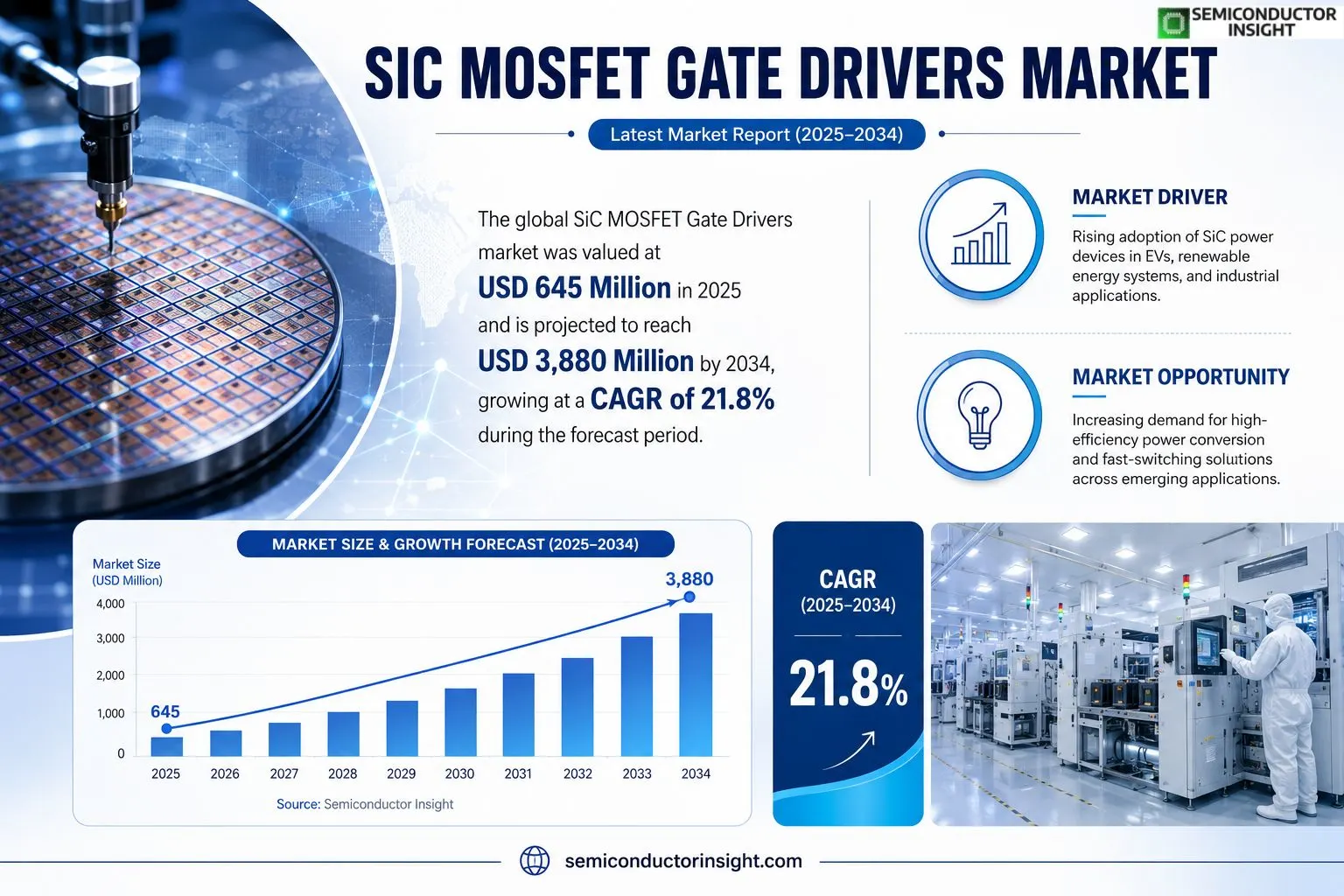
Smart Automotive High-side Switch Controller market size was valued at USD 1,097 million in 2025. The market is projected to grow from USD 1,097 million in 2025 to USD 1,954 million by 2034, exhibiting a CAGR of 8.7% during the forecast period.
Smart Automotive High-side Switch Controller is an intelligent automotive‑grade control IC designed for high‑side load management, integrating switching control, advanced protection, and on‑chip diagnostics to enable safer, more efficient, and more controllable power distribution in modern vehicle electrical systems. In 2025 production reached approximately 267 million units at an average price of USD 4.5 per unit; capacity utilization was about 70 % and gross margin around 40 %.The market is gaining momentum because vehicle architectures are shifting toward centralized and software‑defined electrical systems, which increase demand for controllers that combine load monitoring, fault reporting and system protection. While cost pressure remains on high‑volume platforms, manufacturers that embed diagnostic functionality and reduce wiring complexity can achieve measurable system cost savings and sustain profitability despite intensifying competition.
MARKET DRIVERS
Electrification of Vehicle Architectures
The acceleration of electric‑vehicle (EV) roll‑out forces OEMs to redesign power distribution networks. High‑side switch controllers become essential for managing battery‑to‑motor pathways, ensuring safety while delivering the torque profiles demanded by modern drivetrains. Reliability and low‑on‑resistance are no longer optional features; they are baseline requirements that directly influence vehicle range and warranty costs.
Advances in Power‑Management ICs
Progress in silicon‑carbide (SiC) and gallium‑nitride (GaN) processes yields controllers that can operate at higher temperatures and switch faster. This technical leap trims auxiliary cooling hardware and frees board real‑estate, allowing designers to embed additional functionality such as fault diagnostics and adaptive control loops. Companies that capture these efficiencies gain a competitive edge in platform pricing.
➤ “Integrating a high‑side switch with predictive diagnostics cuts total‑ownership cost by up to 12 % for fleet operators.”
Collectively, the push toward higher voltage architectures, combined with semiconductor breakthroughs, creates a virtuous cycle: more capable controllers enable smarter vehicle systems, which in turn raise demand for the next generation of high‑side switching solutions. Smart Automotive High-side Switch Controller Market is therefore being propelled by both product‑level innovation and system‑level strategy.
MARKET CHALLENGES
Cost Sensitivity Across Segments
While premium EV models can absorb sophisticated controller pricing, mass‑market segments remain tightly constrained by bill‑of‑materials targets. Manufacturers must balance the desire for advanced features against the imperative to keep unit costs below the threshold that would erode profit margins. Price pressure often forces a trade‑off between performance and component count.
Other Challenges
Supply‑Chain Constraints
The semiconductor shortage that began in 2020 has not fully abated. Lead times for high‑voltage devices exceed six months in many cases, compelling OEMs to carry higher inventory levels. This dynamic inflates working capital requirements and introduces scheduling uncertainty for vehicle assembly lines.
MARKET RESTRAINTS
Thermal Management Limits
High‑side switch controllers must dissipate significant power during peak acceleration, yet the confined spaces of modern under‑body modules restrict the deployment of traditional heat‑sink solutions. When thermal budgets are exceeded, reliability degrades, prompting manufacturers to either derate the component or invest in costly cooling infrastructure. This thermal ceiling curtails the adoption of the most capable devices in certain vehicle platforms.Additionally, compliance with emerging safety standards such as ISO 26262 imposes rigorous validation cycles. The documentation and testing overhead associated with functional safety certification can delay product launches, especially for smaller suppliers lacking dedicated compliance teams.
MARKET OPPORTUNITIES
Integration with Vehicle‑to‑Everything (V2X) Ecosystems
As vehicles become nodes in broader connected‑infrastructure networks, high‑side switch controllers are being called upon to manage power for communication modules, radar, and lidar subsystems. Controllers that embed low‑latency switching with built‑in isolation can simplify V2X hardware architectures, reducing both weight and part count. This convergence opens a new revenue stream for vendors that can certify their devices for automotive‑grade wireless applications.Parallel to V2X, the rise of modular platform strategieswhere a single chassis supports multiple powertrain variantscreates demand for switch controllers that are programmable and reconfigurable after assembly. Offering firmware‑updatable solutions positions suppliers to capture aftermarket upgrade markets, extending the product lifecycle beyond initial vehicle launch.
Smart Automotive High-side Switch Controller Market Trends
Shift Toward Centralized, Software‑Defined Electrical Architectures
The most visible change shaping Smart Automotive High-side Switch Controller Market is the move away from dispersed, relay‑based power distribution toward centralized, software‑defined architectures. Vehicle manufacturers are consolidating load‑management functions into a few intelligent controllers that can be updated over‑the‑air, reducing wiring complexity and enabling predictive fault handling. This transition is driven by the proliferation of electric and hybrid powertrains, where precise regulation of high‑side loads directly influences efficiency and range. As a result, developers are embedding advanced diagnostics and on‑chip safety algorithms, turning the controller from a passive switch into an active system node that interacts with vehicle‑wide control software.
Other Trends
Higher Functional Integration Reduces Bill of Materials
Manufacturers are packaging load monitoring, fault reporting, and thermal management within a single silicon die. The approach cuts the bill of materials by eliminating discrete sensors and protective components, which in turn eases assembly lines and shortens validation cycles. In 2025 the average selling price of a unit was about USD 4.5, while the industry’s gross margin hovered near 40 %. Profitability now hinges on delivering additional functionality without raising costa balance achieved through tighter integration and software‑compatible diagnostics.
Supply‑Chain Resilience Through Established Upstream Partners
Upstream inputs such as silicon wafers, photoresists, leadframes, and epoxy molding compounds remain sourced from a stable cohort of suppliers, including Shanghai Silicon Industry Group, Shin‑Etsu Chemical and Sumitomo Bakelite. Their consistent quality supports the 70 % capacity utilization observed in 2025, providing a reliable foundation for scaling production as OEM demand accelerates. Companies that nurture long‑term relationships with these providers are better positioned to manage cost volatility and meet volume targets without compromising reliability.
Impact on Downstream Vehicle Platforms
Passenger‑car makers and commercial‑vehicle builders alike are prioritizing controllers that can be reused across multiple model generations. BYD, Geely and FAW Group, for example, value the ability to simplify vehicle architecture while retaining the flexibility to add new load‑side features via software updates. This strategy lowers total cost of ownership and extends platform lifecycles, which is critical in markets where price pressure is intense. Suppliers that can demonstrate measurable system‑level savingsthrough reduced wiring, fewer discrete components, and longer‑lasting reliabilityare likely to capture a larger share of Smart Automotive High-side Switch Controller Market as OEMs standardize on these smarter, platform‑centric solutions.
COMPETITIVE LANDSCAPEKey Industry Players
Smart Automotive High‑side Switch Controllers – Competitive Overview
Infineon Technologies commands the top tier of the market, leveraging its deep automotive safety portfolio and extensive validation infrastructure to secure a decisive share of high‑volume vehicle platforms. The company’s ability to integrate load monitoring, fault diagnostics and robust protection within a single silicon die has resonated with OEMs seeking to simplify power distribution while meeting stringent functional‑safety standards. This integration not only reduces the bill of materials but also shortens the engineering cycle, giving Infineon a strategic advantage in the shift toward centralized vehicle electrical architectures. Its European engineering centers and close ties with Tier‑1 suppliers have created a feedback loop that continually refines controller algorithms, reinforcing its leadership position across passenger‑car and commercial‑vehicle segments.Beyond the dominant tier, a cluster of specialized firms fuels differentiation. STMicroelectronics and NXP Semiconductors deliver highly configurable devices that appeal to manufacturers targeting niche propulsion or advanced driver‑assistance systems. Texas Instruments and Microchip Technology focus on cost‑effective, dual‑channel solutions optimized for entry‑level models, while ROHM and Renesas emphasize ultra‑low‑loss designs suited for electric‑vehicle power‑train modules. Diodes Incorporated and Fuji Electric supply robust single‑channel parts that excel in legacy platforms, and onsemi’s silicon‑carbide offerings address emerging high‑temperature applications. Toshiba and Skyworks Solutions round out the landscape with reliability‑centric portfolios that attract manufacturers prioritizing long‑life cycles and stringent reliability metrics. Collectively, these players create a layered competitive fabric where innovation, pricing discipline, and application‑specific expertise dictate market share.
List of Key Smart Automotive High-side Switch Controller Companies Profiled
- Infineon Technologies
- STMicroelectronics
- NXP Semiconductors
- Texas Instruments
- Diodes Incorporated
- ROHM Semiconductor
- Renesas Electronics
- Fuji Electric
- Microchip Technology
- onsemi
- Toshiba Corporation
- Skyworks Solutions
- Cypress Semiconductor
- Maxim Integrated
- Analog Devices
Segment Analysis:
| Segment Category | Sub-Segments | Key Insights |
| By Type |
|
12 V Controllers
24 V Controllers
|
| By Application |
|
Passenger Cars
Commercial Vehicles
Body‑Control Modules
|
| By End User |
|
OEMs
Tier‑1 Suppliers
Aftermarket Service Providers
|
| By Architecture |
|
Centralized Power Architecture
|
| By Integration Level |
|
System‑in‑Package (SiP) Solutions
|
Regional Analysis: Smart Automotive High-side Switch Controller Market
North America
Concentrations of venture‑backed start‑ups in California translate cutting‑edge MOSFET designs into commercially viable high‑side switch solutions, accelerating feature integration for next‑gen vehicle platforms.
Strategic alliances between Tier‑1 suppliers and leading OEMs shape product roadmaps, ensuring controllers meet evolving safety standards and real‑time torque‑control demands.
Federal emissions and efficiency mandates compel automakers to adopt more efficient power‑train components, directly boosting demand for high‑side switch controllers.
Diversified sourcing across the U.S., Canada and Mexico buffers the market against single‑point failures, sustaining steady component flow to assembly plants.
Europe
European manufacturers, driven by stringent CO₂ limits and a robust charging infrastructure, are integrating high‑side switch controllers to support modular electric platforms. German engineering firms prioritize thermal management within the controller package, reflecting a broader regional emphasis on reliability under diverse climatic conditions. Collaborative research programs funded by the EU accelerate the adoption of silicon‑carbide technologies, positioning Europe as a hub for next‑generation efficiency enhancements. The interplay between automotive and energy‑policy agendas ensures that controller adoption aligns with broader sustainability goals, prompting suppliers to tailor offerings for both passenger and commercial vehicle segments.
Asia-Pacific
The Asia‑Pacific corridor is distinguished by rapid scaling of electric vehicle production, especially in China, Japan and South Korea. Local OEMs favor high‑side switch controllers that can be embedded within tightly packed power modules, a response to aggressive vehicle downsizing trends. Government subsidies and ambitious electrification targets stimulate demand for compact, high‑performance switching solutions, while domestic semiconductor players benefit from policy‑driven capacity expansions. The region’s cost‑sensitive market segment pushes suppliers toward volume‑oriented designs, yet rising consumer expectations for performance keep innovation momentum high.
South America
In South America, emerging electric mobility projects and a gradual shift toward stricter emissions standards catalyze modest growth in Smart Automotive High-side Switch Controller Market. Brazil’s automotive sector, the region’s largest, is beginning to evaluate high‑side switching architectures for hybrid models, driven by a mix of governmental incentives and consumer awareness. Local manufacturers seek cost‑effective solutions, prompting partnerships with North‑American suppliers to import proven controller designs while adapting them to regional production constraints.
Middle East & Africa
The Middle East & Africa region, while still nascent in electric vehicle volumes, presents a strategic testing ground for high‑side switch controllers in harsh temperature environments. UAE and Saudi Arabia’s investment in premium electric vehicle fleets creates niche demand for controllers that can sustain reliability under extreme heat. African markets, led by South Africa’s growing automotive assembly capacity, are exploring high‑side switching for both electric and hybrid powertrains, guided by an emerging regulatory focus on fuel efficiency. These dynamics encourage suppliers to develop robust, thermally resilient controller families tailored to the region’s climatic challenges.
Report Scope
This market research report provides a comprehensive analysis of the Smart Automotive High-side Switch Controller Market , covering the forecast period 2026–2034. It offers detailed insights into market dynamics, technological advancements, competitive landscape, and key trends shaping the industry.
Key focus areas of the report include:
- Market Overview: The report begins with an overview outlining its current market scenario, key growth indicators, and industry transformation drivers. It discusses macroeconomic factors, demand–supply balance, regulatory landscape, and the strategic role of semiconductors in powering advancements across industries such as automotive, telecommunications, consumer electronics, and industrial automation.
- Market Size & Forecast: Historical data and future projections for revenue, unit shipments, and market value across major regions and segments.
- Segmentation Analysis: Detailed breakdown by product type, technology, application, and end-user industry to identify high-growth segments and investment opportunities.
- Regional Insights: Insights into market performance across North America, Europe, Asia-Pacific, Latin America, and the Middle East & Africa, including country-level analysis where relevant.
- Competitive Landscape: Profiles of leading market participants, including their product offerings, R&D focus, manufacturing capacity, pricing strategies, and recent developments such as mergers, acquisitions, and partnerships.
- Technology Trends & Innovation: Assessment of emerging technologies, integration of AI/IoT, semiconductor design trends, fabrication techniques, and evolving industry standards.
- Market Drivers & Restraints: Evaluation of factors driving market growth along with challenges, supply chain constraints, regulatory issues, and market-entry barriers.
- Stakeholder Insights: Insights for component suppliers, OEMs, system integrators, investors, and policymakers regarding the evolving ecosystem and strategic opportunities.
Primary and secondary research methods are employed, including interviews with industry experts, data from verified sources, and real-time market intelligence to ensure the accuracy and reliability of the insights presented.
FREQUENTLY ASKED QUESTIONS:
What is the current market size of Smart Automotive High-side Switch Controller Market?
-> Smart Automotive High-side Switch Controller Market was valued at USD 1097 million in 2025 and is expected to reach USD 1954 million by 2034, at a CAGR of 8.7% during the forecast period.
Which key companies operate in Smart Automotive High-side Switch Controller Market?
-> Key players include STMicroelectronics, Infineon, Diodes Incorporated, ROHM, Renesas, Fuji Electric, Texas Instruments, Microchip, onsemi, and Toshiba.
What are the key growth drivers?
-> Key growth drivers include the shift toward centralized and software‑defined vehicle electrical architectures, increasing demand for on‑chip diagnostics and functional safety, and the need for higher functional integration that reduces component count and total system cost.
Which region dominates the market?
-> Asia leads the market, driven by strong automotive manufacturing bases in China, Japan, and South Korea, as well as rapid adoption of electric and connected vehicle platforms.
What are the emerging trends?
-> Emerging trends include platform‑based deployment of intelligent high‑side controllers, integration of load‑monitoring and fault‑reporting features, and the development of software‑compatible diagnostics that enable over‑the‑air updates and long‑life vehicle platforms.
Get Sample Report PDF for Exclusive Insights
Report Sample Includes
- Table of Contents
- List of Tables & Figures
- Charts, Research Methodology, and more...
 Download Sample Report PDF