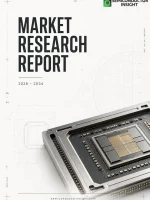
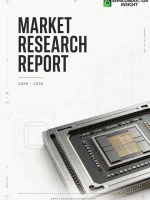
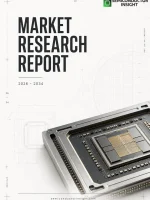
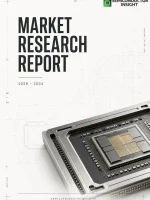
Semiconductor Testing Machine Market Insights
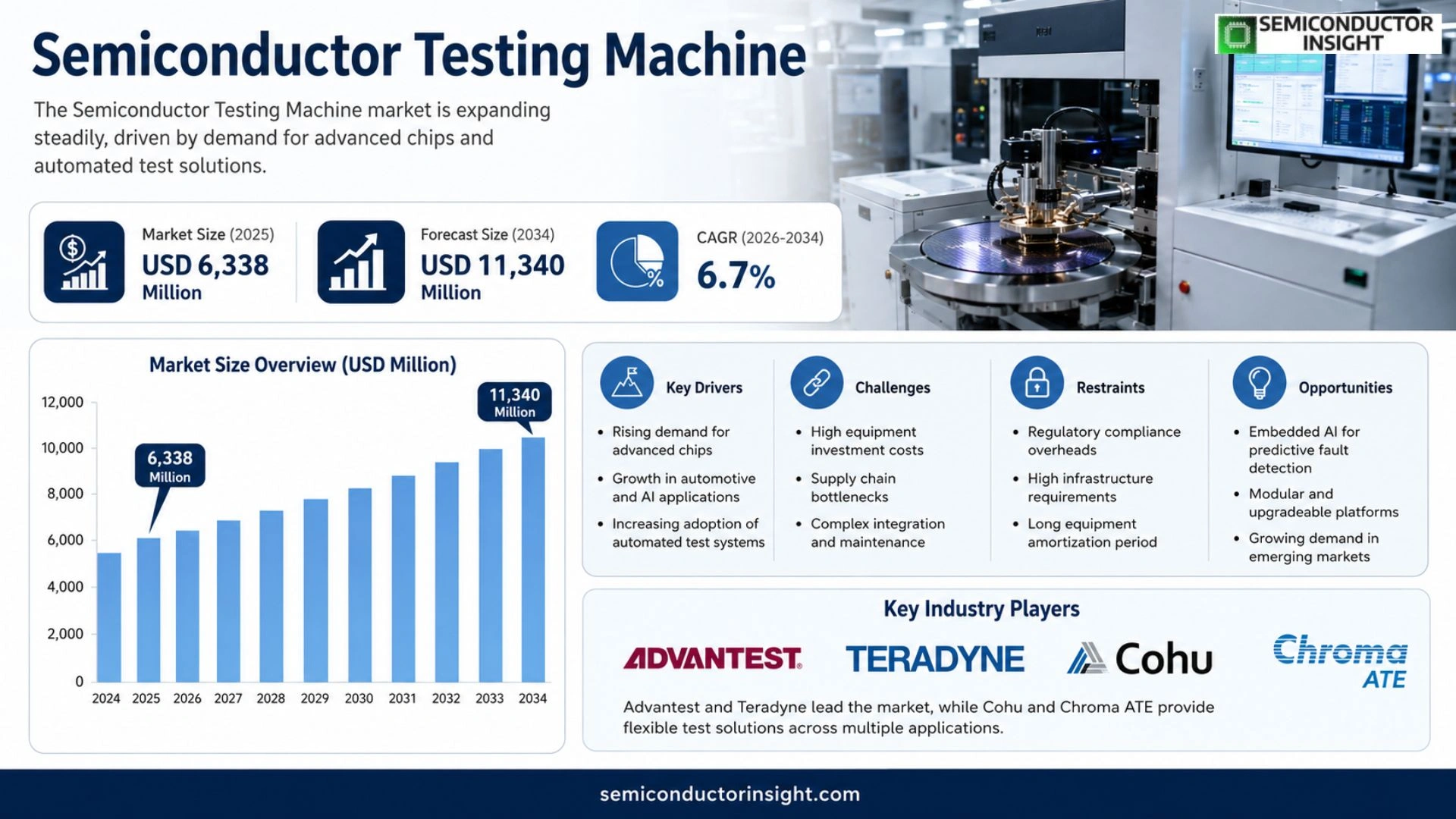
Global Semiconductor Testing Machine market size was valued at USD 6,338 million in 2025. The market will increase USD 11,340 million by 2034, showing a CAGR of approximately 6.7% over the period.
Semiconductor testing machines are equipment designed to meet the needs of developers and manufacturers of stand‑alone integrated circuits as well as system‑on‑chip (SoC) and system‑in‑package (SiP) devices. The portfolio comprises SoC testers, memory testers,_RF_ testers,_analog_ testers,_power semiconductor_ testers and CIS testers. These instruments verify functionality and reliability across multiple sub‑sectors such as SoC validation for advanced processors,_high‑speed memory_ checks for storage solutions,_RF_ assessment for emerging 5G/6G transceivers,_and mixed‑signal testing for analog components._Demand rises because manufacturers scale production for AI accelerators,_autonomous vehicle electronics_and IoT devices.
MARKET DRIVERS
Advanced Node Scaling Demands
As manufacturers push silicon features below 7 nm, testing equipment must resolve defects at previously unattainable resolutions. This pressure compels vendors to integrate higher‑frequency probes and AI‑assisted anomaly detection, directly stimulating capital spending within Semiconductor Testing Machine Market. Companies that can deliver sub‑nanometer accuracy gain a decisive edge, prompting a wave of product upgrades across the industry.
Yield Enhancement Pressure
Yield erosion remains the single most costly factor for fab operators. Modern testing solutions that combine rapid parametric scans with predictive analytics enable early defect isolation, reducing re‑work cycles. Consequently, fabs allocate larger budgets to equipment that shortens time‑to‑market while preserving throughput, fueling demand for next‑generation testers.
➤ Operators that integrate inline test stations report up to a 12 % increase in effective wafer throughput, underscoring the financial incentive driving equipment upgrades.
Environmental regulations also shape purchasing decisions. Machines that lower power consumption and incorporate recyclable components align with corporate sustainability goals, making such features a differentiator in competitive tender processes.
MARKET CHALLENGES
Escalating Equipment Costs
High‑precision testers command premium pricing, and the amortization period for a single unit can exceed five years. For smaller fabs, the financial outlay strains balance sheets, forcing them to delay adoption of the newest platforms. This cost barrier restrains market penetration, especially in emerging regions where capital availability is limited.
Other Challenges
Supply Chain Bottlenecks
Component shortages,particularly for high‑frequency RF modules and specialty optics,have extended lead times. Manufacturers that rely on a single source for critical parts face production throttles, prompting many buyers to seek diversified supplier portfolios.
MARKET RESTRAINTS
Regulatory Compliance Overheads
Stringent safety and electromagnetic emission standards impose additional engineering effort on equipment makers. The need to certify each new model across multiple jurisdictions adds both time and expense, slowing the rollout of innovative testing solutions.
Furthermore, legacy fabs operating on older process nodes often lack the infrastructure to support high‑speed testers, such as the required clean‑room classifications or data‑center bandwidth. Retrofitting these environments incurs substantial auxiliary costs, deterring upgrades.
MARKET OPPORTUNITIES
Embedded AI for Predictive Fault Detection
Embedding machine‑learning models directly into test hardware enables real‑time pattern recognition, allowing operators to anticipate failure modes before they manifest on the wafer. Vendors that can package AI as a turnkey service stand to capture a growing share of upgrades, as fabs prioritize intelligent automation over manual inspection.
Another avenue lies in modular platform designs that allow incremental capability additions,such as interchangeable probe heads or upgradable data‑analytics modules. This approach reduces total cost of ownership and appeals to cost‑conscious manufacturers seeking flexibility as process technologies evolve.
Semiconductor Testing Machine Market Trends
Shift Toward Intelligent, High‑Throughput Testing
The 2025 sales tally of roughly 54,400 units underscores how manufacturers are scaling test capacity to keep pace with ever‑denser chip architectures. A unit price averaging US$127.6 and an industry‑wide gross margin near 68 % reveal that profitability remains strong as producers invest in faster, more precise testers. Pressure comes chiefly from AI‑driven workloads, autonomous‑driving platforms, and the rollout of 5G/6G radios, all of which demand tighter timing windows and higher fault‑coverage. Consequently, vendors are embedding machine‑learning analytics directly into test boards, enabling on‑the‑fly defect classification and reducing test‑time per wafer. This transition not only shortens time‑to‑market for SoC and memory products but also forces equipment makers to redesign platforms for modular upgrades rather than full‑system replacement.
Other Trends
Regional Emergence of Domestic Testers
Asian manufacturers, led by firms in China and South Korea, have accelerated R&D on home‑grown testing solutions, eroding the historical dominance of a handful of Western OEMs. Their ability to offer comparable performance at roughly 15 % lower price points is reshaping procurement strategies of major IDMs and OSATs, which now evaluate total cost of ownership alongside traditional reliability metrics. The rise of domestic suppliers also introduces new intellectual‑property considerations, as local design houses seek tighter integration between device layout and test algorithms. For global players, this trend translates into a need to differentiate through advanced analytics, service ecosystems, and strategic alliances with foundries that can guarantee co‑development roadmaps.
Automation and Accuracy as Competitive Imperatives
Automation is no longer an optional add‑on; it is becoming the baseline for any Semiconductor Testing Machine Market offering that wishes to remain relevant. End‑to‑end test flow orchestration,spanning wafer‑level probing, package‑level validation, and final device burn‑in,is now coordinated by AI‑driven schedulers that allocate resources in real time based on yield forecasts. Enhanced accuracy stems from sub‑nanosecond timing control and multi‑domain measurement capabilities, essential for validating high‑speed RF chips and power‑semiconductor modules. Companies that embed predictive maintenance sensors within test rigs can pre‑empt downtime, preserving the 68 % margin while delivering the throughput demanded by data‑center and IoT manufacturers. The strategic implication for OEMs is clear: invest in platforms that blend automation, analytics, and modular scalability, or risk losing market share to newer entrants that promise a tighter, more cost‑effective testing loop.
COMPETITIVE LANDSCAPE
Key Industry Players
Semiconductor Testing Machine Market – Competitive Overview
Advantest and Teradyne dominate the upper tier of the testing‑machine ecosystem, commanding the bulk of high‑precision SoC and RF tester sales. Their ability to integrate AI‑enabled analytics into test flows grants customers shorter time‑to‑market, which in turn reinforces the duopoly’s pricing power. Cohu and Chroma ATE occupy the mid‑range segment, supplying modular platforms that can be re‑configured for memory, analog and power‑device testing. The concentration of R&D spend among these four firms creates a barrier to entry for newcomers, while their global service networks lock in major IDMs and OSATs seeking consistent after‑sales support.
Beyond the headline names, a cohort of regionally strong manufacturers is reshaping the competitive map. Hangzhou Changchuan, Beijing Huafeng and PowerTECH have leveraged domestic chip‑fab growth in China to roll out cost‑effective storage‑tester lines, challenging imported solutions on price and lead‑time grounds. European specialists such as SPEA S.p.A. and TESEC focus on niche analog and CIS testers, differentiating through ultra‑high‑frequency accuracy. Smaller innovators including UNITEST, Macrotest and ShibaSoku pursue automation‑centric roadmaps, embedding robotics and cloud‑based data management to attract fast‑changing fab environments. Their collective push into smarter, faster test equipment expands the market’s technical envelope and forces the incumbents to accelerate product refresh cycles.
List of Key Semiconductor Testing Machine Companies Profiled
- Advantest Corporation
- Teradyne Inc.
- Cohu, Inc.
- Chroma ATE Inc.
- Hangzhou Changchuan Technology Co., Ltd.
- Beijing Huafeng Electronics Co., Ltd.
- PowerTECH (Shanghai) Co., Ltd.
- UNITEST Co., Ltd.
- TESEC Corporation
- SPEA S.p.A.
- Macrotest Ltd.
- ShibaSoku Corp.
- Test Research, Inc.
- Unisic Technology Co., Ltd.
- NI (SET GmbH)
Segment Analysis:
| Segment Category | Sub-Segments | Key Insights |
| By Type |
|
SoC Tester is emerging as the most influential sub‑segment because:
|
| By Application |
|
IDMs dominate the application landscape because:
|
| By End User |
|
Chip Manufacturers are the primary end‑users due to:
|
| By Technology Trend |
|
AI‑Driven Analytics is reshaping the testing landscape because:
|
| By Industry Driver |
|
AI Computing exerts a strong pull on testing requirements because:
|
Regional Analysis: Semiconductor Testing Machine Market
North America
Equipment makers in the United States and Canada are channeling resources into AI‑enabled fault detection, allowing testers to predict yield loss before silicon leaves the line. Pilot programs embed machine‑learning models directly into test heads, creating a feedback mechanism that adapts to evolving process windows.
Recent geopolitical frictions have spurred North American firms to re‑evaluate component sourcing. Dual‑sourcing strategies for critical optics and metrology sub‑systems are now standard, mitigating the risk of single‑source disruptions and preserving production continuity.
The Federal Trade Commission’s scrutiny of export controls has led vendors to embed compliance checks within software stacks, ensuring that advanced testing capabilities remain within permissible jurisdictions while maintaining operational flexibility.
Tier‑1 fabs are transitioning from traditional parametric tests to mixed‑signal verification, driven by the rise of heterogeneous integration. This shift compels equipment providers to augment their suites with high‑frequency probing and on‑die calibration modules.
Europe
European manufacturers benefit from a collaborative framework that blends academic research with industrial application. Initiatives in the German and French regions focus on modular test platforms capable of scaling across diverse wafer sizes, a response to the continent’s fragmented fab landscape. Sustainability mandates encourage vendors to lower power consumption of test equipment, prompting a wave of redesigns that prioritize energy‑efficient electronics. Meanwhile, the growing emphasis on automotive semiconductors drives demand for ruggedized testing solutions that can tolerate harsher environmental profiles, creating a niche but profitable segment for specialized providers.
Asia‑Pacific
The Asia‑Pacific corridor, anchored by Taiwan, South Korea, and China, exhibits a rapid escalation in fab density, compelling test equipment firms to compress development cycles. Local OEMs leverage close proximity to chip fabs to iterate hardware revisions within weeks, a tempo rarely achievable elsewhere. Strategic government incentives aimed at domesticizing critical equipment have fostered joint ventures that blend indigenous component manufacturing with imported expertise. As advanced packaging gains traction, testers capable of probing through‑silicon vias and fan‑out wafers become essential, steering vendors toward bespoke solutions tailored to regional packaging trends.
South America
Although still emerging in Semiconductor Testing Machine Market, South America is witnessing incremental investment spurred by multinational fabs planning capacity expansions in Brazil and Chile. Market participants are adapting by offering cost‑effective, modular test rigs that can be upgraded as volume ramps. Training programs co‑developed with local universities aim to build a skilled workforce, reducing reliance on expatriate engineers. These efforts lay the groundwork for a self‑sustaining ecosystem that could gradually attract higher‑margin projects.
Middle East & Africa
In the Middle East & Africa, nascent semiconductor assembly lines are prompting a modest yet strategic entry of test equipment providers. Partnerships with sovereign wealth funds have financed the import of turnkey testing solutions, emphasizing reliability over cutting‑edge features. Regional players prioritize ease of maintenance and remote diagnostics, recognizing the limited availability of specialized service technicians. This pragmatic approach positions the market to support early-stage production while setting the stage for future expansion as local design houses mature.
Report Scope
This market research report provides a comprehensive analysis of the Semiconductor Testing Machine Market , covering the forecast period 2026–2034. It offers detailed insights into market dynamics, technological advancements, competitive landscape, and key trends shaping the industry.
Key focus areas of the report include:
- Market Overview: The report begins with an overview outlining its current market scenario, key growth indicators, and industry transformation drivers. It discusses macroeconomic factors, demand–supply balance, regulatory landscape, and the strategic role of semiconductors in powering advancements across industries such as automotive, telecommunications, consumer electronics, and industrial automation.
- Market Size & Forecast: Historical data and future projections for revenue, unit shipments, and market value across major regions and segments.
- Segmentation Analysis: Detailed breakdown by product type, technology, application, and end-user industry to identify high-growth segments and investment opportunities.
- Regional Insights: Insights into market performance across North America, Europe, Asia-Pacific, Latin America, and the Middle East & Africa, including country-level analysis where relevant.
- Competitive Landscape: Profiles of leading market participants, including their product offerings, R&D focus, manufacturing capacity, pricing strategies, and recent developments such as mergers, acquisitions, and partnerships.
- Technology Trends & Innovation: Assessment of emerging technologies, integration of AI/IoT, semiconductor design trends, fabrication techniques, and evolving industry standards.
- Market Drivers & Restraints: Evaluation of factors driving market growth along with challenges, supply chain constraints, regulatory issues, and market-entry barriers.
- Stakeholder Insights: Insights for component suppliers, OEMs, system integrators, investors, and policymakers regarding the evolving ecosystem and strategic opportunities.
Primary and secondary research methods are employed, including interviews with industry experts, data from verified sources, and real-time market intelligence to ensure the accuracy and reliability of the insights presented.
FREQUENTLY ASKED QUESTIONS:
What is the current market size of Semiconductor Testing Machine Market?
-> Semiconductor Testing Machine market will increase USD 11,340 million by 2034, showing a CAGR of approximately 6.7% over the period.
Which key companies operate in Semiconductor Testing Machine Market?
-> Key players include Advantest, Teradyne, Hangzhou Changchuan, Cohu, Chroma ATE, YC Corporation, Beijing Huafeng, PowerTECH, UNITEST, TESEC Corporation, SPEA S.p.A., Exicon, Macrotest, ShibaSoku, Test Research, Inc., Unisic Technology, NI (SET GmbH), AMIDA Technology, YTEC, STATEC, Hitachi Energy, ipTEST Ltd, Shandong Prime‑rel, Shaoxing Hongbang, JUNO International, ITEC BV, Lorlin Test Systems, POWORLD Electronic, Tektronix, VX Instruments GmbH.
What are the key growth drivers?
-> Key growth drivers include the expanding demand for semiconductor devices driven by smart terminals, autonomous driving, AI computing, 5G/6G communications, data centers, and the Internet of Things (IoT).
Which region dominates the market?
-> Asia dominates Semiconductor Testing Machine market, supported by a large concentration of semiconductor fabs and system‑level integration facilities in China, Japan, South Korea, and other Asian economies.
What are the emerging trends?
-> Emerging trends include a shift towards faster, more accurate, smarter, and highly automated test equipment, with growth points in advanced SoC chips, high‑speed storage, 5G/6G RF chips, power semiconductors, and CIS sensors.
Get Sample Report PDF for Exclusive Insights
Report Sample Includes
- Table of Contents
- List of Tables & Figures
- Charts, Research Methodology, and more...
 Download Sample Report PDF