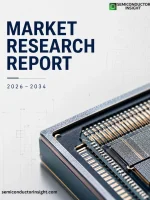
HTCC Ceramic Substrate Market Insights
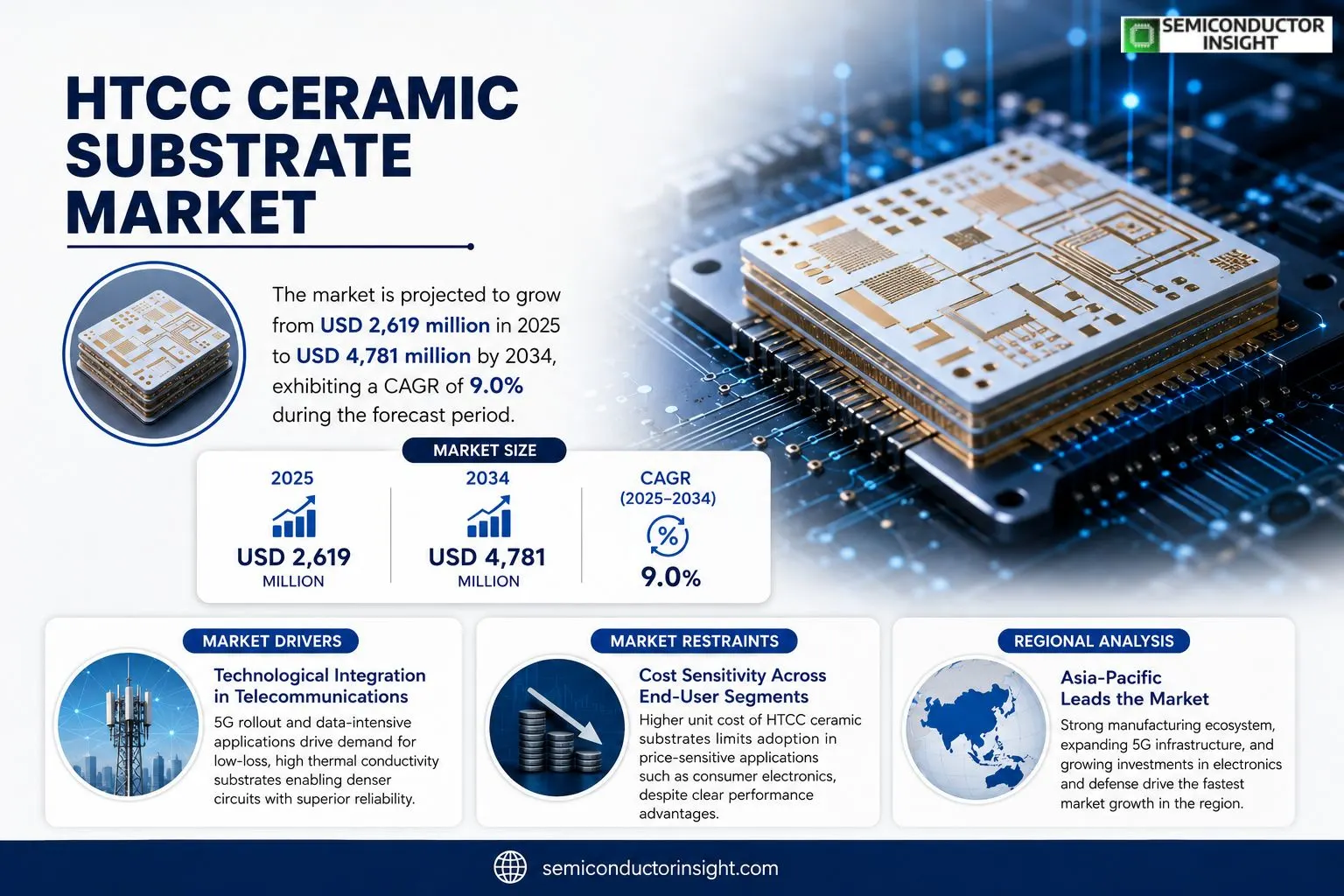
HTCC Ceramic Substrate market size was valued at USD 2,619 million in 2025. The market is projected to grow from USD 2,619 million in 2025 to USD 4,781 million by 2034, exhibiting a CAGR of 9.0% during the forecast period.
HTCC substrateHigh Temperature Co‑fired Ceramicsrefers to a multilayer ceramic body co‑fired with metal patterns such as tungsten or molybdenum at temperatures between 1,500 °C and 1,600 °C. The resulting component delivers high strength, superior heat dissipation and long‑term reliability, making it suitable for military electronics, MEMS, microprocessors and RF modules.The market expands because end‑users require higher frequency operation, tighter integration and robust thermal management across telecom infrastructure, data‑center optics and power‑electronics platforms. At the same time, defense programmes and strategic electronics policies encourage dual‑sourcing and regionalization, which benefits established suppliers such as Kyocera and Maruwa that command proven yield control and qualification histories.
MARKET DRIVERS
Technological Integration in Telecommunications
The rollout of 5G and the surge in data‑intensive applications have forced equipment manufacturers to adopt substrates that combine low loss with high thermal conductivity. HTC ceramic substrates meet these requirements, enabling denser circuitry without compromising signal integrity, a decisive factor for carrier‑grade hardware.
Growth of Advanced Sensor Networks
Automotive and industrial IoT deployments increasingly rely on modules that operate under extreme temperature cycles. The inherent stability of HTCC ceramic layers reduces failure rates, prompting system designers to specify them over traditional FR‑4 alternatives.
➤ Manufacturers that secure early access to high‑quality HTCC supplies can shorten time‑to‑market for next‑generation RF front‑ends.
Moreover, government initiatives supporting domestic production of critical components have spurred investment in HTCC fabrication lines, creating a more resilient supply chain for end users.
MARKET CHALLENGES
Cost Sensitivity Across End‑User Segments
While performance advantages are clear, the higher unit cost of HTCC ceramic substrates remains a barrier for cost‑constrained markets such as consumer electronics, where price pressure limits adoption despite technical merit.
Other Challenges
Manufacturing Yield Consistency
Achieving uniform thickness across large wafers is technically demanding; variations can lead to rework cycles that erode profit margins.
Design Tool Compatibility
Existing EDA workflows are optimized for silicon‑on‑insulator platforms. Engineers often need bespoke simulation models to predict HTCC behavior accurately, adding to development overhead.
MARKET RESTRAINTS
Limited Supplier Base
The HTCC ceramic substrate ecosystem is concentrated among a handful of specialized foundries. This scarcity restricts volume scalability and can expose OEMs to supply interruptions, especially when demand spikes in adjacent sectors such as defense.
MARKET OPPORTUNITIES
Emerging Applications in Quantum Computing
Quantum processors require substrates with ultra‑low dielectric loss and superior thermal management. Early pilots indicate that HTCC ceramic substrates can satisfy these stringent criteria, opening a niche yet high‑value market segment for vendors willing to tailor their offerings to quantum‑hardware manufacturers.
HTCC Ceramic Substrate Market Trends
Shift Toward High‑Frequency, High‑Power Applications
The proliferation of 5G roll‑outs, the emergence of 6G research, and the growing reliance on satellite broadband have intensified the need for substrates that can sustain GHz‑range signals while dissipating heat efficiently. HTCC Ceramic Substrate technology, with firing temperatures between 1,500 °C and 1,600 °C, delivers the thermal stability and low loss required for RF front‑ends, power amplifiers, and laser‑based communication modules. This technical match explains why manufacturers are prioritizing multilayer routing and tighter dimensional tolerances, enabling designers to compress system footprints without sacrificing reliability. As a result, HTCC Ceramic Substrate Market is seeing a pronounced shift from generic consumer electronics toward infrastructure‑grade communications, data‑center optics, and industrial laser platforms.
Other Trends
Regional Concentration and Supply‑Chain Realignment
North America recorded a valuation of $654 million in 2024 and is projected to exceed $1.1 billion by 2031, driven largely by defense contracts and aerospace programs that demand hermetic, high‑temperature components. Asia‑Pacific, anchored by Japan’s mature production ecosystem and China’s expanding capacity, edges ahead with a 2024 base of $1.5 billion, forecast to climb to $2.7 billion. Europe, while smaller, maintains a niche focus on aerospace and high‑precision medical lasers, supporting a steady growth trajectory. The convergence of geopolitical pressures and the push for dual‑sourcing has prompted many system integrators to allocate a larger share of their bill‑of‑materials to regional suppliers, reinforcing the incumbent advantage of Japanese firms and accelerating qualification activities in Chinese plants.
Competitive Landscape Emphasizes Process Mastery
Four leading manufacturersKyocera, Maruwa, NGK/NTK, and Hebei Sinopackcommand over 80 % of total revenue, underscoring the sector’s concentration around firms that can guarantee yield consistency and long‑term reliability. Japanese players leverage vertically integrated material supply chains and decades of ceramic‑package know‑how to set performance baselines that few newcomers can match. Chinese entrants focus on scaling volume and attaining critical aerospace qualifications, narrowing the gap in specific high‑density power modules. This dynamic creates a market where pricing power remains with providers that can demonstrate qualification histories for defense and telecom infrastructure, while still offering incremental design flexibility for emerging photonic applications.
COMPETITIVE LANDSCAPE
Key Industry Players
HTCC Ceramic Substrate Market: Concentrated Leadership and Regional Diversification
Kyocera continues to dominate the HTCC substrate arena, leveraging a vertically integrated supply chain that spans raw‑material synthesis, multilayer processing, and end‑package qualification. Its portfolio includes both high‑frequency RF modules and power‑dense server‑grade substrates, reinforcing its role as a platform supplier for aerospace, defense, and telecom equipment manufacturers. Maruwa, another Japanese heavyweight, differentiates itself through a dedicated high‑reliability line aimed at 5G/6G front‑ends and industrial laser systems; the firm’s tight yield controls and long‑standing qualification record secure premium pricing and long‑term contracts. Together, these firms account for more than three‑quarters of revenue in 2024, a concentration that reflects the capital‑intensive nature of HTCC production and the importance of process know‑how.Beyond the Japanese duopoly, a cadre of regional specialists is expanding the competitive set. NGK / NTK (operating under the Niterra brand) supplies a broad mix of HTCC packages for automotive and consumer electronics, while China’s Hebei Sinopack Electronic Tech & CETC 13 and Chaozhou Three‑Circle Group have accelerated capacity upgrades to meet domestic defense and telecom demand. European niche player Egide focuses on ultra‑hermetic housings for aerospace optics, and Korean contender NEO Tech targets high‑power laser applications. Smaller firms such as AdTech Ceramics, AMETEK Aegis, and Electronic Products, Inc. (EPI) occupy niche corners, often providing custom designs for sensor and photonics modules. The emerging list of qualified suppliers increases buyer choice, yet qualification cycles remain lengthy, preserving the pricing power of the established leaders.
List of Key HTCC Ceramic Substrate Companies Profiled
- Kyocera
- Maruwa
- NGK / NTK (Niterra)
- Egide
- NEO Tech
- AdTech Ceramics
- AMETEK Aegis
- Electronic Products, Inc. (EPI)
- Hebei Sinopack Electronic Tech & CETC 13
- Chaozhou Three‑Circle Group
- SoarTech
- CETC 43 (Shengda Electronics)
- Jiangsu Yixing Electronics
- Fujian Minhang Electronics
- RF Materials (METALLIFE)
Segment Analysis:
| Segment Category | Sub-Segments | Key Insights |
| By Type |
|
HTCC Ceramic Substrates are increasingly preferred because:
|
| By Application |
|
Communication Package drives momentum through:
|
| By End User |
|
Defense & Aerospace remain a leading end‑user because:
|
| By Frequency Range |
|
High Frequency segment is gaining traction through:
|
| By Reliability Requirement |
|
Mission‑Critical Reliability drives strategic focus because:
|
Regional Analysis: HTCC Ceramic Substrate Market
Asia‑Pacific
Companies across China and Vietnam are extending clean‑room footprints to accommodate higher wafer throughput, a response to diversified client portfolios. The shift toward larger substrate diameters reduces per‑unit handling, allowing firms to meet rising order volumes without proportionally increasing labor input.
Recent disruptions have motivated firms to diversify raw‑material sources, integrating local ceramic powder producers into their supply loops. This approach shortens lead times and cushions the sector against geopolitical shocks that could otherwise stall production.
Beyond telecommunications, automotive radar and industrial IoT devices are driving design tweaks that prioritize low dielectric loss. Engineers are experimenting with novel stack‑up architectures that enable thinner profiles while preserving thermal conductivity.
Regional standards bodies are harmonizing testing protocols, which reduces certification friction for multinational customers. Alignment of environmental directives also encourages manufacturers to adopt greener production chemistries, a factor gaining traction among tier‑1 suppliers.
North America
The United States continues to leverage its strong defense and aerospace sectors, where reliability of HTCC substrates is paramount. Partnerships between major chipmakers and research universities foster incremental improvements in substrate consistency, helping clients address stringent performance specifications. Meanwhile, Canada’s emphasis on clean‑energy technologies creates niche demand for substrates that can endure harsh thermal cycles in power‑electronics modules. The overall atmosphere is one of cautious optimism, as firms balance investment in new equipment with the need to preserve margins in a competitive marketplace.
Europe
European manufacturers benefit from a long‑standing tradition of precision engineering, making the region a preferred source for high‑frequency applications in aerospace and defense. Initiatives funded by the European Union promote cross‑border collaboration, accelerating the adoption of advanced dielectric materials. German and French players are also exploring circular‑economy models, recycling ceramic waste to reduce raw‑material costs. These strategic moves help sustain market relevance despite intense pricing pressure from Asian competitors.
South America
In Brazil and Argentina, the growth of renewable‑energy projects has sparked modest interest in HTCC substrates for power‑converter modules. Local firms are beginning to establish joint ventures with Asian manufacturers, gaining access to proven process know‑how while tailoring products to regional climatic conditions. Although the market remains nascent, early adopters are setting the groundwork for broader acceptance as infrastructure projects expand.
Middle East & Africa
The Middle East’s expanding data‑center footprint, driven by cloud‑service providers, is creating a subtle but steady demand for high‑reliability substrates. Strategic partnerships with European suppliers enable faster technology transfer and help local assemblers meet international quality benchmarks. In Africa, pilot programs in telecom‑backhaul networks are testing HTCC components for durability under high‑temperature environments, hinting at a future where the continent could become a testing ground for robust substrate designs.
Report Scope
This market research report provides a comprehensive analysis of the HTCC Ceramic Substrate Market , covering the forecast period 2026–2034. It offers detailed insights into market dynamics, technological advancements, competitive landscape, and key trends shaping the industry.
Key focus areas of the report include:
- Market Overview: The report begins with an overview outlining its current market scenario, key growth indicators, and industry transformation drivers. It discusses macroeconomic factors, demand–supply balance, regulatory landscape, and the strategic role of semiconductors in powering advancements across industries such as automotive, telecommunications, consumer electronics, and industrial automation.
- Market Size & Forecast: Historical data and future projections for revenue, unit shipments, and market value across major regions and segments.
- Segmentation Analysis: Detailed breakdown by product type, technology, application, and end-user industry to identify high-growth segments and investment opportunities.
- Regional Insights: Insights into market performance across North America, Europe, Asia-Pacific, Latin America, and the Middle East & Africa, including country-level analysis where relevant.
- Competitive Landscape: Profiles of leading market participants, including their product offerings, R&D focus, manufacturing capacity, pricing strategies, and recent developments such as mergers, acquisitions, and partnerships.
- Technology Trends & Innovation: Assessment of emerging technologies, integration of AI/IoT, semiconductor design trends, fabrication techniques, and evolving industry standards.
- Market Drivers & Restraints: Evaluation of factors driving market growth along with challenges, supply chain constraints, regulatory issues, and market-entry barriers.
- Stakeholder Insights: Insights for component suppliers, OEMs, system integrators, investors, and policymakers regarding the evolving ecosystem and strategic opportunities.
Primary and secondary research methods are employed, including interviews with industry experts, data from verified sources, and real-time market intelligence to ensure the accuracy and reliability of the insights presented.
FREQUENTLY ASKED QUESTIONS:
What is the current market size of HTCC Ceramic Substrate Market?
-> HTCC Ceramic Substrate Market was valued at USD 2,619 million in 2025 and is expected to reach USD 4,781 million by 2034 with a CAGR of 9.0% during the forecast period.
Which key companies operate in HTCC Ceramic Substrate Market?
-> Key players include Kyocera, Maruwa, NGK Spark Plug, Hebei Sinopack Electronic Tech & CETC 13, Chaozhou Three-Circle, NEO Tech, CETC 43 (Shengda Electronics), among others.
What are the key growth drivers?
-> Key growth drivers include high reliability requirements, high‑frequency/high‑power applications, thermal management demands, and strategic supply‑chain localization.
Which region dominates the market?
-> Asia-Pacific is the fastest‑growing region, while North America remains a dominant market with significant revenue.
What are the emerging trends?
-> Emerging trends include miniaturized hermetic sensor modules, 5G/6G high‑frequency packaging, and advanced multilayer routing technologies.
Get Sample Report PDF for Exclusive Insights
Report Sample Includes
- Table of Contents
- List of Tables & Figures
- Charts, Research Methodology, and more...
 Download Sample Report PDF