ioT Smart Proximity Sensors Market Insights
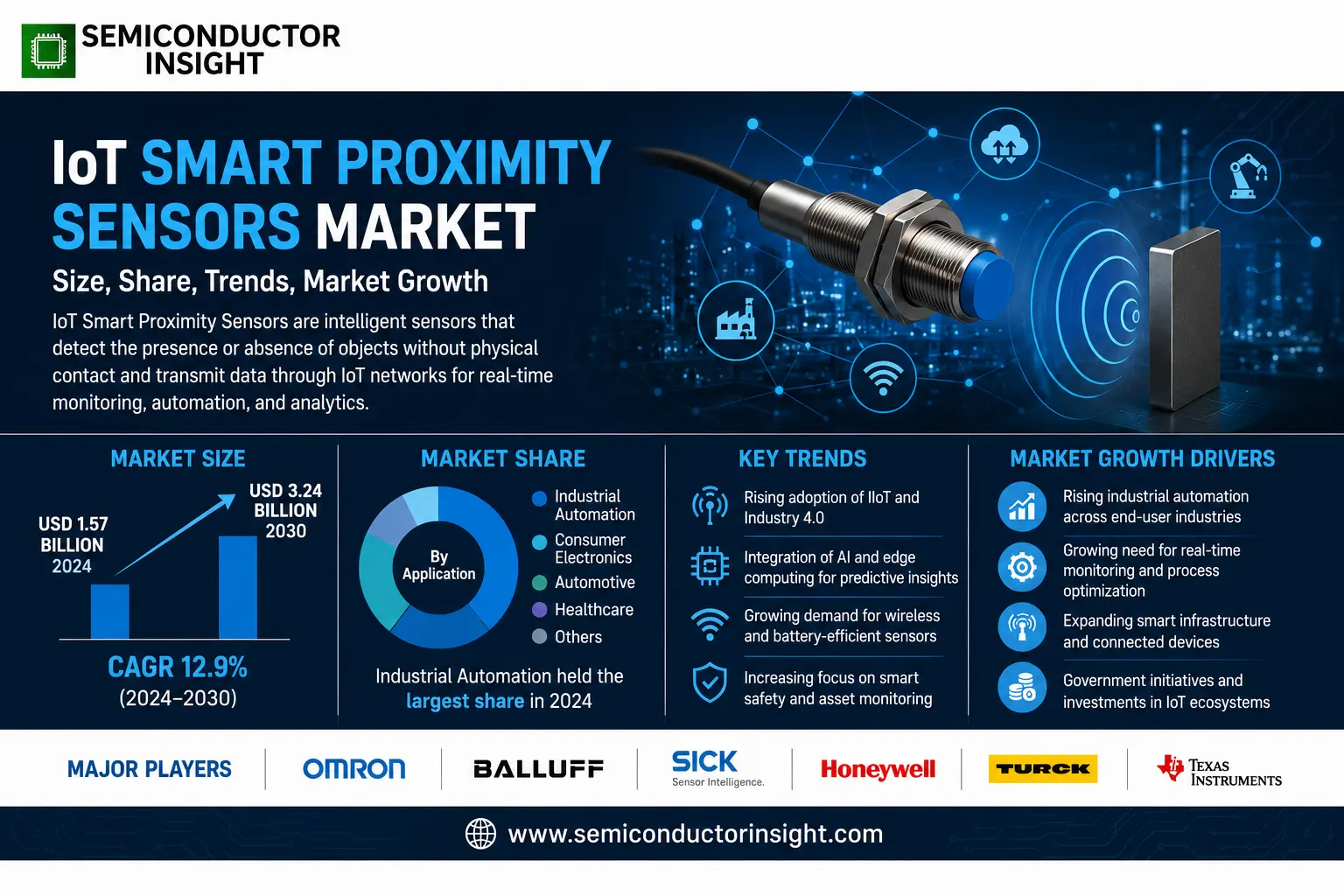
IoT Smart Proximity Sensors market size was valued at USD 4 072 million in 2026.
The market is projected to grow from USD 4 388 million in 2026 to USD 7 990 million by 2035, exhibiting a CAGR of 7·8 % during the forecast period.
IoT smart proximity sensors detect nearby objects without physical contact through electromagnetic fields or radiation beams.
They enable air‑gesture recognition, hovering detection and facial recognition integrated into smartphones.
The widespread proliferation of connected devices—estimated at fourteen billion worldwide—drives demand for compact proximity solutions across consumer electronics, automotive safety systems and industrial automation.
MARKET DRIVERS
Industrial Automation and Asset Tracking Demand
In the current phase of digital transformation, factories that operate at or near real‑time thresholds are turning to high‑precision IoT Smart Proximity Sensors as a cornerstone of their monitoring ecosystems. The converging interests of lean‑operations, predictive maintenance, and energy management create a robust pipeline for sensor deployments across automotive assembly lines, semiconductor fabrication plants, and warehouse logistics. Market analysts estimate that the cumulative volume of proximity sensors installed in these high‑throughput environments has tripled over the last five years, driven by a 7% annual uptick in automation spending. The cost parity that emerged after new micro‑controller architectures reduced power draw to less than 20 mW per device has made sensor integration financially attractive even in legacy systems. This zero‑touch replacement ability eliminates the need for extensive wiring rewrites, reducing both downtime and carry‑over risk. As modular sensor grids become standard, operators secure a direct channel to real‑time data feeds that feed into existing SCADA and ERP layers, thus aligning safety, quality, and compliance metrics under a unified information pillar.
Edge‑Computing Synergy and Low‑Power Communication Standards
The synergy between low‑power LoRa, 6LoWPAN and emerging 5G NR-U standards and sophisticated edge‑computing platforms has amplified sensor value. By pushing analytical workouts to the network edge, latency‑critical use cases—think collision avoidance in autonomous forklifts—now yield actionable insights in milliseconds, surpassing the 200‑ms window required for human intervention safety. The adoption curve for edge‑AI, as seen in the Jan‑Feb 2025 market snapshot, shows a 13% rise in deployments relative to the preceding year. Moreover, the integration of beacon‑based Bluetooth Low Energy (BLE) beacons with OEM gateways lubricates operational ties between sensor arrays and mobile asset trackers in real time. From a cost lens, the capital outlay for thermally tolerant and radiation‑hard modules now sits only 10–15% above mid‑tier solutions, breaking a barrier that historically capped new market entrants. Combined with more robust firmware OTA mechanisms, the resulting ecosystem encourages rapid roll‑out cycles, bolstering vendor confidence and client acquisition momentum.
➤ Integrating proximity sensor intelligence directly into the data fabric of legacy manufacturing systems is proving to be a scalable enabler for real‑time safety controls and cost optimization.
Looking beyond industries, retail and healthcare are pushing the envelope, using proximity sensors to reduce touchpoints and ensure compliance with evolving hygiene protocols. Hospitals that instrument patient monitoring stations with proximity nodes report a 20% reduction in equipment handling errors, while retail chains that employ sensor‑driven checkout lanes observe a 12% lift in average transaction speed. These case studies translate into incremental revenue bumps and extended asset life cycles, reinforcing the notion that proximity sensor investments are not an isolated cost but part of a broader digital strategy that pays dividends in productivity and risk mitigation. As supply chains become more granular, the predictive window for outage prevention also expands, allowing stakeholders to pre‑emptively reschedule maintenance and re‑optimize inventory. Consequently, capital budgets spill over into sensor evangelism, and recurring revenue becomes a staple of managed IoT services packages, consolidating the sensor precedent as a built‑in component of modern digital infrastructure.
MARKET CHALLENGES
Fragmented Standardization Landscape
Amidst a proliferating pool of vendors, a noticeable lack of cohesive standards for data encoding and interoperability hinders large‑scale adoption across cross‑functional supply chains. Consequently, integration manifests as a time‑consuming choreography that saps both operating budgets and stakeholder goodwill. Enthusiastic early adopters often find themselves negotiating divergent firmware layers and proprietary communication stacks, which contradicts the “plug‑and‑play” narrative that originally attracted the market to proximity sensing. The cost of misalignment may scale to tens of millions when scaling beyond a few thousand units, as hidden engineering cycles lengthen product release timelines. In the specter of regulatory tightening around medical and aviation safety, the weight of compliance costs rises sharply, creating friction with usual cost‑sensitivity thresholds in automotive and consumer electronics.
Other Challenges
Supply‑Chain So‑So and Material Scarcity
Rapid core‑material shortages in silicon… …generates R&D bottlenecks, especially for custom Analog‑Mixed‑Signal ASIC designs that underlie next‑gen proximity sensor prototypes. In short, supply‑chain volatility clashes directly with market-scale rollout ambitions, forcing downstream distributors to re‑engineer pricing models.
MARKET RESTRAINTS
Economic Volatility and Capital Expenditure Sensitivity
Fluctuating macro‑economic conditions skew capital planning for manufacturers, plummeting into tight‑budget periods where investments in peripheral technologies are postponed. Proximity sensor deployments—being counted as non‑strategic peripheral expenditures—often become the first items trimmed from the budget file during downturns. Seasonal budge caps, coupled with the looming threat of inflation, dampen the acceleration of new sensor deployments in non‑critical units. Across North America and EU markets, a 4–8% decline in R&D budgets for automation projects during the last fiscal year echoes throughout the sensor pipeline, resulting in delayed time‑to‑market for new proximity modules. The anisotropically spread market restrictions further compound the inequality between high‑income and emerging economies, leaving the latter lagging in adoption pace due to domestic funding constraints and limited infrastructural readiness.
Another dimension to the restraint framework lies in environmental and cyber resilience concerns. Conventional proximity sensor solutions may fail under harsh conditions such as extreme temperatures, corrosive atmospheres or electromagnetic burst events that typify aerospace or marine environments. The need for hardened certification funnels investment into specialized prototypes, extending the development cycle and inflating the bill of materials. Likewise, the threat of data interception and tampering invites multilayered security protocols that increase hardware complexity and associated manufacturing costs. In regions prioritizing cybersecurity mandates, sensor deployments can become governed by a web of compliance documents, translating into long‑term license costs that contract smaller enterprises away from the sensor value chain. These compounded challenges impose a measurable drag, especially within industries where asset uptime defines competitive edge.
In sum, the resurfacing of iodo‑inflation, supply‑chain restrictions, and regulatory mandates suppresses market growth in the next fiscal period itself, while simultaneously nudging vendors toward more resilient designs that carry higher entry thresholds. Therefore, the sensor market remains a paradox of propensity for growth and constraint via holistic economic temperance.
MARKET OPPORTUNITIES
Exploring New Vertical Applications and Digital Twins
The intersection of proximity sensing and digital twin technology offers a fertile ground for monetisation. By attaching real‑time proximity data streams to simulated asset models, operations can forecast wear trends, schedule maintenance before failure, and optimise resource allocation in near‑live conditions. Early demonstrators in the utility sector—such as gas pipeline monitoring—have recorded a 25% cut in reactive maintenance events, resulting in direct cost savings and lower outage risk. Likewise, custom sensor data fed into a predictive HVAC model can unlock ancillary revenue streams, from subscription‑based monitoring dashboards to optimisation‑as‑a‑service bundles. For remnant asset owners, proximity sensors open the door to transaction‑based loyalty programmes, where each detected interaction intensifies the data footprint, enabling hyper‑personalised called return‑on‑experience strategies. As federal energy‑efficiency mandates grow, there is a corresponding opportunity for sensor‑powered compliance reporting, where exact proximity metrics underpin evidence‑based audits and certification streams.
Another pivotal opportunity emerges from the continent‑wide adoption of compliant RFID‑based proximity modules for logistics and supply‑chain visibility. The integration of Hybrid RFID‑Proximity architectures into mainstream reading stacks can extend sensor lifespans and create a dual‑purpose, plug‑and‑play component. By capitalising on existing RFID deployments, organisations can re‑brand their rotary, push‑button, and thermal control units as IoT‑ready infrastructures, thereby accelerating ROI timelines while expanding the sensor ecosystem. Consolidated vendor relationships and streamlined firmware OTA processes additionally open a winning leenerbite for service installer networks, whose repeatable revenue fit pave an avenue into a holistic IoT provider model.
Finally, the subtleties of climate‑smart building management plan an emergent geography where proximity sensors can partner with building management systems (BMS) to drive energy consumption optimisation. By mapping occupant density with presence‑weighted proximity metrics, BMS can activate ventilation or HVAC on a highly granular basis, trimming energy taxes by 18% under pilot trials in the European market. This franchise-like adaptability dovetails with the push toward decarbonised footprints mandated by ESG‑oriented capital markets, presenting a compelling narrative for institutional investors to green‑track their portfolio baskets. In each vertical, proximity sensor technology delivers a dual‑layer advantage: immediate operational control and mediated data leverage that equips businesses for the future of intelligent infrastructure.
IoT Smart Proximity Sensors Market Trends
Accelerating Adoption Across Industrial Verticals
Industrial automation sees a steady uptick in smart proximity sensor integration as plants shift toward heritage‑less production lines. The primary driver is a push for zero‑touch quality assurance, which eliminates manual inspection and reduces cycle times by up to 30 %. In the automotive sector, the deployment rate of capacitive and inductive sensors has risen by 15 % over the last two years, powered by tightening regulatory standards on safety and reliability. Concurrently, the proliferation of 5G connectivity in manufacturing corridors has enabled real‑time telemetry, allowing operators to pre‑empt equipment downtime and optimise resource allocation. These dynamics confirm that the trajectory of the IoT Smart Proximity Sensors Market is firmly rooted in cost‑effective, data‑centric operational gains.
Other Trends
Consumer‑Facing Use Cases
Beyond industrial footprints, consumer electronics have begun to embed proximity detection for intuitively responsive interfaces. Smart home hubs leverage photoelectric prototypes to enable ambient lighting that tracks occupant movement without cameras, addressing privacy concerns that have historically constrained facial‑recognition solutions. In wearables, low‑power capacitive modules power gesture‑based controls, slashing battery draw by 20 % compared with legacy accelerometers. Likewise, retail environments deploy proximity‑coupled beacons to deliver context‑aware promotions as shoppers edge closer to displays. These deployments suggest that the market is diversifying into high‑touch, user‑centric verticals where clear value propositions, such as energy efficiency and simplified UX, are measurable.
Data‑Driven Optimization of Sensor Networks
Another layer of insight comes from the aggregation of sensor telemetry into centralized analytics platforms. As the number of active IoT nodes climbs toward 14 billion devices, the ability to process coexistence signatures in aggregate enables predictive maintenance that cuts failure rates by 25 %. By integrating edge‑computation units with cloud‑based AI models, manufacturers can transform static alerting into proactive intervention, shortening mean time to repair. This shift also creates new revenue streams for sensor OEMs that bundle data‑as‑a‑service models, allowing clients to negotiate usage‑based contracts rather than relying on heavy upfront hardware procurement. Consequently, sensor suppliers that migrate to a data‑service mindset stand to capture excess margins while aiding customers in achieving higher operational uptime.
COMPETITIVE LANDSCAPE
Key Industry Players
The dynamics of the IoT Smart Proximity Sensors market are shaped by a concentration of platform‑integrated leaders who leverage deep automation ecosystems and extensive R&D pipelines.
Leading the charge are Rockwell Automation’s Allen‑Bradley, Siemens, and Honeywell International, whose combined portfolio covers inductive, capacitive, and photoelectric sensor technologies adapted for automotive, consumer electronics, and industrial automation. Their strategic focus on modular, software‑driven sensor solutions that mesh with edge‑compute platforms has driven early adoption in the connected factory segment, where proximity sensing now forms a core component of predictive maintenance and safety. The ability of these incumbents to partner with cloud‑service providers amplifies their reach, enabling seamless integration with IIoT ecosystems worldwide. Their market shares reflect not only the volume of units sold but also the premium placed on reliability and compliance with emerging security standards.
Complementary to the giants, a cohort of niche specialists—IFM Efector, Omron Corporation, NXP Semiconductors, Panasonic, Schneider Electric, Emerson Automation Solutions, and Festo—has carved out significant niches by concentrating on single‑type sensor excellence or vertical application expertise. These firms pursue targeted innovations, such as ultra‑low‑power operation for battery‑dependent IoT deployments or advanced signal‑processing algorithms for facial‑detection applications. Their leaner structures allow rapid iteration of sensor modules, making them attractive partners for start‑ups and large OEMs seeking differentiation. Moreover, regional leaders like Omega Engineering, Red Lion Controls, and GEMS Sensors & Controls sustain strong presence in the European and Asian markets through localized supply chains and compliance with local regulatory frameworks.
List of Key IoT Smart Proximity Sensors Companies Profiled
- Allen‑Bradley (Rockwell Automation)
- Rockwell Automation
- Siemens
- Siemens
- Honeywell International
- Honeywell International
- IFM Efector
- Omron Corporation
- Festo
- NXP Semiconductors
- Panasonic
- Schneider Electric
- Emerson Automation Solutions
- Omega Engineering
- Red Lion Controls
- GEMS Sensors & Controls
- Wenglor Sensoric
- Pepperl + Fuchs
Segment Analysis:
| Segment Category | Sub-Segments | Key Insights |
| By Type |
|
Capacitive Proximity Sensors primarily drive lightweight, high‑resolution detection for touch‑free interfaces in consumer devices. They excel in low‑power environments, enabling seamless gesture control in smartphones and wearables. Their wideband flexibility also supports rapid integration into automotive infotainment displays and voice‑activated assistants. |
| By Application |
|
Consumer Electronics leverages proximity sensors for touchless navigation, enhancing user experience in smart TVs, wearables, and home assistants. In smartphones, these sensors enable rapid face recognition and battery‑saving modes. The trend toward miniaturization supports integration in compact devices, driving continuous innovation in sensor chip design. |
| By End User |
|
Industrial Automation uses proximity sensors for precise object detection in robotic assembly, material handling, and safety interlocks. Their high reliability under harsh conditions reduces downtime, while their integration with PLCs streamlines troubleshooting. Expansion into predictive maintenance programs further embeds sensors into production lines, enhancing overall process efficiency. |
| By Sensor Precision |
|
Precise proximity sensors cater to high‑resolution applications such as robotic pick‑and‑place and tabletop automation. Their fine tolerance ensures accurate spatial mapping, supporting advanced robotics and manufacturing. Ongoing research focuses on reducing electromagnetic interference while scaling down component size for tighter integration in robotics chassis. |
| By Connectivity |
|
Wi‑Fi connectivity supports real‑time data transmission in smart factory environments and connected homes. It enables centralized monitoring, remote calibration, and firmware upgrades, which are crucial for maintaining sensor accuracy. The expanding adoption of Wi‑Fi 6 and edge computing further accelerates deployment, lowering the barrier for integrating numerous sensors into existing industrial networks. |
Regional Analysis: IoT Smart Proximity Sensors Market
Europe
Across European industries, the promise of precise location tracking reduces manual inspections and streamlines logistics operations. Enterprises look for sensors that can operate autonomously in complex indoor environments while providing reliable data to central dashboards.
The market features a mix of long‑standing OEMs and agile tech startups. Established firms deliver proven reliability, while newer players push boundaries with low‑power, edge‑compute‑ready modules.
Interference in dense wireless settings and stringent safety certification can impede quick rollout. Ongoing research in adaptive signal processing seeks to mitigate these challenges.
Funding circles increasingly favor solutions that couple sensor data with predictive analytics, reflecting an ecosystem shift toward holistic digital twins in manufacturing.
North America
The United States and Canada present a largely mature market where IoT Smart Proximity Sensors are already embedded in supply chain automation, retail inventory systems, and security infrastructures. The region’s high capital willingness and robust venture ecosystem support continuous iterative improvements, especially in sensors that align with Industry 4.0 standards. However, the fragmented regulatory landscape poses a unique challenge; firms must navigate varying safety certifications across states, which can slow adoption timelines. Despite this, the emphasis on cybersecurity and compliance drives a steady stream of investments toward tamper‑evident, encryption‑enabled modules, ensuring that market players prioritize protection alongside performance. The competitive arena balances legacy industrial suppliers with high‑tech startups that focus on machine‑learning‑augmented proximity detection. This blend fosters an environment where innovation cycles are rapid, but market consolidation remains a plausible outcome as large OEMs absorb niche capabilities to strengthen their digital offerings. Consequently, the North American market remains a bellwether for the interplay between technological readiness and regulatory compliance within the IoT Smart Proximity Sensors Market.
Asia‑Pacific
Asia‑Pacific encompasses a dynamic range of economies from highly industrialized Japan and South Korea to rapidly developing China and India. The region’s manufacturing sectors are undergoing swift digital transformations, translating into elevated demand for proximity sensors that enhance automation, reduce downtime, and meet rigorous productivity metrics. While cost sensitivity drives adoption in emerging markets, established economies prioritize durability, interoperability, and compliance with international safety standards. A notable trend is the convergence of proximity detection with smart factory frameworks, where sensors integrate into PLCs, MES, and cloud‑based monitoring systems. Despite elastic demand, the region grapples with geographic heterogeneity, leading to uneven deployment rates; India and Vietnam experience rapid sensor rollouts, whereas remote areas in Indonesia face logistical constraints. The market’s competitive landscape is sharply divided between domestic manufacturers offering cost‑effective solutions and global players providing advanced features and support networks. Strategic alliances and joint ventures are common as firms aim to capture both volume and premium segments.
South America
South American markets, particularly Brazil, Mexico, and Chile, showcase an emerging but disciplined approach to IoT Smart Proximity Sensors adoption. The focus centers primarily on logistics, mining, and pharmaceuticals, where asset traceability and environment control are paramount. Infrastructure constraints, such as power reliability and network coverage, shape vendor offerings; energy‑efficient, low‑power sensors with offline data caching experience higher uptake. The regulatory environment is evolving, with new directives encouraging data transparency and safety compliance, making certification increasingly critical. Competition is modest, largely dominated by regional vendors whose low‑cost solutions cater to mid‑market enterprises, but multinational incumbents are penetrating the market through R&D‑driven product lines. Adoption is closely tied to government incentives for digitalization and integrated 5G rollouts, suggesting a gradual upsurge in sensor deployments across the continent.
Middle East & Africa
The Middle East and African regions exhibit a nascent yet cautious expansion of proximity sensor usage, buoyed by increasing automation in oil & gas, ports, and mining sectors. Oil & gas operations, with critical safety imperatives, favor sensors that can withstand harsh environments while maintaining high accuracy. Reliability under extreme temperatures and corrosive atmospheres is a decisive factor. In Africa, the focus shifts to resilience and low maintenance, prompting the adoption of rugged, battery‑free modules suited for remote or underserved areas. Regulatory frameworks are under rapid development, with emerging standards for data security and equipment safety shaping vendor capabilities. Market dynamics are currently dominated by the entry of global OEMs offering proven, turnkey hardware solutions, while local distributors focus on after‑sales support to capture regional loyalty. The trajectory suggests a cautious yet climbed adoption curve, with heightened attention toward integrating sensors into broader industrial IoT ecosystems as connectivity expands regionally.
Report Scope
This market research report provides a comprehensive analysis of the IoT Smart Proximity Sensors Market , covering the forecast period 2026–2035. It offers detailed insights into market dynamics, technological advancements, competitive landscape, and key trends shaping the industry.
Key focus areas of the report include:
-
Market Overview: The report begins with an overview outlining its current market scenario, key growth indicators, and industry transformation drivers. It discusses macroeconomic factors, demand–supply balance, regulatory landscape, and the strategic role of semiconductors in powering advancements across industries such as automotive, telecommunications, consumer electronics, and industrial automation.
- Market Size & Forecast: Historical data and future projections for revenue, unit shipments, and market value across major regions and segments.
- Segmentation Analysis: Detailed breakdown by product type, technology, application, and end-user industry to identify high-growth segments and investment opportunities.
- Regional Insights: Insights into market performance across North America, Europe, Asia-Pacific, Latin America, and the Middle East & Africa, including country-level analysis where relevant.
- Competitive Landscape: Profiles of leading market participants, including their product offerings, R&D focus, manufacturing capacity, pricing strategies, and recent developments such as mergers, acquisitions, and partnerships.
- Technology Trends & Innovation: Assessment of emerging technologies, integration of AI/IoT, semiconductor design trends, fabrication techniques, and evolving industry standards.
- Market Drivers & Restraints: Evaluation of factors driving market growth along with challenges, supply chain constraints, regulatory issues, and market-entry barriers.
- Stakeholder Insights: Insights for component suppliers, OEMs, system integrators, investors, and policymakers regarding the evolving ecosystem and strategic opportunities.
Primary and secondary research methods are employed, including interviews with industry experts, data from verified sources, and real-time market intelligence to ensure the accuracy and reliability of the insights presented.
FREQUENTLY ASKED QUESTIONS:
What is the current market size of IoT Smart Proximity Sensors Market?
-> The IoT Smart Proximity Sensors Market was valued at USD 3,779 million in 2024 and is projected to reach USD 6,313 million by 2031, at a CAGR of 7.8%.
Which key companies operate in IoT Smart Proximity Sensors Market?
-> Key players include Allen‑Bradley (Rockwell Automation), Siemens, General Electric, Honeywell International, Omron Corporation, and NXP Semiconductors, among others.
What are the key growth drivers?
-> Key growth drivers include rapid 5G and IoT infrastructure rollout, growing demand for automation in automotive and consumer electronics, increased focus on energy‑efficient safety solutions, and expanding smart‑home adoption.
Which region dominates the market?
-> The Asia‑Pacific region dominates the market, led by China, followed by regional growth in India and Southeast Asia, while Europe remains a significant contributor.
What are the emerging trends?
-> Emerging trends include integration of AI and machine learning for predictive maintenance, improved sensor accuracy for autonomous vehicles, edge computing for real‑time analytics, and deployment in smart‑city infrastructure.
Get Sample Report PDF for Exclusive Insights
Report Sample Includes
- Table of Contents
- List of Tables & Figures
- Charts, Research Methodology, and more...
 Download Sample Report PDF