High Temperature Co-fired Ceramic (HTCC) Market Insights
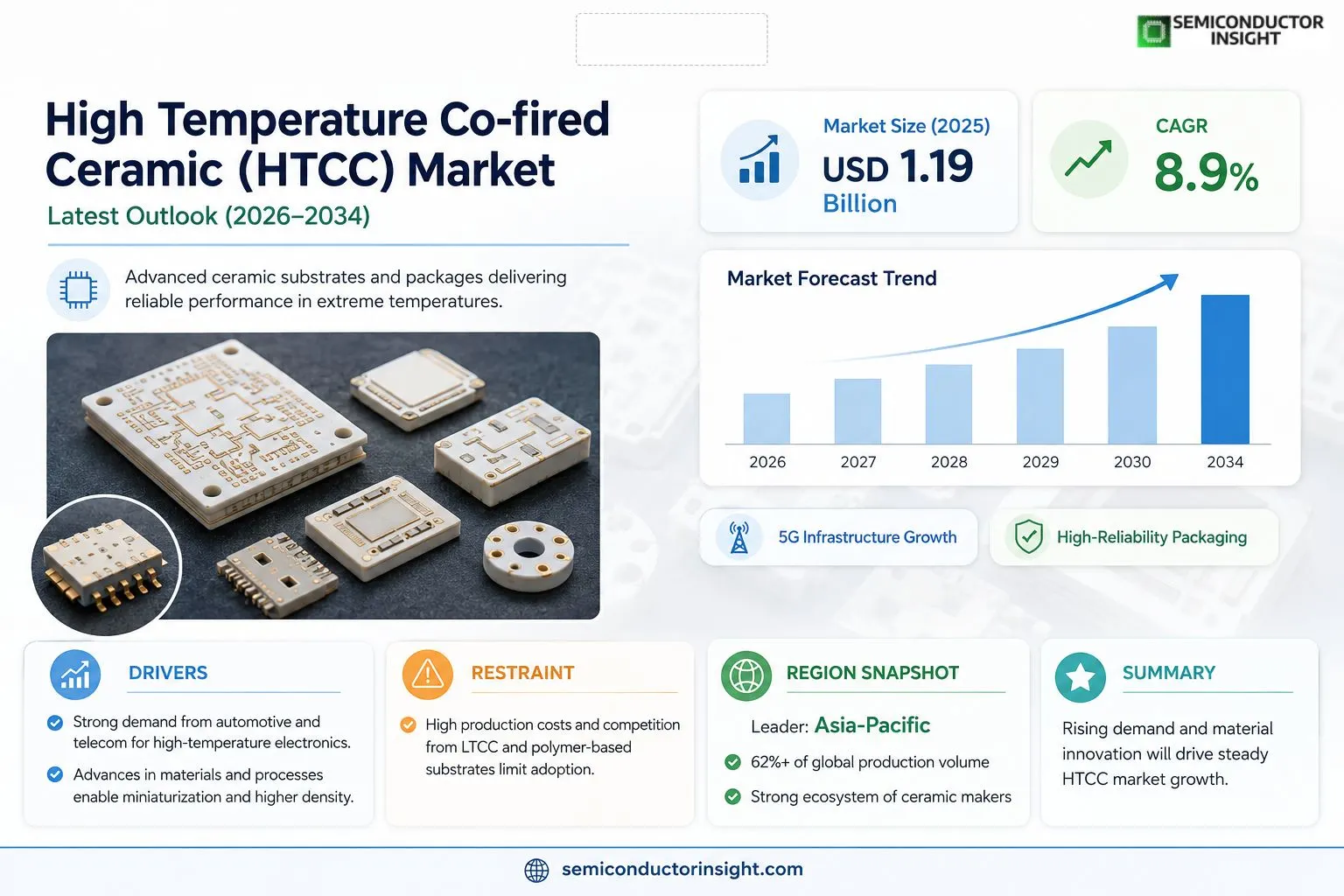
Global High Temperature Co-fired Ceramic (HTCC) market size was valued at USD 1.19 billion in 2025. The market is projected to grow from USD 1.28 billion in 2025 to USD 2.32 billion by 2034, exhibiting a CAGR of 8.9% during the forecast period.
HTCC substrates and packages are specialized ceramic components manufactured by co-firing tungsten or molybdenum metallization with alumina-based ceramic at temperatures exceeding 1500°C. These materials demonstrate exceptional thermal stability, hermetic sealing capability, and reliable electrical performance across extreme operating conditions, encompassing applications in aerospace & defense, automotive electronics, telecommunications infrastructure, and medical devices.
The market is experiencing rapid growth due to several factors, including increased investment in 5G base station deployment, rising demand for high-reliability automotive sensors and ECU packaging, and an increasing prevalence of miniaturized electronic systems requiring robust thermal management. Additionally, the growing demand for advanced packaging solutions in RF and millimeter-wave applications such as synthetic aperture radar (SAR), satellite communications, and phased array antennas are contributing to market expansion. Initiatives by key players in the market are also expected to fuel growth. For instance, in February 2024, Kyocera Corporation expanded its HTCC production capacity at its Kagoshima Kokubu Plant by approximately 40% to meet surging demand for semiconductor packages and ceramic substrates used in advanced driver-assistance systems (ADAS).
Market Segmentation Analysis
HTCC Market comprises multiple product categories distinguished by substrate material composition and end-use application requirements. Alumina-based HTCC substrates dominate current market share owing to mature manufacturing infrastructure and cost-effectiveness for general-purpose applications; however, aluminum nitride (AlN) HTCC variants are gaining substantial traction where thermal conductivity demands exceed 170 W/m·K. Furthermore, emerging developments in silicon carbide (SiC)-compatible HTCC packages address the escalating requirements of wide-bandgap semiconductor deployment in electric vehicle power modules.
Aerospace and defense applications
constituted approximately 28% of total HTCC market revenue in 2023, driven by Department of Defense qualification standards (MIL-PRF-38534) mandating hermetic packaging for mission-critical avionics. Meanwhile, automotive sector adoption has accelerated markedly since 2022 because electrification trends necessitate high-temperature-capable sensor housings capable of withstanding engine bay environments reaching 200°C continuous operation.
Regional Market Dynamics
Asia-Pacific maintains dominant regional positioning
accounting for an estimated 62% of global HTCC production volume in 2024, concentrated heavily across Japan’s established ceramic manufacturing corridor (Kyocera, NGK Insulators, Murata Manufacturing) plus expanding Chinese capacity from CETC 13th Research Institute and Shenzhen Sunlord Electronics. Japanese manufacturers collectively shipped approximately USD 487 million worth of HTCC components domestically and for export during fiscal year 2023/24 per Ministry of Economy Trade and Industry trade statistics.
North American demand growth outpaces global averages at an estimated CAGR through 2030,
MARKET DRIVERS
Rising Demand in Electronics and Automotive Sectors
High Temperature Co-fired Ceramic (HTCC) Market is driven by the growing demand for advanced electronic components in industries such as automotive, aerospace, and telecommunications. HTCC technology offers superior thermal and mechanical properties, making it ideal for high-reliability applications.
Technological Advancements Enhancing Product Capabilities
Continuous improvements in material formulations and manufacturing processes have expanded the applications of HTCC substrates and packages. These advancements allow for miniaturization and higher circuit density, which are critical for the next generation of electronic devices.
➤ Increasing investments in HTCC R&D are catalyzing the development of more efficient and durable ceramic components.
Such innovations further enable integration into complex systems, fostering adoption across various high-performance sectors worldwide.
MARKET CHALLENGES
High Production Costs and Material Complexity
High Temperature Co-fired Ceramic (HTCC) Market faces challenges due to the high costs associated with raw materials and specialized manufacturing processes. These factors can limit widespread adoption, especially among cost-sensitive end users.
Other Challenges
Supply Chain Constraints
The market is occasionally affected by disruptions in the supply of high-purity ceramic powders and metals required for HTCC fabrication, impacting production schedules and cost structures.
MARKET RESTRAINTS
Competition from Alternative Substrate Technologies
The growing preference for Low Temperature Co-fired Ceramic (LTCC) and polymer-based substrates presents a restraint to High Temperature Co-fired Ceramic (HTCC) Market. Alternatives often provide cost and processing advantages, limiting HTCC market expansion in certain segments.
MARKET OPPORTUNITIES
Expanding Applications in Emerging Technologies
High Temperature Co-fired Ceramic (HTCC) Market holds significant opportunities as demand grows from sectors such as electric vehicles, 5G infrastructure, and semiconductor manufacturing. The ability of HTCC to withstand extreme conditions positions it well for these advanced applications.Growing adoption of HTCC components in power electronics and sensors also offers scope for market growth, driven by increasing investments in smart technologies and energy efficiency initiatives globally.
High Temperature Co-fired Ceramic (HTCC) Market Trends
Growth Driven by Advanced Automotive and Telecommunications Applications
High Temperature Co-fired Ceramic (HTCC) Market is exhibiting dynamic growth primarily due to heightened demand in automotive and telecommunications sectors. The adoption of HTCC substrates and packages is accelerating, propelled by their reliable electrical performance and superior thermal stability under extreme conditions. Automotive sensor systems and electronic control units (ECUs) increasingly employ HTCC solutions to endure high-temperature environments, including continuous exposure up to 200°C in engine bays. Meanwhile, telecom infrastructure investments, especially in 5G base stations, are significant contributors to market expansion. The use of HTCC in advanced packaging for radio frequency (RF) and millimeter-wave components such as phased array antennas and satellite communications drives technical innovation and demand.
Other Trends
Material Innovation and Product Segmentation
Within HTCC Market, alumina-based substrates remain dominant due to their cost-effectiveness and established manufacturing processes. However, high thermal conductivity materials such as aluminum nitride (AlN) substrates are experiencing increased traction where thermal management is critical. Silicon carbide (SiC)-compatible HTCC solutions also represent a growing niche segment, facilitating integration with wide-bandgap semiconductors used in electric vehicle power modules. This material diversification reflects targeted responses to specialized application requirements and performance standards.
Geographical Production and Market Penetration
Asia-Pacific holds a commanding share of global HTCC production, driven by established Japanese manufacturers and growing Chinese production capacity. Major companies have expanded facilities recently in response to surging demand, notably for applications in advanced driver-assistance systems (ADAS) and semiconductor packaging. North America is witnessing above-average demand growth due to investments in aerospace, defense, and automotive electrification, highlighting regional diversification patterns in market maturity and innovation focus.
Expanding Applications and Industry Initiatives Enhance Future Outlook
The scaling of HTCC technology into aerospace and defense remains robust, with strict qualification standards necessitating hermetic packaging for critical electronics. Concurrently, miniaturization trends in electronics continue to elevate the need for high-reliability ceramic components with excellent thermal management. Industry initiatives, including production capacity expansion by leading firms, reinforce the market’s trajectory. Overall, High Temperature Co-fired Ceramic (HTCC) Market is poised for sustained growth through advancements in high-performance materials and their adoption across increasingly demanding industrial applications.
COMPETITIVE LANDSCAPEKey Industry Players
Leading manufacturers shaping HTCC Market dynamics
High Temperature Co-fired Ceramic (HTCC) Market is characterized by a mix of well-established ceramic manufacturers and specialist electronic packaging firms predominantly headquartered in Asia-Pacific, where production capacity is concentrated. Kyocera Corporation is widely recognized as the leading player with an advanced manufacturing base in Japan and ongoing capacity expansion initiatives, reflecting its strategic commitment to support automotive semiconductor packaging and high-reliability applications. Alongside Kyocera, other Japanese companies play a significant role in market structuring, benefitting from superior process technologies and compliance with rigorous aerospace and defense standards driving sustained demand.
Complementing these leaders, several niche and regional players contribute specialized HTCC solutions tailored for high-performance RF, millimeter-wave, and wide-bandgap semiconductor modules. Manufacturers such as NGK Insulators, Murata Manufacturing, and CETC 13th Research Institute bolster the supply chain with diversified substrate compositions including alumina, aluminum nitride, and silicon carbide-compatible ceramics. Additional notable firms include Shenzhen Sunlord Electronics and Heraeus, whose product portfolios address emerging industrial needs. Collectively, these companies create a competitive environment fostering innovation and capacity scaling to support expanding end markets globally.
List of Key HTCC Companies Profiled
- Kyocera Corporation
- NGK Insulators
- Murata Manufacturing
- CETC 13th Research Institute
- Shenzhen Sunlord Electronics
- Heraeus
- KEMET Corporation
- CoorsTek, Inc.
- Ferro Corporation
- 3M Company
- Plansee Group
- Toshiba Electronic Devices & Storage Corporation
- KYOCERA AVX Components Corporation
- Taiyo Yuden Co., Ltd.
- Fujitsu Component Limited
Segment Analysis:
| Segment Category | Sub-Segments | Key Insights |
| By Type |
|
Alumina-based HTCC remains the predominant segment due to its mature manufacturing infrastructure and cost-effectiveness in general-purpose applications.
|
| By Application |
|
Aerospace & Defense applications lead due to stringent qualification standards demanding hermetic and reliable packaging for mission-critical systems.
|
| By End User |
|
Defense Contractors drive demand due to mission-critical reliability and compliance with military standards.
|
| By Packaging Technology |
|
Ceramic Substrates are favored for their thermal management and electrical insulation.
|
| By Regional Manufacturing Hub |
|
Japan is recognized as a leading manufacturing hub, driven by established players with extensive production capabilities.
|
Regional Analysis: Asia-Pacific
Asia-Pacific
Asia-Pacific’s dominance in global electronics production directly fuels the demand for HTCC substrates, as manufacturers require durable and thermally stable components for consumer devices and industrial electronics.
The surge in electric vehicle adoption across the region propels HTCC use in power modules and sensors that withstand high thermal environments, enhancing reliability and performance.
Leading companies collaborated with research institutes to innovate HTCC materials and processing techniques, emphasizing miniaturization and multi-layer substrate efficiency for next-generation electronics.
Several governments within the Asia-Pacific region promote high-tech manufacturing and semiconductor self-reliance, offering subsidies and strategic initiatives that support HTCC market expansion.
North America
North America remains a significant market for HTCC, driven by advanced aerospace, defense, and automotive electronics sectors. Emphasis on high-reliability applications necessitates HTCC substrates capable of withstanding extreme environmental conditions. Innovation in material science and precision manufacturing foster steady growth, with manufacturers prioritizing quality and customization to meet stringent industry standards, ensuring sustained market relevance through 2034.
Europe
Europe’s focus on sustainable mobility and renewable energy applications influences its HTCC market trajectory. The region’s automotive manufacturers integrate HTCC substrates into power electronics for electric vehicles and industrial automation. Research centers across Germany, France, and the UK contribute to technological advancements, supporting niche applications with high-temperature tolerance and long-term durability.
South America
South America’s HTCC market is emerging, propelled by increasing industrial automation and infrastructure modernization. Demand stems from growing electronics manufacturing clusters and aerospace components requiring robust ceramic substrates compatible with harsh operational environments. The market experiences gradual expansion, supported by collaborations and technology transfers from more developed regions.
Middle East & Africa
In the Middle East & Africa, HTCC adoption is currently nascent but demonstrates potential linked to defense and energy sector developments. Investments in high-tech manufacturing and strategic industrial diversification bolster interest in HTCC technology, with future growth anticipated as infrastructure and electronics integration intensifies across these regions.
Report Scope
This market research report provides a comprehensive analysis of the High Temperature Co-fired Ceramic (HTCC) Market , covering the forecast period 2026–2034. It offers detailed insights into market dynamics, technological advancements, competitive landscape, and key trends shaping the industry.
Key focus areas of the report include:
- Market Overview: The report begins with an overview outlining its current market scenario, key growth indicators, and industry transformation drivers. It discusses macroeconomic factors, demand–supply balance, regulatory landscape, and the strategic role of semiconductors in powering advancements across industries such as automotive, telecommunications, consumer electronics, and industrial automation.
- Market Size & Forecast: Historical data and future projections for revenue, unit shipments, and market value across major regions and segments.
- Segmentation Analysis: Detailed breakdown by product type, technology, application, and end-user industry to identify high-growth segments and investment opportunities.
- Regional Insights: Insights into market performance across North America, Europe, Asia-Pacific, Latin America, and the Middle East & Africa, including country-level analysis where relevant.
- Competitive Landscape: Profiles of leading market participants, including their product offerings, R&D focus, manufacturing capacity, pricing strategies, and recent developments such as mergers, acquisitions, and partnerships.
- Technology Trends & Innovation: Assessment of emerging technologies, integration of AI/IoT, semiconductor design trends, fabrication techniques, and evolving industry standards.
- Market Drivers & Restraints: Evaluation of factors driving market growth along with challenges, supply chain constraints, regulatory issues, and market-entry barriers.
- Stakeholder Insights: Insights for component suppliers, OEMs, system integrators, investors, and policymakers regarding the evolving ecosystem and strategic opportunities.
Primary and secondary research methods are employed, including interviews with industry experts, data from verified sources, and real-time market intelligence to ensure the accuracy and reliability of the insights presented.
FREQUENTLY ASKED QUESTIONS:
What is the current market size of High Temperature Co-fired Ceramic (HTCC) Market?
-> High Temperature Co-fired Ceramic (HTCC) Market was valued at USD 1.19 billion in 2025 and is expected to reach USD 2.32 billion by 2034.
Which key companies operate in High Temperature Co-fired Ceramic (HTCC) Market?
-> Key players include Kyocera Corporation, NGK Insulators, Murata Manufacturing, CETC 13th Research Institute, and Shenzhen Sunlord Electronics, among others.
What are the key growth drivers?
-> Key growth drivers include increased investment in 5G base station deployment, rising demand for high-reliability automotive sensors and ECU packaging, and the need for miniaturized electronic systems requiring robust thermal management.
Which region dominates the market?
-> Asia-Pacific maintains dominant regional positioning, accounting for an estimated 62% of global HTCC production volume in 2024, while North America shows demand growth outpacing global averages.
What are the emerging trends?
-> Emerging trends include advancements in aluminum nitride (AlN) HTCC substrates for high thermal conductivity, silicon carbide (SiC)-compatible HTCC packages for electric vehicle power modules, and advanced packaging solutions for RF and millimeter-wave applications such as synthetic aperture radar, satellite communications, and phased array antennas.

Get Sample Report PDF for Exclusive Insights
Report Sample Includes
- Table of Contents
- List of Tables & Figures
- Charts, Research Methodology, and more...
 Download Sample Report PDF