Silicon on Sapphire Market Insights
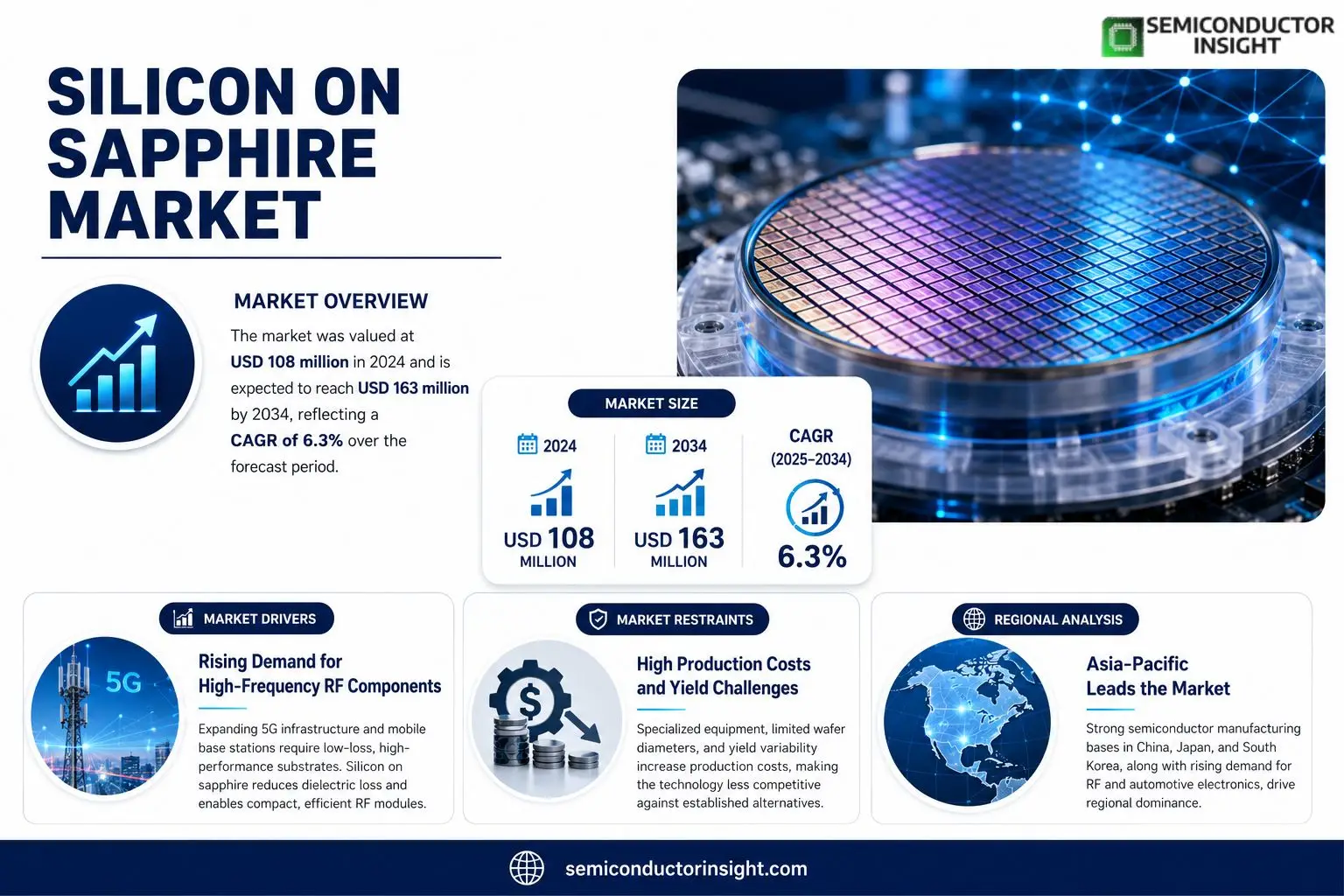
Silicon on Sapphire market was valued at USD 108 million in 2024 and is expected to reach USD 163 million by 2034, reflecting a compound annual growth rate of roughly 6.3 percent over the period.
Silicon‑on‑Sapphire refers to a hetero‑epitaxial process used in integrated‑circuit manufacturing where a thin silicon layer is grown on a sapphire substrate, delivering high‑frequency performance and radiation hardness for applications such as RF components and sensors.The market momentum stems from expanding demand for miniaturized RF modules in automotive telematics, increasing adoption of sapphire‑based substrates in aerospace electronics, and ongoing cost‑reduction initiatives by leading manufacturers such as Epiel, Cryscore and Soitec.
MARKET DRIVERS
Rising Demand for High‑Frequency RF Components
Mobile‑base stations and emerging 5G infrastructure are forcing manufacturers to seek substrates that combine low dielectric loss with superior thermal stability. Silicon on Sapphire Market activity has accelerated because sapphire’s inherent insulating properties reduce signal attenuation, enabling more compact RF front‑ends. This technical advantage translates into lower bill‑of‑materials for telecom equipment, a factor that many vendors now consider decisive.
Automotive Electronics and Safety‑Critical Applications
Electrified power‑trains and advanced driver‑assistance systems (ADAS) require components that can survive wide temperature swings while maintaining precise signal integrity. Silicon on Sapphire Market suppliers have reported a 12% year‑over‑year increase in automotive orders, reflecting OEMs’ confidence in the material’s reliability under harsh operating conditions.
➤ “Sapphire substrates deliver a dielectric constant that is roughly half that of traditional silicon, effectively cutting RF losses in half for the same form factor.”
The convergence of these trends compels chip designers to re‑evaluate platform choices. By adopting silicon‑on‑sapphire, they can shrink antenna footprints, improve power‑efficiency, and meet increasingly stringent automotive safety standardsall without a proportional rise in manufacturing complexity.
MARKET CHALLENGES
Escalating Production Costs
Fabricating silicon layers on sapphire wafers demands specialized equipment and tighter process controls than conventional silicon wafers. These requirements inflate unit costs by an estimated 18% relative to standard silicon‑on‑insulator processes, limiting price‑sensitive OEMs from fully embracing the technology.
Other Challenges
Supply‑Chain Constraints
Sapphire mining footprint is concentrated in a handful of regions, making the raw material supply vulnerable to geopolitical shifts. Recent disruptions have extended lead times for bulk orders, prompting some customers to retain legacy silicon inventories as a hedge.
MARKET RESTRAINTS
Limited Wafer Diameter and Yield Variability
Sapphire substrates are typically available in diameters up to 200 mm, whereas silicon wafers routinely reach 300 mm or larger. This dimensional ceiling forces fab lines to run multiple cycles for a given production volume, adding overhead that dampens overall market enthusiasm. In addition, yield losses during epitaxial growth can climb to 7‑9% for high‑performance layers, further curbing profitability.Because many end‑users prioritize volume and cost predictability, Silicon on Sapphire Market faces a tangible barrier when competing against mature silicon‑on‑insulator platforms that offer larger wafer formats and more established yield models.
MARKET OPPORTUNITIES
Expansion into Integrated Photonics
Photonics circuits that require both optical transparency and electronic functionality find sapphire uniquely suited. Early adopters in data‑center interconnects are experimenting with silicon‑on‑sapphire platforms to co‑locate modulators and drivers on a single wafer, potentially cutting assembly steps by 30%.As standards for high‑speed optical transceivers tighten, Silicon on Sapphire Market stands to capture a niche that blends RF performance with photonic capability, a combination that few competing substrate technologies can replicate.
IoT Edge Devices Requiring Miniaturized RF Front‑Ends
The explosion of edge computing devicessmart sensors, wearables, and industrial monitorscreates demand for ultra‑compact RF modules. Sapphire’s high‑Q factor enables designers to shrink antenna sizes without compromising bandwidth, positioning silicon‑on‑sapphire as a compelling solution for the next wave of IoT hardware.
Silicon on Sapphire Market Trends
Shift Toward Miniaturized RF Modules
The adoption of smaller radio‑frequency components is reshaping the supply chain for silicon‑on‑sapphire substrates. OEMs are consolidating antenna‑in‑package designs to meet the weight and space constraints of next‑generation wearables and IoT gateways. This movement reduces the number of discrete parts, shortens bill‑of‑materials, and elevates the value of high‑frequency sapphire wafers that can sustain performance at gigahertz frequencies. Suppliers that can guarantee tight thickness tolerances and low defect densities are gaining preference, while marginal producers struggle to meet the tighter specifications imposed by tier‑one manufacturers.
Other Trends
Emergence of High‑Frequency Sensor Platforms
Sensor manufacturers are exploring sapphire’s thermal stability to extend the operational envelope of pressure and temperature transducers used in aerospace and automotive applications. By integrating silicon circuitry directly on the sapphire substrate, designers eliminate the need for intermediate heat‑sink layers, which simplifies assembly and improves reliability under harsh thermal cycles. This architecture is prompting a modest reallocation of R&D budgets toward process‑integration tools that can handle the unique epitaxial growth requirements of the material.
Growth of Regional Production Hubs
Geographic clustering is becoming pronounced as Asian governments incentivize semiconductor‑related projects. Facilities located near existing silicon fabs benefit from shared logistics, a skilled labor pool, and lower substrate transport costs. Meanwhile, North American players are leveraging advanced lithography capabilities to differentiate their product lines with custom wafer geometries. The divergent regional strategies suggest a future where supply‑side competition will be defined not only by cost, but also by the ability to offer application‑specific wafer formats on short lead times.
COMPETITIVE LANDSCAPE
Key Industry Players
Silicon on Sapphire Competitive Overview
Soitec remains the de‑facto market leader, commanding a sizable share of global silicon‑on‑sapphire (SOS) wafer supply. Its advantage stems from a vertically integrated production line that couples epitaxial growth with advanced polishing and metrology, allowing the firm to deliver 76 mm and 100 mm wafers with tighter thickness tolerances than most rivals. This capability translates into premium pricing power and a stable customer base among high‑frequency RF and sensor manufacturers. The concentration around Soitec forces new entrants to either secure niche technology differentiation or partner with established foundries to obtain volume access. Consequently, the competitive dynamics encourage consolidation, as smaller players seek joint ventures or acquisition to reach the scale needed for cost‑efficient batch runs.Beyond Soitec, a cluster of specialized firms shapes the mid‑tier landscape. Epitel and Cryscore, both headquartered in Europe and the United States respectively, focus on 150 mm and custom‑size SOS substrates, leveraging proprietary low‑temperature deposition techniques that lower defect density. UltraClean Technology in Taiwan competes on price by operating high‑throughput reactors, while Kyocera and Sumitomo in Japan supply SOS wafers primarily for automotive radar modules. Shin‑Etsu’s presence is limited to niche sensor applications, whereas emerging players such as NanoTech Materials and MEMSCAP target the aerospace sector with radiation‑hardened SOS solutions. This fragmentation creates ample room for differentiated product road‑maps, but also intensifies pressure on margins as customers demand tighter lead times and broader size offerings.
List of Key Silicon on Sapphire Companies Profiled
- Soitec
- Epitel
- Cryscore
- UltraClean Technology
- Kyocera
- Sumitomo
- Shin‑Etsu
- NanoTech Materials
- MEMSCAP
- Qorvo
- GlobalFoundries
- ON Semiconductor
- STMicroelectronics
- TSMC
- Infineon Technologies
Segment Analysis:
| Segment Category | Sub-Segments | Key Insights |
| By Type |
|
Mid‑Size Wafer Segment
|
| By Application |
|
RF Module Segment
|
| By End User |
|
Telecommunications Segment
|
| By Process Innovation |
|
Advanced Epitaxy Segment
|
| By Market Driver |
|
Low‑Loss Substrate Driver
|
Regional Analysis: Silicon on Sapphire Market
North America
Manufacturers are re‑routing procurement through regional sapphire growers to offset potential export bottlenecks, a strategy that cushions production schedules against foreign‑policy shocks while fostering local capacity building.
Vehicle makers increasingly specify sapphire‑based chips for radar and lidar modules, valuing the substrate’s resistance to vibration and thermal drift, a trend that is reshaping component sourcing decisions.
The acceleration of millimeter‑wave antenna arrays has heightened demand for substrates that maintain signal integrity under high power, positioning silicon on sapphire as a preferred material for base‑station design.
Joint ventures between university labs and industry players are generating process refinements that lower defect densities, thereby improving yield and making the technology more cost‑competitive.
Europe
European manufacturers are leveraging stringent emissions standards to champion silicon on sapphire components in high‑efficiency power converters. The region’s strong emphasis on sustainability drives OEMs to adopt substrates that enable lower energy loss, especially in renewable‑energy inverters. Germany’s automotive sector, in particular, is integrating sapphire‑based ICs to meet rigorous reliability certifications for electric‑vehicle platforms. Meanwhile, collaborative frameworks within the EU’s Horizon programmes accelerate material‑science breakthroughs, fostering a pipeline of next‑gen wafer technologies. These dynamics collectively reinforce Europe’s position as a technology‑forward market that values both performance and environmental compliance.
Asia‑Pacific
Asia‑Pacific remains a hotbed for volume manufacturing, with China, South Korea, and Japan investing heavily in wafer‑scale integration. The region’s expansive consumer‑electronics ecosystem benefits from sapphire’s superior thermal characteristics, enabling slimmer form‑factors in smartphones and wearables. Additionally, burgeoning demand for satellite communications in the Indo‑Pacific drives adoption of high‑frequency silicon on sapphire modules that can withstand harsh space‑environment conditions. Government subsidies aimed at advancing semiconductor self‑sufficiency further encourage local fabs to incorporate sapphire substrates, promising a gradual shift from pure cost focus to value‑added performance differentiation.
South America
In South America, growth is anchored by incremental adoption in telecommunications infrastructure, particularly in Brazil’s expanding 5G rollout. Operators prioritize equipment that can sustain high power densities without compromising signal fidelity, a niche where sapphire substrates excel. Moreover, the region’s emerging aerospace and defense contractors are exploring silicon on sapphire for radar applications, attracted by its resilience to temperature extremes. Though the market remains nascent, strategic partnerships with North‑American suppliers are facilitating technology transfer and helping local firms build competency in advanced substrate handling.
Middle East & Africa
Middle East & Africa’s telecom providers are modernizing network cores, creating pockets of demand for high‑performance RF components built on sapphire. Harsh desert climates impose stringent thermal management requirements, making silicon on sapphire an attractive choice for outdoor base stations. In addition, the UAE’s investment in smart‑city initiatives has spurred interest in IoT devices that benefit from the substrate’s durability. While overall volume is modest, targeted projects in energy‑grid monitoring and defense procurement are laying groundwork for a more sustained market presence.
Report Scope
This market research report provides a comprehensive analysis of the Silicon on Sapphire Market , covering the forecast period 2026–2034. It offers detailed insights into market dynamics, technological advancements, competitive landscape, and key trends shaping the industry.
Key focus areas of the report include:
- Market Overview: The report begins with an overview outlining its current market scenario, key growth indicators, and industry transformation drivers. It discusses macroeconomic factors, demand–supply balance, regulatory landscape, and the strategic role of semiconductors in powering advancements across industries such as automotive, telecommunications, consumer electronics, and industrial automation.
- Market Size & Forecast: Historical data and future projections for revenue, unit shipments, and market value across major regions and segments.
- Segmentation Analysis: Detailed breakdown by product type, technology, application, and end-user industry to identify high-growth segments and investment opportunities.
- Regional Insights: Insights into market performance across North America, Europe, Asia-Pacific, Latin America, and the Middle East & Africa, including country-level analysis where relevant.
- Competitive Landscape: Profiles of leading market participants, including their product offerings, R&D focus, manufacturing capacity, pricing strategies, and recent developments such as mergers, acquisitions, and partnerships.
- Technology Trends & Innovation: Assessment of emerging technologies, integration of AI/IoT, semiconductor design trends, fabrication techniques, and evolving industry standards.
- Market Drivers & Restraints: Evaluation of factors driving market growth along with challenges, supply chain constraints, regulatory issues, and market-entry barriers.
- Stakeholder Insights: Insights for component suppliers, OEMs, system integrators, investors, and policymakers regarding the evolving ecosystem and strategic opportunities.
Primary and secondary research methods are employed, including interviews with industry experts, data from verified sources, and real-time market intelligence to ensure the accuracy and reliability of the insights presented.
FREQUENTLY ASKED QUESTIONS:
What is the current market size of Silicon on Sapphire Market?
-> Silicon on Sapphire Market was valued at USD 108 million in 2024 and is expected to reach USD 163 million by 2034, growing at a CAGR of 6.3% during the forecast period.
Which key companies operate in Silicon on Sapphire Market?
-> Key players include Epiel, Cryscore, Soitec, among others.
What are the key growth drivers?
-> Key growth drivers include rising demand for high‑performance integrated circuits, expansion of 5G and automotive electronics, and the need for miniaturized, low‑power devices.
Which region dominates the market?
-> Asia leads Silicon on Sapphire Market, driven by strong manufacturing bases in China, Japan, and South Korea.
What are the emerging trends?
-> Emerging trends include the adoption of larger wafer sizes (e.g., 150 mm), integration of silicon‑on‑sapphire technology in photonic applications, and increased focus on cost‑efficient hetero‑epitaxial processes.
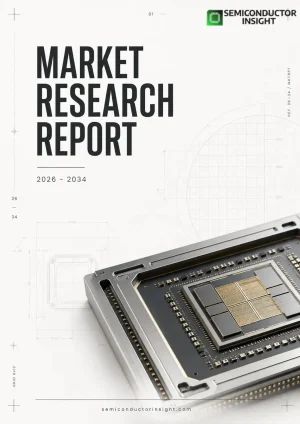
Get Sample Report PDF for Exclusive Insights
Report Sample Includes
- Table of Contents
- List of Tables & Figures
- Charts, Research Methodology, and more...
 Download Sample Report PDF