Pacemaker & ICD (Implantable) ASIC Market Insights
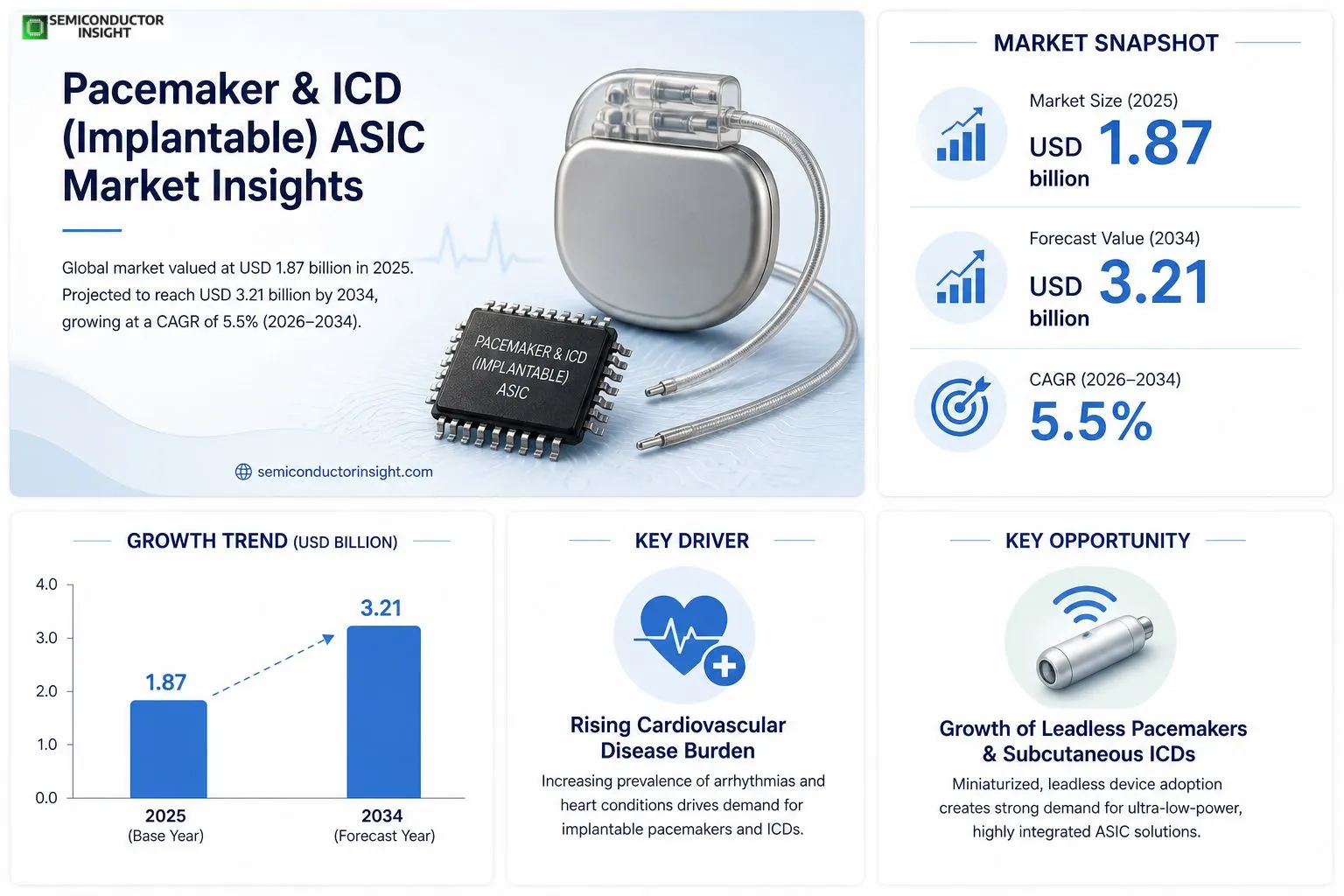
Global Pacemaker & ICD (Implantable) ASIC Market size was valued at USD 1.87 billion in 2025. The market is projected to grow from USD 1.98 billion in 2026 to USD 3.21 billion by 2034, exhibiting a CAGR of 5.5% during the forecast period.
Application-Specific Integrated Circuits (ASICs) designed for pacemakers and implantable cardioverter-defibrillators (ICDs) are highly specialized semiconductor components engineered to manage cardiac rhythm disorders. These chips are purpose-built to deliver precise electrical stimulation, real-time cardiac signal sensing, and power-efficient operation , all within the stringent size and biocompatibility constraints of implantable medical devices. The ASIC category within this domain includes signal processing circuits, telemetry modules, battery management ICs, and therapy delivery controllers tailored specifically for cardiac rhythm management (CRM) applications.
The market is gaining strong momentum driven by the rising global burden of cardiovascular diseases, an aging population increasingly susceptible to arrhythmias, and growing clinical adoption of advanced CRM therapies. Furthermore, continuous miniaturization trends and the push toward leadless pacemakers and subcutaneous ICDs are compelling device manufacturers such as Medtronic plc, Abbott Laboratories, and Boston Scientific Corporation to invest heavily in next-generation ASIC development that supports longer battery life, wireless connectivity, and remote monitoring capabilities.
MARKET DRIVERS
Rising Global Prevalence of Cardiovascular Diseases Fueling Demand for Implantable Cardiac Devices
The escalating burden of cardiovascular diseases worldwide remains one of the most significant forces propelling Pacemaker & ICD (Implantable) ASIC Market. Cardiac arrhythmias, heart failure, and sudden cardiac arrest affect hundreds of millions of individuals globally, creating a sustained and growing clinical need for advanced implantable cardiac rhythm management devices. Application-specific integrated circuits (ASICs) serve as the computational and signal-processing backbone of modern pacemakers and implantable cardioverter-defibrillators (ICDs), enabling precise sensing, therapy delivery, and telemetry in an ultra-low-power, miniaturized form factor. As aging populations in North America, Europe, and Asia-Pacific expand, the incidence of conditions requiring long-term cardiac monitoring and intervention continues to rise, directly supporting higher device implantation rates and, consequently, stronger demand for purpose-built ASICs tailored to implantable cardiac applications.
Technological Advancements in Ultra-Low-Power ASIC Design Enhancing Device Performance and Longevity
Continuous innovation in semiconductor design has dramatically improved the capabilities of ASICs used in pacemakers and ICDs. Modern implantable ASICs are engineered to operate at nanowatt-level power consumption, directly translating to extended device battery life and reduced patient burden associated with surgical replacements. Advances in sub-micron CMOS fabrication processes, mixed-signal circuit architectures, and on-chip signal processing algorithms have enabled manufacturers to integrate increasingly sophisticated arrhythmia detection, noise rejection, and adaptive pacing functionalities into single-chip solutions. These design breakthroughs allow device makers to offer smaller, lighter, and more reliable implants while simultaneously expanding therapeutic capabilities. The convergence of low-power design methodology and high-reliability process nodes continues to drive competitive differentiation in the Pacemaker & ICD Implantable ASIC Market.
➤ The shift toward leadless pacemakers and subcutaneous ICDs is placing heightened demands on ASIC miniaturization and power efficiency, as these next-generation device architectures require all active circuitry to be contained within the implant body itself , creating substantial tailwinds for advanced custom ASIC development.
The growing adoption of remote patient monitoring and wireless telemetry in implantable cardiac devices has further amplified the strategic importance of highly integrated ASICs. Bluetooth Low Energy (BLE) and proprietary RF telemetry capabilities are increasingly being embedded directly into implantable ASICs, enabling seamless communication between devices and external programmers or home monitoring systems. This integration reduces system complexity, improves data transmission reliability, and supports the broader trend toward connected cardiac care, where continuous rhythm data can be transmitted to clinicians in near real-time. As healthcare systems globally shift toward value-based care models that prioritize early intervention and reduced hospitalizations, the role of intelligent, connected implantable ASICs in enabling these outcomes positions the market for sustained long-term growth.
MARKET CHALLENGES
Stringent Regulatory Frameworks and Lengthy Approval Timelines Presenting Significant Barriers for ASIC Developers
The development and commercialization of ASICs intended for use in pacemakers and ICDs are subject to some of the most rigorous regulatory oversight in the medical device industry. Regulatory bodies including the U.S. Food and Drug Administration (FDA), the European Medicines Agency (EMA), and equivalent authorities in Japan, China, and other major markets require exhaustive documentation of ASIC design verification, validation, and reliability testing before implantable devices incorporating these chips can receive market clearance. The regulatory pathway for implantable cardiac devices typically demands multi-year clinical data, extensive biocompatibility evidence, and detailed risk management documentation aligned with standards such as ISO 14971 and IEC 60601. For ASIC developers and their OEM customers, navigating these requirements substantially extends time-to-market and inflates development expenditures, creating meaningful barriers particularly for smaller or emerging semiconductor design firms seeking to enter this specialized market segment.
Other Challenges
High Development Costs and Limited Customer Base
The design and fabrication of custom ASICs for implantable cardiac applications represent a capital-intensive undertaking. Non-recurring engineering (NRE) costs associated with advanced process node tape-outs, multi-year reliability qualification programs, and the specialized expertise required for mixed-signal implantable-grade circuit design can reach substantial levels. Unlike consumer or communications semiconductor markets where high unit volumes amortize development costs rapidly, the implantable cardiac device market represents a relatively concentrated end-user base dominated by a small number of established global manufacturers. This dynamic limits the addressable volume for any given ASIC design, compressing return-on-investment horizons and necessitating long-term strategic supply relationships between ASIC developers and device OEMs to justify initial investment.
Cybersecurity and Device Security Vulnerabilities
As wireless connectivity becomes a standard feature of modern pacemakers and ICDs, cybersecurity has emerged as a critical challenge for ASIC and device developers alike. Regulatory agencies have issued specific guidance on cybersecurity requirements for connected implantable devices, mandating that manufacturers implement robust authentication, encryption, and intrusion detection capabilities. Incorporating these security features within the stringent power and area constraints of an implantable ASIC introduces significant design complexity. Any identified vulnerability in a deployed device can trigger costly post-market surveillance activities, software updates, or in severe cases, device advisories , all of which carry substantial reputational and financial consequences for both ASIC suppliers and device manufacturers operating in the Pacemaker & ICD Implantable ASIC Market.
MARKET RESTRAINTS
Concentrated Market Structure and Long Design Cycles Creating Significant Entry and Expansion Barriers
Pacemaker & ICD (Implantable) ASIC Market is characterized by a highly concentrated competitive landscape in which a small number of vertically integrated cardiac device manufacturers , including entities that develop proprietary ASICs in-house , exert considerable influence over supplier selection and design specifications. This structure limits the market access available to independent ASIC design houses and creates high switching costs once a supplier relationship is established, given the extensive qualification and regulatory documentation tied to specific chip revisions. Long design cycles, often spanning three to five years from initial specification through device approval and commercial launch, further constrain market dynamism and create prolonged periods of revenue uncertainty for ASIC developers investing in next-generation product platforms.
Supply Chain Vulnerabilities and Semiconductor Sourcing Constraints Affecting Production Continuity
Global semiconductor supply chain disruptions have highlighted the vulnerability of implantable medical device manufacturers to shortages of critical components, including specialized ASICs fabricated on mature or specialty process nodes. Unlike leading-edge consumer semiconductor applications, implantable cardiac ASICs are often manufactured on established process geometries chosen for their proven long-term reliability and radiation hardness characteristics rather than maximum performance density. Foundry capacity for these nodes can be constrained during periods of broad semiconductor demand strength, potentially disrupting the production schedules of pacemaker and ICD manufacturers. Additionally, the long qualification lifecycle for implantable-grade components means that supply chain re-sourcing in response to disruptions is not feasible on short timescales, amplifying the impact of any sourcing constraint on device availability and manufacturer revenue in the Pacemaker & ICD Implantable ASIC Market.
MARKET OPPORTUNITIES
Expanding Adoption of Leadless and Miniaturized Implantable Devices Creating New ASIC Design Opportunities
The rapid clinical adoption of leadless pacemakers and subcutaneous ICDs represents a transformative opportunity for Pacemaker & ICD (Implantable) ASIC Market. These next-generation device platforms fundamentally reimagine implant architecture by eliminating transvenous leads, thereby requiring all sensing, processing, therapy delivery, and communication functions to be housed within an ultra-compact, hermetically sealed capsule. This architectural shift creates compelling demand for highly integrated, purpose-designed ASICs capable of delivering full device functionality within unprecedented size and power constraints. ASIC developers capable of meeting these stringent requirements stand to secure long-term strategic partnerships with leading device manufacturers actively expanding their leadless and minimally invasive cardiac rhythm management portfolios, representing a significant and durable revenue opportunity.
Integration of AI and Machine Learning Algorithms into Implantable ASICs Opening New Frontiers in Arrhythmia Detection
The integration of artificial intelligence and machine learning-based signal processing capabilities directly into implantable ASICs represents a frontier opportunity with the potential to meaningfully enhance the clinical performance of pacemakers and ICDs. On-chip inference engines designed to execute lightweight neural network models can improve arrhythmia classification accuracy, reduce inappropriate therapy delivery, and enable personalized adaptive pacing strategies based on individual patient physiology. The development of ultra-low-power neuromorphic and analog computing architectures suited to implantable environments is an active area of semiconductor research, and early commercialization efforts are beginning to emerge. Companies that successfully bring AI-enabled implantable ASICs to market stand to capture premium positioning within the Pacemaker & ICD Implantable ASIC Market while supporting improved patient outcomes that resonate strongly with both clinical and regulatory stakeholders.
Growing Healthcare Infrastructure Investment in Emerging Markets Expanding the Addressable Patient Population
Sustained investment in cardiac care infrastructure across emerging markets in Asia-Pacific, Latin America, the Middle East, and Africa is progressively expanding the addressable patient population for implantable cardiac rhythm management devices. As healthcare systems in these regions develop greater capacity for electrophysiology procedures, echocardiography diagnostics, and post-implant device management, the clinical volume of pacemaker and ICD implantations is expected to grow meaningfully over the coming decade. This geographic expansion of the implantable cardiac device market will correspondingly drive incremental demand for the custom ASICs that power these devices, offering ASIC developers and their OEM partners an opportunity to scale production volumes, improve cost economics, and strengthen their global market positions within the broader Pacemaker & ICD (Implantable) ASIC Market.
Pacemaker & ICD (Implantable) ASIC Market Trends
Miniaturization and Leadless Device Innovation Reshaping Pacemaker & ICD (Implantable) ASIC Market
Pacemaker & ICD (Implantable) ASIC Market is undergoing a significant transformation as device manufacturers accelerate development of increasingly compact and power-efficient semiconductor solutions. The growing clinical preference for leadless pacemakers and subcutaneous ICDs is compelling ASIC designers to engineer chips that deliver precise cardiac rhythm management within highly constrained physical footprints. These purpose-built circuits must simultaneously handle signal processing, therapy delivery, and telemetry functions while consuming minimal power , a challenge that is driving meaningful innovation across the semiconductor supply chain serving the cardiac rhythm management segment.
Other Trends
Rising Cardiovascular Disease Burden Accelerating Adoption
The escalating global prevalence of cardiovascular diseases, particularly arrhythmias, is a key structural driver shaping demand within Pacemaker & ICD (Implantable) ASIC Market. An aging global population that is increasingly susceptible to cardiac rhythm disorders is expanding the patient pool requiring implantable cardiac devices. This demographic shift is prompting healthcare systems across North America, Europe, and Asia-Pacific to increase clinical adoption of advanced cardiac rhythm management therapies, directly translating into sustained demand for the specialized ASICs that power these life-critical devices.
Wireless Connectivity and Remote Monitoring Integration
Remote patient monitoring has emerged as a defining trend influencing ASIC architecture in Pacemaker & ICD (Implantable) ASIC Market. Leading device manufacturers including Medtronic plc, Abbott Laboratories, and Boston Scientific Corporation are investing in next-generation ASIC platforms that incorporate dedicated telemetry modules enabling wireless data transmission. These integrated circuits allow clinicians to monitor cardiac device performance and patient data remotely, reducing the frequency of in-clinic follow-ups and improving long-term patient outcomes. The demand for such connectivity-enabled ASICs is expected to intensify as remote care models become standard practice in cardiac rhythm management.
Battery Management Innovation Driving Long-Term Device Performance
Extended device longevity remains a primary concern for both clinicians and patients receiving implantable pacemakers and ICDs, making advanced battery management ICs a critical focus area within Pacemaker & ICD (Implantable) ASIC Market. ASIC developers are engineering highly efficient power management circuits that maximize energy utilization from compact battery sources, thereby extending the operational lifespan of implanted devices and reducing the frequency of surgical replacements. This focus on power efficiency, combined with the broader push toward miniaturization, continues to position battery management innovation as one of the most consequential technical trends influencing ASIC design strategies across the cardiac rhythm management industry.
COMPETITIVE LANDSCAPE
Key Industry Players
Pacemaker & ICD (Implantable) ASIC Market , Competitive Dynamics and Leading Innovators
Global Pacemaker & ICD (Implantable) ASIC market is characterized by a concentrated yet intensely competitive landscape, with a handful of vertically integrated cardiac rhythm management (CRM) device giants commanding significant market share. Medtronic plc stands as the undisputed market leader, leveraging decades of proprietary ASIC development to power its extensive portfolio of pacemakers, ICDs, and cardiac resynchronization therapy (CRT) devices. The company’s deep investments in low-power signal processing ICs, telemetry modules, and therapy delivery controllers have cemented its technological edge. Abbott Laboratories and Boston Scientific Corporation follow closely, each maintaining robust in-house semiconductor design capabilities and strategic partnerships with specialized ASIC foundries to accelerate next-generation device development. These leading players are actively responding to clinical demand for longer battery life, miniaturized form factors, and wireless remote monitoring , all of which place extraordinary design demands on the underlying ASIC architecture. The competitive intensity is further amplified by the growing adoption of leadless pacemakers and subcutaneous ICDs, which require even more sophisticated, ultra-low-power integrated circuits engineered to operate reliably within the constraints of the human body.
Beyond the dominant OEM device manufacturers, the Pacemaker & ICD ASIC market also features specialized semiconductor design houses and foundry partners that supply custom and semi-custom ASICs to CRM device makers. Companies such as BIOTRONIK SE & Co. KG and MicroPort Scientific Corporation have established strong ASIC development pipelines to support their expanding global CRM portfolios. Emerging players and contract chip designers , including firms with expertise in mixed-signal, ultra-low-power CMOS design , are increasingly positioning themselves as critical enablers within the supply chain. The entry of companies with expertise in medical-grade semiconductor fabrication, such as those operating at GlobalFoundries and TSMC’s specialized medical process nodes, is further reshaping the competitive map. As regulatory requirements tighten and clinical expectations for device longevity and connectivity rise, the ability to deliver verified, biocompatible, and highly reliable ASIC solutions remains the key differentiator across the competitive field.
List of Key Pacemaker & ICD (Implantable) ASIC Companies Profiled
- Medtronic plc
- Abbott Laboratories
- Boston Scientific Corporation
- BIOTRONIK SE & Co. KG
- MicroPort Scientific Corporation
- LivaNova PLC
- Pacesetter, Inc. (a St. Jude Medical company)
- Oscor Inc.
- Ela Medical (a Microport Company)
- Integer Holdings Corporation
- Greatbatch Ltd. (now Integer Holdings)
- Maxim Integrated (now part of Analog Devices, Inc.)
- Texas Instruments Incorporated
- Semtech Corporation
- Shenzhen Pilot Technology Co., Ltd.
Segment Analysis:
| Segment Category | Sub-Segments | Key Insights |
| By Type |
|
Signal Processing ASICs represent the dominant type segment within the Pacemaker & ICD ASIC market, driven by the critical requirement for real-time, highly accurate cardiac signal interpretation in implantable devices.
|
| By Application |
|
Implantable Cardioverter-Defibrillators (ICDs) hold a leading position in the application segment, owing to the high clinical severity of ventricular arrhythmias and the life-saving nature of ICD therapy.
|
| By End User |
|
Cardiac Rhythm Management (CRM) Device Manufacturers constitute the dominant end user group, as these companies integrate ASICs as core proprietary components within their implantable device platforms.
|
| By Technology Node |
|
Ultra-Low-Power Specialized Process Nodes are gaining significant prominence as the leading technology segment, given the fundamental power consumption constraints inherent to long-term implantable cardiac devices.
|
| By Connectivity & Communication Feature |
|
RF & Bluetooth Low Energy (BLE) Enabled ASICs are emerging as the fastest-growing and increasingly dominant connectivity segment, reflecting the industry-wide transition toward remote patient monitoring and connected cardiac care ecosystems.
|
Regional Analysis: Pacemaker & ICD (Implantable) ASIC Market
North America
North America benefits from one of the most structured regulatory environments globally. The FDA’s premarket approval pathway for implantable cardiac devices incorporating ASICs provides a clear route to commercialization. Coupled with relatively comprehensive reimbursement coverage under Medicare and Medicaid, healthcare providers are incentivized to adopt advanced pacemaker and ICD technologies, supporting consistent demand across hospital and outpatient settings.
The region hosts a dense concentration of medical semiconductor and implantable device companies actively investing in next-generation ASIC development. Research collaborations between academic medical centers and industry players are producing breakthroughs in ultra-low-power chip architectures, wireless telemetry integration, and miniaturization , all critical to advancing the performance and longevity of implantable pacemakers and ICDs.
An aging population and high rates of lifestyle-related cardiovascular conditions are primary demand drivers across North America. The rising burden of atrial fibrillation, ventricular tachycardia, and other arrhythmias is creating sustained clinical need for sophisticated implantable cardiac rhythm management devices. This demographic pressure ensures consistent pipeline activity among Pacemaker & ICD (Implantable) ASIC Market participants operating in the region.
North America’s Pacemaker & ICD (Implantable) ASIC Market is characterized by intense but structured competition among established global players and emerging specialized semiconductor firms. Strategic mergers, acquisitions, and long-term supply agreements are common, reinforcing vertical integration across the ASIC design, fabrication, and device assembly value chain. This competitive maturity continues to elevate product quality and accelerate time-to-market for innovative implantable cardiac solutions.
Europe
Europe represents the second most significant geography within Global Pacemaker & ICD (Implantable) ASIC Market, underpinned by advanced healthcare systems across Germany, France, the United Kingdom, and the Netherlands. The region benefits from the CE marking regulatory pathway, which, while rigorous, provides a harmonized framework enabling market access across multiple countries simultaneously. European cardiology centers are recognized globally for their clinical excellence and early adoption of innovative cardiac implantable electronic devices. There is a strong culture of cross-border research collaboration facilitated by EU-funded health technology initiatives, which supports continued advancement in ASIC design specifically for pacemakers and ICDs. Growing awareness of sudden cardiac death prevention, combined with favorable national reimbursement schemes in key markets, continues to drive procedural volumes. The emphasis on device longevity, electromagnetic compatibility, and biocompatibility aligns with Europe’s stringent regulatory philosophy, pushing ASIC developers to deliver increasingly refined and reliable chip solutions tailored to cardiac rhythm management applications.
Asia-Pacific
Asia-Pacific is emerging as the fastest-growing region in Pacemaker & ICD (Implantable) ASIC Market, propelled by rapid urbanization, expanding middle-class populations, and increasing healthcare infrastructure investments across China, Japan, India, and South Korea. The region’s large and aging demographic base presents a significant and largely underpenetrated opportunity for implantable cardiac rhythm management devices. China, in particular, is witnessing accelerated domestic manufacturing capabilities and government-backed initiatives to reduce dependence on imported medical semiconductor technologies, including ASICs for pacemakers and ICDs. Japan’s well-developed healthcare ecosystem and high patient awareness levels support premium device adoption. India’s expanding private hospital network and evolving medical device regulations are gradually improving market access conditions. As regional players develop indigenous ASIC competencies and global manufacturers localize production, the Asia-Pacific Pacemaker & ICD (Implantable) ASIC Market is poised for sustained expansion throughout the forecast period.
South America
South America occupies a developing but strategically relevant position in Global Pacemaker & ICD (Implantable) ASIC Market. Brazil leads the regional landscape, supported by a substantial public healthcare infrastructure through the Sistema Único de Saúde (SUS) and a growing private hospital sector that is increasingly adopting advanced implantable cardiac devices. Argentina and Colombia also demonstrate meaningful market activity, particularly in urban cardiac care centers. However, the region faces persistent challenges including economic volatility, currency fluctuations, and inconsistent reimbursement policies that can limit patient access to high-cost implantable devices incorporating advanced ASICs. Regulatory harmonization efforts among Mercosur member states are gradually improving the environment for medical device market entry. Despite these challenges, rising cardiovascular disease burden and increasing physician awareness of ICD and pacemaker therapies are expected to generate gradual but steady demand growth for specialized ASIC components across South America over the coming years.
Middle East & Africa
The Middle East & Africa region represents the nascent stage of development within Pacemaker & ICD (Implantable) ASIC Market, yet it holds meaningful long-term potential as healthcare modernization accelerates across key economies. Gulf Cooperation Council countries, particularly Saudi Arabia and the United Arab Emirates, are investing heavily in world-class cardiac care facilities and attracting internationally trained cardiologists, which is supporting adoption of advanced implantable devices. South Africa serves as a regional anchor for sub-Saharan Africa, with private healthcare facilities driving demand for sophisticated cardiac rhythm management solutions. Across the broader African continent, limited healthcare budgets, insufficient trained electrophysiology specialists, and underdeveloped reimbursement infrastructure remain key constraints. Nevertheless, international development partnerships, increasing medical tourism in Gulf states, and ongoing efforts to establish local device distribution networks are expected to gradually expand the footprint of Pacemaker & ICD (Implantable) ASIC Market across this diverse and evolving region.
Report Scope
This market research report provides a comprehensive analysis of the Pacemaker & ICD (Implantable) ASIC Market , covering the forecast period 2026–2034. It offers detailed insights into market dynamics, technological advancements, competitive landscape, and key trends shaping the industry.
Key focus areas of the report include:
- Market Overview: The report begins with an overview outlining its current market scenario, key growth indicators, and industry transformation drivers. It discusses macroeconomic factors, demand–supply balance, regulatory landscape, and the strategic role of semiconductors in powering advancements across industries such as automotive, telecommunications, consumer electronics, and industrial automation.
- Market Size & Forecast: Historical data and future projections for revenue, unit shipments, and market value across major regions and segments.
- Segmentation Analysis: Detailed breakdown by product type, technology, application, and end-user industry to identify high-growth segments and investment opportunities.
- Regional Insights: Insights into market performance across North America, Europe, Asia-Pacific, Latin America, and the Middle East & Africa, including country-level analysis where relevant.
- Competitive Landscape: Profiles of leading market participants, including their product offerings, R&D focus, manufacturing capacity, pricing strategies, and recent developments such as mergers, acquisitions, and partnerships.
- Technology Trends & Innovation: Assessment of emerging technologies, integration of AI/IoT, semiconductor design trends, fabrication techniques, and evolving industry standards.
- Market Drivers & Restraints: Evaluation of factors driving market growth along with challenges, supply chain constraints, regulatory issues, and market-entry barriers.
- Stakeholder Insights: Insights for component suppliers, OEMs, system integrators, investors, and policymakers regarding the evolving ecosystem and strategic opportunities.
Primary and secondary research methods are employed, including interviews with industry experts, data from verified sources, and real-time market intelligence to ensure the accuracy and reliability of the insights presented.
FREQUENTLY ASKED QUESTIONS:
What is the current market size of Pacemaker & ICD (Implantable) ASIC Market?
-> Global Pacemaker & ICD (Implantable) ASIC Market size was valued at USD 1.87 billion in 2025. The market is projected to grow from USD 1.98 billion in 2026 to USD 3.21 billion by 2034, exhibiting a CAGR of 5.5% during the forecast period.
Which key companies operate in Pacemaker & ICD (Implantable) ASIC Market?
-> Key players include Medtronic plc, Abbott Laboratories, and Boston Scientific Corporation, among others.
What are the key growth drivers?
-> Key growth drivers include the rising global burden of cardiovascular diseases, an aging population increasingly susceptible to arrhythmias, and growing clinical adoption of advanced cardiac rhythm management (CRM) therapies. Additionally, continuous miniaturization trends and the push toward leadless pacemakers and subcutaneous ICDs are compelling device manufacturers to invest heavily in next-generation ASIC development supporting longer battery life, wireless connectivity, and remote monitoring capabilities.
Which region dominates the market?
-> Asia-Pacific is the fastest-growing region, while North America remains a dominant market driven by high clinical adoption of advanced CRM therapies and strong presence of leading device manufacturers.
What are the emerging trends?
-> Emerging trends include miniaturization of implantable devices, development of leadless pacemakers, subcutaneous ICDs, wireless connectivity integration, remote patient monitoring capabilities, and next-generation ASIC designs focused on extended battery life and enhanced biocompatibility.
Get Sample Report PDF for Exclusive Insights
Report Sample Includes
- Table of Contents
- List of Tables & Figures
- Charts, Research Methodology, and more...
 Download Sample Report PDF