Automotive Audio DSP (Digital Signal Processor) Market Insights
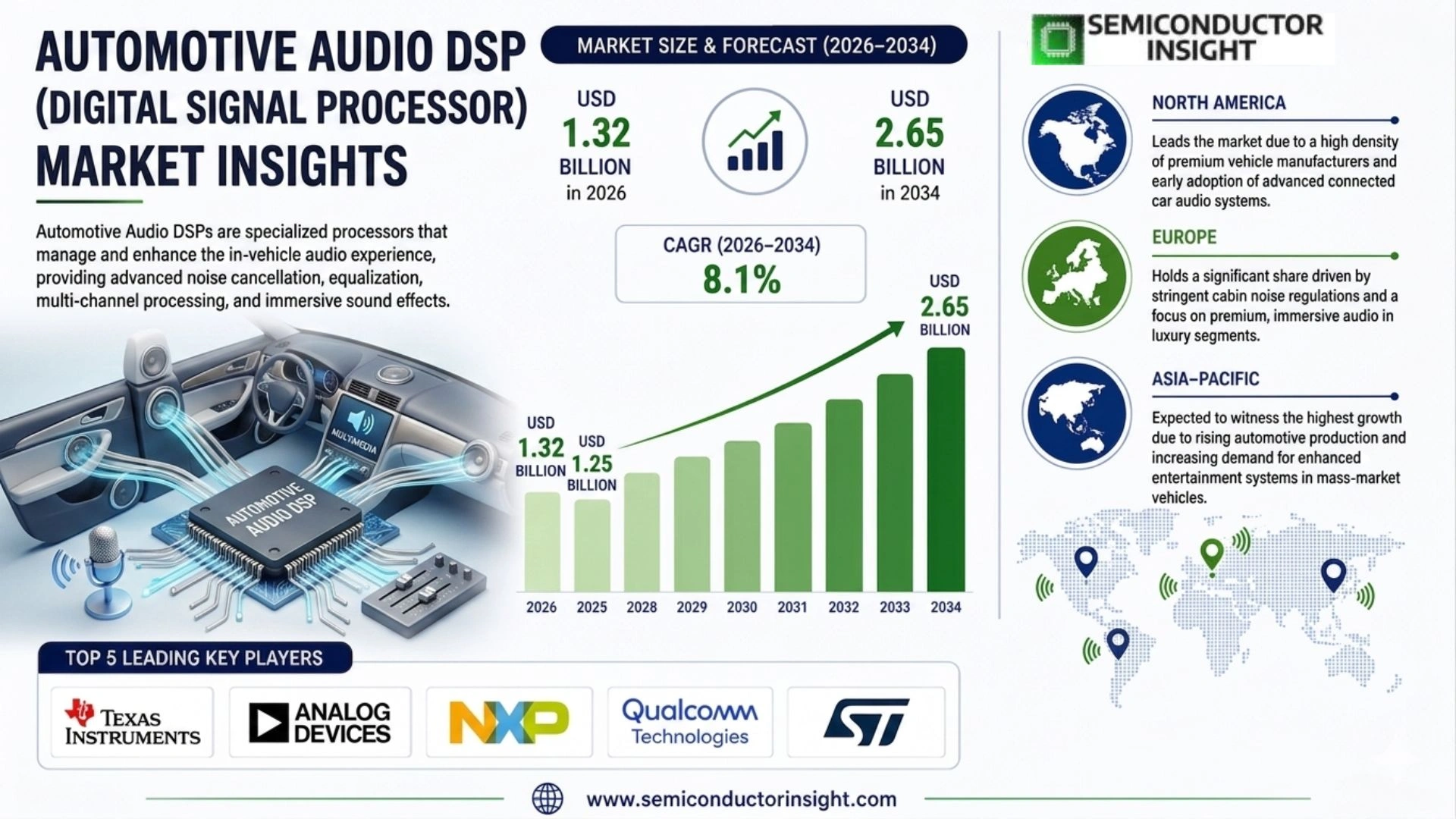
Automotive Audio DSP (Digital Signal Processor) Market size was valued at USD 1.25 billion in 2025. The market is projected to grow from USD 1.32 billion in 2026 to USD 2.65 billion by 2034, exhibiting a CAGR of 8.1% during the forecast period.
Automotive Audio DSPs are specialized microprocessors designed to handle real-time digital signal processing for in-vehicle audio systems. These processors optimize sound quality, enable noise cancellation, support multi-channel audio distribution, and facilitate advanced features such as immersive 3D sound, voice recognition integration, and seamless connectivity with infotainment platforms. They process signals from various sources including radios, streaming services, microphones, and external amplifiers to deliver clear, high-fidelity audio experiences within the challenging acoustic environment of a vehicle cabin.
The market is experiencing steady growth due to several factors, including the rising demand for premium in-car entertainment systems, increasing vehicle electrification, and the proliferation of connected and autonomous vehicles. Furthermore, advancements in audio technologies such as active noise cancellation and personalized sound zoning are contributing to market expansion. Initiatives by key players in the market are also expected to fuel growth. For instance, collaborations between semiconductor manufacturers and automotive OEMs have accelerated the integration of sophisticated DSP solutions in next-generation vehicles. Texas Instruments, Analog Devices, NXP Semiconductors, Qualcomm, and STMicroelectronics are some of the key players that operate in the market with a wide range of portfolios.
MARKET DRIVERS
Rising Demand for Premium In-Vehicle Audio Experiences
Automotive Audio DSP (Digital Signal Processor) Market is experiencing robust growth driven by consumer expectations for high-fidelity, immersive sound systems in vehicles. DSP technology enables advanced audio processing features such as active noise cancellation, surround sound virtualization, and personalized audio zones, significantly enhancing the in-cabin entertainment experience. As premium and luxury vehicle segments expand, automakers are integrating sophisticated DSP solutions to differentiate their offerings.
Integration with Advanced Infotainment and ADAS Systems
Modern vehicles increasingly rely on Automotive Audio DSP for seamless integration with infotainment platforms, voice assistants, and connectivity features. The proliferation of electric vehicles and software-defined architectures further accelerates adoption, as DSPs support real-time audio optimization alongside other signal processing tasks. Market projections indicate strong expansion, with segments showing CAGRs around 8-9% fueled by these technological convergences.
➤ The growing adoption of connected and autonomous vehicles is significantly boosting demand for high-performance Automotive Audio DSP solutions capable of handling complex, multi-channel audio processing while maintaining low latency.
Additionally, the shift toward over-the-air updates and AI-enhanced audio tuning is positioning DSPs as critical components in next-generation automotive ecosystems, supporting both OEM and aftermarket upgrades for superior sound quality.
MARKET CHALLENGES
Integration Complexity and Compatibility Issues
Integrating advanced Automotive Audio DSP (Digital Signal Processor) solutions into existing vehicle platforms presents significant technical challenges for manufacturers. Ensuring compatibility across diverse electronic architectures while maintaining system stability requires extensive testing and customization, particularly in mixed analog-digital environments common in mid-range vehicles.
Other Challenges
Supply Chain Volatility and Component Costs
Fluctuations in semiconductor availability and rising costs of high-performance DSP chips impact production timelines and pricing strategies across the Automotive Audio DSP market.
Skilled Talent Shortage
There is a growing shortage of engineers specialized in automotive-grade DSP design and integration, slowing innovation cycles and increasing development expenses for market participants.
MARKET RESTRAINTS
High Implementation Costs for Advanced DSP Technologies
The substantial research, development, and integration expenses associated with sophisticated Automotive Audio DSP systems continue to restrain broader market penetration, especially in economy vehicle segments. These costs are often passed on to consumers, limiting adoption among price-sensitive buyers despite clear performance benefits. The need for compliance with stringent automotive safety, quality, and environmental standards further adds to overall project expenses and extends time-to-market for new DSP-enabled audio solutions.
MARKET OPPORTUNITIES
Expansion in Electric and Autonomous Vehicles
The rapid growth of electric vehicles creates significant opportunities for Automotive Audio DSP (Digital Signal Processor) Market participants. EVs offer quieter cabins that highlight premium audio systems, driving demand for advanced DSP features like active sound design and immersive 3D audio. Integration with autonomous driving platforms also opens avenues for context-aware audio processing. Emerging trends such as AI-powered personalization, cloud-connected audio ecosystems, and aftermarket DSP upgrades present additional growth pathways for innovative solution providers in this dynamic sector.
Trends
Advancements in Active Noise Cancellation and Immersive Audio Processing
Automotive Audio DSP (Digital Signal Processor) Market is witnessing significant momentum from the integration of sophisticated real-time processing capabilities that enhance in-vehicle sound experiences. Digital signal processors optimize audio signals from multiple sources including streaming services, radios, and microphones, delivering high-fidelity output tailored to the unique acoustic challenges of vehicle cabins. Growing consumer expectations for premium entertainment systems are pushing manufacturers to adopt advanced features such as 3D immersive sound and personalized audio zoning, where sound can be customized for different seating positions within the vehicle.
Other Trends
Rising Integration with Connected and Autonomous Vehicle Platforms
Expansion of connected vehicle technologies is accelerating the need for powerful Automotive Audio DSP solutions that seamlessly interface with infotainment ecosystems and support voice recognition features. As vehicles become more autonomous, audio systems are evolving beyond traditional entertainment to provide critical audio cues and enhanced communication interfaces. This convergence is creating opportunities for DSP chips that handle complex multi-channel audio distribution while maintaining low latency and high efficiency.
Impact of Vehicle Electrification on Audio System Design
Electric vehicles are transforming audio architecture by eliminating traditional engine noise, thereby elevating the importance of crystal-clear audio reproduction and advanced noise management features. Automotive Audio DSP (Digital Signal Processor) technologies are being optimized for the quieter cabin environments of EVs, enabling more effective active noise cancellation and superior sound clarity. Semiconductor leaders are developing specialized processors that balance power consumption with performance to meet the efficiency demands of electrified platforms.
Collaborations across the supply chain between semiconductor manufacturers and automotive OEMs continue to drive innovation in this space. Companies such as Texas Instruments, Analog Devices, NXP Semiconductors, Qualcomm, and STMicroelectronics are actively expanding their portfolios to address the growing complexity of modern vehicle audio systems. These partnerships are facilitating faster integration of next-generation DSP solutions that support emerging audio standards and connectivity protocols, ensuring vehicles deliver exceptional listening experiences while meeting stringent automotive reliability requirements.
COMPETITIVE LANDSCAPE
Key Industry Players
Automotive Audio DSP Market: Leadership Through Advanced Semiconductor Innovation
The Automotive Audio DSP market is characterized by the dominance of established semiconductor giants who leverage extensive expertise in signal processing to deliver high-performance solutions tailored for vehicle acoustics. Texas Instruments stands out as a leading player with its robust portfolio of automotive-grade DSPs that excel in real-time audio optimization, active noise cancellation, and multi-channel processing, supporting the integration needs of major OEMs in premium and mainstream vehicles alike. The market structure remains concentrated among a few key innovators who invest heavily in R&D to address the demands of electrified and connected vehicles, while strategic partnerships with automakers accelerate technology adoption.
Complementing the market leaders are several niche and specialized players focusing on high-fidelity audio enhancement, immersive sound experiences, and efficient power management in compact form factors. Companies such as Cirrus Logic and Asahi Kasei Microdevices bring specialized capabilities in premium audio quality and low-latency processing, while others contribute through targeted solutions for advanced driver assistance systems integration and personalized audio zoning. This competitive environment fosters continuous innovation amid rising demand for sophisticated in-cabin entertainment systems.
List of Key Automotive Audio DSP Companies Profiled
- Texas Instruments
- Analog Devices
- NXP Semiconductors
- Qualcomm Technologies
- STMicroelectronics
- Cirrus Logic
- onsemi
- Renesas Electronics
- Infineon Technologies
- Microchip Technology
- Broadcom Inc.
- Asahi Kasei Microdevices
- ROHM Semiconductor
- Yamaha Corporation
Segment Analysis:
| Segment Category | Sub-Segments | Key Insights |
| By Type |
|
Integrated System-on-Chip Solutions represent the leading segment due to their ability to combine audio processing with broader infotainment functionalities in a compact form factor ideal for modern vehicle architectures. These solutions enable seamless integration with vehicle networks, reducing latency in signal processing and enhancing overall system efficiency. They support advanced real-time algorithms for sound optimization in dynamic cabin environments, while facilitating easier software updates and feature enhancements over the vehicle lifecycle. |
| By Application |
|
Active Noise Cancellation stands out as the leading application segment as it significantly improves the in-cabin acoustic experience by dynamically countering road, engine, and wind noise. DSP processors in this application deliver precise real-time adjustments tailored to vehicle speed and cabin conditions, creating quieter environments that enhance passenger comfort and audio clarity. This technology integrates effectively with other audio features, allowing for personalized sound zones and superior fidelity even in challenging driving scenarios. |
| By End User |
|
Original Equipment Manufacturers (OEMs) dominate this segment through deep collaboration with semiconductor providers to embed advanced DSP capabilities directly into vehicle platforms. This integration ensures optimized performance from the design stage, supporting brand-specific audio signatures and seamless connectivity with emerging vehicle technologies. OEM adoption drives innovation in user-centric features such as adaptive sound profiles that respond to occupant preferences and environmental factors. |
| By Vehicle Type |
|
Luxury & Premium Vehicles lead this category by prioritizing sophisticated audio experiences that differentiate high-end brands. DSP solutions in these vehicles enable multi-zone audio personalization, high-resolution sound reproduction, and integration with advanced driver assistance feedback systems. The demanding acoustic requirements of luxury cabins push continuous advancements in processing power and algorithm sophistication for unparalleled sound immersion. |
| By Technology |
|
AI-Enhanced Processing emerges as the leading technology segment by enabling adaptive and intelligent audio management that learns from user behaviors and cabin acoustics. These systems deliver context-aware sound optimization, automatic source switching, and predictive noise mitigation for consistently superior experiences. Integration with machine learning allows for evolving performance through over-the-air updates, aligning with the shift toward software-defined vehicles and connected ecosystems. |
Regional Analysis: Automotive Audio DSP (Digital Signal Processor) Market
Asia-Pacific
Asia-Pacific benefits from highly integrated supply chains that support rapid scaling of Automotive Audio DSP (Digital Signal Processor) production. Component suppliers and assembly facilities work in close proximity, reducing lead times and enabling customization for diverse vehicle models. This ecosystem fosters innovation in miniaturization and thermal management critical for modern DSP applications.
Major technology centers in Japan, South Korea, and China drive cutting-edge research in audio signal processing algorithms. Collaborative efforts between universities and industry accelerate breakthroughs in real-time processing, AI-enhanced sound optimization, and immersive 3D audio experiences tailored for automotive environments.
Rising disposable incomes and evolving preferences for premium in-vehicle experiences fuel strong demand for advanced DSP solutions. Buyers increasingly seek personalized audio profiles, active noise control, and high-fidelity streaming integration, pushing automakers to adopt sophisticated digital signal processors across vehicle segments.
Supportive policies promoting electric mobility and digital innovation create favorable conditions for Automotive Audio DSP adoption. Regional standards encourage safety-focused audio systems and energy-efficient technologies, aligning perfectly with the capabilities of modern digital signal processors in connected vehicles.
North America
North America maintains a significant position Automotive Audio DSP (Digital Signal Processor) Market through its emphasis on premium vehicle segments and technological leadership. The United States hosts major luxury and performance car manufacturers that prioritize superior sound systems as key differentiators. Strong consumer interest in connected vehicles drives integration of advanced DSP solutions capable of handling complex audio streams and personalized listening experiences. Innovation focuses on seamless compatibility with smart ecosystems and voice assistants. Research institutions and technology firms contribute to advancements in adaptive audio algorithms that enhance driver focus and passenger comfort. The aftermarket segment also shows healthy activity with upgrades featuring latest DSP capabilities. Strategic partnerships between automakers and semiconductor companies ensure continuous evolution of audio processing technologies tailored to regional preferences for powerful, clear sound reproduction.
Europe
Europe demonstrates sophisticated demand for Automotive Audio DSP (Digital Signal Processor) solutions, particularly in premium and electric vehicle categories. German, French, and British manufacturers lead in incorporating high-end audio systems where digital signal processing plays a vital role in delivering concert-like experiences within refined cabin environments. Strict environmental standards accelerate development of energy-efficient DSP chips suitable for battery-powered vehicles. The region excels in acoustic engineering, combining hardware excellence with advanced software algorithms for noise cancellation and spatial audio. Growing focus on autonomous driving creates opportunities for DSP systems that adjust audio based on driving modes and passenger activities. Collaborative research projects across the continent continue to push boundaries in immersive sound technologies while maintaining compliance with rigorous safety and quality regulations.
South America
South America represents an emerging market for Automotive Audio DSP (Digital Signal Processor) technologies with steady growth potential. Brazil and other key countries show increasing adoption in mid-range and premium vehicle segments as consumer expectations for in-car entertainment rise. Local assembly operations increasingly incorporate DSP solutions to meet demands for better audio quality in diverse road conditions. The market benefits from gradual infrastructure improvements and expanding connectivity options that support advanced audio features. While cost sensitivity remains important, rising interest in comfort and technology features encourages automakers to introduce models equipped with capable digital signal processors. Opportunities exist for localized customization of audio profiles suited to regional music preferences and environmental challenges.
Middle East & Africa
The Middle East and Africa region exhibits growing interest Automotive Audio DSP (Digital Signal Processor) Market applications, particularly in luxury and commercial vehicle segments. Gulf countries drive demand through high-end vehicle imports and preferences for premium entertainment systems. Harsh environmental conditions necessitate robust DSP solutions capable of maintaining audio performance despite temperature extremes and road noise. Urban centers show increasing adoption of connected vehicles featuring advanced audio processing. Infrastructure development and rising consumer spending power support gradual market expansion. Focus areas include reliable noise cancellation and clear communication systems suitable for long-distance travel. Partnerships with global technology providers help introduce latest DSP innovations adapted to regional vehicle usage patterns and climate considerations.
Report Scope
This market research report provides a comprehensive analysis of the Automotive Audio DSP (Digital Signal Processor) Market , covering the forecast period 2026–2034. It offers detailed insights into market dynamics, technological advancements, competitive landscape, and key trends shaping the industry.
Key focus areas of the report include:
- Market Overview: The report begins with an overview outlining its current market scenario, key growth indicators, and industry transformation drivers. It discusses macroeconomic factors, demand–supply balance, regulatory landscape, and the strategic role of semiconductors in powering advancements across industries such as automotive, telecommunications, consumer electronics, and industrial automation.
- Market Size & Forecast: Historical data and future projections for revenue, unit shipments, and market value across major regions and segments.
- Segmentation Analysis: Detailed breakdown by product type, technology, application, and end-user industry to identify high-growth segments and investment opportunities.
- Regional Insights: Insights into market performance across North America, Europe, Asia-Pacific, Latin America, and the Middle East & Africa, including country-level analysis where relevant.
- Competitive Landscape: Profiles of leading market participants, including their product offerings, R&D focus, manufacturing capacity, pricing strategies, and recent developments such as mergers, acquisitions, and partnerships.
- Technology Trends & Innovation: Assessment of emerging technologies, integration of AI/IoT, semiconductor design trends, fabrication techniques, and evolving industry standards.
- Market Drivers & Restraints: Evaluation of factors driving market growth along with challenges, supply chain constraints, regulatory issues, and market-entry barriers.
- Stakeholder Insights: Insights for component suppliers, OEMs, system integrators, investors, and policymakers regarding the evolving ecosystem and strategic opportunities.
Primary and secondary research methods are employed, including interviews with industry experts, data from verified sources, and real-time market intelligence to ensure the accuracy and reliability of the insights presented.
FREQUENTLY ASKED QUESTIONS:
What is the current market size of Automotive Audio DSP (Digital Signal Processor) Market?
-> Automotive Audio DSP (Digital Signal Processor) Market was valued at USD 1.25 billion in 2025 and is expected to reach USD 2.65 billion by 2034.
Which key companies operate Automotive Audio DSP (Digital Signal Processor) Market?
-> Key players include Texas Instruments, Analog Devices, NXP Semiconductors, Qualcomm, and STMicroelectronics, among others.
What are the key growth drivers?
-> Key growth drivers include rising demand for premium in-car entertainment systems, increasing vehicle electrification, and the proliferation of connected and autonomous vehicles.
Which region dominates the market?
-> Asia-Pacific is the fastest-growing region, while Europe remains a dominant market.
What are the emerging trends?
-> Emerging trends include active noise cancellation, personalized sound zoning, immersive 3D sound, and voice recognition integration.

Get Sample Report PDF for Exclusive Insights
Report Sample Includes
- Table of Contents
- List of Tables & Figures
- Charts, Research Methodology, and more...
 Download Sample Report PDF