Optical Communication IC Market Overview
In optical devices, optical chips are used for the conversion of photoelectric signals. According to the type of light emission, it is divided into surface emission and side emission. Among them, surface-emitting lasers are mainly VCSEL (vertical cavity surface-emitting lasers); there are many types of edge-emitting lasers, including FP (Fabry Pérot, Fabry-Perot laser), DFB (Distributed Feedback Laser, distributed feedback laser) Lasers) and EML (Electroabsorption Modulated Laser), traditional FP laser chips have gradually narrowed their applications in the field of optical communication due to large losses and short transmission distances. There are three main types of core laser chips: DFB and EML And VCSEL.
This report provides a deep insight into the global Optical Communication IC market covering all its essential aspects. This ranges from a macro overview of the market to micro details of the market size, competitive landscape, development trend, niche market, key market drivers and challenges, SWOT analysis, value chain analysis, etc.
The analysis helps the reader to shape the competition within the industries and strategies for the competitive environment to enhance the potential profit. Furthermore, it provides a simple framework for evaluating and accessing the position of the business organization. The report structure also focuses on the competitive landscape of the Global Optical Communication IC Market, this report introduces in detail the market share, market performance, product situation, operation situation, etc. of the main players, which helps the readers in the industry to identify the main competitors and deeply understand the competition pattern of the market.
In a word, this report is a must-read for industry players, investors, researchers, consultants, business strategists, and all those who have any kind of stake or are planning to foray into the Optical Communication IC market in any manner.
Optical Communication IC Market Analysis:
The global Optical Communication IC Market size was estimated at USD 3045.70 million in 2023 and is projected to reach USD 9004.70 million by 2032, exhibiting a CAGR of 12.80% during the forecast period.
North America Optical Communication IC market size was estimated at USD 977.32 million in 2023, at a CAGR of 10.97% during the forecast period of 2025 through 2032.

Optical Communication IC Key Market Trends :
- Rising Demand for High-Speed Data Transmission
The increasing need for fast and reliable data transmission, driven by 5G deployment and cloud computing, is boosting the adoption of Optical Communication ICs. - Growth of Data Centers and Cloud Computing
The rapid expansion of hyperscale data centers and cloud services is fueling demand for optical transceivers, driving market growth. - Advancements in Photonic Integration
The integration of optical components into a single chip is enhancing performance, reducing costs, and improving energy efficiency. - Increasing Adoption of VCSEL Technology
VCSELs are gaining traction due to their efficiency in high-speed data transmission and applications in 3D sensing and LiDAR. - Rising Investments in 5G and Telecom Infrastructure
With the expansion of 5G networks, telecom operators are heavily investing in optical communication technologies to support high-speed data transfer.
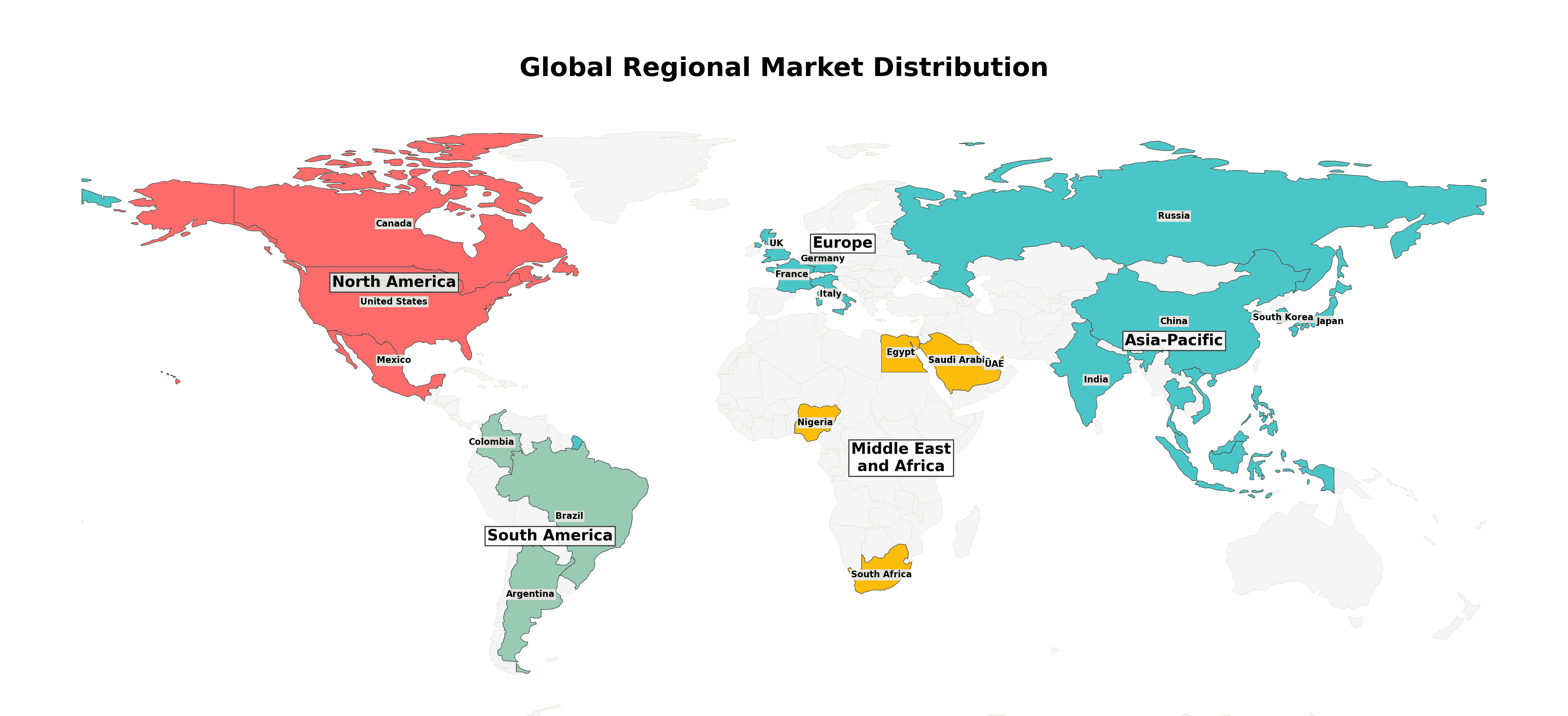
Optical Communication IC Market Regional Analysis :
-
North America:
Strong demand driven by EVs, 5G infrastructure, and renewable energy, with the U.S. leading the market.
-
Europe:
Growth fueled by automotive electrification, renewable energy, and strong regulatory support, with Germany as a key player.
-
Asia-Pacific:
Dominates the market due to large-scale manufacturing in China and Japan, with growing demand from EVs, 5G, and semiconductors.
-
South America:
Emerging market, driven by renewable energy and EV adoption, with Brazil leading growth.
-
Middle East & Africa:
Gradual growth, mainly due to investments in renewable energy and EV infrastructure, with Saudi Arabia and UAE as key contributors.
Optical Communication IC Market Segmentation :
The research report includes specific segments by region (country), manufacturers, Type, and Application. Market segmentation creates subsets of a market based on product type, end-user or application, Geographic, and other factors. By understanding the market segments, the decision-maker can leverage this targeting in the product, sales, and marketing strategies. Market segments can power your product development cycles by informing how you create product offerings for different segments.
Key Company
- II-VI Incorporated (Finisar)
- Lumentum (Oclaro)
- Broadcom
- Sumitomo Electric
- Accelink Technologies
- Hisense Broadband
- Mitsubishi Electric
- Yuanjie Semiconductor
- EMCORE Corporation
- Hisilicon
- Wuhan Mindsemi
- Wuhan Elite Optronics
Market Segmentation (by Type)
- DFB
- VCSEL
- EML
Market Segmentation (by Application)
- Telecommunications
- Data Center
Market Drivers
- Growing Demand for High-Speed Internet
Increasing broadband penetration and the surge in data consumption drive the need for advanced optical communication solutions. - Expansion of Cloud Computing and AI Applications
The rise of AI, big data, and IoT applications requires faster and more efficient data processing, pushing demand for optical ICs. - Advancements in Optical Communication Technology
Ongoing innovations such as silicon photonics and integrated photonics are improving the performance and efficiency of optical ICs.
Market Restraints
- High Initial Investment and Production Costs
The manufacturing of optical ICs involves expensive processes, limiting market entry for small players. - Complexity in Integration and Standardization
Ensuring compatibility between different optical components and industry standards remains a challenge. - Limited Availability of Skilled Professionals
The industry faces a shortage of experts with specialized knowledge in photonics and optical communication technologies.
Market Opportunities
- Emerging 6G Technology
Future advancements in 6G networks will create new opportunities for optical ICs in high-speed communication systems. - Increasing Adoption of Edge Computing
Edge computing relies on fast and efficient data processing, driving demand for optical interconnect solutions. - Rising Investments in Smart Cities and IoT
Governments and enterprises investing in smart infrastructure will drive the need for advanced optical communication technologies.
Market Challenges
- Supply Chain Disruptions
Geopolitical tensions and semiconductor shortages impact the production and availability of optical ICs. - Technological Complexity in Miniaturization
Shrinking optical components while maintaining high efficiency is a significant technical challenge. - Competition from Alternative Communication Technologies
Emerging wireless and RF communication technologies pose potential competition to optical solutions.
Key Benefits of This Market Research:
- Industry drivers, restraints, and opportunities covered in the study
- Neutral perspective on the market performance
- Recent industry trends and developments
- Competitive landscape & strategies of key players
- Potential & niche segments and regions exhibiting promising growth covered
- Historical, current, and projected market size, in terms of value
- In-depth analysis of the Optical Communication IC Market
- Overview of the regional outlook of the Optical Communication IC Market:
Key Reasons to Buy this Report:
- Access to date statistics compiled by our researchers. These provide you with historical and forecast data, which is analyzed to tell you why your market is set to change
- This enables you to anticipate market changes to remain ahead of your competitors
- You will be able to copy data from the Excel spreadsheet straight into your marketing plans, business presentations, or other strategic documents
- The concise analysis, clear graph, and table format will enable you to pinpoint the information you require quickly
- Provision of market value data for each segment and sub-segment
- Indicates the region and segment that is expected to witness the fastest growth as well as to dominate the market
- Analysis by geography highlighting the consumption of the product/service in the region as well as indicating the factors that are affecting the market within each region
- Includes in-depth analysis of the market from various perspectives through Porters five forces analysis
- Provides insight into the market through Value Chain
- Market dynamics scenario, along with growth opportunities of the market in the years to come
- 6-month post-sales analyst support
Customization of the Report
In case of any queries or customization requirements, please connect with our sales team, who will ensure that your requirements are met.
FAQs
Q: What are the key driving factors and opportunities in the Optical Communication IC market?
A: The major drivers include growing demand for high-speed internet, expansion of cloud computing, and advancements in optical technology. Opportunities lie in emerging 6G networks, edge computing, and smart city projects.
Q: Which region is projected to have the largest market share?
A: Asia-Pacific is expected to dominate the market due to rapid technological advancements, strong telecom infrastructure, and increasing investments in data centers.
Q: Who are the top players in the global Optical Communication IC market?
A: Key players include II-VI Incorporated (Finisar), Lumentum (Oclaro), Broadcom, Sumitomo Electric, Accelink Technologies, and Hisense Broadband.
Q: What are the latest technological advancements in the industry?
A: Innovations such as silicon photonics, photonic integration, and VCSEL technology are enhancing the efficiency and performance of optical communication ICs.
Q: What is the current size of the global Optical Communication IC market?
A: The market was valued at USD 3045.70 million in 2023 and is projected to reach USD 9004.70 million by 2032, growing at a CAGR of 12.80%.

Get Sample Report PDF for Exclusive Insights
Report Sample Includes
- Table of Contents
- List of Tables & Figures
- Charts, Research Methodology, and more...
 Download Sample Report PDF