Glass Core Substrate (TGV – Through Glass Via) Market Insights
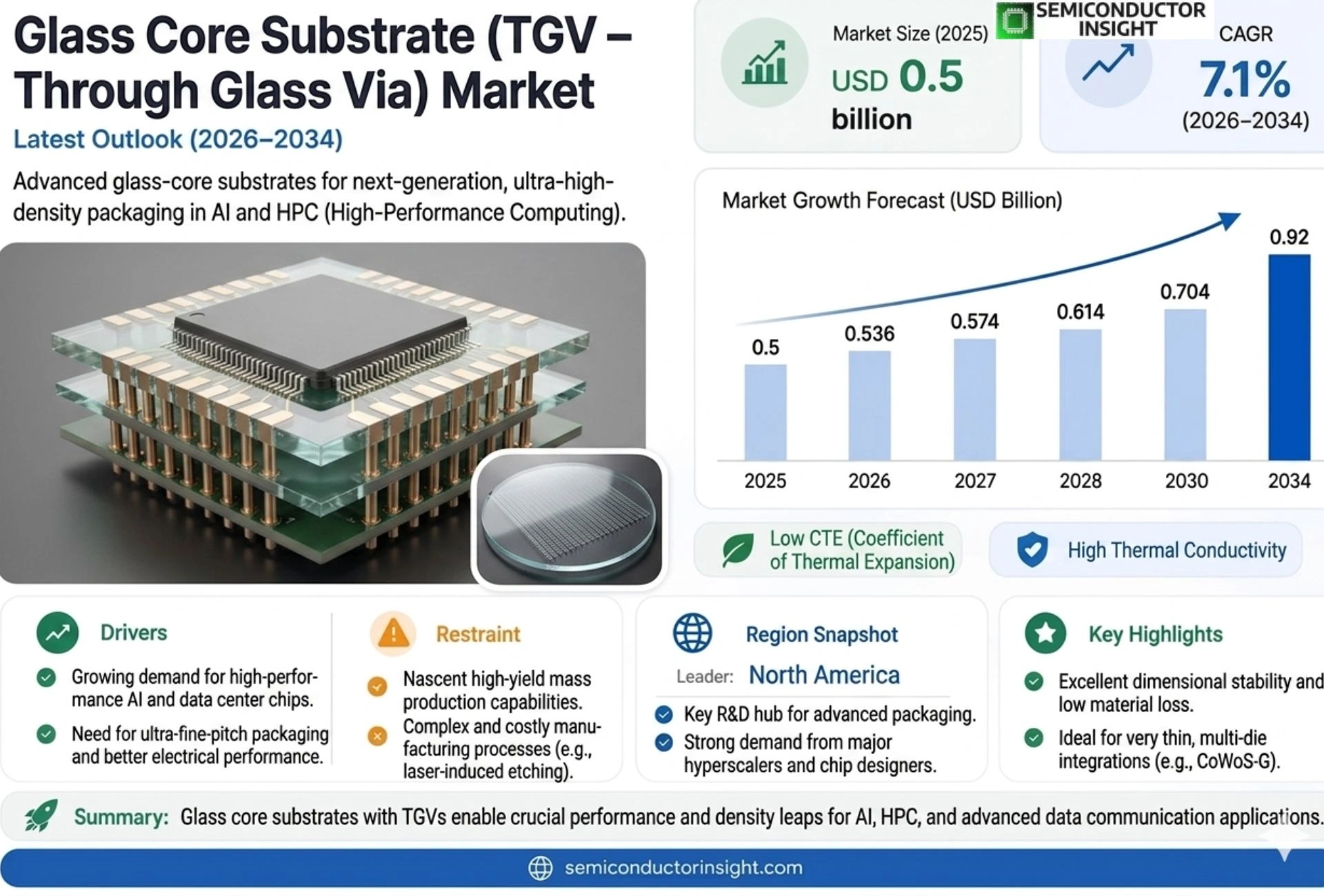
Global Glass Core Substrate (TGV – Through Glass Via) Market size was valued at USD 245.6 million in 2025. The market is projected to grow from USD 257.3 million in 2025 to USD 462.8 million by 2034, exhibiting a CAGR of 7.1% during the forecast period.
Glass Core Substrate with Through Glass Via (TGV) technology refers to advanced substrates used primarily in high-frequency and high-density electronic packaging. These substrates enable vertical electrical connections through glass wafers, offering superior electrical performance, thermal stability, and miniaturization capabilities compared to traditional organic or ceramic substrates. TGV substrates are increasingly critical in applications such as 5G communications, radar systems, and advanced semiconductor packaging.
The market is witnessing robust growth driven by the rising demand for high-speed communication devices and the proliferation of 5G infrastructure worldwide. Furthermore, the superior dielectric properties and low signal loss of glass core substrates make them highly suitable for next-generation electronics, which require enhanced signal integrity and thermal management. However, challenges such as high manufacturing costs and complex fabrication processes remain. Leading players are investing in process optimization and capacity expansion to meet growing industry needs, which is expected to accelerate market adoption in the coming years.
MARKET DRIVERS
Rising Demand for Miniaturization in Electronics
Glass Core Substrate (TGV – Through Glass Via) Market is witnessing substantial growth driven by the increasing demand for compact and lightweight electronic devices. Glass substrates provide superior electrical insulation and thermal stability, making them ideal for advanced packaging solutions in smartphones, wearables, and IoT devices. This trend toward miniaturization is accelerating the adoption of TGV technology to meet size and performance criteria.
Enhanced Performance in High-Frequency Applications
Glass Core Substrates offer low dielectric loss and excellent signal integrity, critical for high-frequency applications such as 5G communication equipment and advanced radar systems. The superior material properties of glass support higher data transmission rates and reliability, which is driving substantial integration of TGV technology in next-generation communication infrastructures.
➤ Advancements in manufacturing processes have reduced production costs, enabling wider adoption of Glass Core Substrate technology across diverse market verticals.
Additionally, increasing investment in 5G networks globally is expected to accelerate the demand for Glass Core Substrate (TGV) solutions due to their ability to support complex circuits with higher bandwidth and efficiency.
MARKET CHALLENGES
Complex Manufacturing and Integration Issues
Despite offering numerous advantages, the manufacturing process of Through Glass Via substrates involves sophisticated techniques that require high precision and advanced equipment. Integration of TGV into existing semiconductor fabrication lines remains challenging, leading to longer development cycles and increased costs for initial setup.
Other Challenges
Reliability Concerns
Glass materials, while offering thermal stability, pose challenges related to mechanical stress and potential cracking during thermal cycling, which can affect long-term reliability and yield rates in mass production.
MARKET RESTRAINTS
High Initial Investment and Limited Standardization
Glass Core Substrate (TGV) Market faces restraints due to the considerable upfront capital required for manufacturing facilities equipped with TGV technology. Moreover, the lack of universally accepted industry standards for TGV processes restrains widespread adoption and interoperability across different devices and platforms, impeding the market’s scalability.
MARKET OPPORTUNITIES
Emerging Applications in Automotive and Medical Electronics
The expanding use of Glass Core Substrate (TGV) technology in automotive electronics, particularly in ADAS and infotainment systems, offers significant growth opportunities. Additionally, the medical electronics sector is increasingly adopting glass-based substrates for high-precision diagnostic and imaging equipment, driven by the substrates’ stability and miniaturization capabilities.
Growing Collaboration for R&D Innovation
Collaborative initiatives between substrate manufacturers, semiconductor companies, and research institutes are fostering innovation in Glass Core Substrate technologies. These partnerships aim to develop cost-effective materials and automated production techniques, paving the way for broader application and enhanced market penetration.
Trends
Emerging Growth Drivers Glass Core Substrate (TGV – Through Glass Via) Market
Glass Core Substrate (TGV – Through Glass Via) Market is experiencing significant growth spurred by the increasing demand for high-frequency and high-density electronic packaging technologies. TGV technology enables vertical electrical interconnections through glass wafers that deliver superior electrical performance, thermal stability, and miniaturization over conventional substrate materials. This is particularly crucial for applications in 5G communications, radar systems, and advanced semiconductor packages where signal integrity and thermal management are paramount.
Another key driver is the global expansion of 5G infrastructure, which requires substrates with excellent dielectric properties and minimal signal loss. Glass core substrates meet these criteria, positioning them as the preferred choice for next-generation electronics that emphasize enhanced speed and reliability. Additionally, advancements in process optimization and manufacturing capacity by leading market players are further accelerating the adoption of TGV substrates.
Other Trends
Challenges in Manufacturing and Cost Considerations
Despite promising growth prospects, Glass Core Substrate (TGV – Through Glass Via) Market faces challenges related to the high cost and complexity of fabrication processes. The precision required in creating vertical vias through glass substrates demands advanced manufacturing techniques, which increase production expenses. These factors limit the entry of smaller participants and can slow down adoption rates in price-sensitive segments. However, ongoing investments in technological enhancements aim to reduce costs and improve production scalability.
Increasing Integration in High-Performance Electronics
Market trends indicate a shift towards integrating glass core substrates in sophisticated electronic modules to enhance device performance and miniaturization. The superior thermal and electrical properties of TGV substrates enable the design of compact and efficient devices, particularly in the semiconductor and telecommunications sectors. This trend aligns with the growing requirement for lightweight and reliable components in consumer electronics and industrial applications.
Future Outlook and Market Dynamics
The forecast period anticipates a continued upward trajectory for Glass Core Substrate (TGV – Through Glass Via) Market, driven by expanding use cases in high-speed communications and complex semiconductor packaging. Innovation focused on reducing manufacturing complexity and improving yield will be crucial to market expansion. Collaboration among material suppliers, substrate manufacturers, and end-users is expected to foster developments that address existing limitations while unlocking new application opportunities.
COMPETITIVE LANDSCAPE
Key Industry Players
Leading innovators shaping Glass Core Substrate (TGV) Market dynamics
Glass Core Substrate (TGV) Market is characterized by a competitive environment dominated by several key established players who leverage advanced manufacturing technologies and robust R&D capabilities to maintain their market positions. Companies like AGC Inc. and Corning Incorporated lead the market with their cutting-edge TGV production processes and extensive global presence. This market structure is moderately consolidated, with significant investments by leading players focusing on capacity expansion and process enhancements to reduce manufacturing complexity and costs while addressing the increasing demand from sectors such as 5G communications and high-frequency device packaging.
In addition to the leaders, several niche players with specialized expertise in glass substrate technology contribute significantly to the market’s innovation landscape. Firms such as Taiyo Holdings Co., Ltd., Michigan Electric Co., Ltd., and Shinko Electric Industries Co., Ltd. offer innovative solutions tailored for specific high-frequency and semiconductor applications. Collaboration and strategic partnerships are prevalent, enabling smaller companies to access advanced technologies and scale effectively. The competitive dynamics also emphasize product differentiation through superior dielectric properties and thermal management capabilities to meet stringent industry requirements.
List of Key Glass Core Substrate (TGV) Companies Profiled
- AGC Inc.
- Corning Incorporated
- Taiyo Holdings Co., Ltd.
- Shinko Electric Industries Co., Ltd.
- Michigan Electric Co., Ltd.
- Planar Systems, Inc.
- AGIE CHARMILLES (GF Machining Solutions)
- NTT Advanced Technology Corporation
- ROHM Semiconductor
- JX Nippon Mining & Metals Corporation
- Scheugenpflug AG
- Taiwan Union Technology Corporation
- Liyu Precision Industry Co., Ltd.
- Fujikura Ltd.
- Samsung Electro-Mechanics
Segment Analysis:
| Segment Category | Sub-Segments | Key Insights |
| By Type |
|
Double-sided TGV Substrate stands out due to its capacity for enhanced integration, allowing vertical interconnections on both sides of the glass substrate. This leads to improved electrical performance and density, which is critical for high-frequency applications. The complexity of manufacturing double-sided substrates encourages innovation in fabrication techniques, driving the market towards higher precision and reliability. Meanwhile, single-sided types still offer benefits in cost efficiency and simplified production suitable for less demanding applications. |
| By Application |
|
5G Communication Devices represent a dominant application, as the need for substrates that support high speed and low signal loss is critical in 5G infrastructure and devices. Additionally, radar and aerospace systems benefit from the superior thermal and electrical properties of TGV substrates, enabling reliable operation in demanding environments. High-performance semiconductor packaging leverages the miniaturization and integration capability of glass core substrates, facilitating advancements in next-generation electronics. |
| By End User |
|
Telecommunication Equipment Manufacturers are leading consumers of glass core substrates, driven by the rapid deployment of 5G networks and the demand for highly reliable components with low signal attenuation. Defense and aerospace companies utilize these substrates for their robustness under extreme conditions, emphasizing durability and precision. Semiconductor producers focus on benefits like improved thermal management and miniaturization offered by these substrates to enhance overall device performance. |
| By Product Form |
|
Rigid Glass Substrates dominate owing to their superior mechanical stability and thermal resistance, which make them suitable for high-performance electronics requiring reliability. Flexible glass substrates are gaining traction as demand rises for compact and bendable devices, fostering innovations in wearable and flexible electronics. Hybrid substrates combine features of both, addressing varied design requirements and enabling improved integration in multifunctional devices. |
| By Manufacturing Technique |
|
Laser Drilling is considered the leading manufacturing technique due to its precision and ability to produce microvias with minimal damage to the glass substrate. Mechanical drilling remains relevant for larger vias where cost considerations dominate. Electrochemical etching is gaining attention for its non-invasive approach that enhances substrate integrity, indicating a growing trend of adopting advanced fabrication processes to improve performance and reduce defects. |
Regional Analysis: Glass Core Substrate (TGV ? Through Glass Via) Market
Asia-Pacific
The thriving electronics manufacturing sector across Asia-Pacific ensures a steady demand for high-quality Glass Core Substrates. Integration with TGV technology is critical for device miniaturization, appealing to a wide array of smart consumer products and industrial electronics.
Significant investments in research and development are advancing substrate materials and through-glass via techniques, enabling enhanced device efficiency and thermal management, which are essential for the competitive electronics market.
Government policies promoting high-tech manufacturing and sustainable industrial practices provide a conducive environment for the Glass Core Substrate market’s sustainable growth in Asia-Pacific.
The region hosts a dense network of suppliers, manufacturers, and technology providers, fostering competitive innovation and enabling the development of cost-effective TGV solutions tailored to diverse applications.
North America
North America enjoys a strong foothold in Glass Core Substrate (TGV – Through Glass Via) Market, propelled by the presence of cutting-edge semiconductor and electronics firms. The emphasis on precision manufacturing and quality control elevates the demand for advanced glass substrates, particularly for aerospace, automotive, and medical electronics sectors. A collaborative innovation ecosystem involving academia, government, and industry players accelerates technology commercialization. Despite higher production costs, continuous efforts toward process optimization maintain the region’s competitiveness.
Europe
Europe maintains a significant role in the Glass Core Substrate market by leveraging expertise in high-performance applications including automotive electronics, industrial automation, and wearable devices. The region emphasizes sustainability and environmental standards, pushing for eco-friendly substrate technologies with enhanced recyclability. Strong collaboration among multinational corporations and startups fosters innovation in through-glass via methodologies, supporting the growth of smart sensor and IoT technologies. The regulatory environment, while stringent, ensures quality and reliability in product offerings.
South America
South America is gradually emerging in Glass Core Substrate (TGV – Through Glass Via) Market, driven primarily by increasing electronics manufacturing investments and demand for affordable consumer electronics. Although the regional ecosystem is still developing, strategic initiatives aim to improve local capabilities and integrate global supply chains. Opportunities for growth exist in sectors such as telecommunications and automotive electronics. However, infrastructural and logistical challenges remain key factors influencing market expansion pace.
Middle East & Africa
The Middle East & Africa region shows cautious progress in adopting Glass Core Substrate technologies, primarily supported by investments in infrastructure and technology diversification efforts. Key applications include telecommunications and defense electronics, where TGV substrates enhance performance in harsh environments. The market is constrained by limited manufacturing infrastructure but benefits from growing interest in advanced electronic components. Collaborative projects and technology transfer agreements with global partners are pivotal to overcoming development barriers and expanding regional market presence.
Report Scope
This market research report provides a comprehensive analysis of the Glass Core Substrate (TGV ? Through Glass Via) Market , covering the forecast period 2026–2034. It offers detailed insights into market dynamics, technological advancements, competitive landscape, and key trends shaping the industry.
Key focus areas of the report include:
- Market Overview: The report begins with an overview outlining its current market scenario, key growth indicators, and industry transformation drivers. It discusses macroeconomic factors, demand–supply balance, regulatory landscape, and the strategic role of semiconductors in powering advancements across industries such as automotive, telecommunications, consumer electronics, and industrial automation.
- Market Size & Forecast: Historical data and future projections for revenue, unit shipments, and market value across major regions and segments.
- Segmentation Analysis: Detailed breakdown by product type, technology, application, and end-user industry to identify high-growth segments and investment opportunities.
- Regional Insights: Insights into market performance across North America, Europe, Asia-Pacific, Latin America, and the Middle East & Africa, including country-level analysis where relevant.
- Competitive Landscape: Profiles of leading market participants, including their product offerings, R&D focus, manufacturing capacity, pricing strategies, and recent developments such as mergers, acquisitions, and partnerships.
- Technology Trends & Innovation: Assessment of emerging technologies, integration of AI/IoT, semiconductor design trends, fabrication techniques, and evolving industry standards.
- Market Drivers & Restraints: Evaluation of factors driving market growth along with challenges, supply chain constraints, regulatory issues, and market-entry barriers.
- Stakeholder Insights: Insights for component suppliers, OEMs, system integrators, investors, and policymakers regarding the evolving ecosystem and strategic opportunities.
Primary and secondary research methods are employed, including interviews with industry experts, data from verified sources, and real-time market intelligence to ensure the accuracy and reliability of the insights presented.
FREQUENTLY ASKED QUESTIONS:
What is the current market size of Glass Core Substrate (TGV ? Through Glass Via) Market?
-> Glass Core Substrate (TGV – Through Glass Via) Market was valued at USD 245.6 million in 2025 and is expected to reach USD 462.8 million by 2034, exhibiting a CAGR of 7.1% during the forecast period.
Which key companies operate Glass Core Substrate (TGV – Through Glass Via) Market?
-> Key players include Axalta Coating Systems, AkzoNobel, BASF SE, PPG, Sherwin-Williams, and 3M, among others.
What are the key growth drivers?
-> Key growth drivers include rising demand for high-speed communication devices and the proliferation of 5G infrastructure worldwide. Additionally, the superior dielectric properties and low signal loss of glass core substrates make them highly suitable for next-generation electronics requiring enhanced signal integrity and thermal management.
Which region dominates the market?
-> Asia-Pacific is the fastest-growing region, driven by significant 5G infrastructure expansion and high adoption of advanced semiconductor packaging technologies, while Europe remains a dominant regional market due to its established electronics manufacturing base.
What are the emerging trends?
-> Emerging trends include advancements in TGV manufacturing processes, increasing integration of glass core substrates in 5G communications, radar systems, and high-density electronic packaging. Industry players are focusing on process optimization and capacity expansion to address challenges such as high manufacturing costs and complex fabrication methods.

Get Sample Report PDF for Exclusive Insights
Report Sample Includes
- Table of Contents
- List of Tables & Figures
- Charts, Research Methodology, and more...