SEMICONDUCTOR INSIGHT
MARKET RESEARCH REPORT

Semiconductor Wafer Handling System Market

2026 to 2034
MARKET INTELLIGENCE
ACROSS KEY REGIONS
2026 EDITION
INTEGRATED CIRCUITS Semiconductor Market Research

Semiconductor Wafer Handling System Market

Size, Global Outlook and Forecast 2026-2034

◷
UPDATED 08 September 2026
▤
REPORT LENGTH Detailed Report
▣
REPORT CODE 24fa1b1ac79a
▯
FORMATS PDF

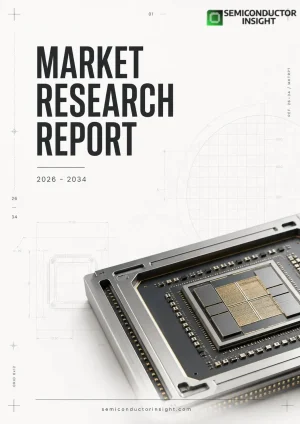
Semiconductor Wafer Handling System Market is projected to reach USD 2,791 million by 2034, implying a 6.5% CAGR for 2026–2034.

Get the sample PDF with study scope, segmentation and methodology details.

Key Statistics

2025 Market Size
USD 1,589 million
2034 Projected Size
USD 2,791 million
CAGR (2026–2034)
6.5%
Largest Market in 2025
Asia Pacific

Key Takeaways

  • USD 1.59 billion in 2025 establishes a specialized automation market tied directly to fab capacity, wafer throughput and contamination-control requirements.
  • 300mm wafer handling is the strategic center, as advanced logic and memory fabs increasingly standardize high-volume production around larger wafer formats and automated FOUP workflows.
  • Vacuum transport is the high-specification segment, where low vibration, pressure compatibility, repeatability and cleanliness become decisive as process windows tighten.
  • Asia Pacific leads the market because China, Japan, Taiwan and South Korea combine dense semiconductor manufacturing with major wafer-automation suppliers.
  • Competition is concentrated; the source scope identifies more than 30 suppliers and places the top-ten group above 80% of global share, making qualification and installed-base experience major barriers.

Semiconductor Wafer Handling System Market Overview

Semiconductor Wafer Handling System Market was valued at USD 1,589 million in 2025 and is projected to reach USD 2,791 million by 2034, implying a 6.5% CAGR for 2026–2034. The market covers automated equipment used to transfer, align, load and unload semiconductor wafers between carriers and process tools in controlled atmospheric or vacuum environments. Demand follows semiconductor fab investment, wafer diameter, contamination requirements, equipment automation and the throughput required to keep expensive process tools operating near target utilization.

Base year: 2025 · Forecast period: 2026–2034 · Historical reference: 2019–2025 · Values in USD million unless otherwise stated

A semiconductor wafer handling system is the physical automation layer that moves wafers through fabrication without introducing particles, excessive vibration or alignment error. The architecture can include Equipment Front End Modules, load ports, wafer robots, aligners, sorters, atmospheric transport and vacuum transport. Its commercial value comes from repeatable movement and predictable interfaces: a failed transfer can idle a process tool, while poor alignment or contamination can affect wafer quality. Handling therefore sits directly inside the fab productivity equation.

Atmospheric transport typically connects FOUPs, load ports and process-tool front ends inside the cleanroom, while vacuum transport operates within clustered process environments where wafers move between chambers without returning to atmosphere. These architectures impose different engineering requirements. Atmospheric systems emphasize clean transfer, access, footprint and factory connectivity; vacuum systems add pressure integrity, low outgassing, vibration control and high-precision motion. Suppliers increasingly package these functions with controls and software because customers want qualified, integrated material flow rather than disconnected robot components.

The market is changing because semiconductor manufacturing is simultaneously becoming more automated and more contamination-sensitive. SEMI expects worldwide 300mm front-end equipment spending to reach a record USD 142 billion in 2026, with continued expansion through 2029, creating the equipment environment that drives wafer-handling demand. New fabs also tend to be specified around automated material flow from the start, while mature fabs add retrofit and replacement demand as older robots, aligners and EFEMs reach service limits. This makes installed-base support an important recurring revenue stream.

Segment Analysis: By Type

The source-defined type axis contains Atmospheric Transport Systems and Vacuum Transport Systems. Atmospheric systems remain fundamental to FOUP-to-tool movement and front-end automation, while vacuum transport carries greater technical value where process clusters require pressure-controlled wafer movement. The distinction is therefore based on the transfer environment and the contamination-control architecture, rather than simply on robot mechanics.

Type Function / Definition Market Position and Demand Characteristics
Atmospheric Transport Systems Automated systems that move wafers in controlled clean-air environments between carriers, load ports and process-tool front ends, including EFEMs, sorters and atmospheric robots. Core production category because FOUP-based fabs require reliable loading and transfer at every tool interface. Suppliers compete on throughput, cleanliness, aligner accuracy, footprint, interface compatibility and software integration. Hirata’s Freedom EFEM family, for example, publishes 300mm support and up to 500 wafers/hour for one configuration, showing how front-end hardware is increasingly evaluated as an integrated throughput and contamination-control platform.
Vacuum Transport Systems Robotic transfer platforms that move wafers between process chambers or clustered modules under vacuum or reduced pressure while protecting contamination and positional integrity. High-specification segment where vibration, pressure range, repeatability, end-effector performance and cleanliness strongly affect qualification. DAIHEN’s current 300mm portfolio includes a 650-wph vacuum robot with direct-drive motors and ISO Class 1 cleanliness, while its precision vacuum platform specifies XY repeatability around 0.02 mm. Such metrics create premium differentiation because the cost of transfer error rises sharply with advanced process complexity.

Performance differentiation in wafer handling

Current supplier specifications show that performance is being pushed across several dimensions simultaneously. DAIHEN’s UT-VDW3000HS combines 650 wafers per hour, direct-drive motors, ISO Class 1 cleanliness and operation toward 10⁻⁶ Pa, while the UT-VDX3000NS emphasizes approximately 0.02 mm XY repeatability and vacuum operation down to 10⁻⁷ Pa. These specifications matter commercially because process tools must receive wafers quickly without trading cycle time for vibration, contamination or positioning risk. High throughput alone is therefore no longer a sufficient performance proposition.

Hirata’s 300mm front-end portfolio shows the parallel move toward integrated architecture. Its Freedom 2×2-port EFEM supports N₂ purge and a published 500-wafer-per-hour configuration, while the company’s vacuum robots emphasize direct drive and vibration suppression. The customer benefit is less integration work and more predictable tool behavior. This creates switching costs once the handling system is qualified with the process tool because changing a robot or EFEM can require interface, software, contamination and motion validation, making the installed base an important source of supplier defensibility.

Segment Analysis: By Application

The source-defined application categories are 300mm Wafer, 200mm Wafer and Other. 300mm is the leading and strategically fastest-expanding application because new high-volume logic and memory capacity increasingly uses 300mm wafer flows. 200mm remains important in mature-node, analog, power and specialty production, where legacy equipment and long product lifecycles make retrofit compatibility valuable. Other formats are smaller and more specialized, favoring configurable handling platforms rather than highly standardized factory architectures.

Application Demand Characteristics
300mm Wafer Leading application. Advanced logic, memory and high-volume foundry production require highly automated FOUP handling, load ports, EFEMs, aligners and vacuum robots. SEMI’s multi-year 300mm capacity expansion makes this the principal equipment demand pool. Purchasing is driven by throughput, contamination control, interface compatibility and serviceability, and greenfield fabs often provide opportunities to win several handling modules within the same factory project.
200mm Wafer 200mm fabs remain active in analog, power, MEMS and mature-node semiconductor production. Many facilities operate older tool generations, so customers value replacement availability, compatible interfaces and the ability to integrate newer automation without rebuilding the entire process line. The commercial opportunity is therefore concentrated in retrofit, lifecycle service and configurable automation rather than only in new-fab equipment purchases.
Other Other wafer formats are associated with specialty manufacturing, pilot lines and research environments where volume is lower and configurations are less standardized. Customers often require custom end effectors, aligner ranges or tool interfaces. Suppliers with modular mechanical and controls architectures can reuse core technology while adapting the final handling configuration, reducing engineering cost and making smaller projects commercially viable.

Semiconductor Wafer Handling System Market Outlook

Regional Analysis

Asia Pacific is the largest regional market because it combines the highest concentration of semiconductor manufacturing with a deep ecosystem of wafer-handling and factory-automation suppliers. North America is increasingly project-led as new fabs are commissioned, Europe has a stronger automotive and industrial orientation, and smaller regions depend more heavily on imported equipment and specialist integration. The regional market therefore follows fab investment and automation maturity rather than general electronics consumption.

How does regional demand differ across the Semiconductor Wafer Handling System Market?

Regional demand follows fab density, process mix and automation design philosophy. Asia Pacific benefits from large-scale memory and foundry production plus local equipment suppliers, so throughput, qualification and service coverage dominate. North America offers greenfield opportunities where complete material-flow architecture can be designed from scratch. Europe values reliability, retrofit compatibility and long equipment support in automotive and industrial fabs. South America is more project-driven, while Middle East & Africa is emerging and depends on international suppliers and regional service partners.

Region Position Growth Outlook Demand Profile What Decides Supplier Selection
Asia Pacific Largest High 300mm fabs, memory, foundry, advanced logic Throughput, cleanliness, local service, qualification
North America Strategic High project activity Greenfield logic, memory, AI and specialty fabs Integration, supply resilience, engineering support
Europe High specification Moderate Automotive, industrial and specialty Reliability, retrofit fit, lifecycle support
South America Emerging Gradual Smaller fab and electronics base Availability, cost, integrator support
Middle East & Africa Developing Project-led Technology ecosystem build-out Local partnership, imported supply, service

Detailed Regional Blocks

Asia Pacific LARGEST

Why does Asia Pacific lead wafer-handling demand?

Asia Pacific leads because wafer fabrication, semiconductor equipment and automation engineering are concentrated within the same commercial ecosystem. China provides a large and growing fab base, Japan combines device manufacturing with leading automation suppliers, Taiwan is centered on advanced foundry production and South Korea on memory and advanced logic. This density shortens engineering feedback loops, supports local service and makes supplier qualification a strategic barrier. The region therefore captures both new-equipment demand and recurring replacement and service activity.

Market positionLargest
Growth outlookHigh
Demand profile300mm + advanced fabs
Access gateQualification + service
Country Position in region What drives demand
China Large and expanding Fab investment and domestic equipment development create demand for atmospheric and vacuum automation. Local technical support and response time increasingly matter.
Japan Major supplier base Semiconductor and automation industries are mature, with customers emphasizing precision, cleanliness, uptime and long lifecycle support.
Taiwan Advanced foundry hub High-volume leading-edge production requires contamination-controlled, high-throughput material movement and tight equipment integration.
South Korea Memory and logic hub Large memory operations demand reliable high-volume wafer transfer, with qualification and service continuity central to supplier selection.
Singapore / Southeast Asia Emerging production hubs New capacity increases demand for locally supported automation and creates opportunities for complete front-end material-flow solutions.

Market instances

  • RORZE’s 2026 reporting continues to center semiconductor automation. Its portfolio spans wafer transfer robots, aligners, load ports, EFEMs and vacuum platforms, demonstrating the breadth needed to compete for fab-wide material-flow programs rather than isolated robot purchases.
  • Hirata reports more than 40,000 Freedom EFEM deliveries. The installed base is commercially important because repeat deployments, service relationships and existing interfaces reduce customer qualification risk when fabs expand or duplicate proven tool architectures.
  • DAIHEN’s 650-wph 300mm vacuum platform pairs high throughput with ISO Class 1 cleanliness and direct-drive motion. The combination illustrates the engineering trade-off the market increasingly monetizes: greater cycle speed without sacrificing contamination or vibration performance.
  • SEMI’s 2026 outlook points to USD 142 billion of 300mm front-end equipment spending. The figure provides a strong macro indicator for the equipment ecosystem that creates demand for EFEMs, load ports, robots and aligners across Asia’s major fab clusters.
In the full report: country-level market size, sales volume, pricing, forecasts and manufacturer-level detail across the study period.
North America STRATEGIC

What is driving North American wafer-handling demand?

North America is gaining strategic importance as new semiconductor fabs create greenfield opportunities for automated material flow. A new facility can specify FOUP handling, EFEMs, robots, aligners and factory interfaces as one architecture, rather than adapting automation to legacy tools. This favors suppliers capable of early engineering engagement and global commissioning. The procurement decision is therefore increasingly about integration risk and lifecycle support, not just the purchase price of one transfer robot.

Market positionStrategic
Growth outlookHigh project activity
Demand profileGreenfield fabs
Access gateIntegration + qualification
Country Position in region What drives demand
United States Dominant regional demand New logic, memory and specialty fabs create demand for 300mm handling equipment and integrated automation. Supply resilience is increasingly part of qualification.
Canada Specialized Research, photonics and advanced electronics create lower-volume demand where configurable automation and technical support are valuable.
Mexico Emerging Electronics manufacturing supports adjacent automation demand, although advanced wafer-fab handling remains concentrated in the United States.
Rest of North America Selective Demand follows individual fab and technology projects and is often served by global suppliers with local engineering capability.

Market instances

  • SEMI projects record 300mm front-end equipment spending in 2026. As new U.S. fabs ramp, the market opportunity extends beyond process tools into the material-flow infrastructure needed to move wafers consistently between FOUPs and equipment.
  • Greenfield projects favor integrated EFEM architectures. Early supplier involvement allows the robot, load port, aligner and factory-interface layers to be designed together, reducing commissioning risk and allowing suppliers to secure multiple positions in the same facility.
  • Supply-chain resilience is becoming a practical supplier-selection criterion. Customers adding domestic capacity want predictable parts, service and engineering access, making regional support increasingly valuable even for globally manufactured automation platforms.
  • Qualification remains a moat. Wafer handlers must prove cleanliness, repeatability, interface reliability and fault recovery in the customer’s tool environment, which makes established reference installations commercially valuable.
In the full report: country-level market size, sales volume, pricing, forecasts and manufacturer-level detail across the study period.
Europe HIGH SPECIFICATION

What differentiates the European wafer-handling market?

Europe has a smaller semiconductor production base than Asia but a high concentration of automotive, industrial and specialty applications. These customers place greater value on equipment reliability, retrofit compatibility, long support periods and predictable maintenance. The result is a market in which automation suppliers can win through lifecycle capability and engineering quality even when annual unit volumes are modest. Automotive chip manufacturing also encourages equipment specifications that prioritize stability over headline speed.

Market positionHigh specification
Growth outlookModerate
Demand profileAutomotive + industrial
Access gateReliability + lifecycle
Country Position in region What drives demand
Germany Largest industrial base Automotive and industrial semiconductor manufacturing favor reliable handling, qualification and long-term service.
France Specialized Aerospace, industrial and research applications require high-precision and configurable wafer automation.
Netherlands / Benelux Advanced ecosystem Advanced semiconductor-equipment activity increases demand for precision, low-vibration handling and close equipment integration.
Italy Industrial Industrial electronics create selective demand for robust, supported automation platforms.
Rest of Europe Distributed Regional fabs rely on global suppliers with strong local field service and spare-parts coverage.

Market instances

  • Hirata’s vacuum robots specify vibration below 0.1G in its published architecture. Such performance is relevant to high-specification environments because transfer-induced vibration can become more consequential as process dimensions shrink and equipment sensitivity increases.
  • Hirata’s N₂-purge EFEM architecture shows how front-end handling is being integrated with contamination management. The market implication is that suppliers increasingly compete as process-enablement partners rather than as standalone robot manufacturers.
  • European automotive semiconductor investment strengthens the requirement for predictable equipment support because factory uptime directly affects vehicle-supply commitments. Suppliers that can maintain qualified automation over long tool lifecycles gain an advantage.
  • Retrofit demand remains important. Mature European facilities often run mixed equipment generations, creating opportunities for configurable handling systems, replacement robots and modernization services rather than only greenfield installations.
In the full report: country-level market size, sales volume, pricing, forecasts and manufacturer-level detail across the study period.
South America EMERGING

What shapes South American wafer-handling demand?

South America remains a smaller market because 300mm semiconductor fabrication is limited compared with Asia, North America and Europe. Demand is concentrated in research, specialty production and electronics-related activities, so large standardized automation orders are less common. Suppliers therefore compete on configurability, integration assistance and service reach. Local partners can create commercial leverage by coordinating imported equipment, commissioning and spare parts, allowing global suppliers to address smaller customers without maintaining the full infrastructure of a major regional fab market.

Market positionEmerging
Growth outlookGradual
Demand profileProject + specialty
Access gateIntegrator + availability
Country Position in region What drives demand
Brazil Largest regional base Electronics, industrial and research activities provide the broadest demand pool, though advanced 300mm fab capacity remains limited.
Argentina Smaller / selective Specialty electronics and research create project demand, with imported equipment and financing affecting purchase timing.
Chile Industrial Mining and industrial electronics support adjacent automation needs rather than large-scale wafer-fab demand.
Rest of South America Fragmented Research and specialty manufacturing create smaller projects requiring flexible integration and imported equipment.

Market instances

  • Project-led demand changes supplier economics. A smaller facility may purchase fewer systems but need more engineering customization, making integration support a larger portion of supplier value than in a standardized greenfield fab.
  • Imported equipment increases lead-time sensitivity.
    Customers depend on global logistics for replacement parts and specialized components, so regional service partnerships can protect uptime and improve supplier competitiveness.
  • Retrofit is a practical route into smaller markets. New robots, load ports and control interfaces can modernize older equipment without rebuilding an entire material-flow system, extending the addressable installed base.
  • Research facilities create technical niches. Pilot lines and specialized manufacturing often require configurable end effectors and non-standard interfaces, rewarding suppliers with modular platforms and engineering flexibility.
In the full report: country-level market size, sales volume, pricing, forecasts and manufacturer-level detail across the study period.
Middle East & Africa DEVELOPING

Where can wafer-handling demand emerge in Middle East & Africa?

The region is still early in semiconductor manufacturing, but technology investment and emerging electronics ecosystems provide a potential path toward future automation demand. Israel has the strongest existing semiconductor technology base, while Gulf states are developing broader technology and industrial infrastructure. For wafer-handling suppliers, the near-term opportunity is largely service and project oriented: imported equipment needs commissioning, maintenance and spare parts, while any future advanced fab would create a much larger recurring market.

Market positionDeveloping
Growth outlookProject-led
Demand profileTechnology build-out
Access gateLocal service
Country Position in region What drives demand
Israel Advanced niche Semiconductor and electronics activity creates technically demanding projects with high precision and contamination-control requirements.
UAE Emerging technology hub Technology infrastructure and industrial projects can support future semiconductor automation demand.
Saudi Arabia Strategic development Large technology and industrial investment provides potential future demand if semiconductor manufacturing projects scale.
South Africa Industrial / research Research and industrial electronics create smaller requirements typically served by global suppliers.
North Africa Emerging Electronics manufacturing and technology projects provide incremental, import-dependent opportunities.

Market instances

  • Israel provides the region’s deepest semiconductor engineering base. This creates the most technically credible near-term niche for precision handling suppliers even though absolute equipment volumes are much smaller than Asia’s.
  • Imported automation makes local field support valuable. Long shipping distances increase the cost of equipment downtime, so regional collection, commissioning and service capability can differentiate suppliers with otherwise similar products.
  • Dust and contamination control raise operating requirements. Semiconductor automation must preserve clean transfer conditions even when ambient environments outside the fab are challenging, increasing the value of robust preventive-maintenance programs.
  • Future fab projects would materially change the market. A new 300mm fab would create demand across EFEMs, load ports, robots and vacuum transfer, so suppliers that establish engineering relationships early can position before full procurement begins.
In the full report: country-level market size, sales volume, pricing, forecasts and manufacturer-level detail across the study period.

Competitive Landscape

Competition is concentrated around a group of established automation suppliers with broad 300mm portfolios, installed customer bases and global field support. The source report identifies more than 30 companies and states that its top-ten group holds more than 80% of global share. This concentration reflects the high qualification burden of semiconductor automation: a supplier must prove motion reliability, cleanliness, interface compatibility, software behavior and maintenance performance before a fab will accept the system into a high-value production environment.

RORZE, Brooks Automation, DAIHEN, Hirata and Nidec (Genmark Automation) are prominent in the source-defined landscape, while regional specialists and lower-cost suppliers compete in selected applications. The strongest suppliers increasingly sell an integrated material-flow stack that can include robots, aligners, load ports, EFEMs, vacuum platforms and software. This breadth matters because customers want fewer integration points and a common service model, particularly during a greenfield fab ramp.

Technical differentiation is moving toward speed without sacrificing cleanliness and vibration control. DAIHEN’s 650-wph vacuum platform and Hirata’s 500-wph EFEM configuration illustrate the direction, while direct-drive motors, N₂ purge and high-precision positioning address process stability. Customers are therefore buying productivity protection as well as motion hardware. Once qualified, the supplier also benefits from service and replacement demand, making installed-base depth a commercial asset.

The full profiled company list covered in the source report is: RORZE Corporation; Brooks Automation; DAIHEN Corporation; Hirata Corporation; Sinfonia Technology; Nidec (Genmark Automation); JEL Corporation; Cymechs Inc; Robostar; Robots and Design (RND); RAONTEC Inc; KORO; Kensington Laboratories; Quartet Mechanics; Milara Incorporated; Accuron Technologies (RECIF Technologies); Sanwa Engineering Corporation; HIWIN TECHNOLOGIES; Siasun Robot & Automation; Beijing Jingyi Automation Equipment Technology; Shanghai Guona Semiconductor; Shanghai Fortrend Technology; Shanghai MICSON Industrial Automation; Shanghai HIROKAWA; HongHu (Suzhou) Semiconductor Technology; Beijing Sineva Intelligent Machine; Wisdom Semiconductor Technology; Wuxi Xinghui Technology; Mindox Techno; PHT Inc.; SK Enpulse; Huaxin (Jiaxing) Intelligent Manufacturing; and Tazmo. Inclusion reflects source-report coverage; competitive strength varies by module, geography and qualification.

Tier Companies Basis of Competition
Global / established RORZE; Brooks Automation; DAIHEN; Hirata; Nidec (Genmark) Broad 300mm portfolios, global service, customer qualification and deep installed bases across robots, EFEMs and front-end automation.
Regional specialists Sinfonia Technology; JEL; RAONTEC; KORO; HIWIN; Accuron Technologies (RECIF) Specialized motion, handling or integration capabilities with strong regional customer relationships and configurable systems.
China / Asia growth suppliers Siasun; Shanghai Guona; Shanghai Fortrend; Shanghai MICSON; Shanghai HIROKAWA; HongHu; Beijing Sineva; Wisdom Semiconductor Technology; Wuxi Xinghui; Mindox; Huaxin Compete through localization, cost, regional service and expanding qualification footprints as semiconductor manufacturing capacity develops.
Focused / niche suppliers Cymechs; Robostar; Robots and Design; Kensington Laboratories; Quartet Mechanics; Milara; Beijing Jingyi; PHT; SK Enpulse; Tazmo Target specific motion, handling, integration or process requirements where application fit can outweigh global scale.

Full profiled company list

The complete source-defined company scope is RORZE Corporation, Brooks Automation, DAIHEN Corporation, Hirata Corporation, Sinfonia Technology, Nidec (Genmark Automation), JEL Corporation, Cymechs Inc, Robostar, Robots and Design (RND), RAONTEC Inc, KORO, Kensington Laboratories, Quartet Mechanics, Milara Incorporated, Accuron Technologies (RECIF Technologies), Sanwa Engineering Corporation, HIWIN TECHNOLOGIES, Siasun Robot & Automation, Beijing Jingyi Automation Equipment Technology, Shanghai Guona Semiconductor, Shanghai Fortrend Technology, Shanghai MICSON Industrial Automation, Shanghai HIROKAWA, HongHu (Suzhou) Semiconductor Technology, Beijing Sineva Intelligent Machine, Wisdom Semiconductor Technology, Wuxi Xinghui Technology, Mindox Techno, PHT Inc., SK Enpulse, Huaxin (Jiaxing) Intelligent Manufacturing and Tazmo. The list is reproduced as coverage, not as an unsupported ranking.

Production Capacity Analysis / Supply-Side Analysis

Supply-side capacity in wafer handling depends on precision mechanics, servo motors, encoders, vacuum components, controllers, end effectors, cleanroom assembly and application engineering. Unlike general industrial robotics, a semiconductor handler must maintain cleanliness and repeatability across a narrow qualified process window. A supplier can therefore have nominal factory capacity while still being constrained by qualification engineering, specific end-effector configurations or component lead times. Effective capacity is the amount that can be delivered and qualified without disrupting a fab ramp.

The strongest suppliers have built modular platforms that can be replicated across process tools and fabs. This approach lowers engineering effort for each incremental system while allowing customer-specific interfaces. DAIHEN, Hirata and RORZE demonstrate this model through broad 300mm portfolios covering different robot configurations, while Brooks and Nidec bring large installed bases and integration capability. The supply-side advantage is not just factory scale; it is the ability to reuse validated architectures while maintaining customer-specific performance.

Demand is tied to semiconductor capital expenditure, and the 300mm environment remains the key driver. SEMI’s 2026 outlook for USD 142 billion of front-end 300mm equipment spending indicates continued tool investment, while installed 300mm capacity is expected to expand during 2026–2029. Handling suppliers therefore need capacity ahead of fab ramps, but they also need field engineering resources for installation and qualification. A shortage of qualified technicians can constrain revenue just as much as mechanical production capacity.

Upstream component risk is concentrated in high-precision motors, drives, vacuum-compatible parts, cleanroom materials and sensors. A substituted component can require reliability and motion validation, particularly where it affects transfer accuracy or vacuum integrity. Suppliers with dual sourcing, in-house controls expertise and regional service reduce this risk. Lifecycle service is also becoming part of effective capacity because a vendor that cannot support spare parts or repairs can become a bottleneck even when its new-equipment production lines are not full.

Market Dynamics

The market expands when fabs add 300mm capacity, automate more material movement or tighten contamination and vibration requirements. SEMI’s record 2026 300mm equipment outlook provides the strongest external indicator of the demand environment, while supplier specifications show continuing improvement in throughput and precision. The principal counterweight is project timing: wafer handlers are bought with semiconductor capital equipment, so delayed fabs can shift orders, commissioning and revenue even when the long-term capacity requirement remains unchanged.

MARKET DRIVERS

Drivers Impact Analysis

Factor Relative Impact Geographic Relevance Impact Timeline
300mm fab expansion High Global; strongest Asia Pacific and North America 2025–2034
Automation of material flow High Global 2026–2034
Advanced-node cleanliness and vibration control High Advanced logic and memory hubs 2025–2034
AI-driven semiconductor capex High Asia Pacific + North America 2025–2034

300mm capacity expansion

SEMI forecasts USD 142 billion of 300mm front-end equipment spending in 2026 and continued growth through 2029. New fabs need automated loading, transfer and alignment to sustain throughput and contamination control. The supplier implication is that qualified 300mm platforms can capture multiple positions within one greenfield project, making early fab engagement strategically valuable.

Automation is becoming standard factory infrastructure

Manual wafer movement is difficult to scale because human handling adds variability and contamination risk. EFEMs, load ports, robots and aligners create repeatable transfer sequences and improve tool utilization. As factories become more automated, the commercial value moves toward integrated material flow, software interfaces and uptime rather than the labor-saving value of a single robot.

Advanced processes raise precision requirements

As process geometries tighten, vibration, particle generation and positioning error become more consequential. DAIHEN’s ISO Class 1 vacuum products and Hirata’s vibration-control architecture illustrate the response. Suppliers that demonstrate repeatable performance can command premium positioning because the cost of a transfer-related defect is far greater than the price difference between competing robots.

AI investment strengthens advanced-fab demand

AI accelerators and HBM-linked memory production are major contributors to current semiconductor capital spending. The resulting advanced-fab buildout increases the need for highly automated wafer movement, particularly around dense process clusters. Handling suppliers benefit when they can combine high throughput, contamination control and rapid qualification during aggressive production ramps. This matters commercially because handling equipment sits directly between the wafer carrier and the process tool: a small transfer problem can consume valuable equipment time, trigger requalification work or raise contamination risk across an otherwise productive fab.

MARKET RESTRAINTS

Restraints Impact Analysis

Factor Relative Impact Geographic Relevance Impact Timeline
High initial equipment cost Medium Global 2025–2034
Long qualification cycles Medium Global 2025–2034
Skilled-service requirements Medium Global Recurring
Fab project delays Medium Global Cyclical

High capital cost limits smaller projects

Advanced EFEM and vacuum systems require precision hardware, controllers and cleanroom assembly, raising the cost of entry. Smaller fabs and research facilities may therefore extend existing equipment life or use simpler retrofit solutions. The commercial result is a market skew toward large greenfield fabs for premium systems and toward lifecycle service for smaller installed bases.

Qualification slows supplier switching

A handler must prove motion, cleanliness, communication and recovery performance in the actual customer environment. These validation requirements slow new supplier adoption but protect qualified incumbents. The commercial implication is that engineering and reference installations are as important as manufacturing capacity, because a robot that cannot clear qualification has little immediate addressable revenue.

Service talent can constrain installed-base support

Maintenance requires expertise in robotics, vacuum, sensors, electronics and semiconductor cleanliness. The shortage or geographic concentration of capable technicians can limit a supplier’s ability to support growing installations. Strong regional service networks therefore improve customer retention and can provide recurring revenue that is less volatile than new equipment orders. This matters commercially because handling equipment sits directly between the wafer carrier and the process tool: a small transfer problem can consume valuable equipment time, trigger requalification work or raise contamination risk across an otherwise productive fab.

Fab delays shift equipment revenue

Wafer-handling equipment is purchased as part of larger semiconductor capital programs. A delayed facility or tool ramp can therefore move orders without eliminating the long-term requirement. Suppliers with diversified customers and service revenue are better positioned to absorb this cyclicality than companies dependent on a few large greenfield projects. This matters commercially because handling equipment sits directly between the wafer carrier and the process tool: a small transfer problem can consume valuable equipment time, trigger requalification work or raise contamination risk across an otherwise productive fab.

MARKET OPPORTUNITIES

High-throughput vacuum systems

High-volume process clusters create demand for transfer robots that improve cycle time without sacrificing contamination or vibration control. DAIHEN’s 650-wph platform shows the market direction. Suppliers can capture premium value when faster transfer reduces tool idle time and the performance has been proven through customer qualification. This matters commercially because handling equipment sits directly between the wafer carrier and the process tool: a small transfer problem can consume valuable equipment time, trigger requalification work or raise contamination risk across an otherwise productive fab.

Integrated EFEM and load-port systems

Customers increasingly prefer a single supplier for front-end interfaces, robotics, alignment and control. Integrated platforms reduce commissioning risk and simplify service. The commercial benefit is greater share per tool and greater recurring service value once the architecture is standardized across a fab. This matters commercially because handling equipment sits directly between the wafer carrier and the process tool: a small transfer problem can consume valuable equipment time, trigger requalification work or raise contamination risk across an otherwise productive fab.

Greenfield AI and advanced-node fabs

New fabs provide the highest-value design-in opportunity because material-flow architecture can be specified before equipment installation. Suppliers that engage during factory and tool planning can secure multi-system positions and establish the software and service relationship before competing platforms are qualified. This matters commercially because handling equipment sits directly between the wafer carrier and the process tool: a small transfer problem can consume valuable equipment time, trigger requalification work or raise contamination risk across an otherwise productive fab.

Retrofit and lifecycle automation

The installed base creates recurring demand for replacement robots, aligners, load ports, software upgrades and partial automation. Lifecycle services reduce dependence on the timing of new-fab projects and can extend customer relationships through semiconductor downcycles. This matters commercially because handling equipment sits directly between the wafer carrier and the process tool: a small transfer problem can consume valuable equipment time, trigger requalification work or raise contamination risk across an otherwise productive fab.

Supply Chain Analysis

Stage Value Capture and Bottleneck
UPSTREAM Precision motors, encoders, servo drives, vacuum-compatible components, sensors, end effectors and cleanroom materials form the component base. Qualified substitutes are difficult because changes can affect motion or contamination performance, so supplier quality and dual sourcing matter.
MANUFACTURING Robots, EFEMs, load ports, aligners and vacuum modules are assembled, calibrated and tested. The critical bottlenecks are precision production, cleanliness, software integration and customer-specific engineering. Effective capacity depends on qualified configuration capability, not just factory labor.
CHANNEL Direct fab and process-tool relationships dominate because systems must integrate with specific equipment architectures. Technical sales, commissioning and field service are therefore part of the commercial channel. Emerging regions rely more heavily on local integrators and service partners.
DOWNSTREAM Foundries, IDMs and semiconductor fabs use handling systems to protect throughput, contamination control and uptime. A transfer failure can stop a process tool, so downstream buyers evaluate reliability and recovery time as system-level economics, making service and installed-base support central to supplier value.

Recent Developments

  • 31 Aug 2026 Published RORZE releases Integrated Report 2026 RORZE’s August 2026 corporate update continues to position semiconductor automation at the center of its portfolio, including wafer-handling system products. The development matters because integrated reporting provides evidence of the company’s continued strategic commitment to semiconductor automation and supports the broader shift toward specialist suppliers with deep technology and installed-base relationships.Source: https://www.rorze.com/en/news/
  • 24 Aug 2026 Announced RORZE establishes a sub-subsidiary in China RORZE announced the establishment of a Chinese sub-subsidiary through a consolidated subsidiary. For wafer-handling equipment, regional corporate infrastructure can improve support, coordination and proximity to semiconductor customers. The market significance is greater localization of supplier operations around one of the world’s most important fab-investment regions.Source: https://www.rorze.com/en/news/
  • 9 Jul 2026 Reported RORZE publishes FY2026 first-quarter results RORZE published its consolidated results for the three months ended 31 May 2026 and a related financial briefing. Current public reporting is relevant to the wafer-handling market because semiconductor automation suppliers fund new product development, manufacturing capacity and service expansion from the same demand cycle driving fab investment.Source: https://www.rorze.com/en/news/
  • 16 Dec 2025 Launched DAIHEN introduces a 20kg advanced-packaging panel transport robot DAIHEN launched the SPR-AD020BPN series for advanced semiconductor back-end manufacturing with a published 20kg payload. Although designed for panel transport rather than front-end wafers, the product demonstrates continued expansion of DAIHEN’s semiconductor automation portfolio into larger workpieces as advanced packaging becomes more important. The development broadens the addressable automation capability around semiconductor manufacturing.Source: https://www.daihen.co.jp/newinfo_2025/news_251216.html

Report Scope & Segmentation

Attribute Scope
Study Period 2019–2034, with 2025 as the base year and 2026–2034 as the forecast period.
Base Year 2025
Estimated Year 2025.
Forecast Period 2026–2034.
Historical Period 2019–2025.
Market Size USD 1,589 million in 2025 and USD 2,791 million in 2034.
Growth Rate 6.5% CAGR for 2026–2034, calculated from the source-page size anchors.
By Type Atmospheric Transport Systems; Vacuum Transport Systems.
By Application 300mm Wafer; 200mm Wafer; Other.
By Region North America; Europe; Asia-Pacific; South America; Middle East & Africa.
Key Companies Profiled RORZE Corporation; Brooks Automation; DAIHEN Corporation; Hirata Corporation; Sinfonia Technology; Nidec (Genmark Automation); JEL Corporation; Cymechs Inc; Robostar; Robots and Design (RND); RAONTEC Inc; KORO; Kensington Laboratories; Quartet Mechanics; Milara Incorporated; Accuron Technologies (RECIF Technologies); Sanwa Engineering Corporation; HIWIN TECHNOLOGIES; Siasun Robot & Automation; Beijing Jingyi Automation Equipment Technology; Shanghai Guona Semiconductor; Shanghai Fortrend Technology; Shanghai MICSON Industrial Automation; Shanghai HIROKAWA; HongHu (Suzhou) Semiconductor Technology; Beijing Sineva Intelligent Machine; Wisdom Semiconductor Technology; Wuxi Xinghui Technology; Mindox Techno; PHT Inc.; SK Enpulse; Huaxin (Jiaxing) Intelligent Manufacturing; Tazmo.
Customization Scope Country-level market size, wafer shipments, supplier profiles, application mix, production-capacity detail and additional cuts consistent with the source definition.

Frequently Asked Questions

What is the 2025 size of the Semiconductor Wafer Handling System Market?

The 2025 market value is approximately USD 1,589 million. It is derived from the source page’s published USD 1,402 million value for 2023 and USD 2,173 million value for 2030 using the deterministic anchor-based growth method. This matters commercially because handling equipment sits directly between the wafer carrier and the process tool: a small transfer problem can consume valuable equipment time, trigger requalification work or raise contamination risk across an otherwise productive fab.

What is the projected size by 2034?

The market reaches approximately USD 2,791 million in 2034, producing a 6.5% CAGR for 2026–2034. Growth is tied to higher fab automation, tighter wafer contamination controls and increasing requirements for repeatable robotic transfer across process tools, stockers and inspection systems. Suppliers that integrate motion control, sensing and cleanroom-compatible mechanics are positioned to capture higher-value system content. This matters commercially because handling equipment sits directly between the wafer carrier and the process tool: a small transfer problem can consume valuable equipment time, trigger requalification work or raise contamination risk across an otherwise productive fab.

Which wafer-handling type is most important?

The market consists of Atmospheric Transport Systems and Vacuum Transport Systems. Atmospheric handling is fundamental to FOUP and EFEM transfer, while vacuum handling carries more specialized value where contamination, pressure and vibration requirements are stringent. This matters commercially because handling equipment sits directly between the wafer carrier and the process tool: a small transfer problem can consume valuable equipment time, trigger requalification work or raise contamination risk across an otherwise productive fab.

Which wafer size drives demand?

300mm wafers are the strategic center because advanced logic and memory fabs increasingly use 300mm production with highly automated material flow. This supports demand for robots, load ports, aligners, EFEMs and vacuum platforms. This matters commercially because handling equipment sits directly between the wafer carrier and the process tool: a small transfer problem can consume valuable equipment time, trigger requalification work or raise contamination risk across an otherwise productive fab.

Why is Asia Pacific the largest region?

Asia Pacific combines dense semiconductor manufacturing with the strongest wafer-automation supplier ecosystem. China, Japan, Taiwan and South Korea together support large logic, memory and foundry operations that require high-throughput, qualified wafer movement. This matters commercially because handling equipment sits directly between the wafer carrier and the process tool: a small transfer problem can consume valuable equipment time, trigger requalification work or raise contamination risk across an otherwise productive fab.

What is driving the market?

The principal drivers are 300mm fab expansion, greater automation, advanced-node contamination control and AI-linked semiconductor capital expenditure. SEMI’s 2026 outlook for USD 142 billion of 300mm front-end equipment spending illustrates the scale of the underlying equipment cycle. This matters commercially because handling equipment sits directly between the wafer carrier and the process tool: a small transfer problem can consume valuable equipment time, trigger requalification work or raise contamination risk across an otherwise productive fab.

Why are vacuum handling systems gaining importance?

Vacuum systems keep wafers in controlled pressure environments and can reduce contamination exposure in clustered process tools. Current products emphasize high throughput, low vibration, repeatability and high-vacuum capability, making these parameters important differentiators as process requirements tighten. This matters commercially because handling equipment sits directly between the wafer carrier and the process tool: a small transfer problem can consume valuable equipment time, trigger requalification work or raise contamination risk across an otherwise productive fab.

How concentrated is the supplier market?

The source report identifies more than 30 suppliers and states that the top-ten group holds more than 80% of global share. The concentration reflects long qualification cycles, high integration risk and the value of installed-base service relationships. This matters commercially because handling equipment sits directly between the wafer carrier and the process tool: a small transfer problem can consume valuable equipment time, trigger requalification work or raise contamination risk across an otherwise productive fab.

What are the main restraints?

High equipment cost, lengthy qualification, specialist service requirements and fab project timing are the principal restraints. These factors can delay adoption or shift orders even when the underlying long-term need for automated wafer movement remains strong. This matters commercially because handling equipment sits directly between the wafer carrier and the process tool: a small transfer problem can consume valuable equipment time, trigger requalification work or raise contamination risk across an otherwise productive fab.

Which companies are covered?

The source-defined company scope includes RORZE, Brooks Automation, DAIHEN, Hirata, Sinfonia Technology, Nidec (Genmark), JEL, Cymechs, Robostar, Robots and Design, RAONTEC, KORO, Kensington Laboratories, Quartet Mechanics, Milara, RECIF, Sanwa Engineering, HIWIN, Siasun, Beijing Jingyi, Shanghai Guona, Shanghai Fortrend, Shanghai MICSON, Shanghai HIROKAWA, HongHu, Beijing Sineva, Wisdom Semiconductor Technology, Wuxi Xinghui, Mindox, PHT, SK Enpulse, Huaxin and Tazmo.
Semiconductor Wafer Handling System Market Size, Global Outlook and Forecast 2026-2034

Get Sample Report PDF for Exclusive Insights

Report Sample Includes

  • Table of Contents
  • List of Tables & Figures
  • Charts, Research Methodology, and more...

PDF Icon Download Sample Report PDF

Download Sample Report

Table of Content

1 Introduction to Research & Analysis Reports
1.1 Semiconductor Wafer Handling System Market Definition
1.2 Market Segments
1.2.1 Segment by Type
1.2.2 Segment by Application
1.3 Global Semiconductor Wafer Handling System Market Overview
1.4 Features & Benefits of This Report
1.5 Methodology & Sources of Information
1.5.1 Research Methodology
1.5.2 Research Process
1.5.3 Base Year
1.5.4 Report Assumptions & Caveats
2 Global Semiconductor Wafer Handling System Overall Market Size
2.1 Global Semiconductor Wafer Handling System Market Size: 2023 VS 2030
2.2 Global Semiconductor Wafer Handling System Market Size, Prospects & Forecasts: 2019-2030
2.3 Global Semiconductor Wafer Handling System Sales: 2019-2030
3 Company Landscape
3.1 Top Semiconductor Wafer Handling System Players in Global Market
3.2 Top Global Semiconductor Wafer Handling System Companies Ranked by Revenue
3.3 Global Semiconductor Wafer Handling System Revenue by Companies
3.4 Global Semiconductor Wafer Handling System Sales by Companies
3.5 Global Semiconductor Wafer Handling System Price by Manufacturer (2019-2024)
3.6 Top 3 and Top 5 Semiconductor Wafer Handling System Companies in Global Market, by Revenue in 2023
3.7 Global Manufacturers Semiconductor Wafer Handling System Product Type
3.8 Tier 1, Tier 2, and Tier 3 Semiconductor Wafer Handling System Players in Global Market
3.8.1 List of Global Tier 1 Semiconductor Wafer Handling System Companies
3.8.2 List of Global Tier 2 and Tier 3 Semiconductor Wafer Handling System Companies
4 Sights by Product
4.1 Overview
4.1.1 Segment by Type – Global Semiconductor Wafer Handling System Market Size Markets, 2023 & 2030
4.1.2 Atmospheric Transport Systems
4.1.3 Vacuum Transport Systems
4.2 Segment – Global Semiconductor Wafer Handling System Revenue & Forecasts
4.2.1 Segment – Global Semiconductor Wafer Handling System Revenue, 2019-2024
4.2.2 Segment – Global Semiconductor Wafer Handling System Revenue, 2025-2030
4.2.3 Segment – Global Semiconductor Wafer Handling System Revenue Market Share, 2019-2030
4.3 Segment – Global Semiconductor Wafer Handling System Sales & Forecasts
4.3.1 Segment – Global Semiconductor Wafer Handling System Sales, 2019-2024
4.3.2 Segment – Global Semiconductor Wafer Handling System Sales, 2025-2030
4.3.3 Segment – Global Semiconductor Wafer Handling System Sales Market Share, 2019-2030
4.4 Segment – Global Semiconductor Wafer Handling System Price (Manufacturers Selling Prices), 2019-2030
5 Sights by Application
5.1 Overview
5.1.1 Segment by Application – Global Semiconductor Wafer Handling System Market Size, 2023 & 2030
5.1.2 300mm Wafer
5.1.3 200mm Wafer
5.1.4 Other
5.2 Segment by Application – Global Semiconductor Wafer Handling System Revenue & Forecasts
5.2.1 Segment by Application – Global Semiconductor Wafer Handling System Revenue, 2019-2024
5.2.2 Segment by Application – Global Semiconductor Wafer Handling System Revenue, 2025-2030
5.2.3 Segment by Application – Global Semiconductor Wafer Handling System Revenue Market Share, 2019-2030
5.3 Segment by Application – Global Semiconductor Wafer Handling System Sales & Forecasts
5.3.1 Segment by Application – Global Semiconductor Wafer Handling System Sales, 2019-2024
5.3.2 Segment by Application – Global Semiconductor Wafer Handling System Sales, 2025-2030
5.3.3 Segment by Application – Global Semiconductor Wafer Handling System Sales Market Share, 2019-2030
5.4 Segment by Application – Global Semiconductor Wafer Handling System Price (Manufacturers Selling Prices), 2019-2030
6 Sights by Region
6.1 By Region – Global Semiconductor Wafer Handling System Market Size, 2023 & 2030
6.2 By Region – Global Semiconductor Wafer Handling System Revenue & Forecasts
6.2.1 By Region – Global Semiconductor Wafer Handling System Revenue, 2019-2024
6.2.2 By Region – Global Semiconductor Wafer Handling System Revenue, 2025-2030
6.2.3 By Region – Global Semiconductor Wafer Handling System Revenue Market Share, 2019-2030
6.3 By Region – Global Semiconductor Wafer Handling System Sales & Forecasts
6.3.1 By Region – Global Semiconductor Wafer Handling System Sales, 2019-2024
6.3.2 By Region – Global Semiconductor Wafer Handling System Sales, 2025-2030
6.3.3 By Region – Global Semiconductor Wafer Handling System Sales Market Share, 2019-2030
6.4 North America
6.4.1 By Country – North America Semiconductor Wafer Handling System Revenue, 2019-2030
6.4.2 By Country – North America Semiconductor Wafer Handling System Sales, 2019-2030
6.4.3 United States Semiconductor Wafer Handling System Market Size, 2019-2030
6.4.4 Canada Semiconductor Wafer Handling System Market Size, 2019-2030
6.4.5 Mexico Semiconductor Wafer Handling System Market Size, 2019-2030
6.5 Europe
6.5.1 By Country – Europe Semiconductor Wafer Handling System Revenue, 2019-2030
6.5.2 By Country – Europe Semiconductor Wafer Handling System Sales, 2019-2030
6.5.3 Germany Semiconductor Wafer Handling System Market Size, 2019-2030
6.5.4 France Semiconductor Wafer Handling System Market Size, 2019-2030
6.5.5 U.K. Semiconductor Wafer Handling System Market Size, 2019-2030
6.5.6 Italy Semiconductor Wafer Handling System Market Size, 2019-2030
6.5.7 Russia Semiconductor Wafer Handling System Market Size, 2019-2030
6.5.8 Nordic Countries Semiconductor Wafer Handling System Market Size, 2019-2030
6.5.9 Benelux Semiconductor Wafer Handling System Market Size, 2019-2030
6.6 Asia
6.6.1 By Region – Asia Semiconductor Wafer Handling System Revenue, 2019-2030
6.6.2 By Region – Asia Semiconductor Wafer Handling System Sales, 2019-2030
6.6.3 China Semiconductor Wafer Handling System Market Size, 2019-2030
6.6.4 Japan Semiconductor Wafer Handling System Market Size, 2019-2030
6.6.5 South Korea Semiconductor Wafer Handling System Market Size, 2019-2030
6.6.6 Southeast Asia Semiconductor Wafer Handling System Market Size, 2019-2030
6.6.7 India Semiconductor Wafer Handling System Market Size, 2019-2030
6.7 South America
6.7.1 By Country – South America Semiconductor Wafer Handling System Revenue, 2019-2030
6.7.2 By Country – South America Semiconductor Wafer Handling System Sales, 2019-2030
6.7.3 Brazil Semiconductor Wafer Handling System Market Size, 2019-2030
6.7.4 Argentina Semiconductor Wafer Handling System Market Size, 2019-2030
6.8 Middle East & Africa
6.8.1 By Country – Middle East & Africa Semiconductor Wafer Handling System Revenue, 2019-2030
6.8.2 By Country – Middle East & Africa Semiconductor Wafer Handling System Sales, 2019-2030
6.8.3 Turkey Semiconductor Wafer Handling System Market Size, 2019-2030
6.8.4 Israel Semiconductor Wafer Handling System Market Size, 2019-2030
6.8.5 Saudi Arabia Semiconductor Wafer Handling System Market Size, 2019-2030
6.8.6 UAE Semiconductor Wafer Handling System Market Size, 2019-2030
7 Manufacturers & Brands Profiles
7.1 RORZE Corporation
7.1.1 RORZE Corporation Company Summary
7.1.2 RORZE Corporation Business Overview
7.1.3 RORZE Corporation Semiconductor Wafer Handling System Major Product Offerings
7.1.4 RORZE Corporation Semiconductor Wafer Handling System Sales and Revenue in Global (2019-2024)
7.1.5 RORZE Corporation Key News & Latest Developments
7.2 DAIHEN Corporation
7.2.1 DAIHEN Corporation Company Summary
7.2.2 DAIHEN Corporation Business Overview
7.2.3 DAIHEN Corporation Semiconductor Wafer Handling System Major Product Offerings
7.2.4 DAIHEN Corporation Semiconductor Wafer Handling System Sales and Revenue in Global (2019-2024)
7.2.5 DAIHEN Corporation Key News & Latest Developments
7.3 Hirata Corporation
7.3.1 Hirata Corporation Company Summary
7.3.2 Hirata Corporation Business Overview
7.3.3 Hirata Corporation Semiconductor Wafer Handling System Major Product Offerings
7.3.4 Hirata Corporation Semiconductor Wafer Handling System Sales and Revenue in Global (2019-2024)
7.3.5 Hirata Corporation Key News & Latest Developments
7.4 Sinfonia Technology
7.4.1 Sinfonia Technology Company Summary
7.4.2 Sinfonia Technology Business Overview
7.4.3 Sinfonia Technology Semiconductor Wafer Handling System Major Product Offerings
7.4.4 Sinfonia Technology Semiconductor Wafer Handling System Sales and Revenue in Global (2019-2024)
7.4.5 Sinfonia Technology Key News & Latest Developments
7.5 Nidec (Genmark Automation)
7.5.1 Nidec (Genmark Automation) Company Summary
7.5.2 Nidec (Genmark Automation) Business Overview
7.5.3 Nidec (Genmark Automation) Semiconductor Wafer Handling System Major Product Offerings
7.5.4 Nidec (Genmark Automation) Semiconductor Wafer Handling System Sales and Revenue in Global (2019-2024)
7.5.5 Nidec (Genmark Automation) Key News & Latest Developments
7.6 JEL Corporation
7.6.1 JEL Corporation Company Summary
7.6.2 JEL Corporation Business Overview
7.6.3 JEL Corporation Semiconductor Wafer Handling System Major Product Offerings
7.6.4 JEL Corporation Semiconductor Wafer Handling System Sales and Revenue in Global (2019-2024)
7.6.5 JEL Corporation Key News & Latest Developments
7.7 Cymechs Inc
7.7.1 Cymechs Inc Company Summary
7.7.2 Cymechs Inc Business Overview
7.7.3 Cymechs Inc Semiconductor Wafer Handling System Major Product Offerings
7.7.4 Cymechs Inc Semiconductor Wafer Handling System Sales and Revenue in Global (2019-2024)
7.7.5 Cymechs Inc Key News & Latest Developments
7.8 Robostar
7.8.1 Robostar Company Summary
7.8.2 Robostar Business Overview
7.8.3 Robostar Semiconductor Wafer Handling System Major Product Offerings
7.8.4 Robostar Semiconductor Wafer Handling System Sales and Revenue in Global (2019-2024)
7.8.5 Robostar Key News & Latest Developments
7.9 Robots and Design (RND)
7.9.1 Robots and Design (RND) Company Summary
7.9.2 Robots and Design (RND) Business Overview
7.9.3 Robots and Design (RND) Semiconductor Wafer Handling System Major Product Offerings
7.9.4 Robots and Design (RND) Semiconductor Wafer Handling System Sales and Revenue in Global (2019-2024)
7.9.5 Robots and Design (RND) Key News & Latest Developments
7.10 RAONTEC Inc
7.10.1 RAONTEC Inc Company Summary
7.10.2 RAONTEC Inc Business Overview
7.10.3 RAONTEC Inc Semiconductor Wafer Handling System Major Product Offerings
7.10.4 RAONTEC Inc Semiconductor Wafer Handling System Sales and Revenue in Global (2019-2024)
7.10.5 RAONTEC Inc Key News & Latest Developments
7.11 KORO
7.11.1 KORO Company Summary
7.11.2 KORO Business Overview
7.11.3 KORO Semiconductor Wafer Handling System Major Product Offerings
7.11.4 KORO Semiconductor Wafer Handling System Sales and Revenue in Global (2019-2024)
7.11.5 KORO Key News & Latest Developments
7.12 Brooks Automation
7.12.1 Brooks Automation Company Summary
7.12.2 Brooks Automation Business Overview
7.12.3 Brooks Automation Semiconductor Wafer Handling System Major Product Offerings
7.12.4 Brooks Automation Semiconductor Wafer Handling System Sales and Revenue in Global (2019-2024)
7.12.5 Brooks Automation Key News & Latest Developments
7.13 Kensington Laboratories
7.13.1 Kensington Laboratories Company Summary
7.13.2 Kensington Laboratories Business Overview
7.13.3 Kensington Laboratories Semiconductor Wafer Handling System Major Product Offerings
7.13.4 Kensington Laboratories Semiconductor Wafer Handling System Sales and Revenue in Global (2019-2024)
7.13.5 Kensington Laboratories Key News & Latest Developments
7.14 Quartet Mechanics
7.14.1 Quartet Mechanics Company Summary
7.14.2 Quartet Mechanics Business Overview
7.14.3 Quartet Mechanics Semiconductor Wafer Handling System Major Product Offerings
7.14.4 Quartet Mechanics Semiconductor Wafer Handling System Sales and Revenue in Global (2019-2024)
7.14.5 Quartet Mechanics Key News & Latest Developments
7.15 Milara Incorporated
7.15.1 Milara Incorporated Company Summary
7.15.2 Milara Incorporated Business Overview
7.15.3 Milara Incorporated Semiconductor Wafer Handling System Major Product Offerings
7.15.4 Milara Incorporated Semiconductor Wafer Handling System Sales and Revenue in Global (2019-2024)
7.15.5 Milara Incorporated Key News & Latest Developments
7.16 Accuron Technologies (RECIF Technologies)
7.16.1 Accuron Technologies (RECIF Technologies) Company Summary
7.16.2 Accuron Technologies (RECIF Technologies) Business Overview
7.16.3 Accuron Technologies (RECIF Technologies) Semiconductor Wafer Handling System Major Product Offerings
7.16.4 Accuron Technologies (RECIF Technologies) Semiconductor Wafer Handling System Sales and Revenue in Global (2019-2024)
7.16.5 Accuron Technologies (RECIF Technologies) Key News & Latest Developments
7.17 Sanwa Engineering Corporation
7.17.1 Sanwa Engineering Corporation Company Summary
7.17.2 Sanwa Engineering Corporation Business Overview
7.17.3 Sanwa Engineering Corporation Semiconductor Wafer Handling System Major Product Offerings
7.17.4 Sanwa Engineering Corporation Semiconductor Wafer Handling System Sales and Revenue in Global (2019-2024)
7.17.5 Sanwa Engineering Corporation Key News & Latest Developments
7.18 HIWIN TECHNOLOGIES
7.18.1 HIWIN TECHNOLOGIES Company Summary
7.18.2 HIWIN TECHNOLOGIES Business Overview
7.18.3 HIWIN TECHNOLOGIES Semiconductor Wafer Handling System Major Product Offerings
7.18.4 HIWIN TECHNOLOGIES Semiconductor Wafer Handling System Sales and Revenue in Global (2019-2024)
7.18.5 HIWIN TECHNOLOGIES Key News & Latest Developments
7.19 Siasun Robot & Automation
7.19.1 Siasun Robot & Automation Company Summary
7.19.2 Siasun Robot & Automation Business Overview
7.19.3 Siasun Robot & Automation Semiconductor Wafer Handling System Major Product Offerings
7.19.4 Siasun Robot & Automation Semiconductor Wafer Handling System Sales and Revenue in Global (2019-2024)
7.19.5 Siasun Robot & Automation Key News & Latest Developments
7.20 Beijing Jingyi Automation Equipment Technology
7.20.1 Beijing Jingyi Automation Equipment Technology Company Summary
7.20.2 Beijing Jingyi Automation Equipment Technology Business Overview
7.20.3 Beijing Jingyi Automation Equipment Technology Semiconductor Wafer Handling System Major Product Offerings
7.20.4 Beijing Jingyi Automation Equipment Technology Semiconductor Wafer Handling System Sales and Revenue in Global (2019-2024)
7.20.5 Beijing Jingyi Automation Equipment Technology Key News & Latest Developments
7.21 Shanghai Guona Semiconductor
7.21.1 Shanghai Guona Semiconductor Company Summary
7.21.2 Shanghai Guona Semiconductor Business Overview
7.21.3 Shanghai Guona Semiconductor Semiconductor Wafer Handling System Major Product Offerings
7.21.4 Shanghai Guona Semiconductor Semiconductor Wafer Handling System Sales and Revenue in Global (2019-2024)
7.21.5 Shanghai Guona Semiconductor Key News & Latest Developments
7.22 Shanghai Fortrend Technology
7.22.1 Shanghai Fortrend Technology Company Summary
7.22.2 Shanghai Fortrend Technology Business Overview
7.22.3 Shanghai Fortrend Technology Semiconductor Wafer Handling System Major Product Offerings
7.22.4 Shanghai Fortrend Technology Semiconductor Wafer Handling System Sales and Revenue in Global (2019-2024)
7.22.5 Shanghai Fortrend Technology Key News & Latest Developments
7.23 Shanghai MICSON Industrial Automation
7.23.1 Shanghai MICSON Industrial Automation Company Summary
7.23.2 Shanghai MICSON Industrial Automation Business Overview
7.23.3 Shanghai MICSON Industrial Automation Semiconductor Wafer Handling System Major Product Offerings
7.23.4 Shanghai MICSON Industrial Automation Semiconductor Wafer Handling System Sales and Revenue in Global (2019-2024)
7.23.5 Shanghai MICSON Industrial Automation Key News & Latest Developments
7.24 Shanghai HIROKAWA
7.24.1 Shanghai HIROKAWA Company Summary
7.24.2 Shanghai HIROKAWA Business Overview
7.24.3 Shanghai HIROKAWA Semiconductor Wafer Handling System Major Product Offerings
7.24.4 Shanghai HIROKAWA Semiconductor Wafer Handling System Sales and Revenue in Global (2019-2024)
7.24.5 Shanghai HIROKAWA Key News & Latest Developments
7.25 HongHu (Suzhou) Semiconductor Technology
7.25.1 HongHu (Suzhou) Semiconductor Technology Company Summary
7.25.2 HongHu (Suzhou) Semiconductor Technology Business Overview
7.25.3 HongHu (Suzhou) Semiconductor Technology Semiconductor Wafer Handling System Major Product Offerings
7.25.4 HongHu (Suzhou) Semiconductor Technology Semiconductor Wafer Handling System Sales and Revenue in Global (2019-2024)
7.25.5 HongHu (Suzhou) Semiconductor Technology Key News & Latest Developments
7.26 Beijing Sineva Intelligent Machine
7.26.1 Beijing Sineva Intelligent Machine Company Summary
7.26.2 Beijing Sineva Intelligent Machine Business Overview
7.26.3 Beijing Sineva Intelligent Machine Semiconductor Wafer Handling System Major Product Offerings
7.26.4 Beijing Sineva Intelligent Machine Semiconductor Wafer Handling System Sales and Revenue in Global (2019-2024)
7.26.5 Beijing Sineva Intelligent Machine Key News & Latest Developments
7.27 Wisdom Semiconductor Technology
7.27.1 Wisdom Semiconductor Technology Company Summary
7.27.2 Wisdom Semiconductor Technology Business Overview
7.27.3 Wisdom Semiconductor Technology Semiconductor Wafer Handling System Major Product Offerings
7.27.4 Wisdom Semiconductor Technology Semiconductor Wafer Handling System Sales and Revenue in Global (2019-2024)
7.27.5 Wisdom Semiconductor Technology Key News & Latest Developments
7.28 Wuxi Xinghui Technology
7.28.1 Wuxi Xinghui Technology Company Summary
7.28.2 Wuxi Xinghui Technology Business Overview
7.28.3 Wuxi Xinghui Technology Semiconductor Wafer Handling System Major Product Offerings
7.28.4 Wuxi Xinghui Technology Semiconductor Wafer Handling System Sales and Revenue in Global (2019-2024)
7.28.5 Wuxi Xinghui Technology Key News & Latest Developments
7.29 Mindox Techno
7.29.1 Mindox Techno Company Summary
7.29.2 Mindox Techno Business Overview
7.29.3 Mindox Techno Semiconductor Wafer Handling System Major Product Offerings
7.29.4 Mindox Techno Semiconductor Wafer Handling System Sales and Revenue in Global (2019-2024)
7.29.5 Mindox Techno Key News & Latest Developments
7.30 PHT Inc.
7.30.1 PHT Inc. Company Summary
7.30.2 PHT Inc. Business Overview
7.30.3 PHT Inc. Semiconductor Wafer Handling System Major Product Offerings
7.30.4 PHT Inc. Semiconductor Wafer Handling System Sales and Revenue in Global (2019-2024)
7.30.5 PHT Inc. Key News & Latest Developments
7.31 SK Enpulse
7.31.1 SK Enpulse Company Summary
7.31.2 SK Enpulse Business Overview
7.31.3 SK Enpulse Semiconductor Wafer Handling System Major Product Offerings
7.31.4 SK Enpulse Semiconductor Wafer Handling System Sales and Revenue in Global (2019-2024)
7.31.5 SK Enpulse Key News & Latest Developments
7.32 Huaxin (Jiaxing) Intelligent Manufacturing
7.32.1 Huaxin (Jiaxing) Intelligent Manufacturing Company Summary
7.32.2 Huaxin (Jiaxing) Intelligent Manufacturing Business Overview
7.32.3 Huaxin (Jiaxing) Intelligent Manufacturing Semiconductor Wafer Handling System Major Product Offerings
7.32.4 Huaxin (Jiaxing) Intelligent Manufacturing Semiconductor Wafer Handling System Sales and Revenue in Global (2019-2024)
7.32.5 Huaxin (Jiaxing) Intelligent Manufacturing Key News & Latest Developments
7.33 Tazmo
7.33.1 Tazmo Company Summary
7.33.2 Tazmo Business Overview
7.33.3 Tazmo Semiconductor Wafer Handling System Major Product Offerings
7.33.4 Tazmo Semiconductor Wafer Handling System Sales and Revenue in Global (2019-2024)
7.33.5 Tazmo Key News & Latest Developments
8 Global Semiconductor Wafer Handling System Production Capacity, Analysis
8.1 Global Semiconductor Wafer Handling System Production Capacity, 2019-2030
8.2 Semiconductor Wafer Handling System Production Capacity of Key Manufacturers in Global Market
8.3 Global Semiconductor Wafer Handling System Production by Region
9 Key Market Trends, Opportunity, Drivers and Restraints
9.1 Market Opportunities & Trends
9.2 Market Drivers
9.3 Market Restraints
10 Semiconductor Wafer Handling System Supply Chain Analysis
10.1 Semiconductor Wafer Handling System Industry Value Chain
10.2 Semiconductor Wafer Handling System Upstream Market
10.3 Semiconductor Wafer Handling System Downstream and Clients
10.4 Marketing Channels Analysis
10.4.1 Marketing Channels
10.4.2 Semiconductor Wafer Handling System Distributors and Sales Agents in Global
11 Conclusion
12 Appendix
12.1 Note
12.2 Examples of Clients
12.3 DisclaimerList of Tables
Table 1. Key Players of Semiconductor Wafer Handling System in Global Market
Table 2. Top Semiconductor Wafer Handling System Players in Global Market, Ranking by Revenue (2023)
Table 3. Global Semiconductor Wafer Handling System Revenue by Companies, (US$, Mn), 2019-2024
Table 4. Global Semiconductor Wafer Handling System Revenue Share by Companies, 2019-2024
Table 5. Global Semiconductor Wafer Handling System Sales by Companies, (Units), 2019-2024
Table 6. Global Semiconductor Wafer Handling System Sales Share by Companies, 2019-2024
Table 7. Key Manufacturers Semiconductor Wafer Handling System Price (2019-2024) & (US$/Unit)
Table 8. Global Manufacturers Semiconductor Wafer Handling System Product Type
Table 9. List of Global Tier 1 Semiconductor Wafer Handling System Companies, Revenue (US$, Mn) in 2023 and Market Share
Table 10. List of Global Tier 2 and Tier 3 Semiconductor Wafer Handling System Companies, Revenue (US$, Mn) in 2023 and Market Share
Table 11. Segment by Type – Global Semiconductor Wafer Handling System Revenue, (US$, Mn), 2023 & 2030
Table 12. Segment by Type – Global Semiconductor Wafer Handling System Revenue (US$, Mn), 2019-2024
Table 13. Segment by Type – Global Semiconductor Wafer Handling System Revenue (US$, Mn), 2025-2030
Table 14. Segment by Type – Global Semiconductor Wafer Handling System Sales (Units), 2019-2024
Table 15. Segment by Type – Global Semiconductor Wafer Handling System Sales (Units), 2025-2030
Table 16. Segment by Application – Global Semiconductor Wafer Handling System Revenue, (US$, Mn), 2023 & 2030
Table 17. Segment by Application – Global Semiconductor Wafer Handling System Revenue, (US$, Mn), 2019-2024
Table 18. Segment by Application – Global Semiconductor Wafer Handling System Revenue, (US$, Mn), 2025-2030
Table 19. Segment by Application – Global Semiconductor Wafer Handling System Sales, (Units), 2019-2024
Table 20. Segment by Application – Global Semiconductor Wafer Handling System Sales, (Units), 2025-2030
Table 21. By Region – Global Semiconductor Wafer Handling System Revenue, (US$, Mn), 2023-2030
Table 22. By Region – Global Semiconductor Wafer Handling System Revenue, (US$, Mn), 2019-2024
Table 23. By Region – Global Semiconductor Wafer Handling System Revenue, (US$, Mn), 2025-2030
Table 24. By Region – Global Semiconductor Wafer Handling System Sales, (Units), 2019-2024
Table 25. By Region – Global Semiconductor Wafer Handling System Sales, (Units), 2025-2030
Table 26. By Country – North America Semiconductor Wafer Handling System Revenue, (US$, Mn), 2019-2024
Table 27. By Country – North America Semiconductor Wafer Handling System Revenue, (US$, Mn), 2025-2030
Table 28. By Country – North America Semiconductor Wafer Handling System Sales, (Units), 2019-2024
Table 29. By Country – North America Semiconductor Wafer Handling System Sales, (Units), 2025-2030
Table 30. By Country – Europe Semiconductor Wafer Handling System Revenue, (US$, Mn), 2019-2024
Table 31. By Country – Europe Semiconductor Wafer Handling System Revenue, (US$, Mn), 2025-2030
Table 32. By Country – Europe Semiconductor Wafer Handling System Sales, (Units), 2019-2024
Table 33. By Country – Europe Semiconductor Wafer Handling System Sales, (Units), 2025-2030
Table 34. By Region – Asia Semiconductor Wafer Handling System Revenue, (US$, Mn), 2019-2024
Table 35. By Region – Asia Semiconductor Wafer Handling System Revenue, (US$, Mn), 2025-2030
Table 36. By Region – Asia Semiconductor Wafer Handling System Sales, (Units), 2019-2024
Table 37. By Region – Asia Semiconductor Wafer Handling System Sales, (Units), 2025-2030
Table 38. By Country – South America Semiconductor Wafer Handling System Revenue, (US$, Mn), 2019-2024
Table 39. By Country – South America Semiconductor Wafer Handling System Revenue, (US$, Mn), 2025-2030
Table 40. By Country – South America Semiconductor Wafer Handling System Sales, (Units), 2019-2024
Table 41. By Country – South America Semiconductor Wafer Handling System Sales, (Units), 2025-2030
Table 42. By Country – Middle East & Africa Semiconductor Wafer Handling System Revenue, (US$, Mn), 2019-2024
Table 43. By Country – Middle East & Africa Semiconductor Wafer Handling System Revenue, (US$, Mn), 2025-2030
Table 44. By Country – Middle East & Africa Semiconductor Wafer Handling System Sales, (Units), 2019-2024
Table 45. By Country – Middle East & Africa Semiconductor Wafer Handling System Sales, (Units), 2025-2030
Table 46. RORZE Corporation Company Summary
Table 47. RORZE Corporation Semiconductor Wafer Handling System Product Offerings
Table 48. RORZE Corporation Semiconductor Wafer Handling System Sales (Units), Revenue (US$, Mn) and Average Price (US$/Unit) & (2019-2024)
Table 49. RORZE Corporation Key News & Latest Developments
Table 50. DAIHEN Corporation Company Summary
Table 51. DAIHEN Corporation Semiconductor Wafer Handling System Product Offerings
Table 52. DAIHEN Corporation Semiconductor Wafer Handling System Sales (Units), Revenue (US$, Mn) and Average Price (US$/Unit) & (2019-2024)
Table 53. DAIHEN Corporation Key News & Latest Developments
Table 54. Hirata Corporation Company Summary
Table 55. Hirata Corporation Semiconductor Wafer Handling System Product Offerings
Table 56. Hirata Corporation Semiconductor Wafer Handling System Sales (Units), Revenue (US$, Mn) and Average Price (US$/Unit) & (2019-2024)
Table 57. Hirata Corporation Key News & Latest Developments
Table 58. Sinfonia Technology Company Summary
Table 59. Sinfonia Technology Semiconductor Wafer Handling System Product Offerings
Table 60. Sinfonia Technology Semiconductor Wafer Handling System Sales (Units), Revenue (US$, Mn) and Average Price (US$/Unit) & (2019-2024)
Table 61. Sinfonia Technology Key News & Latest Developments
Table 62. Nidec (Genmark Automation) Company Summary
Table 63. Nidec (Genmark Automation) Semiconductor Wafer Handling System Product Offerings
Table 64. Nidec (Genmark Automation) Semiconductor Wafer Handling System Sales (Units), Revenue (US$, Mn) and Average Price (US$/Unit) & (2019-2024)
Table 65. Nidec (Genmark Automation) Key News & Latest Developments
Table 66. JEL Corporation Company Summary
Table 67. JEL Corporation Semiconductor Wafer Handling System Product Offerings
Table 68. JEL Corporation Semiconductor Wafer Handling System Sales (Units), Revenue (US$, Mn) and Average Price (US$/Unit) & (2019-2024)
Table 69. JEL Corporation Key News & Latest Developments
Table 70. Cymechs Inc Company Summary
Table 71. Cymechs Inc Semiconductor Wafer Handling System Product Offerings
Table 72. Cymechs Inc Semiconductor Wafer Handling System Sales (Units), Revenue (US$, Mn) and Average Price (US$/Unit) & (2019-2024)
Table 73. Cymechs Inc Key News & Latest Developments
Table 74. Robostar Company Summary
Table 75. Robostar Semiconductor Wafer Handling System Product Offerings
Table 76. Robostar Semiconductor Wafer Handling System Sales (Units), Revenue (US$, Mn) and Average Price (US$/Unit) & (2019-2024)
Table 77. Robostar Key News & Latest Developments
Table 78. Robots and Design (RND) Company Summary
Table 79. Robots and Design (RND) Semiconductor Wafer Handling System Product Offerings
Table 80. Robots and Design (RND) Semiconductor Wafer Handling System Sales (Units), Revenue (US$, Mn) and Average Price (US$/Unit) & (2019-2024)
Table 81. Robots and Design (RND) Key News & Latest Developments
Table 82. RAONTEC Inc Company Summary
Table 83. RAONTEC Inc Semiconductor Wafer Handling System Product Offerings
Table 84. RAONTEC Inc Semiconductor Wafer Handling System Sales (Units), Revenue (US$, Mn) and Average Price (US$/Unit) & (2019-2024)
Table 85. RAONTEC Inc Key News & Latest Developments
Table 86. KORO Company Summary
Table 87. KORO Semiconductor Wafer Handling System Product Offerings
Table 88. KORO Semiconductor Wafer Handling System Sales (Units), Revenue (US$, Mn) and Average Price (US$/Unit) & (2019-2024)
Table 89. KORO Key News & Latest Developments
Table 90. Brooks Automation Company Summary
Table 91. Brooks Automation Semiconductor Wafer Handling System Product Offerings
Table 92. Brooks Automation Semiconductor Wafer Handling System Sales (Units), Revenue (US$, Mn) and Average Price (US$/Unit) & (2019-2024)
Table 93. Brooks Automation Key News & Latest Developments
Table 94. Kensington Laboratories Company Summary
Table 95. Kensington Laboratories Semiconductor Wafer Handling System Product Offerings
Table 96. Kensington Laboratories Semiconductor Wafer Handling System Sales (Units), Revenue (US$, Mn) and Average Price (US$/Unit) & (2019-2024)
Table 97. Kensington Laboratories Key News & Latest Developments
Table 98. Quartet Mechanics Company Summary
Table 99. Quartet Mechanics Semiconductor Wafer Handling System Product Offerings
Table 100. Quartet Mechanics Semiconductor Wafer Handling System Sales (Units), Revenue (US$, Mn) and Average Price (US$/Unit) & (2019-2024)
Table 101. Quartet Mechanics Key News & Latest Developments
Table 102. Milara Incorporated Company Summary
Table 103. Milara Incorporated Semiconductor Wafer Handling System Product Offerings
Table 104. Milara Incorporated Semiconductor Wafer Handling System Sales (Units), Revenue (US$, Mn) and Average Price (US$/Unit) & (2019-2024)
Table 105. Milara Incorporated Key News & Latest Developments
Table 106. Accuron Technologies (RECIF Technologies) Company Summary
Table 107. Accuron Technologies (RECIF Technologies) Semiconductor Wafer Handling System Product Offerings
Table 108. Accuron Technologies (RECIF Technologies) Semiconductor Wafer Handling System Sales (Units), Revenue (US$, Mn) and Average Price (US$/Unit) & (2019-2024)
Table 109. Accuron Technologies (RECIF Technologies) Key News & Latest Developments
Table 110. Sanwa Engineering Corporation Company Summary
Table 111. Sanwa Engineering Corporation Semiconductor Wafer Handling System Product Offerings
Table 112. Sanwa Engineering Corporation Semiconductor Wafer Handling System Sales (Units), Revenue (US$, Mn) and Average Price (US$/Unit) & (2019-2024)
Table 113. Sanwa Engineering Corporation Key News & Latest Developments
Table 114. HIWIN TECHNOLOGIES Company Summary
Table 115. HIWIN TECHNOLOGIES Semiconductor Wafer Handling System Product Offerings
Table 116. HIWIN TECHNOLOGIES Semiconductor Wafer Handling System Sales (Units), Revenue (US$, Mn) and Average Price (US$/Unit) & (2019-2024)
Table 117. HIWIN TECHNOLOGIES Key News & Latest Developments
Table 118. Siasun Robot & Automation Company Summary
Table 119. Siasun Robot & Automation Semiconductor Wafer Handling System Product Offerings
Table 120. Siasun Robot & Automation Semiconductor Wafer Handling System Sales (Units), Revenue (US$, Mn) and Average Price (US$/Unit) & (2019-2024)
Table 121. Siasun Robot & Automation Key News & Latest Developments
Table 122. Beijing Jingyi Automation Equipment Technology Company Summary
Table 123. Beijing Jingyi Automation Equipment Technology Semiconductor Wafer Handling System Product Offerings
Table 124. Beijing Jingyi Automation Equipment Technology Semiconductor Wafer Handling System Sales (Units), Revenue (US$, Mn) and Average Price (US$/Unit) & (2019-2024)
Table 125. Beijing Jingyi Automation Equipment Technology Key News & Latest Developments
Table 126. Shanghai Guona Semiconductor Company Summary
Table 127. Shanghai Guona Semiconductor Semiconductor Wafer Handling System Product Offerings
Table 128. Shanghai Guona Semiconductor Semiconductor Wafer Handling System Sales (Units), Revenue (US$, Mn) and Average Price (US$/Unit) & (2019-2024)
Table 129. Shanghai Guona Semiconductor Key News & Latest Developments
Table 130. Shanghai Fortrend Technology Company Summary
Table 131. Shanghai Fortrend Technology Semiconductor Wafer Handling System Product Offerings
Table 132. Shanghai Fortrend Technology Semiconductor Wafer Handling System Sales (Units), Revenue (US$, Mn) and Average Price (US$/Unit) & (2019-2024)
Table 133. Shanghai Fortrend Technology Key News & Latest Developments
Table 134. Shanghai MICSON Industrial Automation Company Summary
Table 135. Shanghai MICSON Industrial Automation Semiconductor Wafer Handling System Product Offerings
Table 136. Shanghai MICSON Industrial Automation Semiconductor Wafer Handling System Sales (Units), Revenue (US$, Mn) and Average Price (US$/Unit) & (2019-2024)
Table 137. Shanghai MICSON Industrial Automation Key News & Latest Developments
Table 138. Shanghai HIROKAWA Company Summary
Table 139. Shanghai HIROKAWA Semiconductor Wafer Handling System Product Offerings
Table 140. Shanghai HIROKAWA Semiconductor Wafer Handling System Sales (Units), Revenue (US$, Mn) and Average Price (US$/Unit) & (2019-2024)
Table 141. Shanghai HIROKAWA Key News & Latest Developments
Table 142. HongHu (Suzhou) Semiconductor Technology Company Summary
Table 143. HongHu (Suzhou) Semiconductor Technology Semiconductor Wafer Handling System Product Offerings
Table 144. HongHu (Suzhou) Semiconductor Technology Semiconductor Wafer Handling System Sales (Units), Revenue (US$, Mn) and Average Price (US$/Unit) & (2019-2024)
Table 145. HongHu (Suzhou) Semiconductor Technology Key News & Latest Developments
Table 146. Beijing Sineva Intelligent Machine Company Summary
Table 147. Beijing Sineva Intelligent Machine Semiconductor Wafer Handling System Product Offerings
Table 148. Beijing Sineva Intelligent Machine Semiconductor Wafer Handling System Sales (Units), Revenue (US$, Mn) and Average Price (US$/Unit) & (2019-2024)
Table 149. Beijing Sineva Intelligent Machine Key News & Latest Developments
Table 150. Wisdom Semiconductor Technology Company Summary
Table 151. Wisdom Semiconductor Technology Semiconductor Wafer Handling System Product Offerings
Table 152. Wisdom Semiconductor Technology Semiconductor Wafer Handling System Sales (Units), Revenue (US$, Mn) and Average Price (US$/Unit) & (2019-2024)
Table 153. Wisdom Semiconductor Technology Key News & Latest Developments
Table 154. Wuxi Xinghui Technology Company Summary
Table 155. Wuxi Xinghui Technology Semiconductor Wafer Handling System Product Offerings
Table 156. Wuxi Xinghui Technology Semiconductor Wafer Handling System Sales (Units), Revenue (US$, Mn) and Average Price (US$/Unit) & (2019-2024)
Table 157. Wuxi Xinghui Technology Key News & Latest Developments
Table 158. Mindox Techno Company Summary
Table 159. Mindox Techno Semiconductor Wafer Handling System Product Offerings
Table 160. Mindox Techno Semiconductor Wafer Handling System Sales (Units), Revenue (US$, Mn) and Average Price (US$/Unit) & (2019-2024)
Table 161. Mindox Techno Key News & Latest Developments
Table 162. PHT Inc. Company Summary
Table 163. PHT Inc. Semiconductor Wafer Handling System Product Offerings
Table 164. PHT Inc. Semiconductor Wafer Handling System Sales (Units), Revenue (US$, Mn) and Average Price (US$/Unit) & (2019-2024)
Table 165. PHT Inc. Key News & Latest Developments
Table 166. SK Enpulse Company Summary
Table 167. SK Enpulse Semiconductor Wafer Handling System Product Offerings
Table 168. SK Enpulse Semiconductor Wafer Handling System Sales (Units), Revenue (US$, Mn) and Average Price (US$/Unit) & (2019-2024)
Table 169. SK Enpulse Key News & Latest Developments
Table 170. Huaxin (Jiaxing) Intelligent Manufacturing Company Summary
Table 171. Huaxin (Jiaxing) Intelligent Manufacturing Semiconductor Wafer Handling System Product Offerings
Table 172. Huaxin (Jiaxing) Intelligent Manufacturing Semiconductor Wafer Handling System Sales (Units), Revenue (US$, Mn) and Average Price (US$/Unit) & (2019-2024)
Table 173. Huaxin (Jiaxing) Intelligent Manufacturing Key News & Latest Developments
Table 174. Tazmo Company Summary
Table 175. Tazmo Semiconductor Wafer Handling System Product Offerings
Table 176. Tazmo Semiconductor Wafer Handling System Sales (Units), Revenue (US$, Mn) and Average Price (US$/Unit) & (2019-2024)
Table 177. Tazmo Key News & Latest Developments
Table 178. Semiconductor Wafer Handling System Capacity of Key Manufacturers in Global Market, 2022-2024 (Units)
Table 179. Global Semiconductor Wafer Handling System Capacity Market Share of Key Manufacturers, 2022-2024
Table 180. Global Semiconductor Wafer Handling System Production by Region, 2019-2024 (Units)
Table 181. Global Semiconductor Wafer Handling System Production by Region, 2025-2030 (Units)
Table 182. Semiconductor Wafer Handling System Market Opportunities & Trends in Global Market
Table 183. Semiconductor Wafer Handling System Market Drivers in Global Market
Table 184. Semiconductor Wafer Handling System Market Restraints in Global Market
Table 185. Semiconductor Wafer Handling System Raw Materials
Table 186. Semiconductor Wafer Handling System Raw Materials Suppliers in Global Market
Table 187. Typical Semiconductor Wafer Handling System Downstream
Table 188. Semiconductor Wafer Handling System Downstream Clients in Global Market
Table 189. Semiconductor Wafer Handling System Distributors and Sales Agents in Global Market

List of Figures
Figure 1. Semiconductor Wafer Handling System Segment by Type in 2023
Figure 2. Semiconductor Wafer Handling System Segment by Application in 2023
Figure 3. Global Semiconductor Wafer Handling System Market Overview: 2023
Figure 4. Key Caveats
Figure 5. Global Semiconductor Wafer Handling System Market Size: 2023 VS 2030 (US$, Mn)
Figure 6. Global Semiconductor Wafer Handling System Revenue: 2019-2030 (US$, Mn)
Figure 7. Semiconductor Wafer Handling System Sales in Global Market: 2019-2030 (Units)
Figure 8. The Top 3 and 5 Players Market Share by Semiconductor Wafer Handling System Revenue in 2023
Figure 9. Segment by Type – Global Semiconductor Wafer Handling System Revenue, (US$, Mn), 2023 & 2030
Figure 10. Segment by Type – Global Semiconductor Wafer Handling System Revenue Market Share, 2019-2030
Figure 11. Segment by Type – Global Semiconductor Wafer Handling System Sales Market Share, 2019-2030
Figure 12. Segment by Type – Global Semiconductor Wafer Handling System Price (US$/Unit), 2019-2030
Figure 13. Segment by Application – Global Semiconductor Wafer Handling System Revenue, (US$, Mn), 2023 & 2030
Figure 14. Segment by Application – Global Semiconductor Wafer Handling System Revenue Market Share, 2019-2030
Figure 15. Segment by Application – Global Semiconductor Wafer Handling System Sales Market Share, 2019-2030
Figure 16. Segment by Application -Global Semiconductor Wafer Handling System Price (US$/Unit), 2019-2030
Figure 17. By Region – Global Semiconductor Wafer Handling System Revenue, (US$, Mn), 2023 & 2030
Figure 18. By Region – Global Semiconductor Wafer Handling System Revenue Market Share, 2019 VS 2023 VS 2030
Figure 19. By Region – Global Semiconductor Wafer Handling System Revenue Market Share, 2019-2030
Figure 20. By Region – Global Semiconductor Wafer Handling System Sales Market Share, 2019-2030
Figure 21. By Country – North America Semiconductor Wafer Handling System Revenue Market Share, 2019-2030
Figure 22. By Country – North America Semiconductor Wafer Handling System Sales Market Share, 2019-2030
Figure 23. United States Semiconductor Wafer Handling System Revenue, (US$, Mn), 2019-2030
Figure 24. Canada Semiconductor Wafer Handling System Revenue, (US$, Mn), 2019-2030
Figure 25. Mexico Semiconductor Wafer Handling System Revenue, (US$, Mn), 2019-2030
Figure 26. By Country – Europe Semiconductor Wafer Handling System Revenue Market Share, 2019-2030
Figure 27. By Country – Europe Semiconductor Wafer Handling System Sales Market Share, 2019-2030
Figure 28. Germany Semiconductor Wafer Handling System Revenue, (US$, Mn), 2019-2030
Figure 29. France Semiconductor Wafer Handling System Revenue, (US$, Mn), 2019-2030
Figure 30. U.K. Semiconductor Wafer Handling System Revenue, (US$, Mn), 2019-2030
Figure 31. Italy Semiconductor Wafer Handling System Revenue, (US$, Mn), 2019-2030
Figure 32. Russia Semiconductor Wafer Handling System Revenue, (US$, Mn), 2019-2030
Figure 33. Nordic Countries Semiconductor Wafer Handling System Revenue, (US$, Mn), 2019-2030
Figure 34. Benelux Semiconductor Wafer Handling System Revenue, (US$, Mn), 2019-2030
Figure 35. By Region – Asia Semiconductor Wafer Handling System Revenue Market Share, 2019-2030
Figure 36. By Region – Asia Semiconductor Wafer Handling System Sales Market Share, 2019-2030
Figure 37. China Semiconductor Wafer Handling System Revenue, (US$, Mn), 2019-2030
Figure 38. Japan Semiconductor Wafer Handling System Revenue, (US$, Mn), 2019-2030
Figure 39. South Korea Semiconductor Wafer Handling System Revenue, (US$, Mn), 2019-2030
Figure 40. Southeast Asia Semiconductor Wafer Handling System Revenue, (US$, Mn), 2019-2030
Figure 41. India Semiconductor Wafer Handling System Revenue, (US$, Mn), 2019-2030
Figure 42. By Country – South America Semiconductor Wafer Handling System Revenue Market Share, 2019-2030
Figure 43. By Country – South America Semiconductor Wafer Handling System Sales, Market Share, 2019-2030
Figure 44. Brazil Semiconductor Wafer Handling System Revenue, (US$, Mn), 2019-2030
Figure 45. Argentina Semiconductor Wafer Handling System Revenue, (US$, Mn), 2019-2030
Figure 46. By Country – Middle East & Africa Semiconductor Wafer Handling System Revenue, Market Share, 2019-2030
Figure 47. By Country – Middle East & Africa Semiconductor Wafer Handling System Sales, Market Share, 2019-2030
Figure 48. Turkey Semiconductor Wafer Handling System Revenue, (US$, Mn), 2019-2030
Figure 49. Israel Semiconductor Wafer Handling System Revenue, (US$, Mn), 2019-2030
Figure 50. Saudi Arabia Semiconductor Wafer Handling System Revenue, (US$, Mn), 2019-2030
Figure 51. UAE Semiconductor Wafer Handling System Revenue, (US$, Mn), 2019-2030
Figure 52. Global Semiconductor Wafer Handling System Production Capacity (Units), 2019-2030
Figure 53. The Percentage of Production Semiconductor Wafer Handling System by Region, 2023 VS 2030
Figure 54. Semiconductor Wafer Handling System Industry Value Chain
Figure 55. Marketing Channels