
US Manufacturing Push and Semiconductor Thermoelectric Cooler Integration in Domestic fabs
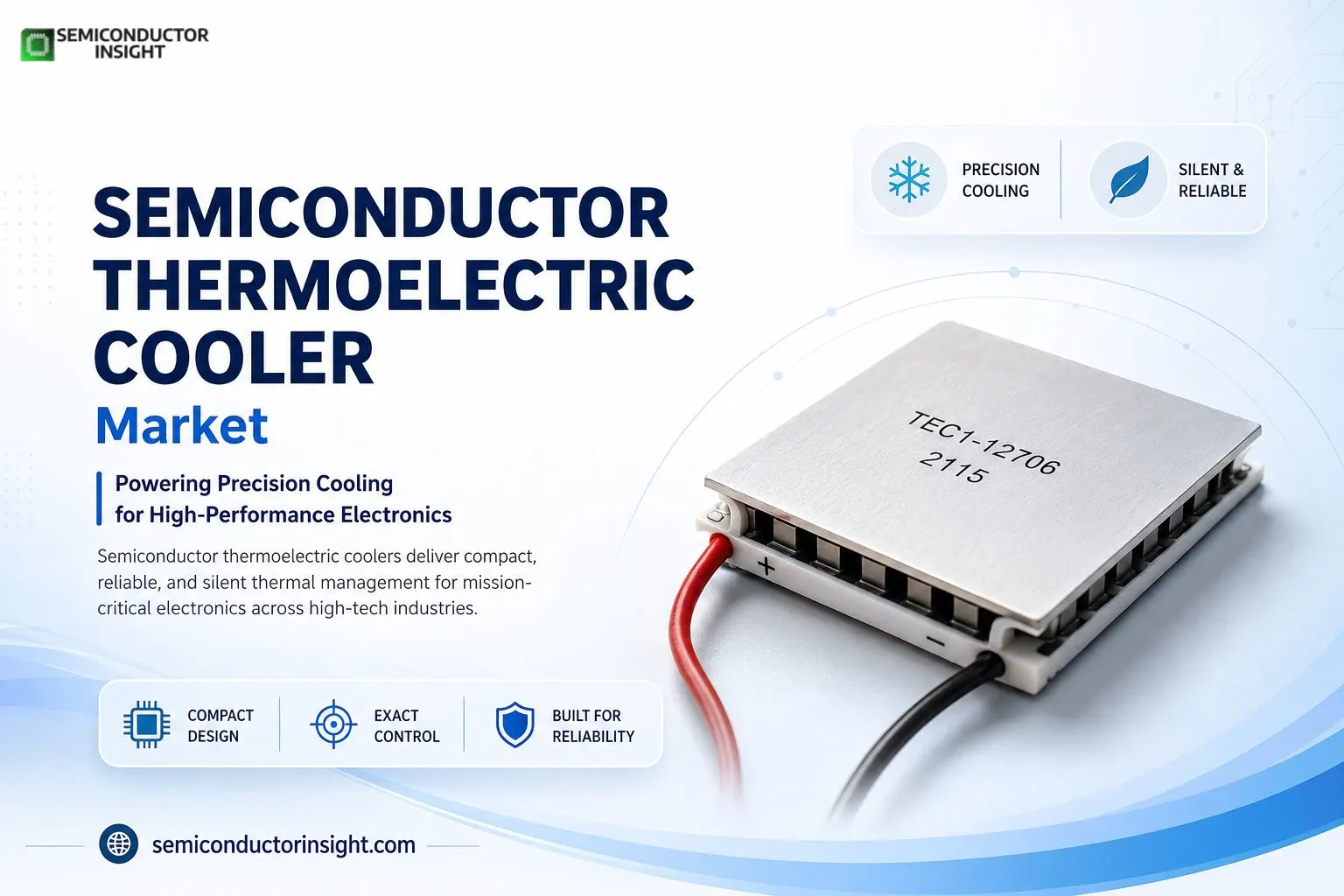
Thermoelectric coolers built on semiconductor principles continue to gain traction as engineers seek compact, reliable ways to manage heat in increasingly dense electronic systems. These devices, often called Peltier modules, leverage the Peltier effect where passing current through junctions of n-type and p-type semiconductors creates a temperature difference one side absorbs heat while the other releases it. Unlike traditional refrigeration with moving parts and fluids, they offer silent operation and precise control, making them ideal for sensitive applications.
Recent advances in materials like bismuth telluride alloys and emerging thin-film designs push performance boundaries. Researchers at Penn State developed a high-power thermoelectric device showing roughly 210% enhancement in cooling power density compared to standard commercial bismuth telluride units, pointing to better handling of high-heat electronics without sacrificing efficiency. Such progress aligns with demands from sectors where even small temperature fluctuations affect performance or reliability.
Inside the Working Principles Driving Semiconductor Thermoelectric Cooler Adoption
- At the core sits a module with multiple semiconductor legs connected electrically in series and thermally in parallel between ceramic plates.
- Applying DC voltage moves heat across the device, enabling both cooling and heating by reversing current.
- Bismuth telluride remains the workhorse material for near-room-temperature uses due to its favorable electrical and thermal properties, though ongoing work explores silicon-germanium and other compounds for specialized needs.
- Designers balance leg length, cross-section, and staging multi-stage setups reach lower temperatures but trade off overall efficiency.
- Modern modules achieve temperature differentials up to 60-80°C in single stages under optimal conditions, with heat pumping capacities scaled by the number of couples.
- This solid-state nature eliminates vibration and refrigerant concerns, supporting use in vibration-sensitive or environmentally regulated settings.
Semiconductor Thermoelectric Cooler Finds Strongholds in High-Tech Applications
In optoelectronics and telecommunications, these coolers stabilize laser diodes and photodetectors, where wavelength stability depends on tight temperature control. Fiber-optic systems often pair them with thermistors for feedback loops maintaining consistent performance.
Medical and laboratory equipment benefits immensely. Thermal cyclers for PCR testing rely on rapid heating-cooling cycles enabled by thermoelectric modules. Portable diagnostic devices and imaging systems use them for precise cooling without bulky infrastructure. In automotive contexts, especially electric vehicles, localized thermal management for sensors, batteries, or seats demonstrates growing integration as production volumes climb China reported new energy vehicle output exceeding 10 million units by 2024.
Data centers and high-performance computing represent another frontier. As AI workloads drive processor densities higher, targeted cooling at hotspots complements larger facility systems. Semiconductor thermoelectric solutions help mitigate localized heat where traditional air or liquid cooling falls short, supporting energy goals by reducing overall power draw for thermal management, which can account for a significant share of data center electricity.
Military and aerospace applications leverage their reliability in extreme environments, cooling avionics or infrared detectors where failure is not an option.
Take a Quick Glance at Our In-Depth Analysis Report: https://semiconductorinsight.com/report/semiconductor-thermoelectric-cooler-market-2/
Material Innovations Reshaping Semiconductor Thermoelectric Cooler Capabilities
Focus on nanoscale engineering and superlattice structures boosts the figure of merit (ZT), a key efficiency indicator combining Seebeck coefficient, electrical conductivity, and low thermal conductivity. Thin-film approaches reportedly use far less active material sometimes 1/1000th of bulk equivalents while delivering higher coefficients of performance in low-delta-T scenarios.
These developments enable integration directly onto chips or in compact assemblies, addressing demands from semiconductor manufacturing itself, where metrology and inspection tools require stable temperatures. Government-backed initiatives like the CHIPS Act emphasize domestic advanced manufacturing, indirectly boosting interest in efficient on-shore thermal solutions for new fabrication facilities.
Emerging Trends Point to Broader Semiconductor Thermoelectric Cooler Integration
Miniaturization trends favor micro-TECs for edge computing, wearables, and 5G infrastructure. Improved pulse operation techniques and better heat sinking expand viable temperature ranges and duty cycles. Sustainability drivers favor refrigerant-free designs amid global environmental regulations.
- As semiconductor nodes advance and power densities rise, on-chip or near-chip thermoelectric options help sustain Moore’s Law-like scaling by tackling thermal bottlenecks. Collaborations between universities, national labs, and industry accelerate translation from lab ZT improvements to manufacturable devices.
- The technology’s bidirectional nature also opens waste-heat recovery possibilities, though cooling remains the dominant mode. Continued investment in materials compatible with existing semiconductor processes could further streamline adoption.
Semiconductor thermoelectric coolers stand as a versatile tool in the thermal management toolkit. Their evolution reflects broader shifts toward efficient, compact, and intelligent electronics across industries. With ongoing refinements in performance and integration, these devices are positioned to play an expanding role in keeping tomorrow’s high-tech systems operating reliably and efficiently.

Comments (0)