

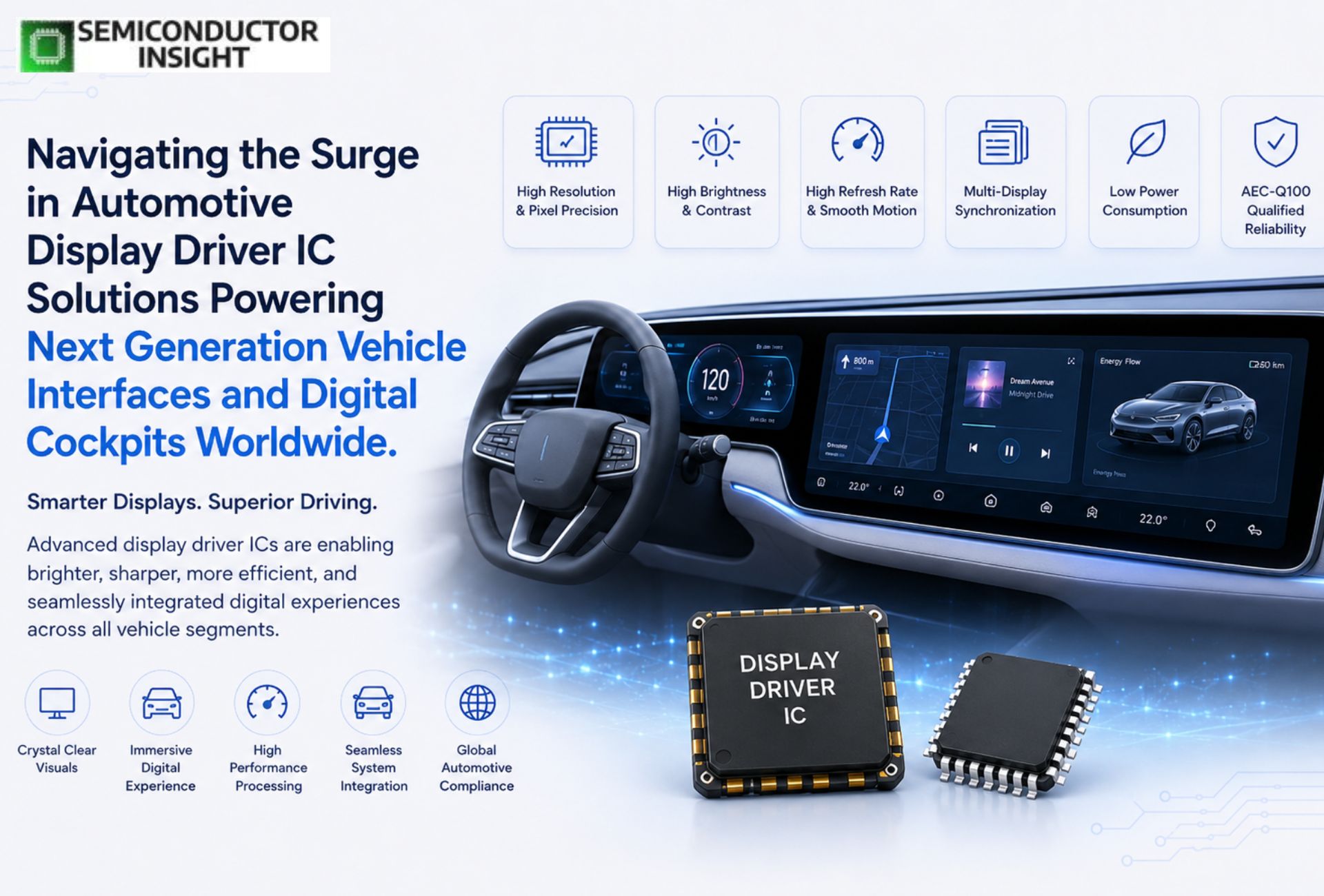
Navigating the Surge in Automotive Display Driver IC Solutions Powering Next Generation Vehicle Interfaces and Digital Cockpits Worldwide
The automotive sector continues its rapid evolution toward sophisticated digital experiences, where Display Driver ICs, or DDIs, serve as the critical semiconductor backbone translating processor signals into vibrant, responsive visuals on vehicle screens.
These specialized integrated circuits manage pixel-level control, voltage regulation, and timing to deliver crisp images on instrument clusters, infotainment systems, heads-up displays (HUDs), and passenger entertainment panels. As vehicles transform into mobile digital hubs, automotive DDI technology stands at the intersection of safety, connectivity, and user immersion.
Understanding Core Mechanics behind Automotive Display Driver IC Functionality
- At their foundation, automotive DDIs act as advanced bridges between a vehicle’s central processors and display panels, whether LCD, OLED, or emerging Micro-LED
- They convert digital data streams into precise analog voltages that activate individual pixels, adjusting brightness, color balance, and refresh rates in real time.
- In demanding automotive environments, these chips incorporate robust features like thermal management and vibration resistance to maintain performance across extreme temperature swings and road conditions.
For instance, touch and display driver integration (TDDI) variants combine display control with capacitive touch sensing, enabling seamless interactions on center consoles or rear passenger screens.
- This integration reduces component count while enhancing responsiveness, a key consideration for safety-focused designs where split-second driver feedback matters.
- Technologies such as local area contrast optimization and sunlight readability enhancements further tailor visuals for varying cabin lighting.
To Know More about the Report, You Can Freely Browse Our Latest Updated Report: https://semiconductorinsight.com/report/automotive-display-driver-ic-ddi-market/
Evolution from Traditional Gauges to Immersive Digital Cockpits
Early automotive displays relied on simple vacuum fluorescent or basic LCD readouts for speedometers and fuel levels. The shift accelerated with the rise of MOS technology and microcontrollers, paving the way for complex electronic systems now standard in modern vehicles. Wikipedia notes that electronics now comprise a substantial portion of vehicle value, up significantly from earlier decades, driven by demands for better engine management, safety features, and entertainment.
Today’s digital cockpits feature expansive curved panels spanning driver and passenger zones, often exceeding 30 inches of combined display area. These setups integrate navigation, media, vehicle diagnostics, and even augmented reality overlays for navigation guidance projected onto windshields via HUDs. Semiconductor advancements enable higher resolutions and faster refresh rates, supporting smoother animations and real-time data visualization essential for advanced driver assistance systems (ADAS).
Real World Deployments Shaping Current Automotive Landscapes
- Leading semiconductor players actively demonstrate DDI capabilities in production vehicles and showcases. Himax Technologies highlights its automotive display IC portfolio, including timing controller solutions for HUDs and OLED touch controllers that differentiate driver versus passenger inputs for safer interactions. These solutions appear in demonstrations at events like Embedded World, addressing the push for information-rich cockpits in connected and electric vehicles.
- ROHM Semiconductor supplies LED driver ICs tailored for medium to large infotainment and instrument cluster displays, supporting automakers in achieving efficient, high-quality visuals. Texas Instruments and Synaptics have introduced customizable automotive-grade DDIs with features like color enhancement and auto-contrast, deployed in systems prioritizing sunlight readability and product differentiation for original equipment manufacturers.
- In practice, these technologies power setups in electric vehicles from brands advancing digital experiences, where large touchscreens replace traditional controls and deliver personalized interfaces. Partnerships, such as those integrating advanced rendering engines, further elevate photorealistic graphics in next-generation models.
Global Momentum Fueled by Vehicle Production and Technology Adoption
Rising vehicle production volumes directly influence DDI demand. United States light vehicle sales reached around 16 million units in recent periods, each incorporating multiple digital displays for dashboards, navigation, and entertainment. This scale, combined with growth in electric and connected vehicles, expands opportunities for sophisticated display architectures worldwide.
Regions with strong manufacturing bases, particularly in Asia, drive innovation through investments in high-resolution panels and integrated systems. European and North American markets emphasize functional safety standards, pushing DDI designs toward ISO 26262 compliance for reliable operation in critical applications.
Innovations Redefining Safety, Efficiency, and User Experience
Emerging DDI solutions incorporate artificial intelligence for adaptive brightness and content prioritization, reducing driver distraction while enhancing passenger engagement.
- Low-power designs prove vital for electric vehicles, where every watt conserved extends range. Variable refresh rate capabilities and high dynamic range support deliver fluid visuals even during rapid content changes, such as real-time traffic mapping or camera feeds.
- Miniaturization and integration trends allow thinner bezels and curved form factors, enabling designers to create more spacious, futuristic interiors. Optical technologies paired with display drivers further improve HUD clarity, projecting essential information without obstructing the driver’s view.
Strategic Implications for Stakeholders in the Semiconductor Value Chain
For semiconductor firms, automotive DDIs represent a high-value segment demanding specialized expertise in functional safety and customization. Automakers benefit from differentiated cabin experiences that strengthen brand loyalty and support premium pricing. Tier-1 suppliers integrate these chips into domain controllers, creating unified platforms that simplify vehicle architecture.
As software-defined vehicles gain traction, DDIs evolve beyond pure hardware to enable dynamic reconfiguration of display real estate based on driving modes or occupant preferences.
The automotive Display Driver IC space reflects broader semiconductor innovation tailored to mobility’s unique demands. Continued progress in resolution, integration, and intelligence positions these components as enablers of safer, more enjoyable, and sustainable transportation experiences across global markets. Stakeholders who prioritize robust, forward-compatible solutions will help shape the future of intelligent vehicle interfaces.

Comments (0)