
Direct Bonded Copper Substrates Fueling Next-Gen IGBT and SiC Modules
As semiconductor devices push toward higher power densities, faster switching speeds, and compact form factors, thermal management has shifted from a secondary concern to a primary design constraint. This is where Direct Bonded Copper (DBC) ceramic substrates play a decisive role. DBC substrates are no longer viewed as passive components; they are structural enablers of performance, reliability, and lifecycle efficiency in modern power electronics.
DBC ceramic substrate market has gained momentum as industries increasingly rely on power modules that must operate under extreme thermal and electrical stress while maintaining long-term stability.
Understanding DBC Ceramic Substrates in Simple Terms
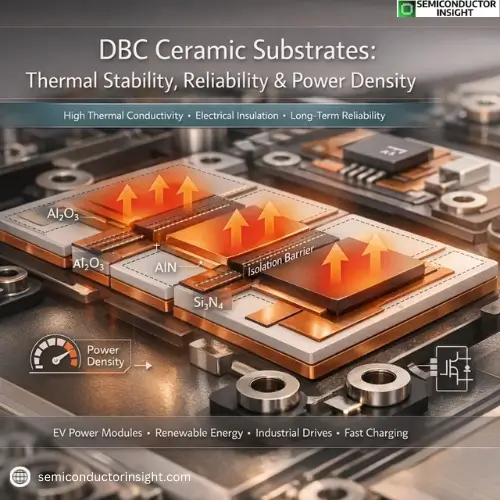
A DBC ceramic substrate consists of a ceramic base commonly alumina, aluminum nitride, or silicon nitride bonded directly with copper layers on one or both sides through a high-temperature oxidation process. This structure creates a unique combination of high thermal conductivity, electrical insulation, and mechanical strength.
What makes DBC substrates particularly valuable is their ability to dissipate heat efficiently while supporting high current loads. This balance is critical for applications where failure due to thermal fatigue or electrical breakdown is not an option.
Material Selection as a Competitive Differentiator
Not all DBC substrates are created equal. Material choice directly influences performance outcomes. Alumina remains widely used due to cost efficiency, while aluminum nitride is increasingly preferred in high-power applications because of its superior thermal conductivity.
Manufacturers are focusing on material optimization rather than volume expansion. Subtle improvements in copper thickness control, ceramic purity, and bonding uniformity often translate into meaningful gains in thermal cycling endurance and electrical reliability.
Rising Demand from Power-Intensive Applications
The demand for DBC ceramic substrates is closely linked to the growth of power-intensive semiconductor applications. Electric vehicles, renewable energy systems, industrial motor drives, and fast-charging infrastructure all rely on power modules that generate significant heat during operation.
In these environments, DBC substrates provide the thermal stability needed to protect sensitive semiconductor components, making them a preferred choice over traditional insulated metal substrates in high-stress conditions.
Manufacturing Precision Shapes Market Entry Barriers
DBC substrate production requires precise temperature control, surface preparation, and oxidation conditions. Any deviation can compromise bond strength or thermal performance. This technical complexity creates high entry barriers, limiting the number of manufacturers capable of producing consistent, high-quality substrates at scale.
As a result, the market is characterized by long-term supplier relationships, qualification cycles, and strong emphasis on process repeatability rather than rapid capacity expansion.
Design Integration with Modern Power Modules
DBC ceramic substrates are increasingly designed in close collaboration with power module architects. Their role extends beyond heat dissipation to include mechanical support, electrical isolation, and compatibility with advanced packaging techniques.
This integration trend means substrate suppliers are becoming strategic partners rather than commodity vendors. Custom geometries, multilayer designs, and application-specific copper layouts are gaining importance as power modules become more compact and complex.
International Trade and Supply Chain Issues
DBC ceramic substrate market operates within a globally interconnected supply chain. Raw ceramic materials, copper foils, and specialized processing equipment often originate from different regions, making supply continuity a strategic concern.
Manufacturers are diversifying sourcing strategies and investing in regional production capabilities to mitigate geopolitical risks and logistics disruptions. Import-export regulations related to advanced materials and semiconductor components also influence market accessibility in certain regions.
To Know More about the Report, You Can Freely Browse Our Latest Updated Report:
https://semiconductorinsight.com/report/dbc-ceramic-substrate-market/
Limited Bullet Snapshot: What Buyers Prioritize
While most purchasing decisions are technically driven, buyers consistently evaluate:
- Thermal conductivity and cycling reliability
- Process consistency across production batches
These factors often outweigh price considerations in high-value semiconductor applications.
Innovation Focus: Incremental Gains with Long-Term Impact
Innovation in the DBC ceramic substrate market is evolutionary rather than disruptive. Improvements in surface roughness control, copper adhesion, and ceramic composition steadily enhance performance margins.
Manufacturers are also exploring hybrid substrate architectures to address emerging needs in wide-band gap semiconductors such as silicon carbide and gallium nitride, where operating temperatures and power densities continue to rise.
Why This Market Matters Going Forward?
DBC ceramic substrates form the physical and thermal backbone of power electronics systems that underpin electrification, automation, and energy efficiency initiatives worldwide. Their role becomes even more critical as semiconductor devices push operational limits.
Rather than chasing volume growth, the market’s future lies in material refinement, application-specific customization, and reliability assurance, making DBC substrates a cornerstone technology in the semiconductor value chain.

Comments (0)