
7 Breakthrough Ways LPV Control with Road Preview Is Transforming Active Suspension in Automotive Semiconductors 2026
Linear Parameter-Varying (LPV) control strategies paired with road preview capabilities represent one of the most advanced advancements in vehicle dynamics. These systems adapt in real time to changing conditions by treating parameters like vehicle speed or road roughness as varying elements within the control framework. In the semiconductor domain, this relies heavily on powerful microcontrollers, sensors, and processors that handle complex computations at high speeds to deliver smoother rides and better stability.
What Makes Road Preview a Game Changer for Suspension Performance?
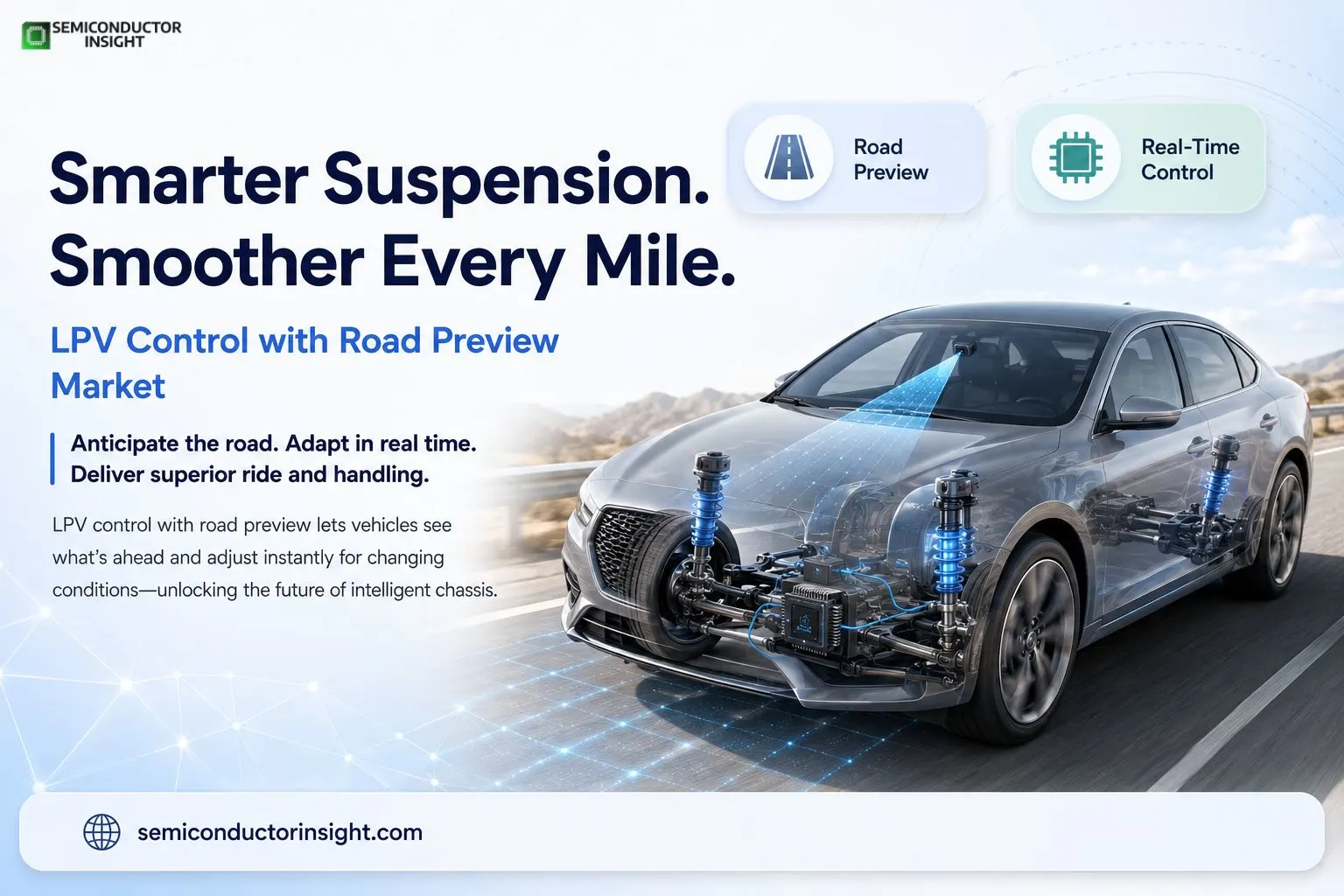
Road preview uses forward-looking sensors often cameras or lidar-like systems to scan upcoming terrain. This data feeds into LPV controllers that anticipate disturbances rather than merely reacting to them. Early concepts date back decades, but modern implementations in vehicles like certain Lincoln models with adaptive suspension demonstrate practical benefits through forward-facing cameras that adjust dampers proactively.
Semiconductor components enable this by processing vast sensor inputs quickly. NXP and Infineon, for example, supply acceleration sensors and MCUs that measure wheel movements and execute control algorithms for individual dampers, optimizing comfort or handling on the fly.
Inside the LPV Framework Powering Next Generation Chassis Electronics
- LPV control models the suspension as a system where dynamics shift with parameters such as speed or load.
- This allows for more robust performance across operating conditions compared to fixed linear controllers.
- Research highlights MPC-LPV approaches that incorporate road preview and speed data, often solved offline into lookup tables for efficient real-time execution on embedded hardware.
- In full-vehicle models, these controllers manage heave, roll, and pitch motions simultaneously. Studies show notable gains in ride comfort and road-holding, sometimes achieving around 10% better trade-offs versus traditional methods like Skyhook controllers through careful tuning and fault-tolerant designs.
Semiconductor Hardware Enabling Real Time LPV Execution
High-performance automotive MCUs with specialized peripherals form the backbone. Dual-core processors handle the demanding calculations for multi-DOF vehicle models while integrating inputs from inertial sensors mounted on dampers. Power management chips support actuators in semi-active or fully active setups, scaling from 12V to higher voltage systems for efficiency.
Image signal processors and radar-related chips further enhance preview accuracy by fusing data from multiple sources. This integration supports not just suspension but broader ADAS ecosystems where chassis control coordinates with braking and steering.
Real World Deployments Showcasing LPV Road Preview Benefits
- Automakers have tested and deployed systems drawing on these principles.
- Mercedes-Benz Magic Body Control, for instance, scans the road ahead with image sensors to prepare the suspension.
- Academic and industry collaborations explore LPV-based adaptive controllers for semi-active dampers using magnetorheological or electro-rheological fluids, validated on test rigs and real roads.
- In heavy vehicles or performance cars, such technologies reduce body motions during maneuvers like lane changes while maintaining tire contact.
- Fault-tolerant LPV variants even reconfigure control when individual dampers underperform, using remaining actuators effectively.
Integration Challenges and Semiconductor Innovations Addressing Them
Embedding LPV algorithms requires balancing computational load with power consumption and cost. Grid-based or polytopic LPV methods help simplify implementation on resource-constrained ECUs. Advances in sensor fusion chips and AI accelerators allow more accurate road profile estimation without overwhelming the system.
Ongoing work focuses on observer designs that estimate unmeasured states adaptively, crucial for reliable preview-based decisions even in varying lighting or weather.
Curious about the report? Dive into our newest updated version at no cost: https://semiconductorinsight.com/report/lpv-control-for-active-suspension-with-road-preview-market/
How LPV Control Elevates Safety and Efficiency in Connected Vehicles
By minimizing vertical accelerations and optimizing tire loads, these systems contribute to better handling and reduced driver fatigue. In electric vehicles, efficient active suspension helps extend range by lowering energy losses from road irregularities. Semiconductor suppliers continue refining low-power, high-reliability components tailored for chassis applications.
Emerging Trends in LPV and Preview Tech for 2026 and Beyond
Expect deeper fusion with vehicle-to-everything (V2X) data for even longer preview horizons. Machine learning-enhanced LPV tuning could adapt controllers online to specific driver styles or road types. Miniaturized, cost-effective lidar and camera modules will broaden adoption beyond premium segments.
Practical Takeaways for Engineers and Industry Professionals
- Engineers should prioritize scalable semiconductor platforms that support LPV modeling tools and real-time simulation.
- Testing on full-vehicle setups remains essential to validate performance across diverse scenarios.
- As automotive chips evolve to handle more autonomy, LPV road preview stands out as a key enabler for superior chassis intelligence.
This technology exemplifies how semiconductor innovation drives tangible improvements in vehicle experience, blending advanced control theory with robust hardware for safer, more comfortable mobility.

Comments (0)