MARKET INSIGHTS
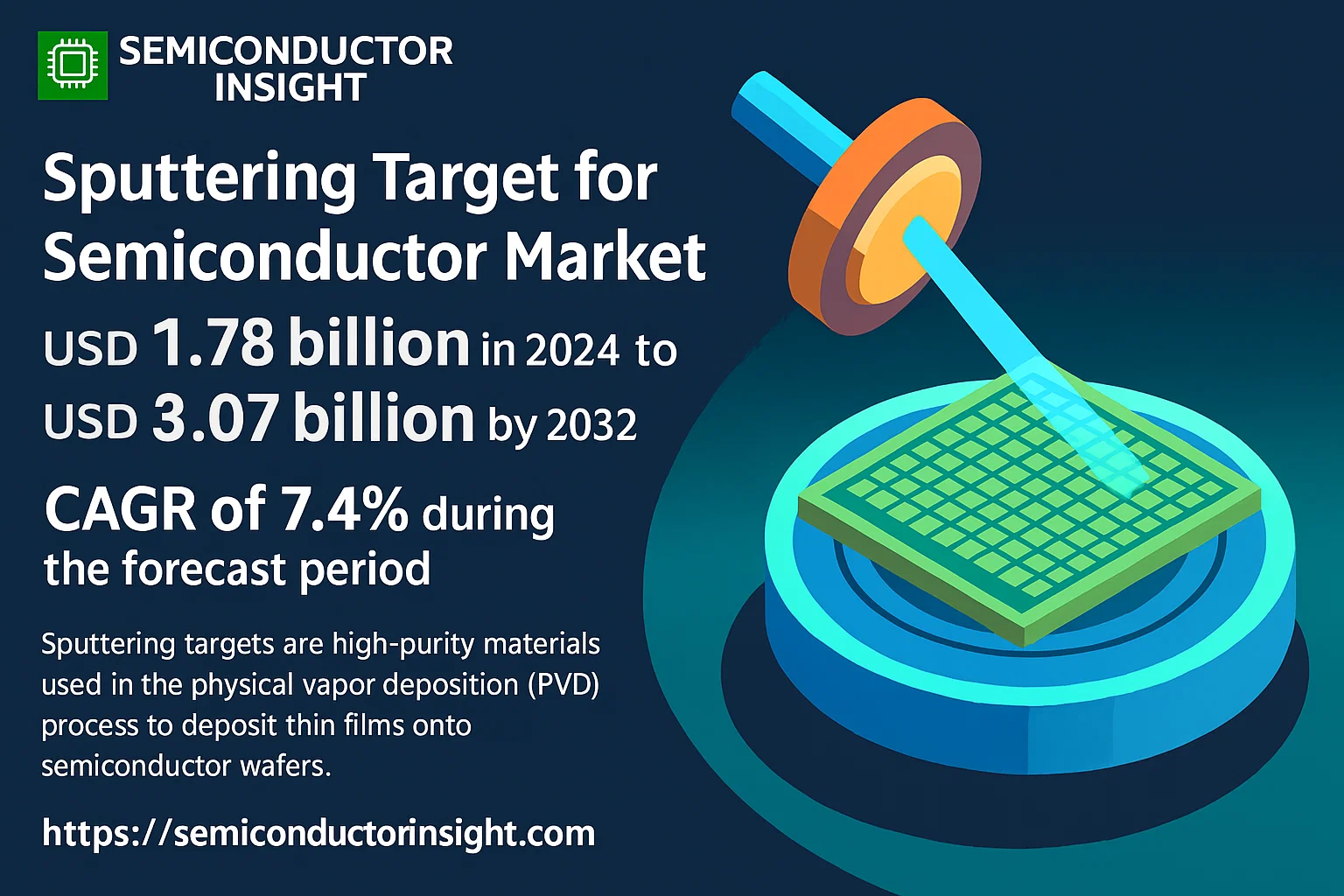
Global Sputtering Target for Semiconductor Market size is projected to grow from USD 1.78 billion in 2024 to USD 3.07 billion by 2032, CAGR of 7.4% during the forecast period.
Sputtering targets are high-purity materials used in the physical vapor deposition (PVD) process to deposit thin films onto semiconductor wafers. These films are critical for fabricating integrated circuits (ICs) and other semiconductor devices. The process involves bombarding a target material with energetic ions, causing atoms to be ejected and deposited as a thin, uniform layer. This technology is essential for creating the intricate and miniaturized structures in modern electronics.
Market growth is primarily driven by the increasing demand for advanced electronics, including smartphones, tablets, and Internet of Things (IoT) devices, which require more powerful and efficient semiconductors. The ongoing miniaturization of semiconductor nodes, such as the transition to 3nm and 2nm processes, necessitates the use of high-performance sputtering targets to deposit precise and defect-free thin films. Additionally, the rise of artificial intelligence (AI), 5G technology, and electric vehicles (EVs) is creating new demand for advanced semiconductors, further propelling the market.
However, the market also faces challenges, including potential supply chain disruptions for critical raw materials like tungsten, cobalt, and copper. Geopolitical tensions and trade restrictions can impact the availability and cost of these materials. Furthermore, the high cost and technical complexity of manufacturing advanced sputtering targets pose barriers to entry for new market participants.
Geographically, the Asia-Pacific region, particularly China, Taiwan, South Korea, and Japan, is expected to remain the largest market due to its dominant position in global semiconductor manufacturing. North America and Europe are also significant markets, supported by government initiatives to bolster domestic semiconductor production capabilities.
MARKET DRIVERS
Proliferation of Advanced Semiconductor Devices
The relentless demand for more powerful and efficient semiconductors for applications like artificial intelligence, 5G, and high-performance computing is a primary driver. Sputtering targets are essential for depositing thin, uniform metallic and dielectric films in the fabrication of advanced logic and memory chips. The transition to smaller technology nodes, such as 5nm and 3nm, requires ultra-high purity targets to ensure device performance and yield, directly fueling market growth.
Expansion of the Internet of Things (IoT) Ecosystem
The exponential growth of connected devices is driving the need for a vast quantity of semiconductors, many of which utilize sputtering for thin-film deposition. These semiconductors power sensors, microcontrollers, and communication chips embedded in everything from consumer wearables to industrial equipment. This broad-based demand creates a steady, high-volume requirement for various types of sputtering targets.
➤ Increasing investment in new semiconductor fabrication plants (fabs) globally, particularly for leading-edge logic and memory, is creating a long-term, sustainable demand pipeline for high-performance sputtering targets.
Furthermore, the continual adoption of new interconnect materials, such as cobalt for copper barriers and ruthenium for advanced nodes, is driving the development and consumption of new target materials, presenting significant opportunities for material innovation.
MARKET CHALLENGES
High Cost and Supply Chain Volatility of Raw Materials
The production of high-purity sputtering targets relies on critical raw materials like tantalum, cobalt, and rare earth elements. The prices and availability of these materials are subject to significant geopolitical and supply chain fluctuations. This volatility poses a major challenge for target manufacturers in terms of cost management and securing a stable supply to meet consistent demand from semiconductor fabricators.
Other Challenges
Technical Complexity of Advanced Targets
As chip geometries shrink, the technical specifications for sputtering targets become increasingly stringent. Achieving the required levels of purity (often 99.999% or higher), grain size control, and metallurgical properties demands sophisticated manufacturing processes and significant R&D investment. This high barrier to entry limits the number of qualified suppliers.
Intense Price Pressure from Semiconductor Manufacturers
Semiconductor manufacturers operate in a highly competitive environment and exert substantial pressure on their suppliers, including sputtering target producers, to reduce costs. This constant pressure on pricing can compress profit margins for target manufacturers, challenging their ability to fund necessary research and development for next-generation products.
MARKET RESTRAINTS
Cyclical Nature of the Semiconductor Industry
The sputtering target market is intrinsically linked to the capital expenditure cycles of the semiconductor industry. During periods of downturn or overcapacity, semiconductor manufacturers delay or cancel new equipment purchases and reduce production volumes. This directly translates into reduced demand for sputtering targets, creating periods of significant revenue volatility and uncertainty for target suppliers.
Long and Rigorous Qualification Processes
Introducing a new sputtering target material or a new supplier into a semiconductor fabrication process is an extremely lengthy and costly process. It requires extensive testing and qualification to ensure it meets the strict performance, yield, and reliability standards of the fab. This long lead time acts as a restraint, slowing down the adoption of new materials and making it difficult for new entrants to penetrate the market.
MARKET OPPORTUNITIES
Emergence of New Semiconductor Applications
Beyond traditional computing, new growth frontiers like automotive semiconductors (for electrification and autonomy) and advanced packaging technologies (such as 2.5D/3D integration) present substantial opportunities. These applications require specialized thin-film materials and processes, driving demand for innovative sputtering targets tailored to these specific performance and reliability requirements.
Development of Recyclable and Large-Sized Targets
There is a growing focus on improving the cost-effectiveness and sustainability of the sputtering process. This creates opportunities for manufacturers who can develop larger-sized targets that increase throughput and reduce downtime in fabs, as well as establish efficient recycling programs for used targets. Reclaiming and reprocessing precious metals from spent targets offers both economic and environmental benefits.
Geographical Expansion of Semiconductor Manufacturing
Government initiatives globally, such as the CHIPS Act in the United States and similar programs in Europe and Asia, are incentivizing the construction of new semiconductor manufacturing capacity. This geographical diversification of the supply chain creates new localized demand for sputtering targets, offering growth opportunities for suppliers who can establish a strong presence in these emerging manufacturing hubs.
Sputtering Target for Semiconductor Market Trends
Strong Market Growth Fueled by Semiconductor Demand
The global Sputtering Target for Semiconductor market, valued at $1,781 million in 2024, is projected to reach $3,071 million by 2032, growing at a compound annual growth rate (CAGR) of 7.4%. This robust growth is primarily driven by the relentless advancement in semiconductor technology and increasing demand across multiple high-growth sectors. As semiconductor manufacturing progresses toward smaller process nodes like 3nm, the requirements for high-purity materials become more stringent, directly fueling the demand for specialized sputtering targets. These high-purity materials are essential in the physical vapor deposition (PVD) process to create the precise, uniform thin films that form the functional layers of integrated circuits and memory chips.
Other Trends
Diversified Application Drivers
Beyond the core wafer manufacturing process, sputtering targets are critically important in wafer assembly and testing. In these final production stages, sputtering is used to deposit thin films that enhance the connectivity, protection, and overall functionality of integrated circuits. The demand for these applications is being propelled by the automotive industry’s rapid adoption of electric vehicles (EVs), autonomous driving systems, and advanced driver-assistance systems (ADAS), all of which rely heavily on sophisticated semiconductors. Similarly, the global expansion of 5G networks and the infrastructure required for artificial intelligence (AI) applications are creating substantial demand for advanced semiconductors, further driving the need for high-performance sputtering targets.
Regional Dynamics and Supply Chain Challenges
The Asia-Pacific region dominates market demand, a reflection of its central role in global semiconductor manufacturing, with key contributions from China, Taiwan, South Korea, and Japan. North America and Europe are also poised for significant growth, supported by government initiatives aimed at bolstering domestic semiconductor production capabilities. However, the market faces notable challenges, including supply chain vulnerabilities for critical raw materials like tungsten, molybdenum, and copper. Geopolitical issues and logistical disruptions can lead to cost volatility and production delays. Furthermore, the continuous push for technological miniaturization demands ongoing innovation in sputtering target purity and manufacturing precision, presenting both a challenge and an area for potential advancement.
COMPETITIVE LANDSCAPE
Key Industry Players
A highly specialized market driven by material purity and technological innovation
The global sputtering target for semiconductor market is characterized by the presence of several major multinational corporations and specialized material suppliers, creating a concentrated yet competitive landscape. JX Advanced Metals, Materion, and Konfoong Materials International are recognized as leading players, leveraging extensive R&D capabilities and long-standing relationships with top-tier semiconductor foundries. These companies dominate due to their ability to consistently supply ultra-high purity materials, including metals like tungsten, tantalum, and copper, which are critical for advanced nodes such as 3nm and below. The market structure is evolving as technological complexity increases, pushing for greater vertical integration and strategic partnerships throughout the semiconductor supply chain to ensure material availability and quality control.
Beyond the market leaders, a number of other significant companies hold important niches. Players like Plansee SE and TANAKA are renowned for their expertise in refractory metals and precious metal targets, respectively. Companies such as ULVAC and Honeywell provide essential process expertise alongside their materials. Grinm Advanced Materials Co., Ltd. and Longhua Technology Group highlight the strong presence of Chinese manufacturers in the supply chain. Firms like Furuya Metal and Angstrom Sciences cater to specialized application needs, while established chemical giants like Sumitomo Chemical and Linde (through its electronics gases and materials division) bring significant scale and diverse material portfolios to the market.
List of Key Sputtering Target for Semiconductor Companies Profiled
- JX Advanced Metals
- Materion
- Konfoong Materials International
- Linde
- Proterial
- Plansee SE
- TOSOH
- Honeywell
- Grinm Advanced Materials Co., Ltd.
- ULVAC
- TANAKA
- Sumitomo Chemical
- Luvata
- Advantec
- Longhua Technology Group (Luoyang)
- Furuya Metal
- Umicore Thin Film Products
- Angstrom Sciences
Segment Analysis:
| Segment Category | Sub-Segments | Key Insights |
| By Type |
|
Metal Sputtering Target Material holds a dominant position, driven by the extensive use of high-purity metals such as aluminum, copper, and tantalum in depositing critical conductive and barrier layers for semiconductor interconnects. The relentless miniaturization of semiconductor nodes requires metals with exceptional electrical properties and deposition uniformity. While alloys offer tailored properties for specific applications and non-metals like silicon dioxide are essential for dielectric layers, the foundational requirement for superior conductivity and reliability in advanced logic and memory chips solidifies the leadership role of pure metal targets in the market. |
| By Application |
|
Wafer Manufacturing is the primary application segment, as it constitutes the core front-end process where sputtering targets are indispensable for creating the intricate multi-layer thin films that form the transistors and circuits on the silicon wafer. This stage demands the highest levels of material purity and process precision, especially for cutting-edge nodes. The Wafer Assembly and Testing segment is also critical, utilizing targets to deposit films that enhance connectivity and protection in packaging, but the sheer volume and complexity of layers deposited during the initial wafer fabrication process underscore the leading role of the wafer manufacturing application. |
| By End User |
|
Foundries represent the most significant end-user segment, acting as the manufacturing hubs for a vast array of fabless semiconductor companies. The intense competition and technological race among leading foundries to produce chips at 5nm, 3nm, and beyond creates sustained, high-volume demand for advanced sputtering targets. While Integrated Device Manufacturers (IDMs) have substantial in-house production needs and Memory Manufacturers are major consumers for DRAM and NAND flash production, the concentrated and scalable nature of the pure-play foundry business model makes it the dominant force driving consumption and technological requirements in the sputtering target market. |
| By Material Purity Level |
|
Ultra High Purity (6N and above) targets are increasingly the leading requirement for advanced semiconductor manufacturing. As device geometries shrink to atomic scales, even minute impurities can cause catastrophic failures in yield and performance. This segment is critical for leading-edge logic and memory applications where material consistency and defect-free deposition are non-negotiable. While High Purity grades suffice for some mature nodes and less critical layers, the industry’s trajectory toward more complex architectures is creating a powerful and growing pull for the superior quality and reliability offered by ultra high purity materials. |
| By Target Form |
|
Planar Targets remain the most widely used form factor due to their simplicity, reliability, and suitability for a vast range of semiconductor deposition processes. Their flat geometry allows for uniform erosion and consistent film properties across wafers, which is paramount for high-volume manufacturing. Rotary targets offer improved material utilization for specific applications, and bonded targets are essential for managing thermal stress with high-cost materials, but the foundational role of planar targets in mainstream production tools and processes cements their leading position in the market landscape. |
Regional Analysis: Sputtering Target for Semiconductor Market
The region’s unparalleled strength lies in its dense cluster of major semiconductor fabrication plants (fabs). This concentration creates a massive, localized demand for sputtering targets, fostering a highly efficient and responsive supply chain. Proximity to end-users allows for close collaboration on material specifications and rapid problem-solving, which is crucial for high-volume manufacturing. This integrated ecosystem minimizes logistical delays and enhances supply security for critical materials.
Asia-Pacific is at the forefront of producing semiconductors at the most advanced technology nodes (e.g., 5nm, 3nm, and below). This leadership drives the demand for highly specialized and ultra-high-purity sputtering targets, including cobalt, ruthenium, and advanced alloys used in transistor gates and interconnects. The relentless push for miniaturization and performance in this region creates a continuous cycle of innovation and requirement for next-generation target materials.
Substantial national initiatives and corporate investments are a hallmark of the region. Countries like China, South Korea, and Japan have launched long-term strategic plans and provided significant funding to achieve semiconductor self-sufficiency and technological supremacy. This results in the construction of new fabs and R&D centers, which directly translates into sustained and growing demand for sputtering targets from both established suppliers and emerging local players.
Beyond front-end fabrication, the region is a global hub for advanced packaging technologies like 2.5D and 3D IC packaging. These packaging techniques require specialized sputtering processes for creating thin films on silicon interposers and through-silicon vias (TSVs). The expertise and scale in packaging within Asia-Pacific generate significant demand for targets used in these specific applications, adding another layer of market strength.
North America
North America remains a critical and technologically advanced region in the sputtering target market, anchored by strong R&D capabilities and the presence of leading semiconductor equipment manufacturers and fabless design companies. The region’s market is characterized by a high demand for specialized, high-value targets used in R&D for next-generation semiconductor architectures and in the production of high-performance chips for computing, AI, and aerospace/defense applications. While its manufacturing capacity is smaller than Asia-Pacific’s, it focuses on low-volume, high-mix production of highly complex chips. Collaborative ecosystems between national laboratories, universities, and companies drive innovation in new target materials. Recent policy initiatives aimed at reshoring semiconductor manufacturing are expected to stimulate future growth in domestic demand for sputtering targets, though the region will continue to rely on its technological leadership and innovation-driven demand.
Europe
Europe holds a significant position in the sputtering target market, distinguished by its strong focus on research, specialization, and high-quality manufacturing. The region is a leader in developing and utilizing targets for specialized semiconductor applications, particularly in the automotive, industrial, and power electronics sectors. European research institutions and companies are at the forefront of developing new materials for MEMS sensors, power semiconductors (like SiC and GaN), and specialized analog chips. The market demand is driven by a need for high-reliability and long-lifecycle components for automotive and industrial systems. Collaborative projects within the EU, such as the Important Project of Common European Interest (IPCEI) on microelectronics, are fostering investment and innovation in the semiconductor supply chain, including advanced materials like sputtering targets, ensuring Europe maintains its niche as a supplier of highly specialized, value-added components.
South America
The sputtering target market in South America is relatively nascent and small-scale compared to other regions, with limited local semiconductor manufacturing infrastructure. Market activity is primarily focused on supporting the consumer electronics assembly industry and some industrial applications. Demand for sputtering targets is largely met through imports, as the region lacks major domestic target manufacturers or advanced semiconductor fabs. However, there is growing interest in developing local technological capabilities, particularly in countries like Brazil. Potential for future growth exists if regional economic stability improves and investments in technology sectors increase, but currently, the market dynamics are defined by its role as a consumer within the global supply chain rather than a significant producer or innovator in the field.
Middle East & Africa
The Middle East & Africa region represents an emerging and potential growth area for the sputtering target market, though it currently accounts for a very small share of global demand. The market is primarily driven by the Middle East, where nations with sovereign wealth funds are making strategic investments in technology diversification beyond oil and gas. This includes plans for building semiconductor-related infrastructure and fostering tech hubs. Any local demand for sputtering targets is currently for maintenance and small-scale operations rather than large-volume production. Africa’s market is minimal, with sporadic activity related to consumer electronics repair and minor industrial applications. The long-term outlook points to gradual growth as these regions continue their economic diversification efforts, but they remain minor players in the current global landscape.
Report Scope
This market research report provides a comprehensive analysis of the Sputtering Target for Semiconductor Market , covering the forecast period 2024–2032. It offers detailed insights into market dynamics, technological advancements, competitive landscape, and key trends shaping the industry.
Key focus areas of the report include:
- Market Overview: The report begins with an overview outlining its current market scenario, key growth indicators, and industry transformation drivers. It discusses macroeconomic factors, demand–supply balance, regulatory landscape, and the strategic role of semiconductors in powering advancements across industries such as automotive, telecommunications, consumer electronics, and industrial automation.
- Market Size & Forecast: Historical data and future projections for revenue, unit shipments, and market value across major regions and segments.
- Segmentation Analysis: Detailed breakdown by product type, technology, application, and end-user industry to identify high-growth segments and investment opportunities.
- Regional Insights: Insights into market performance across North America, Europe, Asia-Pacific, Latin America, and the Middle East & Africa, including country-level analysis where relevant.
- Competitive Landscape: Profiles of leading market participants, including their product offerings, R&D focus, manufacturing capacity, pricing strategies, and recent developments such as mergers, acquisitions, and partnerships.
- Technology Trends & Innovation: Assessment of emerging technologies, integration of AI/IoT, semiconductor design trends, fabrication techniques, and evolving industry standards.
- Market Drivers & Restraints: Evaluation of factors driving market growth along with challenges, supply chain constraints, regulatory issues, and market-entry barriers.
- Stakeholder Insights: Insights for component suppliers, OEMs, system integrators, investors, and policymakers regarding the evolving ecosystem and strategic opportunities.
Primary and secondary research methods are employed, including interviews with industry experts, data from verified sources, and real-time market intelligence to ensure the accuracy and reliability of the insights presented.
FREQUENTLY ASKED QUESTIONS:
What is the current market size of Sputtering Target for Semiconductor Market?
-> Global Sputtering Target for Semiconductor Market was valued at USD 1781 million in 2024 and is projected to reach USD 3071 million by 2032, exhibiting a CAGR of 7.4% during the forecast period.
Which key companies operate in Sputtering Target for Semiconductor Market?
-> Key players include JX Advanced Metals, Materion, Konfoong Materials International, Plansee SE, Honeywell, Grinm Advanced Materials Co., Ltd., ULVAC, and TANAKA, among others.
What are the key growth drivers?
-> Key growth drivers include advancements in semiconductor technology, demand for high-performance chips in consumer electronics and automotive sectors, and the expansion of 5G and AI infrastructure.
Which region dominates the market?
-> Asia-Pacific is the dominant market, driven by semiconductor manufacturing hubs in China, Taiwan, South Korea, and Japan.
What are the emerging trends?
-> Emerging trends include the push towards smaller semiconductor nodes (e.g., 3nm), development of high-purity materials, and innovations to meet stringent thin-film requirements.

Get Sample Report PDF for Exclusive Insights
Report Sample Includes
- Table of Contents
- List of Tables & Figures
- Charts, Research Methodology, and more...
 Download Sample Report PDF