MARKET INSIGHTS
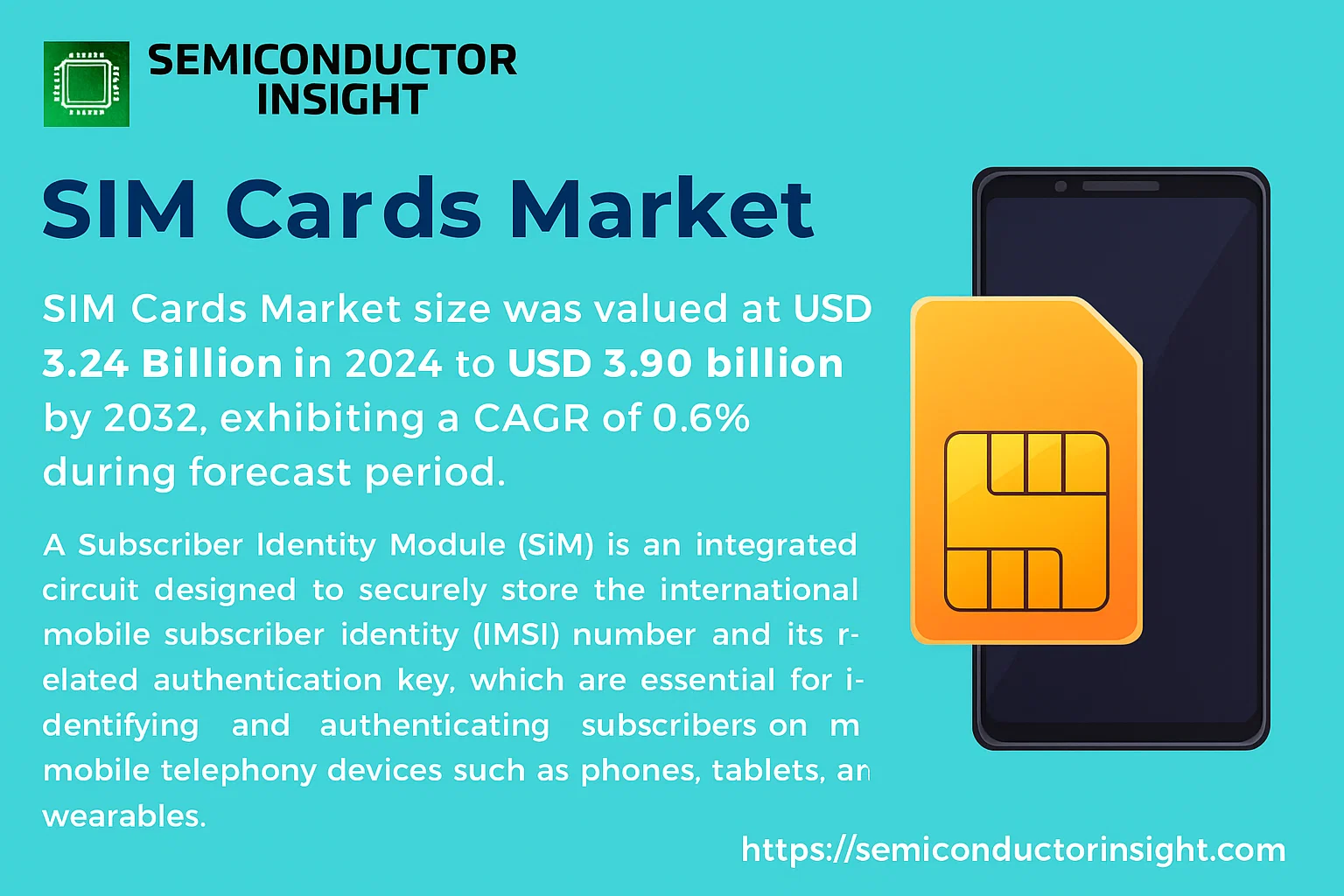
Global SIM Cards Market size was valued at USD 3.24 billion in 2024 to USD 3.90 billion by 2032, exhibiting a CAGR of 0.6% during the forecast period.
A Subscriber Identity Module (SIM) is an integrated circuit designed to securely store the international mobile subscriber identity (IMSI) number and its related authentication key, which are essential for identifying and authenticating subscribers on mobile telephony devices such as phones, tablets, and wearables.
The market is experiencing steady growth due to several factors, including the expanding global subscriber base for cellular services and the increasing adoption of IoT devices requiring cellular connectivity. However, this growth faces challenges from the rise of eSIM technology, which embeds the SIM functionality directly into device hardware. Asia-Pacific dominates the market with a share of about 60%, followed by Europe at approximately 20%. Key players such as Gemalto, Giesecke+Devrient (G&D), Oberthur, Morpho (Safran), and VALID collectively hold a significant portion of the market share.
MARKET DRIVERS
Proliferation of IoT and M2M Connections
The exponential growth of Internet of Things (IoT) and Machine-to-Machine (M2M) communication is a primary driver for the SIM card market. Billions of new connected devices, ranging from smart meters and industrial sensors to connected vehicles, require reliable cellular connectivity. Embedded SIM (eSIM) and traditional SIM form factors are essential for enabling these connections, creating sustained demand from enterprise and industrial sectors.
Global Expansion of Mobile Subscription Base
Despite market maturity in many regions, emerging economies continue to experience significant growth in mobile subscriptions. The ongoing rollout of 4G networks and the expansion of 5G infrastructure necessitate SIM cards for device activation, driving volume sales. The demand for multi-SIM devices and affordable data plans further contributes to this growth trend.
The rise of remote work and digital nomadism has also fueled demand for international travel SIMs and flexible, multi-operator profiles that eSIM technology facilitates. This trend supports a dynamic segment of the market focused on connectivity for mobile professionals and tourists.
MARKET CHALLENGES
Transition to eSIM and Software-Based Authentication
The industry-wide shift towards embedded SIM (eSIM) and integrated SIM (iSIM) technologies presents a significant challenge for traditional SIM card manufacturers. These new form factors reduce the need for physical SIM card swaps, potentially shrinking the volume-based revenue model that has long sustained the market. Manufacturers must adapt their businesses to focus on provisioning services and software management.
Other Challenges
Security and Fraud Concerns
As SIM cards are the primary identifier for network authentication, they remain a target for sophisticated fraud, including SIM-swapping attacks and cloning. Ensuring robust security protocols and compliance with evolving standards like GSMA’s Security Accreditation Scheme requires continuous investment in R&D and manufacturing processes.
Supply Chain and Commoditization
The SIM card market is highly competitive, with price pressure leading to commoditization. Fluctuations in the semiconductor supply chain can impact the availability and cost of chips, affecting profitability. Manufacturers must navigate these pressures while maintaining quality and security standards.
MARKET RESTRAINTS
Hardware Reduction in Consumer Devices
A major restraint for the traditional SIM card market is the design trend in consumer electronics toward minimizing internal hardware. The adoption of eSIM technology, which is soldered directly onto a device’s board, eliminates the need for a removable SIM tray. This design choice, increasingly common in flagship smartphones, wearables, and tablets, directly reduces the addressable market for physical SIM cards.
Regulatory and Standardization Hurdles
The full realization of eSIM’s potential is partially restrained by differing regulatory environments and a lack of universal standardization across mobile network operators (MNOs). In some regions, regulations around number portability, remote provisioning, and consumer rights create complexities that can slow down the adoption of eSIM-only devices and services.
MARKET OPPORTUNITIES
Growth in IoT-Specific SIM Form Factors
The IoT market presents a substantial opportunity for specialized SIM solutions. Unlike consumer handsets, many IoT devices require rugged, durable SIMs capable of withstanding extreme temperatures, vibration, and long lifespans. The development and sale of industrial-grade M2M SIMs, along with the management platforms for large-scale IoT deployments, represent a high-growth, value-added segment.
eSIM Management Platforms and Services
As the eSIM ecosystem matures, the opportunity is shifting from hardware to software and services. There is growing demand for subscription management platforms that allow enterprises and MNOs to remotely provision, manage, and secure eSIM profiles across millions of devices globally. This creates a new, recurring revenue stream for technology providers.
5G and Network Slicing Enablement
The deployment of 5G networks, with its advanced capabilities like network slicing, requires sophisticated SIM technology for secure authentication and service differentiation. SIM cards, particularly eSIMs, are crucial for enabling tailored connectivity solutions for different enterprise applications, opening up opportunities in verticals like manufacturing, healthcare, and smart cities.
SIM Cards Market Trends
Steady Market Growth Amidst Technological Evolution
Global SIM Cards Market, valued at USD 3,243 million in 2024, is projected to grow to USD 3,390 million by 2032, reflecting a compound annual growth rate (CAGR) of 0.6%. This steady growth occurs within a dynamic environment where the fundamental role of the Subscriber Identity Module (SIM) as a secure authenticator for mobile networks is being reshaped. While the Asia-Pacific region continues to dominate the market with approximately 60% share, followed by Europe at 20%, the industry is experiencing a significant transition from traditional plastic cards to embedded and integrated solutions. The competitive landscape remains concentrated, with the top five manufacturers—Gemalto, G&D, Oberthur, Morpho (Safran), and VALID—collectively holding about 70% of the global market share.
Other Trends
Encryption Standard Diversification
The type of encryption used on SIM cards is a key product differentiator. The market is segmented by security protocols, including SIM Cards with DES, 3DES, and AES, among others. As cybersecurity threats evolve, there is a clear trend toward adopting more advanced encryption standards like AES to enhance the security of subscriber data and authentication processes. This diversification allows manufacturers to cater to varying security needs and price points across different applications and regions.
Application Expansion Beyond Mobile Phones
The application scope for SIM cards has expanded far beyond traditional mobile phones. While mobile phones remain the largest application segment, significant growth is observed in tablets, wearable devices, and other Internet of Things (IoT) applications. This diversification drives demand for specialized SIM form factors, such as embedded SIMs (eSIMs) and integrated SIMs (iSIMs), which are designed for compact and power-efficient devices, opening new avenues for market expansion.
Manufacturing and Regional Dynamics
Manufacturing capabilities and regional demand are closely linked. Asia-Pacific’s leadership is fueled by the high concentration of mobile device manufacturing and a massive subscriber base. Key players are continuously investing in production capacity and technological advancements to maintain competitiveness. The market is also influenced by regional regulations and the rollout of new mobile network technologies, which necessitate compatible SIM cards. The ongoing industry consolidation through mergers and acquisitions among leading players is a notable trend aimed at achieving greater market reach and technological synergy.
COMPETITIVE LANDSCAPE
Key Industry Players
A Market Dominated by a Handful of Established Security Technology Giants
Global SIM Cards Market is characterized by a high level of concentration, with the top five manufacturers—Gemalto (now part of Thales), Giesecke+Devrient (G&D), Oberthur Technologies (OT, now IDEMIA), Morpho (Safran, now IDEMIA), and VALID—collectively commanding approximately 70% of the market share. This dominance is rooted in their extensive experience in secure embedded software and hardware, critical for producing the sophisticated integrated circuits that store subscriber identity data. These players benefit from massive scale, long-standing relationships with mobile network operators (MNOs) globally, and significant investment in research and development to support the evolution of SIM technology from traditional plastic cards to embedded (eSIM) and integrated (iSIM) forms. The market structure is oligopolistic, with competition primarily based on technological innovation, product security, reliability, and global supply chain capabilities.
Beyond the dominant players, a second tier of significant regional and niche companies contributes to the market’s diversity. Firms like Eastcompeace and Wuhan Tianyu in China have captured substantial market share, particularly within the Asia-Pacific region, which accounts for about 60% of the global market. These companies compete effectively on cost and by servicing the vast domestic and regional demand. Other notable players such as DATANG, KONA I, DZ Cards, Watchdata, HENGBAO, and XH Smartcard (Zhuhai) specialize in various segments, including providing SIMs for specific applications like Internet of Things (IoT) devices, tablets, and wearable technology. These companies often focus on innovation in form factors and security protocols (DES, 3DES, AES) to carve out specialized niches and compete with the giants.
List of Key SIM Cards Companies Profiled
- Gemalto (Thales)
- Giesecke+Devrient (G&D)
- IDEMIA (Oberthur Technologies & Morpho)
- VALID
- Eastcompeace
- Wuhan Tianyu
- DATANG
- KONA I
- DZ Cards
- Watchdata
- HENGBAO
- XH Smartcard (Zhuhai)
Segment Analysis:
| Segment Category | Sub-Segments | Key Insights |
| By Type |
|
SIM Cards with AES are the leading segment due to their superior encryption standards, which are increasingly mandated for modern high-security telecommunications networks. The transition towards more robust security protocols is driven by escalating cybersecurity threats and the need to protect sensitive subscriber data. This segment benefits from its adoption in next-generation networks and IoT applications where data integrity is paramount, positioning it for sustained long-term growth over older DES and 3DES technologies. |
| By Application |
|
Mobile Phone remains the dominant application segment, serving as the primary device for global cellular connectivity. The sheer volume of mobile phone subscriptions worldwide establishes a massive, consistent demand base. Furthermore, the ongoing global rollout of 4G and 5G networks continues to drive replacement cycles and the need for compatible SIM cards. While tablets and wearables represent growing niches, the mobile phone segment’s foundational role in personal and business communication secures its leadership position. |
| By End User |
|
MNOs & MVNOs represent the core end-user segment, as Mobile Network Operators and their virtual counterparts are the primary distributors and integrators of SIM cards into their service offerings. Their leadership is underpinned by the critical need to authenticate subscribers on their networks. This segment drives volume through new subscriber acquisitions, replacement SIMs, and migrations to new network technologies. The enterprise and M2M/IoT segment is a high-growth area, but MNOs & MVNOs remain the central channel to the market. |
| By Security Standard |
|
Traditional SIM cards currently lead the market due to their universal compatibility and established infrastructure across the globe. However, the landscape is rapidly evolving. The emergence of Embedded SIM (eSIM) technology represents a significant industry shift, offering remote provisioning benefits for IoT applications and sleek consumer devices. While eSIM adoption is accelerating, the traditional removable SIM’s entrenched position in the massive existing base of mobile devices ensures its continued dominance in the near term, albeit with growing competitive pressure. |
| By Form Factor |
|
Nano-SIM (4FF) is the unequivocal leading form factor in the current market, having become the standard for virtually all modern smartphones and a wide range of other connected devices. Its dominance is driven by the relentless industry trend towards device miniaturization and the need to maximize internal space for larger batteries and advanced components. While older form factors persist in legacy devices and specific applications, the Nano-SIM’s widespread adoption by major device manufacturers solidifies its position as the primary form factor for new deployments and upgrades. |
Regional Analysis: SIM Cards Market
Asia-Pacific
The sheer volume of mobile subscribers in Asia-Pacific creates the world’s largest addressable market for SIM cards. High mobile penetration rates, even in emerging economies, are a primary driver. The market is characterized by a constant influx of first-time mobile users and the need for multiple SIMs per user in many countries, leading to sustained and robust demand for both traditional plastic SIMs and the newer eSIM profiles required for a wide array of connected devices.
Asia-Pacific is a global pioneer in the deployment of 5G networks, particularly in South Korea, China, and Japan. This next-generation network rollout is a significant catalyst for SIM card demand, necessitating upgrades to compatible SIMs and stimulating the adoption of eSIMs for IoT and advanced consumer devices. The region’s consumers and industries are quick to adopt new technologies, creating a fertile ground for innovations in SIM form factors and functionalities, driving the market beyond basic connectivity.
An intensely competitive environment among Mobile Network Operators (MNOs) and Mobile Virtual Network Operators (MVNOs) in countries like India and Indonesia fuels SIM card proliferation. Operators engage in frequent price wars and bundle attractive data and voice plans, encouraging users to switch providers or hold multiple active SIMs. This competition not only drives volume but also pressures operators to improve service quality and innovate with SIM-based value-added services to retain customers.
Supportive government policies, such as digital India campaigns and national broadband projects in various Southeast Asian nations, actively promote mobile connectivity. Regulations often mandate simplified Know Your Customer (KYC) processes for SIM acquisition, making it easier for consumers to obtain them. Additionally, governments are increasingly recognizing and standardizing eSIM technology, providing a clear regulatory pathway that encourages device manufacturers and operators to integrate and promote eSIM capabilities, further stimulating market growth.
North America
The North American SIM cards market is characterized by high maturity, a strong push towards eSIM technology, and a focus on premium services. The region, led by the United States and Canada, has a highly saturated mobile subscriber base, where growth is primarily driven by the adoption of connected devices beyond smartphones, such as smartwatches, tablets, and a vast array of Internet of Things (IoT) applications in automotive, healthcare, and enterprise sectors. Major carriers are aggressively promoting eSIMs for their flexibility, allowing consumers to switch plans digitally and manage multiple profiles on a single device. The market dynamics are heavily influenced by partnerships between device manufacturers like Apple and Google and telecommunications providers to embed eSIM capabilities as a standard feature. While the volume of traditional SIM cards remains stable for basic handset activations, the highest growth potential lies in the eSIM segment, catering to a tech-savvy population that values convenience and seamless connectivity across multiple devices.
Europe
Europe represents a highly regulated and consolidated SIM cards market, with a strong emphasis on standardization, security, and consumer rights. The region’s dynamics are significantly shaped by European Union regulations, such as the Roaming Regulation, which has reduced the need for local SIMs when traveling, and the strict General Data Protection Regulation (GDPR) impacting SIM registration processes. The market is mature, with growth stemming from the migration to 5G networks and the increasing adoption of eSIMs in consumer electronics and automotive applications. Western European nations, including Germany, the UK, and France, are leading the charge in eSIM integration, while Eastern Europe shows potential for growth in traditional SIM volumes as mobile penetration increases. The competitive landscape features established telecom giants who are gradually shifting their strategies from volume-based SIM sales to value-added services enabled by advanced SIM technology, focusing on secure authentication for banking, enterprise solutions, and smart cities.
South America
The South American SIM cards market is defined by its growth potential, particularly in expanding mobile broadband access to underserved populations. Countries like Brazil, Argentina, and Chile are the main contributors, with markets that are less saturated compared to North America or Europe. The primary driver is the increasing affordability of smartphones and mobile data plans, bringing millions of new users online each year. This creates sustained demand for traditional SIM cards. The regulatory environment is evolving, with some countries implementing stricter registration laws to combat fraud, which can temporarily impact sales volumes. The adoption of eSIM technology is in its nascent stages, primarily limited to premium smartphone users and travelers. Market dynamics are competitive, with operators focusing on network expansion into rural areas and offering bundled services to capture new subscribers, indicating that growth in traditional SIM card demand will remain strong for the foreseeable future.
Middle East & Africa
The Middle East and Africa (MEA) region presents a dualistic market for SIM cards. The Gulf Cooperation Council (GCC) countries, such as the UAE and Saudi Arabia, have highly developed telecom infrastructures and are early adopters of advanced technologies like eSIMs, particularly for luxury devices and IoT applications in smart city projects. In contrast, Sub-Saharan Africa is a high-growth volume market for traditional SIM cards, driven by low mobile penetration rates and the pivotal role of mobile money services (e.g., M-Pesa). SIM cards in this context are not just for communication but are essential tools for financial inclusion. The region faces challenges like infrastructure gaps and complex regulatory hurdles in some nations, but the overall trend is toward rapid subscriber growth. The dynamics are shaped by the critical need to connect unserved populations, making low-cost, durable SIM cards a key commodity, while the affluent Gulf states drive innovation in embedded SIM solutions.
Report Scope
This market research report provides a comprehensive analysis of the SIM Cards Market, covering the forecast period 2025–2032. It offers detailed insights into market dynamics, technological advancements, competitive landscape, and key trends shaping the industry.
Key focus areas of the report include:
- Market Overview: The report begins with an overview outlining its current market scenario, key growth indicators, and industry transformation drivers. It discusses macroeconomic factors, demand–supply balance, regulatory landscape, and the strategic role of semiconductors in powering advancements across industries such as automotive, telecommunications, consumer electronics, and industrial automation.
- Market Size & Forecast: Historical data and future projections for revenue, unit shipments, and market value across major regions and segments.
- Segmentation Analysis: Detailed breakdown by product type, technology, application, and end-user industry to identify high-growth segments and investment opportunities.
- Regional Insights: Insights into market performance across North America, Europe, Asia-Pacific, Latin America, and the Middle East & Africa, including country-level analysis where relevant.
- Competitive Landscape: Profiles of leading market participants, including their product offerings, R&D focus, manufacturing capacity, pricing strategies, and recent developments such as mergers, acquisitions, and partnerships.
- Technology Trends & Innovation: Assessment of emerging technologies, integration of AI/IoT, semiconductor design trends, fabrication techniques, and evolving industry standards.
- Market Drivers & Restraints: Evaluation of factors driving market growth along with challenges, supply chain constraints, regulatory issues, and market-entry barriers.
- Stakeholder Insights: Insights for component suppliers, OEMs, system integrators, investors, and policymakers regarding the evolving ecosystem and strategic opportunities.
Primary and secondary research methods are employed, including interviews with industry experts, data from verified sources, and real-time market intelligence to ensure the accuracy and reliability of the insights presented.
FREQUENTLY ASKED QUESTIONS:
What is the current market size of SIM Cards Market?
-> SIM Cards Market size was valued at USD 3.24 billion in 2024 to USD 3.90 billion by 2032, exhibiting a CAGR of 0.6% during the forecast period..
Which key companies operate in SIM Cards Market?
-> Key players include Gemalto, G&D, Oberthur, Morpho (Safran), and VALID, which together held about 70% of the combined market share in 2024. Other notable players are Eastcompeace, Wuhan Tianyu, DATANG, KONA I, DZ Cards, Watchdata, HENGBAO, and XH Smartcard (Zhuhai).
What are the key growth drivers?
-> Key growth drivers are primarily linked to the expansion of mobile telephony, rising adoption of connected devices such as tablets and wearables, and the ongoing need for secure subscriber identification and authentication in telecommunications networks globally.
Which region dominates the market?
-> Asia-Pacific is the largest region for SIM Cards, with a market share of about 60%. It was followed by Europe with a 20% share.
What are the emerging trends?
-> Emerging trends include the development of SIM Cards with advanced encryption standards (AES), integration into a wider array of Internet of Things (IoT) devices, and the evolution of form factors to meet the demands of modern, compact electronics.

Get Sample Report PDF for Exclusive Insights
Report Sample Includes
- Table of Contents
- List of Tables & Figures
- Charts, Research Methodology, and more...
 Download Sample Report PDF