MARKET INSIGHTS
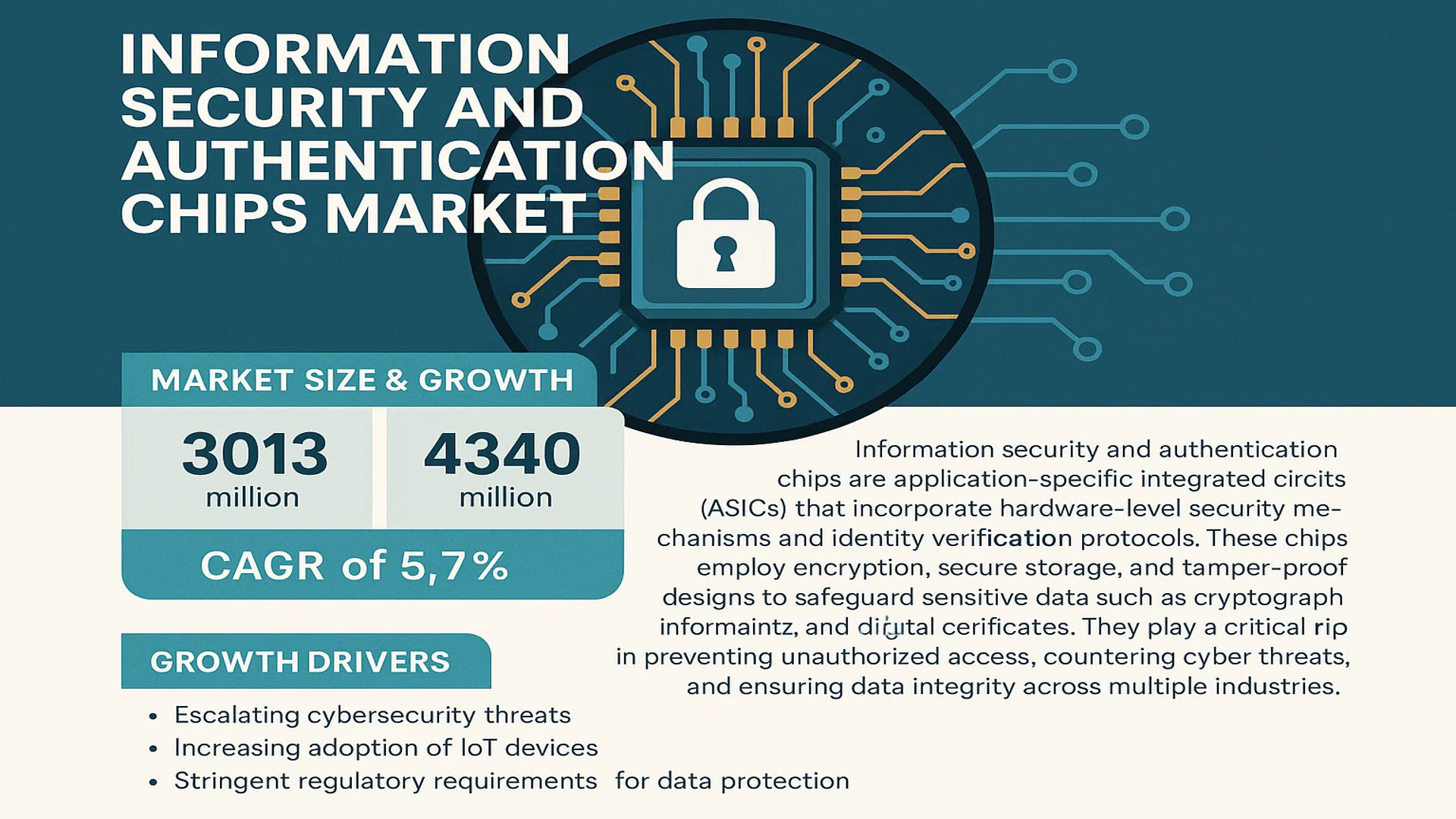
The global Information Security and Authentication Chips Market was valued at 3013 million in 2024 and is projected to reach US$ 4340 million by 2032, at a CAGR of 5.7% during the forecast period.
Information security and authentication chips are application-specific integrated circuits (ASICs) that incorporate hardware-level security mechanisms and identity verification protocols. These chips employ encryption, secure storage, and tamper-proof designs to safeguard sensitive data such as cryptographic keys, biometric information, and digital certificates. They play a critical role in preventing unauthorized access, countering cyber threats, and ensuring data integrity across multiple industries.
The market growth is driven by escalating cybersecurity threats, increasing adoption of IoT devices, and stringent regulatory requirements for data protection. Furthermore, the rising demand for secure authentication in financial transactions and government applications is accelerating market expansion. Key players like NXP Semiconductors, Infineon, and STMicroelectronics are leading innovation in this space, with the top five companies holding a significant market share as of 2024. The storage IC segment is expected to show notable growth, reflecting the industry’s focus on secure data retention solutions.
MARKET DYNAMICS
MARKET DRIVERS
Rising Cybersecurity Threats Accelerate Adoption of Hardware-Based Security Solutions
The global increase in sophisticated cyberattacks is driving robust demand for information security and authentication chips. Recent statistics indicate cybercrime damages could reach over $10 trillion annually by 2025, propelling organizations to invest in hardware-based security solutions. Authentication chips provide tamper-proof protection at the silicon level, making them significantly more resilient against software-based attacks compared to traditional security measures. Financial institutions and government agencies are increasingly mandating hardware security modules (HSMs) and secure elements in their systems to protect sensitive data and transactions.
IoT Expansion Creates Massive Demand for Device Authentication
The Internet of Things (IoT) ecosystem is experiencing explosive growth, with projections suggesting over 75 billion connected devices by 2025. This massive device proliferation creates an urgent need for robust security solutions at the hardware level. Authentication chips enable secure device identity verification and encrypted communications, becoming critical components in smart home systems, industrial IoT applications, and connected vehicles. Semiconductor companies are responding with dedicated IoT security solutions that integrate cryptographic accelerators and secure boot capabilities directly into chip architectures.
MARKET RESTRAINTS
High Development Costs Create Entry Barriers for Smaller Players
The specialized nature of security chip development presents significant financial challenges. Designing tamper-resistant hardware with advanced cryptographic capabilities requires extensive R&D investment, often exceeding $10 million for a single chip family. Certification processes for security standards like Common Criteria or FIPS can add another $500,000 to development costs, pricing out smaller semiconductor firms. This concentration of market power among established players with deep pockets limits innovation and competition in the sector.
Additional Constraints
Supply Chain Vulnerabilities
The global semiconductor shortage exposed critical weaknesses in the secure chip supply chain. Lead times for certain authentication chips extended beyond 52 weeks during peak demand, forcing manufacturers to seek less secure alternatives. Counterfeit components entering the supply chain further complicate procurement for security-conscious applications.
MARKET CHALLENGES
Quantum Computing Threat to Existing Cryptographic Standards
The emerging field of quantum computing presents an existential challenge to current cryptographic methods. Estimates suggest quantum computers could break RSA-2048 encryption within seconds by 2030. This impending threat requires the industry to develop and implement quantum-resistant algorithms in authentication chips, creating a complex transition period where both classical and post-quantum cryptography may need to coexist.
Implementation Complexity in Legacy Systems
Integrating modern security chips into existing infrastructure proves particularly challenging for organizations with legacy systems. Many industrial control systems and financial networks still rely on decades-old hardware that wasn’t designed with modern security requirements in mind. Retrofitting these systems with adequate protection often requires complete architecture overhauls rather than simple component upgrades.
MARKET OPPORTUNITIES
Emerging Applications in Automotive Cybersecurity Create New Revenue Streams
The automotive industry’s rapid digital transformation unlocks significant opportunities for security chip manufacturers. Modern vehicles now contain over 100 million lines of code across multiple ECUs, creating an extensive attack surface that requires hardware-level protection. The connected car security market is projected to grow at 19% CAGR through 2030, with authentication chips playing a central role in securing vehicle-to-everything (V2X) communications and over-the-air firmware updates.
Biometric Authentication Integration
The convergence of hardware security and biometric technologies presents another promising avenue. Advanced authentication chips now incorporate dedicated processing units for fingerprint matching and facial recognition algorithms while keeping biometric templates securely isolated. This integration enables more secure and convenient authentication for mobile devices, access control systems, and payment terminals.
INFORMATION SECURITY AND AUTHENTICATION CHIPS MARKET TRENDS
Rising Cyber Threats and IoT Expansion to Fuel Market Growth
The global information security and authentication chips market is witnessing accelerated growth due to escalating cybersecurity threats and the rapid expansion of Internet of Things (IoT) devices. In 2023 alone, cyberattacks increased by over 15% year-on-year, compelling organizations to adopt hardware-based security solutions. Authentication chips provide enhanced protection against unauthorized access and data breaches by integrating tamper-resistant mechanisms such as secure key storage and cryptographic accelerators. Additionally, the IoT market is projected to reach 29 billion connected devices by 2030, further driving demand for embedded security solutions. Leading semiconductor companies are prioritizing Post-Quantum Cryptography (PQC) to counter emerging threats from quantum computing, ensuring long-term security resilience.
Other Trends
Adoption of Multi-Factor Authentication (MFA)
Multi-factor authentication is becoming a standard security practice across industries, accelerating the deployment of authentication chips in consumer electronics, banking systems, and government applications. Nearly 60% of enterprises are shifting from software-based authentication to hardware-embedded solutions due to their lower vulnerability to hacking. Smartphones, payment cards, and cloud infrastructure are increasingly incorporating Secure Element (SE) chips to comply with stringent regulatory frameworks, including GDPR and PCI DSS standards. Biometric authentication, combined with hardware-backed encryption, is particularly gaining traction in financial services, accounting for approximately 30% of authentication chip applications in 2024.
Regional Growth and Strategic Collaborations
Asia-Pacific is emerging as the fastest-growing market for authentication chips, fueled by government-led digital transformation initiatives and semiconductor manufacturing advancements. China’s semiconductor self-sufficiency policies have spurred investments in domestic players like Unigroup Guoxin Microelectronics, while South Korea and Japan are leading in automotive and industrial IoT security. Meanwhile, strategic collaborations between cybersecurity firms and chip manufacturers are fostering innovation. For instance, partnerships focusing on physically unclonable functions (PUFs) and AI-driven threat detection are reshaping the competitive landscape, with mergers and acquisitions contributing to 12% of market expansion in the past two years.
COMPETITIVE LANDSCAPE
Key Industry Players
Innovation and Strategic Partnerships Drive Market Competition
The global information security and authentication chips market features a dynamic competitive landscape dominated by semiconductor giants, specialized security solution providers, and emerging regional players. NXP Semiconductors holds a substantial market share in 2024, driven by its comprehensive portfolio of secure element chips serving banking, government ID, and IoT applications. Their recent acquisition of digital identity verification capabilities further strengthens their position.
Infineon Technologies and STMicroelectronics follow closely, leveraging their expertise in embedded security solutions for automotive, industrial, and payment systems. Both companies have made significant R&D investments in post-quantum cryptography-ready chips, anticipating future security threats.
The competitive intensity is further heightened by Asian players like Unigroup Guoxin Microelectronics and Samsung, who are rapidly expanding their authentication chip offerings. These companies benefit from strong domestic demand in China and South Korea’s thriving electronics manufacturing ecosystems. Samsung’s recent integration of security chips into its flagship smartphones demonstrates the growing convergence of consumer electronics and hardware-level security.
Several notable trends are reshaping competition:
- Increasing demand for multi-factor authentication solutions combining biometrics and cryptographic chips
- Regulatory pressures driving adoption in financial services and government applications
- Emerging focus on automotive security as vehicles become more connected
List of Key Information Security and Authentication Chip Manufacturers
- NXP Semiconductors (Netherlands)
- Infineon Technologies AG (Germany)
- HED (U.S.)
- STMicroelectronics (Switzerland)
- Samsung Electronics (South Korea)
- Unigroup Guoxin Microelectronics Co., Ltd. (China)
- Shanghai Fudan Microelectronics Group Co., Ltd. (China)
- Microchip Technology Inc. (U.S.)
- Datang Telecom Technology Co.,Ltd. (China)
- Nations Technologies Inc. (China)
- Giantec Semiconductor Corporation (China)
Segment Analysis:
By Type
Storage IC Segment Leads the Market Due to Growing Demand for Secure Data Storage Solutions
The market is segmented based on type into:
- Storage IC
- Subtypes: Secure Flash, Secure EEPROM, Secure SRAM, and others
- Logic encryption IC
- Subtypes: Hardware security modules, Cryptographic ICs, Authentication ICs
- CPU IC
- Subtypes: Secure processors, Trusted Platform Modules (TPM)
- Other
By Application
BFSI Segment Dominates Market Share Owing to High Security Requirements in Banking Transactions
The market is segmented based on application into:
- Communications
- BFSI
- Government and Defense
- Transportation
- Others
By Security Level
High Security Chips Witness Growing Adoption for Critical Infrastructure Protection
The market is segmented based on security level into:
- Basic security chips
- Medium security chips
- High security chips
- Subtypes: FIPS 140-2, Common Criteria EAL5+ certified
By Authentication Method
Biometric Authentication Chips Show Strong Growth Potential with Rising Demand for Secure Identification
The market is segmented based on authentication method into:
- Password/PIN based
- Certificate based
- Biometric
- Subtypes: Fingerprint, Facial recognition, Iris recognition, and others
- Multi-factor authentication
Regional Analysis: Information Security and Authentication Chips Market
North America
North America dominates the global Information Security and Authentication Chips market, driven by stringent cybersecurity regulations such as the NIST Cybersecurity Framework and high adoption of advanced authentication technologies across industries. The U.S. leads the region, with major tech firms and financial institutions investing heavily in hardware-based security solutions to combat rising cyber threats. The growth is further propelled by government initiatives like the CHIPS and Science Act, which allocates funding for semiconductor R&D. Key players like Microchip Technology and NXP Semiconductors are expanding their product portfolios to meet demand for secure authentication in IoT, automotive, and cloud applications.
Europe
Europe’s market growth is fueled by strict data protection laws such as GDPR and increasing digital transformation across banking and government sectors. Countries like Germany and France are at the forefront, implementing advanced cryptographic chips for secure ID cards, payment systems, and industrial IoT. The European Commission’s Cyber Resilience Act further mandates stringent security standards for hardware components. Local manufacturers such as Infineon and STMicroelectronics are leveraging their expertise in automotive and industrial applications to drive innovation in authentication technology.
Asia-Pacific
The Asia-Pacific region is the fastest-growing market, led by China, Japan, and South Korea, where rapid digitalization and government-backed semiconductor initiatives are accelerating demand. China’s focus on self-reliance in chip manufacturing has boosted local players like Unigroup Guoxin Microelectronics and Shanghai Fudan Microelectronics, particularly in smart card and mobile authentication applications. India’s expanding fintech sector and Japan’s advanced automotive industry also contribute to the adoption of secure authentication chips, though cost sensitivity remains a challenge in emerging economies.
South America
The market in South America is nascent but growing, with Brazil and Argentina showing potential due to increasing fintech adoption and government digitization projects. However, economic instability and lower investment in local semiconductor production limit the pace of growth. Key sectors like banking and retail are gradually adopting hardware-based authentication to combat fraud, relying on imported solutions from global suppliers.
Middle East & Africa
This region presents emerging opportunities, particularly in the Gulf Cooperation Council (GCC) countries, where smart city projects and digital ID programs are driving demand for secure authentication chips. However, limited local manufacturing capabilities and reliance on imports pose challenges. South Africa and the UAE are key markets, with financial institutions and government agencies prioritizing secure authentication to enhance cybersecurity resilience.
Report Scope
This market research report provides a comprehensive analysis of the Global Information Security and Authentication Chips Market, covering the forecast period 2024–2032. It offers detailed insights into market dynamics, technological advancements, competitive landscape, and key trends shaping the industry.
Key focus areas of the report include:
- Market Size & Forecast: Historical data and future projections for revenue, unit shipments, and market value across major regions and segments. The market was valued at USD 3,013 million in 2024 and is projected to reach USD 4,340 million by 2032, growing at a CAGR of 5.7%.
- Segmentation Analysis: Detailed breakdown by product type (Storage IC, Logic Encryption IC, CPU IC, Others), technology, application (Communications, BFSI, Government & Defense, Transportation, Others), and end-user industry to identify high-growth segments and investment opportunities.
- Regional Outlook: Insights into market performance across North America, Europe, Asia-Pacific, Latin America, and the Middle East & Africa, including country-level analysis. The U.S. and China are key growth markets.
- Competitive Landscape: Profiles of leading market participants, including NXP Semiconductors, Infineon, STMicroelectronics, Samsung, and Microchip, among others, covering their product offerings, R&D focus, manufacturing capacity, and recent developments.
- Technology Trends & Innovation: Assessment of emerging technologies, including hardware-level encryption, tamper-proof designs, and AI/ML integration in authentication protocols.
- Market Drivers & Restraints: Evaluation of factors such as rising cyber threats, regulatory compliance, and IoT adoption driving growth, along with challenges like supply chain constraints and high development costs.
- Stakeholder Analysis: Insights for component suppliers, OEMs, system integrators, investors, and policymakers regarding the evolving security chip ecosystem and strategic opportunities.
Primary and secondary research methods are employed, including interviews with industry experts, data from verified sources, and real-time market intelligence to ensure the accuracy and reliability of the insights presented.
FREQUENTLY ASKED QUESTIONS:
What is the current market size of Global Information Security and Authentication Chips Market?
->Information Security and Authentication Chips Market was valued at 3013 million in 2024 and is projected to reach US$ 4340 million by 2032, at a CAGR of 5.7% during the forecast period..
Which key companies operate in this market?
-> Key players include NXP Semiconductors, Infineon, STMicroelectronics, Samsung, Microchip, Unigroup Guoxin Microelectronics, and Shanghai Fudan Microelectronics.
What are the key growth drivers?
-> Growth is driven by increasing cyber threats, stringent data protection regulations, IoT adoption, and demand for secure authentication in BFSI and government sectors.
Which region dominates the market?
-> Asia-Pacific is the fastest-growing region due to semiconductor manufacturing growth, while North America leads in technological innovation.
What are the emerging trends?
-> Emerging trends include quantum-resistant encryption, biometric authentication chips, and AI-powered security solutions.

Get Sample Report PDF for Exclusive Insights
Report Sample Includes
- Table of Contents
- List of Tables & Figures
- Charts, Research Methodology, and more...
 Download Sample Report PDF