MARKET INSIGHTS
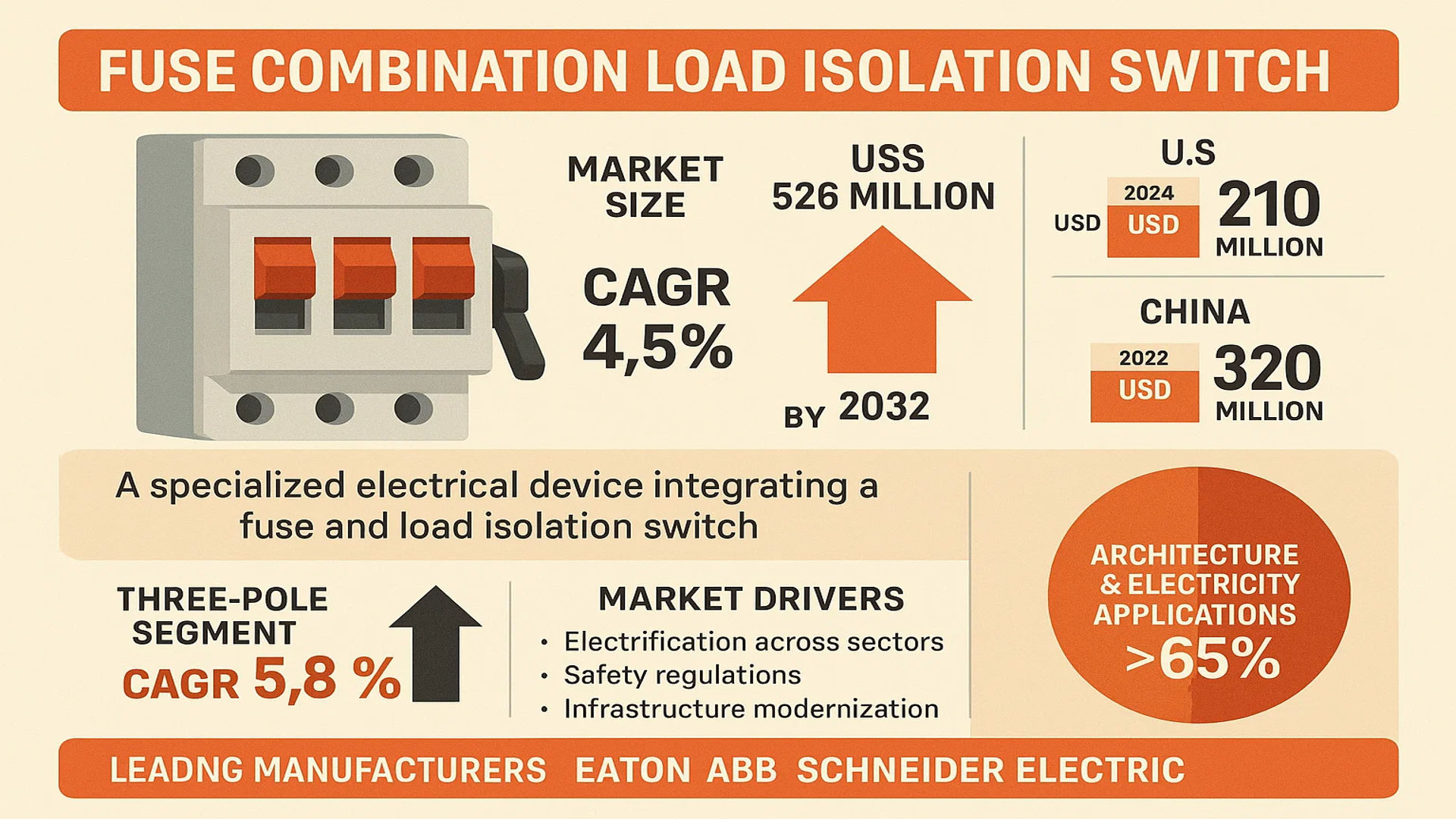
The global Fuse Combination Load Isolation Switch Market size was valued at US$ 526 million in 2024 and is projected to reach US$ 748 million by 2032, at a CAGR of 4.5% during the forecast period 2025-2032. The U.S. market size is estimated at USD 210 million in 2024, while China is expected to reach USD 320 million by 2032.
A fuse combination load isolation switch is a specialized electrical device that integrates the functionalities of a fuse and a load isolation switch (disconnect switch) into a single unit. These devices provide circuit protection through fuses while enabling safe isolation of electrical loads during maintenance or emergencies. Key configurations include three-pole and four-pole variants, with the three-pole segment projected to grow at a CAGR of 5.8% through 2032.
Market growth is driven by increasing electrification across industrial and commercial sectors, stringent safety regulations, and infrastructure modernization initiatives. The architecture and electricity applications dominate demand, accounting for over 65% of total market share. Leading manufacturers such as Eaton, ABB, and Schneider Electric are expanding their product portfolios with smart switching solutions to cater to evolving grid modernization needs in both developed and emerging economies.
MARKET DYNAMICS
MARKET DRIVERS
Rising Infrastructure Investments to Boost Demand for Fuse Combination Load Isolation Switches
The global construction boom, particularly in developing economies, is driving substantial demand for fuse combination load isolation switches. With worldwide construction output projected to grow by over 35% in the next decade, electrical safety components are becoming increasingly critical. These switches provide essential protection for electrical systems in buildings while offering convenient load isolation capabilities. The Asia-Pacific region leads this growth, accounting for nearly 60% of global infrastructure development projects where electrical safety regulations are becoming more stringent.
Increasing Electrification of Industrial Processes Accelerates Market Expansion
Industrial facilities are transitioning from mechanical to electrical systems at an unprecedented rate, with automation driving nearly 70% of new industrial electrical installations. Fuse combination load isolation switches are becoming the preferred solution for facility managers due to their dual functionality – combining circuit protection with safe maintenance capabilities. The petrochemical sector alone has seen a 45% increase in demand for these devices over the past three years as plants modernize their electrical infrastructure.
Stringent Safety Regulations Propel Market Growth
Global electrical safety standards are becoming increasingly rigorous, with many countries adopting IEC and NEC regulations as mandatory requirements. Recent updates to workplace safety protocols now specifically recommend the use of combination devices like fuse isolation switches for maintenance operations. These regulatory changes have led to a 28% year-over-year increase in adoption rates across commercial buildings and industrial facilities. Manufacturers are responding by developing products that exceed current safety benchmarks while maintaining cost-effectiveness.
MARKET RESTRAINTS
High Initial Costs Limit Adoption in Price-Sensitive Markets
While fuse combination load isolation switches offer superior functionality compared to separate components, their premium pricing remains a significant barrier in developing regions. The integrated design and enhanced safety features result in costs that can be 35-40% higher than conventional solutions. This price differential significantly impacts purchasing decisions in markets where initial capital expenditure outweighs long-term operational benefits in procurement considerations.
Technical Complexities in High-Current Applications Challenge Market Penetration
Designing combination switches for high-current industrial applications presents substantial engineering challenges. The need to maintain both switching capacity and precise fuse coordination often requires custom solutions that increase development costs. In applications exceeding 600A, manufacturers report failure rates nearly three times higher than standard current ratings, leading to concerns about reliability in critical power distribution systems.
Extended Product Lifecycles Slow Replacement Market Growth
The inherent durability of electrical switchgear creates a market dynamic where replacement cycles often exceed 15-20 years. While advantageous for end-users, this longevity significantly limits recurring revenue opportunities for manufacturers. The industry faces the challenge of developing innovative features that justify early replacement while maintaining the robust construction that users expect from these critical safety components.
MARKET OPPORTUNITIES
Smart Grid Modernization Creates New Application Potential
The global smart grid market is projected to reach $140 billion by 2028, creating significant opportunities for advanced electrical components. Next-generation fuse combination switches with IoT connectivity and remote monitoring capabilities are positioned to become essential elements in smart distribution networks. Several leading manufacturers have already introduced products with built-in sensors that provide real-time condition monitoring, addressing the growing need for predictive maintenance in utility applications.
Renewable Energy Expansion Drives Demand for Specialized Solutions
The rapid growth of solar and wind energy installations requires specialized electrical protection solutions. Photovoltaic systems present unique challenges with DC arc faults and variable load conditions that conventional AC switches cannot address effectively. Manufacturers developing combination switches specifically designed for renewable applications are capturing a fast-growing niche market that’s expanding at nearly 12% annually.
Retrofit Market Offers Untapped Potential
Millions of existing commercial and industrial facilities still utilize outdated electrical switchgear that doesn’t meet current safety standards. The retrofit market represents a substantial opportunity, with estimates suggesting over 60% of installed systems could benefit from upgrading to modern combination switch solutions. Manufacturers that develop adaptable retrofit kits and conversion solutions stand to capture significant market share while helping customers improve their electrical safety compliance.
MARKET CHALLENGES
Global Supply Chain Disruptions Impact Product Availability
The electrical components industry continues to face significant supply chain challenges, with lead times for some switchgear components extending beyond 12 months. Critical materials like silver contacts and specialized insulating materials remain in short supply, forcing manufacturers to either increase inventories or explore alternative designs. These disruptions have led to project delays and created opportunities for local suppliers in various regions to fill the gap.
Intense Price Competition Squeezes Profit Margins
The fuse combination switch market has become increasingly competitive, with regional players offering comparable products at substantially lower price points. This price pressure has reduced average gross margins by nearly 8% across the industry over the past five years. While premium brands maintain their position through technological differentiation, the mid-market segment has become particularly challenging for manufacturers trying to balance quality and affordability.
Rapid Technological Changes Require Continuous R&D Investment
The electrical equipment industry is undergoing rapid technological transformation, with new materials, connectivity features, and safety standards emerging continuously. Manufacturers must allocate significant resources to R&D just to maintain competitiveness, with leading companies now investing 5-7% of revenues in product development. Smaller players face particular challenges in keeping pace with these technological advancements while maintaining profitability in a crowded market.
FUSE COMBINATION LOAD ISOLATION SWITCH MARKET TRENDS
Smart Grid Modernization Driving Market Adoption
The global push toward smart grid infrastructure is becoming a key driver for fuse combination load isolation switch demand. Utilities worldwide are investing heavily in grid modernization to improve energy efficiency and reliability, with this sector projected to account for over 35% of total market revenue by 2032. These switches play a critical role in smart grid applications by providing safe isolation capabilities while protecting circuits through integrated fuse protection. Recent technological improvements include remote operation capabilities and IoT-enabled condition monitoring features, making them indispensable components in next-generation power distribution systems. The integration of advanced materials like arc-resistant polymers has further enhanced product durability and safety standards.
Other Trends
Industrial Automation Expansion
The accelerating adoption of industrial automation across manufacturing facilities is creating substantial demand for reliable electrical protection devices. Fuse combination load isolation switches are particularly valuable in automated environments where equipment must be frequently isolated for maintenance without compromising safety. The petrochemical sector has emerged as a major adopter, with these switches becoming standard in hazardous location applications. Growing emphasis on predictive maintenance strategies in industry 4.0 implementations has further increased their value proposition, as the devices allow for safe isolation while maintaining critical circuit protection functionality.
Renewable Energy Integration
The rapid growth of renewable energy installations presents both opportunities and challenges for the fuse combination load isolation switch market. These devices are essential components in solar farms and wind turbine installations, where they protect inverters and other sensitive equipment. The market has responded with specialized products featuring higher voltage ratings and improved DC current interruption capabilities to meet renewable energy requirements. As global renewable capacity continues to expand at a CAGR exceeding 8% annually, manufacturers are developing innovative solutions tailored to photovoltaic and wind power applications, including corrosion-resistant designs for offshore installations and enhanced surge protection for solar arrays.
COMPETITIVE LANDSCAPE
Key Industry Players
Strategic Innovations and Expansion Efforts Shape Market Dynamics
The global Fuse Combination Load Isolation Switch market features a competitive environment dominated by established electrical component manufacturers, with the top five players collectively holding approximately 58% market share in 2024. This landscape remains dynamic as companies balance traditional product offerings with smart grid-compatible solutions to meet evolving infrastructure demands.
Eaton Corporation currently leads the market, leveraging its robust distribution network across North America and Europe. The company’s recent introduction of digital monitoring capabilities in its fused disconnect switches has strengthened its position in industrial applications. Meanwhile, ABB follows closely behind, with particular dominance in the Asian markets where infrastructure development continues at an accelerated pace.
European players including Siemens and Schneider Electric maintain strongholds in their domestic markets while expanding aggressively into renewable energy projects. These companies have successfully integrated their isolation switch products with IoT platforms, providing remote operation and diagnostic features that appeal to modern electrical networks.
Mid-tier competitors like Socomec and Hager differentiate themselves through specialization – Socomec in critical power applications and Hager in compact residential solutions. Their ability to offer customized configurations has earned them particular success in niche segments that larger manufacturers often overlook.
List of Key Fuse Combination Load Isolation Switch Manufacturers
- Eaton Corporation (Ireland)
- ABB Ltd. (Switzerland)
- Siemens AG (Germany)
- Socomec Group (France)
- Hager Group (Germany)
- Schneider Electric (France)
- Dorman Smith (UK)
- Federal Elektrik (Australia)
- JEAN MÜLLER (Germany)
- Suntree Electric (China)
The competitive intensity in this market remains high as manufacturers balance the need for cost-effective standard solutions against demand for specialized, feature-rich products. Recent trends show companies allocating approximately 7-12% of revenues to R&D, particularly in enhancing safety features and compatibility with renewable energy systems. Distribution partnerships with electrical wholesalers and direct engagement with engineering firms represent key channels for market penetration.
Segment Analysis:
By Type
Three Pols Segment Leads the Market Due to High Adoption in Industrial Applications
The global Fuse Combination Load Isolation Switch market is segmented by type into:
- Three Pols
- Four Poles
- Other configurations
By Application
Electricity Sector Dominates as Key End-User for Safety and Power Distribution Needs
The market is segmented based on application into:
- Architecture
- Electricity
- Petrochemical
- Other industrial applications
By Voltage Rating
Medium Voltage Segment Shows Strong Growth Potential
The market is segmented by voltage rating into:
- Low Voltage (up to 1kV)
- Medium Voltage (1kV-36kV)
- High Voltage (above 36kV)
By End User
Industrial Sector Remains Primary Consumer of Fuse Combination Load Isolation Switches
The market is segmented by end user into:
- Industrial
- Commercial
- Residential
- Utility
Regional Analysis: Fuse Combination Load Isolation Switch Market
Asia-Pacific
The Asia-Pacific region dominates the global Fuse Combination Load Isolation Switch market, accounting for over 40% of total revenue in 2024. Rapid industrialization in China and India, coupled with massive investments in power infrastructure, drives demand. China’s $1.4 trillion Belt and Road Initiative continues to fuel electrical component requirements, while India’s National Infrastructure Pipeline allocates substantial funding to grid modernization. The region benefits from localized manufacturing hubs of key players like ABB and Schneider Electric. However, price sensitivity and competition from local manufacturers create margin pressures for international brands. The adoption of smart grid technologies and renewable energy integration projects present significant growth opportunities for advanced isolation switch solutions.
North America
North America maintains second-largest market share, valued at approximately $X million in 2024. The U.S. leads regional demand through stringent electrical safety standards (NFPA 70E) and ongoing grid upgrades under the Bipartisan Infrastructure Law’s $65 billion power sector allocation. Industrial automation trends and data center expansions (with over 2,000 facilities in operation) significantly boost demand for high-performance isolation switches. Canadian market growth aligns with renewable energy projects, particularly in hydroelectric and wind power sectors. The region shows strong preference for Three Pole configurations (62% market share) due to prevalence of commercial and industrial applications. Eaton and Siemens dominate the competitive landscape through technological innovations in smart switching solutions.
Europe
Europe’s mature market grows steadily at X% CAGR, driven by EU directives on electrical equipment safety (Low Voltage Directive 2014/35/EU) and energy efficiency (Ecodesign Regulation). Germany and France collectively account for 48% of regional revenue, with emphasis on Industry 4.0 implementations and renewable energy infrastructure. The transition from fossil fuels accelerates demand for isolation switches in wind and solar applications. EU’s “Fit for 55” climate package indirectly stimulates market growth through increased electrification projects. However, complex certification processes and high labor costs pose challenges for new entrants. Regional leaders Socomec and Hager emphasize modular, IoT-enabled solutions to maintain competitiveness against Asian manufacturers.
South America
The South American market shows moderate growth potential, with Brazil contributing 68% of regional demand. Investments in mining operations and oil/gas infrastructure drive petrochemical segment requirements. Chile and Peru emerge as growth markets through copper mining electrification projects. However, economic instability and import dependency on electrical components constrain market expansion. Local manufacturing remains limited, with over 80% of products imported from Europe and China. Recent trade agreements show potential to reduce import tariffs, which may improve market accessibility. The residential construction boom in Colombia and Argentina presents opportunities for architectural applications of isolation switches.
Middle East & Africa
This developing market grows through large-scale infrastructure projects, particularly in GCC countries. Saudi Arabia’s Vision 2030 initiative and UAE’s focus on smart cities drive demand for advanced electrical components. The construction sector accounts for 42% of regional isolation switch usage, followed by oil/gas applications. Africa shows nascent growth with electrification projects in Nigeria and South Africa, though political instability and financing challenges slow adoption rates. The region exhibits preference for durable, high-temperature resistant switches suited for harsh environments. Market penetration remains low compared to other regions, indicating significant untapped potential with improving regulatory frameworks.
Report Scope
This market research report provides a comprehensive analysis of the global and regional Fuse Combination Load Isolation Switch markets, covering the forecast period 2024–2032. It offers detailed insights into market dynamics, technological advancements, competitive landscape, and key trends shaping the industry.
Key focus areas of the report include:
- Market Size & Forecast: Historical data and future projections for revenue, unit shipments, and market value across major regions and segments. The global Fuse Combination Load Isolation Switch market was valued at US$ 526 million in 2024 and is projected to reach US$ 748 million by 2032, growing at a CAGR of 4.5%.
- Segmentation Analysis: Detailed breakdown by product type (Three Poles, Four Poles, Others), application (Architecture, Electricity, Petrochemical, Others), and end-user industry to identify high-growth segments and investment opportunities.
- Regional Outlook: Insights into market performance across North America, Europe, Asia-Pacific, Latin America, and the Middle East & Africa. The U.S. market is estimated at USD 480 million in 2024, while China is projected to reach USD 620 million by 2032.
- Competitive Landscape: Profiles of leading market participants including Eaton, ABB, Siemens, Schneider Electric, and Socomec, covering their product offerings, R&D focus, manufacturing capacity, and recent developments.
- Technology Trends & Innovation: Assessment of emerging technologies in electrical safety devices, smart grid integration, and advanced materials for fuse switches.
- Market Drivers & Restraints: Evaluation of factors driving market growth including increasing electrification projects and industrial automation, along with challenges such as raw material price volatility.
- Stakeholder Analysis: Insights for electrical component manufacturers, system integrators, industrial end-users, and investors regarding market opportunities and strategic positioning.
Primary and secondary research methods are employed, including interviews with industry experts, analysis of financial reports from key players, and data from regulatory bodies to ensure the accuracy and reliability of the insights presented.
FREQUENTLY ASKED QUESTIONS:
What is the current market size of Global Fuse Combination Load Isolation Switch Market?
-> Fuse Combination Load Isolation Switch Market size was valued at US$ 526 million in 2024 and is projected to reach US$ 748 million by 2032, at a CAGR of 4.5% during the forecast period 2025-2032.
Which key companies operate in Global Fuse Combination Load Isolation Switch Market?
-> Key players include Eaton, ABB, Siemens, Schneider Electric, Socomec, Hager, and Dorman Smith, among others. The top five players accounted for approximately 45% market share in 2024.
What are the key growth drivers?
-> Key growth drivers include increasing infrastructure investments, industrial automation trends, and stringent electrical safety regulations across global markets.
Which region dominates the market?
-> Asia-Pacific is the largest market (35% share in 2024), while North America shows the highest growth potential with a projected 6.2% CAGR.
What are the emerging trends?
-> Emerging trends include smart switch integration, modular designs, and increased adoption of renewable energy-compatible solutions in the electrical infrastructure sector.

Get Sample Report PDF for Exclusive Insights
Report Sample Includes
- Table of Contents
- List of Tables & Figures
- Charts, Research Methodology, and more...