Automotive Blade Fuse Market, Global Business Strategies 2025-2032

Automotive Blade Fuse Market was valued at USD 302 million in 2024. The market is projected to grow from USD 312 million in 2025 to USD 384 million by 2032, exhibiting a CAGR of 3.6% during the forecast period.

PDF Icon Download Sample Report PDF
  • Quick Dispatch

    All Orders

  • Secure Payment

    100% Secure Payment

Price range: $1,500.00 through $4,250.00

Clear

MARKET INSIGHTS

Global Automotive Blade Fuse Market was valued at USD 302 million in 2024. The market is projected to grow from USD 312 million in 2025 to USD 384 million by 2032, exhibiting a CAGR of 3.6% during the forecast period.

Automotive blade fuses are protective electrical components primarily used in vehicles featuring a plastic body with two prongs that securely fit into sockets. Each fuse is clearly printed with its rated current capacity in amperes on the top surface, and they are commonly referred to as spade or plug in fuses due to their distinctive design.

The market is experiencing steady growth driven by several key factors, including increasing vehicle production worldwide, rising demand for advanced electrical systems in modern automobiles, and stringent safety regulations mandating proper circuit protection. Furthermore, the growing adoption of electric vehicles with complex electrical architectures presents significant opportunities for market expansion. The competitive landscape features several established players, with Littlefuse, Pacific Engineering Corporation (PEC), and Eaton (Cooper Industries) holding prominent positions in the industry alongside other significant contributors such as MTA SpA and ESKA Erich Schweizer.
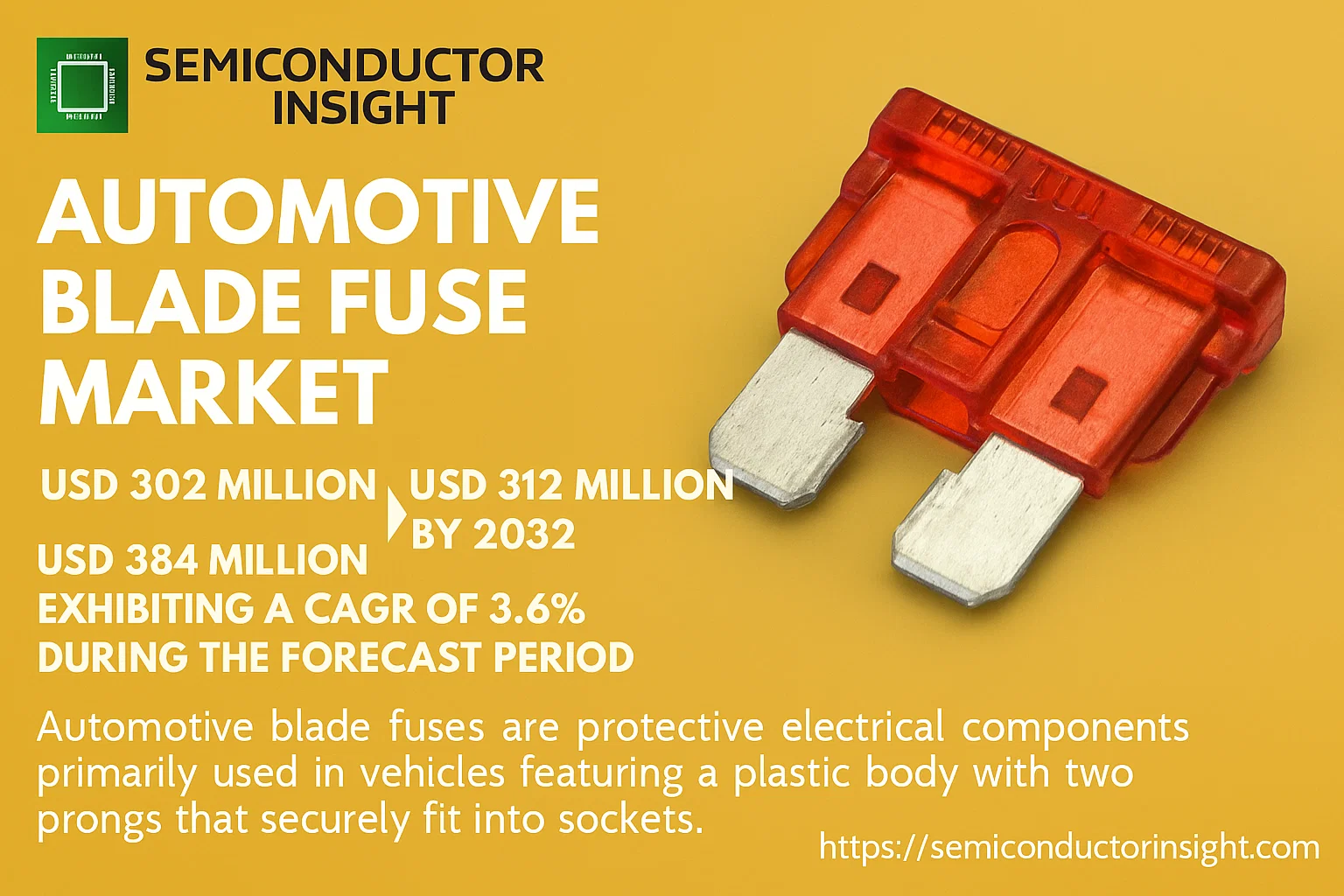
Automotive Blade Fuse Market Size & Forecast Analysis

MARKET DRIVERS

Rising Global Vehicle Production and Electrification

The steady growth in global automotive production, particularly the rapid expansion of electric and hybrid vehicle segments, is a primary driver for the Automotive Blade Fuse Market. These vehicles require sophisticated electrical systems for battery management, power electronics, and advanced driver assistance systems (ADAS), all of which rely on blade fuses for circuit protection. The increased electrical content per vehicle directly translates into higher fuse usage, fueling market growth. Furthermore, the standardization of blade fuses across most vehicle platforms ensures their continued relevance in new vehicle designs.

Stringent Automotive Safety Regulations

Governments and international regulatory bodies are implementing increasingly strict safety standards for automotive electrical systems. These regulations mandate reliable circuit protection to prevent electrical failures that could lead to fires or system malfunctions. Blade fuses are a critical, cost effective component for OEMs to achieve compliance, as they offer predictable failure modes and easy replacement. This regulatory push ensures that blade fuses remain a fundamental and non negotiable part of vehicle design, supporting consistent demand in the market.

The proliferation of in vehicle electronics and consumer demand for comfort and connectivity features such as infotainment systems, multiple USB ports, and advanced lighting are also significant drivers. Each new electronic module requires its own circuit protection, directly expanding the total available market for blade fuses.

MARKET CHALLENGES

Competition from Alternative Circuit Protection Technologies

A key challenge facing the Automotive Blade Fuse Market is the emergence and gradual adoption of solid state circuit breakers and smart fuses. These technologies offer advantages like resettability and diagnostic capabilities, which are attractive for high end vehicles and critical systems. While blade fuses maintain a stronghold due to their low cost and simplicity, the automotive industry’s push toward smarter, more integrated systems presents a long term threat that could erode market share for traditional fuses.

Other Challenges

Price Pressure and Thin Margins
The market is highly competitive and characterized by significant price sensitivity. Both OEMs and the aftermarket demand low cost components, which compresses profit margins for fuse manufacturers. This constant pressure necessitates highly efficient manufacturing processes and large scale production to remain profitable.

Supply Chain Vulnerabilities
The reliance on specific raw materials, such as copper and specialized plastics, makes the Automotive Blade Fuse Market susceptible to supply chain disruptions and price volatility. Geopolitical issues and logistical bottlenecks can lead to increased costs and production delays, impacting market stability.

MARKET RESTRAINTS

Long Product Lifecycle and High Reliability

The inherent reliability and long lifespan of automotive blade fuses act as a market restraint. Once installed, a quality blade fuse can last the entire lifetime of the vehicle under normal conditions. This reduces the frequency of replacement in the aftermarket for non accident related reasons. While failures do occur, the high durability of the product limits the volume of repeat purchases, capping growth potential compared to more frequently replaced automotive components.

Vehicle Lightweighting Initiatives

Automotive manufacturers are under continuous pressure to reduce vehicle weight to improve fuel efficiency and meet emissions standards. While blade fuses are small, every component is scrutinized. This can lead to designs that consolidate electronic control units or use alternative, lighter weight protection methods in certain applications, potentially restraining the per vehicle consumption of blade fuses.

MARKET OPPORTUNITIES

Expansion in Emerging Economies

The growing middle class in emerging economies across Asia Pacific, Latin America, and Africa presents a substantial opportunity. Rising vehicle ownership rates and the expansion of local automotive manufacturing in these regions will drive demand for both OEM and aftermarket blade fuses. The need for affordable and reliable circuit protection in these price sensitive markets aligns perfectly with the value proposition of standard blade fuses.

Aftermarket and Replacement Demand

Global vehicle parc, the total number of vehicles in operation, continues to grow and age. Older vehicles experience more electrical issues and require fuse replacements due to wear, corrosion, or aftermarket accessory installations. This creates a stable and recurring revenue stream in the Automotive Blade Fuse Market. The DIY repair trend further boosts retail sales of blade fuse kits and individual fuses.

Innovation in Fuse Design and Materials

There is an opportunity for manufacturers to innovate by developing blade fuses with enhanced features, such as miniaturization for space constrained modern fuse boxes, improved materials for higher temperature resistance in electric vehicles, and colored or numbered indicators for easier diagnostics. Developing specialized fuses for high voltage applications in EVs represents a high growth niche within the broader market.


Automotive Blade Fuse Market Trends

Sustained Global Growth Driven by Vehicle Electrification

Global Automotive Blade Fuse market, valued at USD 302 million in 2024, is on a steady growth trajectory, projected to reach USD 384 million by 2032 with a Compound Annual Growth Rate (CAGR) of 3.6%. This consistent expansion is primarily fueled by the increasing complexity of vehicle electrical systems. The proliferation of advanced driver assistance systems (ADAS), infotainment units, and comfort features in both passenger and commercial vehicles significantly raises the number of protective circuits required. As the core component safeguarding these circuits from overcurrent conditions, the demand for Automotive Blade Fuses is directly correlated with the electronic content in modern vehicles.

Other Trends

Market Consolidation and Competitive Landscape

Global Automotive Blade Fuse market is characterized by a consolidated competitive environment where the top five players, including Littlefuse, Eaton, and Pacific Engineering Corporation (PEC), collectively hold approximately 50% of the market share. This concentration drives intense competition focused on product reliability, miniaturization, and international distribution networks. Manufacturers are continuously innovating to meet stringent automotive safety standards and cater to the specific voltage and current requirements of next generation vehicles.

Clear Segment Dominance

Analysis of the Automotive Blade Fuse market by type reveals that the Maxi blade fuse segment is the largest, commanding about 40% of the market. These fuses are critical for protecting high current circuits commonly found in commercial vehicles and electric power steering systems. In terms of application, the Passenger Car segment is the dominant consumer of Automotive Blade Fuses, followed by Commercial Vehicles, reflecting the massive volume of passenger car production globally.

Regional Market Dynamics

Europe currently stands as the largest regional market for Automotive Blade Fuses, accounting for roughly 30% of global demand, supported by a strong automotive manufacturing base and high adoption of vehicle electronics. North America and China together represent a further 40% market share. The Asia Pacific region, particularly China, is anticipated to exhibit significant growth potential due to increasing vehicle production and the rapid electrification of its automotive fleet. Global distribution underscores the universal reliance on these critical safety components across all major automotive markets.

COMPETITIVE LANDSCAPE

Key Industry Players

Concentration and Strategic Focus Define the Market Structure

Global Automotive Blade Fuse market is characterized by a high degree of concentration, with the top five players accounting for approximately 50% of the total market share. Littelfuse Inc. is the undisputed global leader, with a comprehensive product portfolio and a strong global distribution network that serves major automotive OEMs and aftermarket channels. The market structure is competitive yet consolidated, where established players leverage their technological expertise, brand reputation, and long standing relationships with automotive manufacturers. Competition is primarily based on product reliability, compliance with stringent automotive safety standards, pricing, and the ability to innovate with miniaturization and enhanced electrical characteristics to meet the evolving demands of modern vehicle electrical systems.

Beyond the dominant leaders, a range of other significant players hold a combined substantial market share and often compete effectively by specializing in niche segments or specific geographic regions. Companies like Pacific Engineering Corporation (PEC) and MTA SpA have a strong presence, particularly in their home regions of Japan and Europe respectively. The market also includes numerous specialized manufacturers, especially from Asia, who compete on cost efficiency and cater to the vast aftermarket and lower tier OEM segments. These players, including several key Chinese manufacturers, are crucial in serving the high volume passenger car and commercial vehicle markets, contributing significantly to the overall market’s competitive dynamics and price points.

List of Key Automotive Blade Fuse Companies Profiled

Segment Analysis:

Segment Category Sub Segments Key Insights
By Type
  • Micro and Mini
  • Regular
  • Maxi
Maxi blade fuses represent the most substantial product category, with their dominance driven by the requirement for higher current ratings to protect heavy duty electrical circuits in modern vehicles. This leadership position is reinforced by the growing complexity of automotive electrical architectures and the proliferation of power hungry features such as advanced infotainment systems and sophisticated climate control units. The sheer physical size and robust construction of Maxi fuses make them indispensable for safeguarding critical systems, particularly in commercial vehicles and high performance passenger cars where electrical loads are consistently elevated.
By Application
  • Passenger Car
  • Commercial Vehicle
  • Others
Passenger Car applications constitute the largest and most dynamic segment, fueled by the global production volume of cars and the continuous integration of advanced electronic features. The steady consumer demand for enhanced safety, comfort, and connectivity features directly translates into a higher average number of fuses per vehicle. Furthermore, the ongoing transition towards electric and hybrid vehicles, which possess significantly more complex and sensitive electrical systems than traditional internal combustion engine vehicles, creates a sustained and expanding demand for reliable circuit protection solutions within this application space.
By End User
  • OEM (Original Equipment Manufacturer)
  • Aftermarket
OEM (Original Equipment Manufacturer) is the primary end user segment, as blade fuses are fundamental components installed during the initial vehicle assembly process. The dynamics of this segment are closely tied to global automotive production rates and technological trends adopted by vehicle manufacturers. The segment’s leadership is underpinned by large volume supply contracts and the critical need for components that meet stringent quality and reliability standards set by automakers. The push towards vehicle electrification and autonomy by OEMs is also a key factor, as these technologies demand more sophisticated and numerous circuit protection points integrated directly at the factory.
By Vehicle Electrification Level
  • Internal Combustion Engine (ICE) Vehicles
  • Hybrid Electric Vehicles (HEV)
  • Battery Electric Vehicles (BEV)
Internal Combustion Engine (ICE) Vehicles currently represent the most significant segment based on the existing global vehicle parc. However, the most profound growth dynamics are observed in the electric vehicle segments. BEVs, in particular, present a paradigm shift, as their architecture is fundamentally electrical, relying on high voltage battery packs and numerous low voltage auxiliary systems, all requiring extensive and robust circuit protection. This creates a substantially higher fuse density per vehicle compared to traditional ICE vehicles, positioning the electrification trend as a major long term growth driver for the blade fuse market, despite the current volume dominance of conventional powertrains.
By Sales Channel
  • Direct Sales
  • Distributors/Wholesalers
  • Retail/Automotive Parts Stores
Direct Sales to large automotive OEMs constitute the leading channel, characterized by long term partnerships and high volume contracts that ensure stable demand. This channel’s prominence is driven by the need for just in time delivery integration with vehicle assembly lines and the requirement for components that meet precise technical specifications. The relationship between fuse manufacturers and OEMs is deeply collaborative, often involving co design and stringent quality assurance processes. While distributors serve the fragmented aftermarket effectively, the direct OEM channel commands the majority of volume and revenue due to the scale and strategic importance of the partnerships involved.

Regional Analysis: Automotive Blade Fuse Market

Asia Pacific

The Asia Pacific region has firmly established itself as the undisputed leader in the global automotive blade fuse market, driven by its powerhouse automotive manufacturing sector. The region’s dominance is anchored by China, the world’s largest vehicle producer and consumer, where the relentless expansion of both domestic brands and international manufacturing hubs creates massive, sustained demand for blade fuses. This is complemented by major automotive industries in Japan and South Korea, which are global leaders in vehicle technology and electrification. Furthermore, emerging economies like India and Southeast Asian nations are experiencing rapid motorization, fueling aftermarket and original equipment manufacturer (OEM) demand. The regional market is characterized by a robust network of local component suppliers capable of producing cost competitive, reliable fuses, meeting the stringent requirements of global OEMs while also serving the vast and diverse replacement market. The strategic focus on electric vehicle (EV) production across the region is accelerating the development and integration of specialized blade fuses designed for high voltage applications, securing the Asia Pacific’s position at the forefront of market innovation and volume.

Manufacturing Hub Advantage
The concentration of major global automotive OEMs and a vast ecosystem of tier 1 and tier 2 suppliers ensures a seamless, high volume supply chain for blade fuses. This integrated network provides significant advantages in production scalability, cost efficiency, and rapid adoption of new vehicle platforms, directly influencing blade fuse market volumes and technological trends.
Electric Vehicle Expansion
As the epicenter of electric vehicle manufacturing, the region is driving demand for advanced blade fuses capable of handling higher voltages and unique safety requirements of EV powertrains and battery management systems. Local manufacturers are rapidly innovating to meet these specialized needs, creating a significant growth segment within the automotive blade fuse market.
Aftermarket Dynamics
The region boasts one of the world’s largest and fastest growing vehicle parcs, leading to a substantial and resilient aftermarket for automotive blade fuses. A dense network of independent repair shops, dealerships, and parts distributors ensures widespread availability and replacement, making the aftermarket a crucial and stable pillar of demand.
Regulatory Influence
Governments across the region are implementing increasingly stringent vehicle safety and emission standards, which indirectly bolster the automotive blade fuse market. These regulations mandate reliable circuit protection systems, ensuring that high quality blade fuses are integral components in both new vehicle designs and compliance certifications.

North America
The North American automotive blade fuse market is characterized by its maturity and a strong emphasis on technological sophistication and reliability. The region features a high vehicle ownership rate and a well established, quality conscious aftermarket. The presence of the “Big Three” automakers and numerous international OEMs necessitates blade fuses that meet rigorous performance and durability standards, particularly for premium vehicles, light trucks, and SUVs which dominate sales. The ongoing transition towards electric and autonomous vehicles presents a significant driver, with specialized blade fuses being critical for advanced driver assistance systems (ADAS) and electric powertrains. Furthermore, stringent federal motor vehicle safety standards ensure that circuit protection remains a non negotiable aspect of vehicle design, sustaining consistent demand from OEMs.

Europe
Europe represents a highly advanced and regulated market for automotive blade fuses, driven by its premium and luxury automotive sector. German automotive manufacturers, in particular, set global benchmarks for engineering excellence, demanding blade fuses with precise ratings and high reliability for complex electrical architectures. The region is at the forefront of the transition to electric mobility, with ambitious regulatory targets accelerating EV adoption. This shift creates demand for innovative blade fuse solutions tailored for high voltage applications. The European aftermarket is also robust, supported by a culture of vehicle maintenance and a network of specialized distributors. Compliance with strict EU safety and environmental directives, such as those concerning electronic component lifecycle and recyclability, further shapes product development and sourcing strategies within the regional blade fuse market.

South America
The South American automotive blade fuse market is an emerging landscape with growth potential heavily tied to the region’s economic fluctuations and automotive production cycles. Brazil and Argentina are the primary markets, with domestic manufacturing playing a key role. The market dynamics are influenced by a strong price sensitivity, leading to significant demand for cost effective blade fuse solutions, particularly in the large and price conscious aftermarket segment. The region’s vehicle parc consists largely of entry level and mid range models, which influences the specifications and volume of blade fuses required. While the adoption of advanced automotive electronics is slower compared to mature markets, gradual economic stabilization and increasing vehicle electrification are expected to drive future growth in demand for reliable circuit protection components.

Middle East & Africa
The automotive blade fuse market in the Middle East and Africa is diverse, reflecting the vast economic disparities across the region. The Gulf Cooperation Council (GCC) countries represent a premium segment with a high concentration of luxury and high performance vehicles, demanding high quality blade fuses suited for harsh climatic conditions, especially extreme heat. In contrast, much of Africa is characterized by a large and aging vehicle fleet, creating a substantial aftermarket reliant on durable and affordable replacement parts, including blade fuses. The market is also influenced by the high volume of imported used vehicles, which sustain aftermarket demand. Infrastructure development and gradual economic growth in parts of Africa are expected to slowly increase new vehicle sales, thereby influencing future OEM demand for automotive blade fuses.

Report Scope

This market research report provides a comprehensive analysis of the Automotive Blade Fuse Market , covering the forecast period 2025–2032. It offers detailed insights into market dynamics, technological advancements, competitive landscape, and key trends shaping the industry.

Key focus areas of the report include:

  • Market Overview: The report begins with an overview outlining its current market scenario, key growth indicators, and industry transformation drivers. It discusses macroeconomic factors, demand–supply balance, regulatory landscape, and the strategic role of semiconductors in powering advancements across industries such as automotive, telecommunications, consumer electronics, and industrial automation.
  • Market Size & Forecast: Historical data and future projections for revenue, unit shipments, and market value across major regions and segments.
  • Segmentation Analysis: Detailed breakdown by product type, technology, application, and end user industry to identify high growth segments and investment opportunities.
  • Regional Insights: Insights into market performance across North America, Europe, Asia Pacific, Latin America, and the Middle East & Africa, including country level analysis where relevant.
  • Competitive Landscape: Profiles of leading market participants, including their product offerings, R&D focus, manufacturing capacity, pricing strategies, and recent developments such as mergers, acquisitions, and partnerships.
  • Technology Trends & Innovation: Assessment of emerging technologies, integration of AI/IoT, semiconductor design trends, fabrication techniques, and evolving industry standards.
  • Market Drivers & Restraints: Evaluation of factors driving market growth along with challenges, supply chain constraints, regulatory issues, and market entry barriers.
  • Stakeholder Insights: Insights for component suppliers, OEMs, system integrators, investors, and policymakers regarding the evolving ecosystem and strategic opportunities.

Primary and secondary research methods are employed, including interviews with industry experts, data from verified sources, and real time market intelligence to ensure the accuracy and reliability of the insights presented.

FREQUENTLY ASKED QUESTIONS:

What is the current market size of Automotive Blade Fuse Market?

> Automotive Blade Fuse Market was valued at USD 302 million in 2024. The market is projected to grow from USD 312 million in 2025 to USD 384 million by 2032, exhibiting a CAGR of 3.6% during the forecast period.

Which key companies operate in Automotive Blade Fuse Market?

> Key players include Littlefuse, Pacific Engineering Corporation (PEC), Eaton (Cooper Industries), MTA SpA, ESKA Erich Schweizer, among others. Global top five players hold a share about 50%.

What are the key growth drivers?

> Key growth drivers are primarily associated with the overall expansion of the automotive industry, increasing vehicle production, and the essential role of fuses in vehicle electrical systems for safety and reliability.

Which region dominates the market?

> Europe is the largest market, with a share of about 30%, followed by North America and China.

What are the emerging trends?

> The market is driven by standard automotive electrification trends. The largest product segment is Maxi fuses, and the largest application is Passenger Cars.

 

Automotive Blade Fuse Market, Global Business Strategies 2025-2032

Get Sample Report PDF for Exclusive Insights

Report Sample Includes

  • Table of Contents
  • List of Tables & Figures
  • Charts, Research Methodology, and more...

PDF Icon Download Sample Report PDF

Download Sample Report

Table of Content

1 Introduction to Research & Analysis Reports
1.1 Automotive Blade Fuse Market Definition
1.2 Market Segments
1.2.1 Segment by Type
1.2.2 Segment by Application
1.3 Global Automotive Blade Fuse Market Overview
1.4 Features & Benefits of This Report
1.5 Methodology & Sources of Information
1.5.1 Research Methodology
1.5.2 Research Process
1.5.3 Base Year
1.5.4 Report Assumptions & Caveats
2 Global Automotive Blade Fuse Overall Market Size
2.1 Global Automotive Blade Fuse Market Size: 2024 VS 2032
2.2 Global Automotive Blade Fuse Market Size, Prospects & Forecasts: 2020-2032
2.3 Global Automotive Blade Fuse Sales: 2020-2032
3 Company Landscape
3.1 Top Automotive Blade Fuse Players in Global Market
3.2 Top Global Automotive Blade Fuse Companies Ranked by Revenue
3.3 Global Automotive Blade Fuse Revenue by Companies
3.4 Global Automotive Blade Fuse Sales by Companies
3.5 Global Automotive Blade Fuse Price by Manufacturer (2020-2025)
3.6 Top 3 and Top 5 Automotive Blade Fuse Companies in Global Market, by Revenue in 2024
3.7 Global Manufacturers Automotive Blade Fuse Product Type
3.8 Tier 1, Tier 2, and Tier 3 Automotive Blade Fuse Players in Global Market
3.8.1 List of Global Tier 1 Automotive Blade Fuse Companies
3.8.2 List of Global Tier 2 and Tier 3 Automotive Blade Fuse Companies
4 Sights by Product
4.1 Overview
4.1.1 Segment by Type – Global Automotive Blade Fuse Market Size Markets, 2024 & 2032
4.1.2 Micro and Mini
4.1.3 Regular
4.1.4 Maxi
4.2 Segment by Type – Global Automotive Blade Fuse Revenue & Forecasts
4.2.1 Segment by Type – Global Automotive Blade Fuse Revenue, 2020-2025
4.2.2 Segment by Type – Global Automotive Blade Fuse Revenue, 2026-2032
4.2.3 Segment by Type – Global Automotive Blade Fuse Revenue Market Share, 2020-2032
4.3 Segment by Type – Global Automotive Blade Fuse Sales & Forecasts
4.3.1 Segment by Type – Global Automotive Blade Fuse Sales, 2020-2025
4.3.2 Segment by Type – Global Automotive Blade Fuse Sales, 2026-2032
4.3.3 Segment by Type – Global Automotive Blade Fuse Sales Market Share, 2020-2032
4.4 Segment by Type – Global Automotive Blade Fuse Price (Manufacturers Selling Prices), 2020-2032
5 Sights by Application
5.1 Overview
5.1.1 Segment by Application – Global Automotive Blade Fuse Market Size, 2024 & 2032
5.1.2 Passenger Car
5.1.3 Commercial Vehicle
5.2 Segment by Application – Global Automotive Blade Fuse Revenue & Forecasts
5.2.1 Segment by Application – Global Automotive Blade Fuse Revenue, 2020-2025
5.2.2 Segment by Application – Global Automotive Blade Fuse Revenue, 2026-2032
5.2.3 Segment by Application – Global Automotive Blade Fuse Revenue Market Share, 2020-2032
5.3 Segment by Application – Global Automotive Blade Fuse Sales & Forecasts
5.3.1 Segment by Application – Global Automotive Blade Fuse Sales, 2020-2025
5.3.2 Segment by Application – Global Automotive Blade Fuse Sales, 2026-2032
5.3.3 Segment by Application – Global Automotive Blade Fuse Sales Market Share, 2020-2032
5.4 Segment by Application – Global Automotive Blade Fuse Price (Manufacturers Selling Prices), 2020-2032
6 Sights by Region
6.1 By Region – Global Automotive Blade Fuse Market Size, 2024 & 2032
6.2 By Region – Global Automotive Blade Fuse Revenue & Forecasts
6.2.1 By Region – Global Automotive Blade Fuse Revenue, 2020-2025
6.2.2 By Region – Global Automotive Blade Fuse Revenue, 2026-2032
6.2.3 By Region – Global Automotive Blade Fuse Revenue Market Share, 2020-2032
6.3 By Region – Global Automotive Blade Fuse Sales & Forecasts
6.3.1 By Region – Global Automotive Blade Fuse Sales, 2020-2025
6.3.2 By Region – Global Automotive Blade Fuse Sales, 2026-2032
6.3.3 By Region – Global Automotive Blade Fuse Sales Market Share, 2020-2032
6.4 North America
6.4.1 By Country – North America Automotive Blade Fuse Revenue, 2020-2032
6.4.2 By Country – North America Automotive Blade Fuse Sales, 2020-2032
6.4.3 United States Automotive Blade Fuse Market Size, 2020-2032
6.4.4 Canada Automotive Blade Fuse Market Size, 2020-2032
6.4.5 Mexico Automotive Blade Fuse Market Size, 2020-2032
6.5 Europe
6.5.1 By Country – Europe Automotive Blade Fuse Revenue, 2020-2032
6.5.2 By Country – Europe Automotive Blade Fuse Sales, 2020-2032
6.5.3 Germany Automotive Blade Fuse Market Size, 2020-2032
6.5.4 France Automotive Blade Fuse Market Size, 2020-2032
6.5.5 U.K. Automotive Blade Fuse Market Size, 2020-2032
6.5.6 Italy Automotive Blade Fuse Market Size, 2020-2032
6.5.7 Russia Automotive Blade Fuse Market Size, 2020-2032
6.5.8 Nordic Countries Automotive Blade Fuse Market Size, 2020-2032
6.5.9 Benelux Automotive Blade Fuse Market Size, 2020-2032
6.6 Asia
6.6.1 By Region – Asia Automotive Blade Fuse Revenue, 2020-2032
6.6.2 By Region – Asia Automotive Blade Fuse Sales, 2020-2032
6.6.3 China Automotive Blade Fuse Market Size, 2020-2032
6.6.4 Japan Automotive Blade Fuse Market Size, 2020-2032
6.6.5 South Korea Automotive Blade Fuse Market Size, 2020-2032
6.6.6 Southeast Asia Automotive Blade Fuse Market Size, 2020-2032
6.6.7 India Automotive Blade Fuse Market Size, 2020-2032
6.7 South America
6.7.1 By Country – South America Automotive Blade Fuse Revenue, 2020-2032
6.7.2 By Country – South America Automotive Blade Fuse Sales, 2020-2032
6.7.3 Brazil Automotive Blade Fuse Market Size, 2020-2032
6.7.4 Argentina Automotive Blade Fuse Market Size, 2020-2032
6.8 Middle East & Africa
6.8.1 By Country – Middle East & Africa Automotive Blade Fuse Revenue, 2020-2032
6.8.2 By Country – Middle East & Africa Automotive Blade Fuse Sales, 2020-2032
6.8.3 Turkey Automotive Blade Fuse Market Size, 2020-2032
6.8.4 Israel Automotive Blade Fuse Market Size, 2020-2032
6.8.5 Saudi Arabia Automotive Blade Fuse Market Size, 2020-2032
6.8.6 UAE Automotive Blade Fuse Market Size, 2020-2032
7 Manufacturers & Brands Profiles
7.1 Littlefuse
7.1.1 Littlefuse Company Summary
7.1.2 Littlefuse Business Overview
7.1.3 Littlefuse Automotive Blade Fuse Major Product Offerings
7.1.4 Littlefuse Automotive Blade Fuse Sales and Revenue in Global (2020-2025)
7.1.5 Littlefuse Key News & Latest Developments
7.2 Pacific Engineering Corporation (PEC)
7.2.1 Pacific Engineering Corporation (PEC) Company Summary
7.2.2 Pacific Engineering Corporation (PEC) Business Overview
7.2.3 Pacific Engineering Corporation (PEC) Automotive Blade Fuse Major Product Offerings
7.2.4 Pacific Engineering Corporation (PEC) Automotive Blade Fuse Sales and Revenue in Global (2020-2025)
7.2.5 Pacific Engineering Corporation (PEC) Key News & Latest Developments
7.3 Eaton (Cooper Industries)
7.3.1 Eaton (Cooper Industries) Company Summary
7.3.2 Eaton (Cooper Industries) Business Overview
7.3.3 Eaton (Cooper Industries) Automotive Blade Fuse Major Product Offerings
7.3.4 Eaton (Cooper Industries) Automotive Blade Fuse Sales and Revenue in Global (2020-2025)
7.3.5 Eaton (Cooper Industries) Key News & Latest Developments
7.4 MTA SpA
7.4.1 MTA SpA Company Summary
7.4.2 MTA SpA Business Overview
7.4.3 MTA SpA Automotive Blade Fuse Major Product Offerings
7.4.4 MTA SpA Automotive Blade Fuse Sales and Revenue in Global (2020-2025)
7.4.5 MTA SpA Key News & Latest Developments
7.5 ESKA Erich Schweizer
7.5.1 ESKA Erich Schweizer Company Summary
7.5.2 ESKA Erich Schweizer Business Overview
7.5.3 ESKA Erich Schweizer Automotive Blade Fuse Major Product Offerings
7.5.4 ESKA Erich Schweizer Automotive Blade Fuse Sales and Revenue in Global (2020-2025)
7.5.5 ESKA Erich Schweizer Key News & Latest Developments
7.6 Conquer Electronics
7.6.1 Conquer Electronics Company Summary
7.6.2 Conquer Electronics Business Overview
7.6.3 Conquer Electronics Automotive Blade Fuse Major Product Offerings
7.6.4 Conquer Electronics Automotive Blade Fuse Sales and Revenue in Global (2020-2025)
7.6.5 Conquer Electronics Key News & Latest Developments
7.7 Tianrui Electronic
7.7.1 Tianrui Electronic Company Summary
7.7.2 Tianrui Electronic Business Overview
7.7.3 Tianrui Electronic Automotive Blade Fuse Major Product Offerings
7.7.4 Tianrui Electronic Automotive Blade Fuse Sales and Revenue in Global (2020-2025)
7.7.5 Tianrui Electronic Key News & Latest Developments
7.8 Zhenhui Electronics
7.8.1 Zhenhui Electronics Company Summary
7.8.2 Zhenhui Electronics Business Overview
7.8.3 Zhenhui Electronics Automotive Blade Fuse Major Product Offerings
7.8.4 Zhenhui Electronics Automotive Blade Fuse Sales and Revenue in Global (2020-2025)
7.8.5 Zhenhui Electronics Key News & Latest Developments
7.9 Selittel
7.9.1 Selittel Company Summary
7.9.2 Selittel Business Overview
7.9.3 Selittel Automotive Blade Fuse Major Product Offerings
7.9.4 Selittel Automotive Blade Fuse Sales and Revenue in Global (2020-2025)
7.9.5 Selittel Key News & Latest Developments
7.10 Dongguan Andu Electronic Co., Ltd.
7.10.1 Dongguan Andu Electronic Co., Ltd. Company Summary
7.10.2 Dongguan Andu Electronic Co., Ltd. Business Overview
7.10.3 Dongguan Andu Electronic Co., Ltd. Automotive Blade Fuse Major Product Offerings
7.10.4 Dongguan Andu Electronic Co., Ltd. Automotive Blade Fuse Sales and Revenue in Global (2020-2025)
7.10.5 Dongguan Andu Electronic Co., Ltd. Key News & Latest Developments
7.11 Zhejiang Worldsea Autoparts Co.,Limited
7.11.1 Zhejiang Worldsea Autoparts Co.,Limited Company Summary
7.11.2 Zhejiang Worldsea Autoparts Co.,Limited Business Overview
7.11.3 Zhejiang Worldsea Autoparts Co.,Limited Automotive Blade Fuse Major Product Offerings
7.11.4 Zhejiang Worldsea Autoparts Co.,Limited Automotive Blade Fuse Sales and Revenue in Global (2020-2025)
7.11.5 Zhejiang Worldsea Autoparts Co.,Limited Key News & Latest Developments
8 Global Automotive Blade Fuse Production Capacity, Analysis
8.1 Global Automotive Blade Fuse Production Capacity, 2020-2032
8.2 Automotive Blade Fuse Production Capacity of Key Manufacturers in Global Market
8.3 Global Automotive Blade Fuse Production by Region
9 Key Market Trends, Opportunity, Drivers and Restraints
9.1 Market Opportunities & Trends
9.2 Market Drivers
9.3 Market Restraints
10 Automotive Blade Fuse Supply Chain Analysis
10.1 Automotive Blade Fuse Industry Value Chain
10.2 Automotive Blade Fuse Upstream Market
10.3 Automotive Blade Fuse Downstream and Clients
10.4 Marketing Channels Analysis
10.4.1 Marketing Channels
10.4.2 Automotive Blade Fuse Distributors and Sales Agents in Global
11 Conclusion
12 Appendix
12.1 Note
12.2 Examples of Clients
12.3 DisclaimerList of Tables
Table 1. Key Players of Automotive Blade Fuse in Global Market
Table 2. Top Automotive Blade Fuse Players in Global Market, Ranking by Revenue (2024)
Table 3. Global Automotive Blade Fuse Revenue by Companies, (US$, Mn), 2020-2025
Table 4. Global Automotive Blade Fuse Revenue Share by Companies, 2020-2025
Table 5. Global Automotive Blade Fuse Sales by Companies, (M Units), 2020-2025
Table 6. Global Automotive Blade Fuse Sales Share by Companies, 2020-2025
Table 7. Key Manufacturers Automotive Blade Fuse Price (2020-2025) & (USD/K Unit)
Table 8. Global Manufacturers Automotive Blade Fuse Product Type
Table 9. List of Global Tier 1 Automotive Blade Fuse Companies, Revenue (US$, Mn) in 2024 and Market Share
Table 10. List of Global Tier 2 and Tier 3 Automotive Blade Fuse Companies, Revenue (US$, Mn) in 2024 and Market Share
Table 11. Segment by Type – Global Automotive Blade Fuse Revenue, (US$, Mn), 2024 & 2032
Table 12. Segment by Type – Global Automotive Blade Fuse Revenue (US$, Mn), 2020-2025
Table 13. Segment by Type – Global Automotive Blade Fuse Revenue (US$, Mn), 2026-2032
Table 14. Segment by Type – Global Automotive Blade Fuse Sales (M Units), 2020-2025
Table 15. Segment by Type – Global Automotive Blade Fuse Sales (M Units), 2026-2032
Table 16. Segment by Application – Global Automotive Blade Fuse Revenue, (US$, Mn), 2024 & 2032
Table 17. Segment by Application – Global Automotive Blade Fuse Revenue, (US$, Mn), 2020-2025
Table 18. Segment by Application – Global Automotive Blade Fuse Revenue, (US$, Mn), 2026-2032
Table 19. Segment by Application – Global Automotive Blade Fuse Sales, (M Units), 2020-2025
Table 20. Segment by Application – Global Automotive Blade Fuse Sales, (M Units), 2026-2032
Table 21. By Region – Global Automotive Blade Fuse Revenue, (US$, Mn), 2025-2032
Table 22. By Region – Global Automotive Blade Fuse Revenue, (US$, Mn), 2020-2025
Table 23. By Region – Global Automotive Blade Fuse Revenue, (US$, Mn), 2026-2032
Table 24. By Region – Global Automotive Blade Fuse Sales, (M Units), 2020-2025
Table 25. By Region – Global Automotive Blade Fuse Sales, (M Units), 2026-2032
Table 26. By Country – North America Automotive Blade Fuse Revenue, (US$, Mn), 2020-2025
Table 27. By Country – North America Automotive Blade Fuse Revenue, (US$, Mn), 2026-2032
Table 28. By Country – North America Automotive Blade Fuse Sales, (M Units), 2020-2025
Table 29. By Country – North America Automotive Blade Fuse Sales, (M Units), 2026-2032
Table 30. By Country – Europe Automotive Blade Fuse Revenue, (US$, Mn), 2020-2025
Table 31. By Country – Europe Automotive Blade Fuse Revenue, (US$, Mn), 2026-2032
Table 32. By Country – Europe Automotive Blade Fuse Sales, (M Units), 2020-2025
Table 33. By Country – Europe Automotive Blade Fuse Sales, (M Units), 2026-2032
Table 34. By Region – Asia Automotive Blade Fuse Revenue, (US$, Mn), 2020-2025
Table 35. By Region – Asia Automotive Blade Fuse Revenue, (US$, Mn), 2026-2032
Table 36. By Region – Asia Automotive Blade Fuse Sales, (M Units), 2020-2025
Table 37. By Region – Asia Automotive Blade Fuse Sales, (M Units), 2026-2032
Table 38. By Country – South America Automotive Blade Fuse Revenue, (US$, Mn), 2020-2025
Table 39. By Country – South America Automotive Blade Fuse Revenue, (US$, Mn), 2026-2032
Table 40. By Country – South America Automotive Blade Fuse Sales, (M Units), 2020-2025
Table 41. By Country – South America Automotive Blade Fuse Sales, (M Units), 2026-2032
Table 42. By Country – Middle East & Africa Automotive Blade Fuse Revenue, (US$, Mn), 2020-2025
Table 43. By Country – Middle East & Africa Automotive Blade Fuse Revenue, (US$, Mn), 2026-2032
Table 44. By Country – Middle East & Africa Automotive Blade Fuse Sales, (M Units), 2020-2025
Table 45. By Country – Middle East & Africa Automotive Blade Fuse Sales, (M Units), 2026-2032
Table 46. Littlefuse Company Summary
Table 47. Littlefuse Automotive Blade Fuse Product Offerings
Table 48. Littlefuse Automotive Blade Fuse Sales (M Units), Revenue (US$, Mn) and Average Price (USD/K Unit) & (2020-2025)
Table 49. Littlefuse Key News & Latest Developments
Table 50. Pacific Engineering Corporation (PEC) Company Summary
Table 51. Pacific Engineering Corporation (PEC) Automotive Blade Fuse Product Offerings
Table 52. Pacific Engineering Corporation (PEC) Automotive Blade Fuse Sales (M Units), Revenue (US$, Mn) and Average Price (USD/K Unit) & (2020-2025)
Table 53. Pacific Engineering Corporation (PEC) Key News & Latest Developments
Table 54. Eaton (Cooper Industries) Company Summary
Table 55. Eaton (Cooper Industries) Automotive Blade Fuse Product Offerings
Table 56. Eaton (Cooper Industries) Automotive Blade Fuse Sales (M Units), Revenue (US$, Mn) and Average Price (USD/K Unit) & (2020-2025)
Table 57. Eaton (Cooper Industries) Key News & Latest Developments
Table 58. MTA SpA Company Summary
Table 59. MTA SpA Automotive Blade Fuse Product Offerings
Table 60. MTA SpA Automotive Blade Fuse Sales (M Units), Revenue (US$, Mn) and Average Price (USD/K Unit) & (2020-2025)
Table 61. MTA SpA Key News & Latest Developments
Table 62. ESKA Erich Schweizer Company Summary
Table 63. ESKA Erich Schweizer Automotive Blade Fuse Product Offerings
Table 64. ESKA Erich Schweizer Automotive Blade Fuse Sales (M Units), Revenue (US$, Mn) and Average Price (USD/K Unit) & (2020-2025)
Table 65. ESKA Erich Schweizer Key News & Latest Developments
Table 66. Conquer Electronics Company Summary
Table 67. Conquer Electronics Automotive Blade Fuse Product Offerings
Table 68. Conquer Electronics Automotive Blade Fuse Sales (M Units), Revenue (US$, Mn) and Average Price (USD/K Unit) & (2020-2025)
Table 69. Conquer Electronics Key News & Latest Developments
Table 70. Tianrui Electronic Company Summary
Table 71. Tianrui Electronic Automotive Blade Fuse Product Offerings
Table 72. Tianrui Electronic Automotive Blade Fuse Sales (M Units), Revenue (US$, Mn) and Average Price (USD/K Unit) & (2020-2025)
Table 73. Tianrui Electronic Key News & Latest Developments
Table 74. Zhenhui Electronics Company Summary
Table 75. Zhenhui Electronics Automotive Blade Fuse Product Offerings
Table 76. Zhenhui Electronics Automotive Blade Fuse Sales (M Units), Revenue (US$, Mn) and Average Price (USD/K Unit) & (2020-2025)
Table 77. Zhenhui Electronics Key News & Latest Developments
Table 78. Selittel Company Summary
Table 79. Selittel Automotive Blade Fuse Product Offerings
Table 80. Selittel Automotive Blade Fuse Sales (M Units), Revenue (US$, Mn) and Average Price (USD/K Unit) & (2020-2025)
Table 81. Selittel Key News & Latest Developments
Table 82. Dongguan Andu Electronic Co., Ltd. Company Summary
Table 83. Dongguan Andu Electronic Co., Ltd. Automotive Blade Fuse Product Offerings
Table 84. Dongguan Andu Electronic Co., Ltd. Automotive Blade Fuse Sales (M Units), Revenue (US$, Mn) and Average Price (USD/K Unit) & (2020-2025)
Table 85. Dongguan Andu Electronic Co., Ltd. Key News & Latest Developments
Table 86. Zhejiang Worldsea Autoparts Co.,Limited Company Summary
Table 87. Zhejiang Worldsea Autoparts Co.,Limited Automotive Blade Fuse Product Offerings
Table 88. Zhejiang Worldsea Autoparts Co.,Limited Automotive Blade Fuse Sales (M Units), Revenue (US$, Mn) and Average Price (USD/K Unit) & (2020-2025)
Table 89. Zhejiang Worldsea Autoparts Co.,Limited Key News & Latest Developments
Table 90. Automotive Blade Fuse Capacity of Key Manufacturers in Global Market, 2023-2025 (M Units)
Table 91. Global Automotive Blade Fuse Capacity Market Share of Key Manufacturers, 2023-2025
Table 92. Global Automotive Blade Fuse Production by Region, 2020-2025 (M Units)
Table 93. Global Automotive Blade Fuse Production by Region, 2026-2032 (M Units)
Table 94. Automotive Blade Fuse Market Opportunities & Trends in Global Market
Table 95. Automotive Blade Fuse Market Drivers in Global Market
Table 96. Automotive Blade Fuse Market Restraints in Global Market
Table 97. Automotive Blade Fuse Raw Materials
Table 98. Automotive Blade Fuse Raw Materials Suppliers in Global Market
Table 99. Typical Automotive Blade Fuse Downstream
Table 100. Automotive Blade Fuse Downstream Clients in Global Market
Table 101. Automotive Blade Fuse Distributors and Sales Agents in Global Market

List of Figures
Figure 1. Automotive Blade Fuse Product Picture
Figure 2. Automotive Blade Fuse Segment by Type in 2024
Figure 3. Automotive Blade Fuse Segment by Application in 2024
Figure 4. Global Automotive Blade Fuse Market Overview: 2024
Figure 5. Key Caveats
Figure 6. Global Automotive Blade Fuse Market Size: 2024 VS 2032 (US$, Mn)
Figure 7. Global Automotive Blade Fuse Revenue: 2020-2032 (US$, Mn)
Figure 8. Automotive Blade Fuse Sales in Global Market: 2020-2032 (M Units)
Figure 9. The Top 3 and 5 Players Market Share by Automotive Blade Fuse Revenue in 2024
Figure 10. Segment by Type – Global Automotive Blade Fuse Revenue, (US$, Mn), 2024 & 2032
Figure 11. Segment by Type – Global Automotive Blade Fuse Revenue Market Share, 2020-2032
Figure 12. Segment by Type – Global Automotive Blade Fuse Sales Market Share, 2020-2032
Figure 13. Segment by Type – Global Automotive Blade Fuse Price (USD/K Unit), 2020-2032
Figure 14. Segment by Application – Global Automotive Blade Fuse Revenue, (US$, Mn), 2024 & 2032
Figure 15. Segment by Application – Global Automotive Blade Fuse Revenue Market Share, 2020-2032
Figure 16. Segment by Application – Global Automotive Blade Fuse Sales Market Share, 2020-2032
Figure 17. Segment by Application -Global Automotive Blade Fuse Price (USD/K Unit), 2020-2032
Figure 18. By Region – Global Automotive Blade Fuse Revenue, (US$, Mn), 2025 & 2032
Figure 19. By Region – Global Automotive Blade Fuse Revenue Market Share, 2020 VS 2024 VS 2032
Figure 20. By Region – Global Automotive Blade Fuse Revenue Market Share, 2020-2032
Figure 21. By Region – Global Automotive Blade Fuse Sales Market Share, 2020-2032
Figure 22. By Country – North America Automotive Blade Fuse Revenue Market Share, 2020-2032
Figure 23. By Country – North America Automotive Blade Fuse Sales Market Share, 2020-2032
Figure 24. United States Automotive Blade Fuse Revenue, (US$, Mn), 2020-2032
Figure 25. Canada Automotive Blade Fuse Revenue, (US$, Mn), 2020-2032
Figure 26. Mexico Automotive Blade Fuse Revenue, (US$, Mn), 2020-2032
Figure 27. By Country – Europe Automotive Blade Fuse Revenue Market Share, 2020-2032
Figure 28. By Country – Europe Automotive Blade Fuse Sales Market Share, 2020-2032
Figure 29. Germany Automotive Blade Fuse Revenue, (US$, Mn), 2020-2032
Figure 30. France Automotive Blade Fuse Revenue, (US$, Mn), 2020-2032
Figure 31. U.K. Automotive Blade Fuse Revenue, (US$, Mn), 2020-2032
Figure 32. Italy Automotive Blade Fuse Revenue, (US$, Mn), 2020-2032
Figure 33. Russia Automotive Blade Fuse Revenue, (US$, Mn), 2020-2032
Figure 34. Nordic Countries Automotive Blade Fuse Revenue, (US$, Mn), 2020-2032
Figure 35. Benelux Automotive Blade Fuse Revenue, (US$, Mn), 2020-2032
Figure 36. By Region – Asia Automotive Blade Fuse Revenue Market Share, 2020-2032
Figure 37. By Region – Asia Automotive Blade Fuse Sales Market Share, 2020-2032
Figure 38. China Automotive Blade Fuse Revenue, (US$, Mn), 2020-2032
Figure 39. Japan Automotive Blade Fuse Revenue, (US$, Mn), 2020-2032
Figure 40. South Korea Automotive Blade Fuse Revenue, (US$, Mn), 2020-2032
Figure 41. Southeast Asia Automotive Blade Fuse Revenue, (US$, Mn), 2020-2032
Figure 42. India Automotive Blade Fuse Revenue, (US$, Mn), 2020-2032
Figure 43. By Country – South America Automotive Blade Fuse Revenue Market Share, 2020-2032
Figure 44. By Country – South America Automotive Blade Fuse Sales, Market Share, 2020-2032
Figure 45. Brazil Automotive Blade Fuse Revenue, (US$, Mn), 2020-2032
Figure 46. Argentina Automotive Blade Fuse Revenue, (US$, Mn), 2020-2032
Figure 47. By Country – Middle East & Africa Automotive Blade Fuse Revenue, Market Share, 2020-2032
Figure 48. By Country – Middle East & Africa Automotive Blade Fuse Sales, Market Share, 2020-2032
Figure 49. Turkey Automotive Blade Fuse Revenue, (US$, Mn), 2020-2032
Figure 50. Israel Automotive Blade Fuse Revenue, (US$, Mn), 2020-2032
Figure 51. Saudi Arabia Automotive Blade Fuse Revenue, (US$, Mn), 2020-2032
Figure 52. UAE Automotive Blade Fuse Revenue, (US$, Mn), 2020-2032
Figure 53. Global Automotive Blade Fuse Production Capacity (M Units), 2020-2032
Figure 54. The Percentage of Production Automotive Blade Fuse by Region, 2024 VS 2032
Figure 55. Automotive Blade Fuse Industry Value Chain
Figure 56. Marketing Channels