

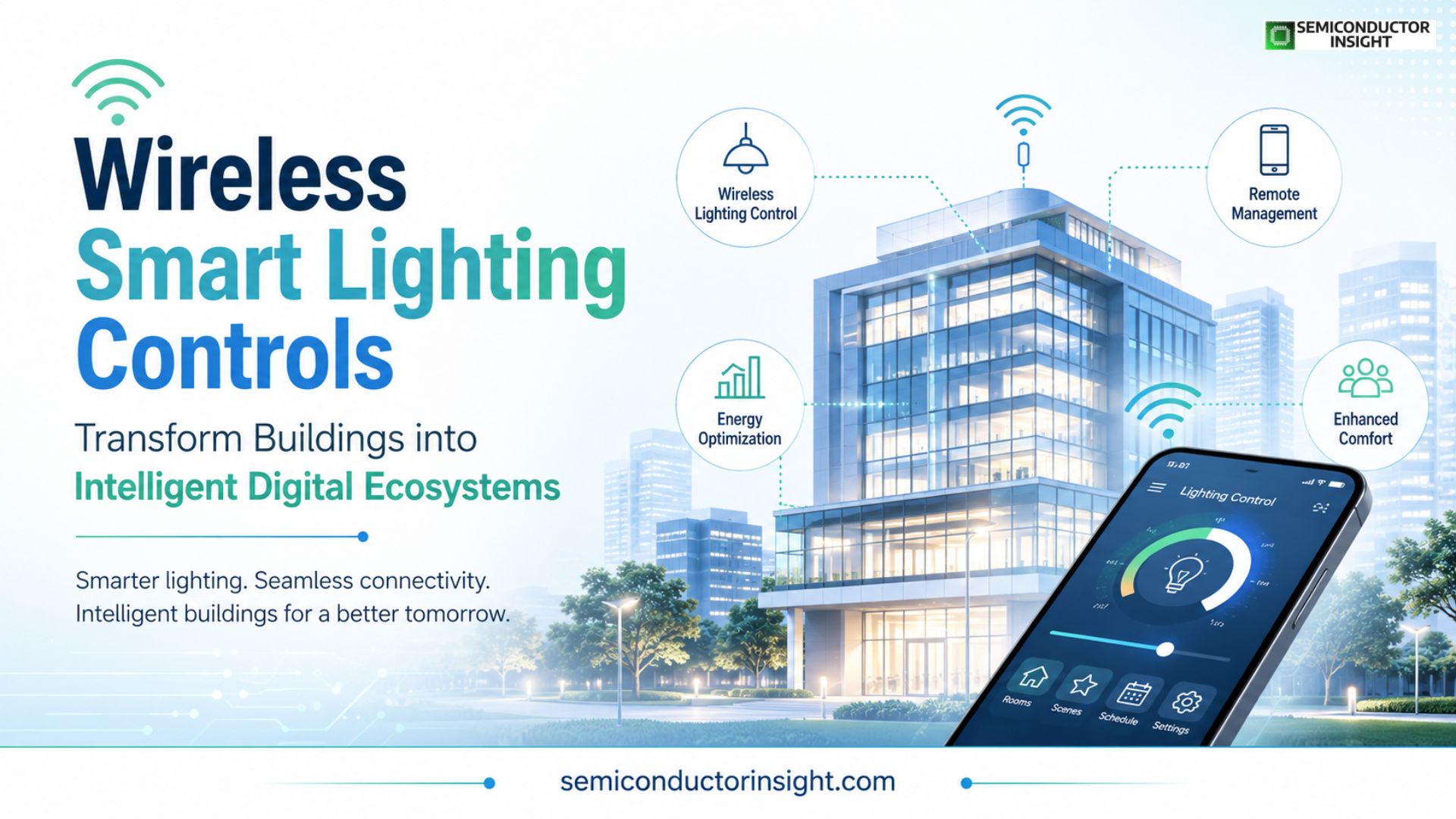
Wireless Smart Lighting Controls Transform Buildings into Intelligent Digital Ecosystems
Ordinary wall switch is rapidly becoming one of the most intelligent devices inside modern buildings. Once a straightforward mechanical part, it now incorporates energy-management circuits, sensors, wireless communication chips, and microcontrollers. Smart lighting switches have evolved into semiconductor-driven platforms capable of automation, occupancy detection, remote control, and energy optimization.
The rise of connected homes, intelligent offices, and energy-conscious buildings has pushed lighting switches beyond traditional functionality. From apartments in Singapore to commercial buildings in Germany, digital lighting controls are becoming part of larger smart ecosystems.
Buildings Are Becoming Digital Operating Systems
Modern buildings are no longer passive structures. Lighting, security, climate control, and appliances increasingly communicate through connected networks.
In 2025, the Connectivity Standards Alliance reported continued expansion of Matter-compatible devices, allowing lighting switches to operate across multiple smart ecosystems. This interoperability is reducing installation complexity while improving user adoption.
Office buildings now deploy intelligent lighting schedules that adjust brightness based on occupancy levels. Hotels use centralized switch management to reduce electricity waste, while residential users automate lighting through voice assistants and mobile applications.
These developments have increased demand for semiconductor components including low-power microcontrollers, RF chips, sensors, and power management integrated circuits.
Numbers That Explain the Momentum
Several measurable indicators highlight the growing adoption of smart lighting technologies.
- More than 600 million smart home devices are estimated to be operating globally.
- LED lighting accounts for over half of global lighting sales.
- Large commercial buildings can reduce lighting electricity consumption by 20 to 40 kilowatt-hours per square meter annually through advanced lighting controls.
- Occupancy sensors can reduce lighting operating hours by several hundred hours per year in office environments.
The semiconductor content inside a modern smart switch may include wireless communication chips, memory devices, voltage regulators, sensing modules, and embedded processors.
Why Wireless Protocols Are Winning Inside Homes?
Connectivity has become the foundation of smart lighting.
Wi-Fi switches appeal to consumers because they operate through existing home networks. Zigbee solutions remain popular in large smart home installations due to lower power consumption. Thread technology has gained attention because of its mesh networking capabilities.
The emergence of Matter is allowing different brands to communicate more effectively, reducing compatibility concerns that previously limited adoption.
For semiconductor suppliers, this transition creates demand for multi-protocol communication chips capable of supporting several wireless standards simultaneously.
The New Face of Intelligent Lighting Experiences
Consumers increasingly expect lighting to react automatically to their environment.
Motion detection, daylight harvesting, voice activation, geofencing, and scheduling have become common features. Retail stores adjust lighting according to customer traffic patterns. Hospitals optimize illumination based on patient activity, while residential users create personalized lighting scenes.
Artificial intelligence is beginning to influence lighting controls as systems learn occupancy habits and usage preferences.
Several airports and commercial campuses have already implemented adaptive lighting systems that automatically modify brightness according to real-time occupancy conditions.
You Can Go Through Our Latest Updated Insights Here: https://semiconductorinsight.com/report/wireless-smart-lighting-controls-market/
The Companies Shaping the Intelligent Switch Ecosystem
Several companies continue to influence the development of smart lighting switches through innovation, connectivity, and semiconductor integration.
- Signify
- Legrand
- Lutron Electronics
- Aqara
- Schneider Electric
- Leviton
- TP-Link
These organizations continue to invest in connectivity platforms, semiconductor integration, and intelligent control technologies.
Smart Home Compatibility Leaders Gaining Consumer Attention
Compatibility has become a deciding factor for buyers selecting smart lighting switches.
Several brands currently demonstrate strong integration capabilities across major smart home ecosystems.
- Philips Hue devices support multiple platforms including Matter and voice assistants.
- Lutron systems are widely deployed in premium residential automation projects.
- Aqara products provide extensive sensor and automation compatibility.
- Leviton offers broad support for residential smart home installations.
- TP-Link Kasa products remain popular because of simplified setup procedures.
Users increasingly prefer switches that work simultaneously with mobile applications, voice assistants, and home automation platforms without requiring separate hubs.
Semiconductor Intelligence Moves Closer to the Edge
The next generation of smart lighting switches will rely heavily on edge processing.
Embedded AI, local occupancy analysis, predictive automation, and energy monitoring are becoming practical features. Low-power semiconductor architectures enable devices to perform computations directly within the switch rather than relying entirely on cloud services.
As buildings become increasingly connected, the humble wall switch is evolving into an intelligent semiconductor endpoint capable of supporting automation, sustainability, and digital infrastructure. Smart lighting switch market is no longer simply about illumination control; it represents a growing intersection of semiconductors, connectivity, software, and energy management.

Comments (0)