
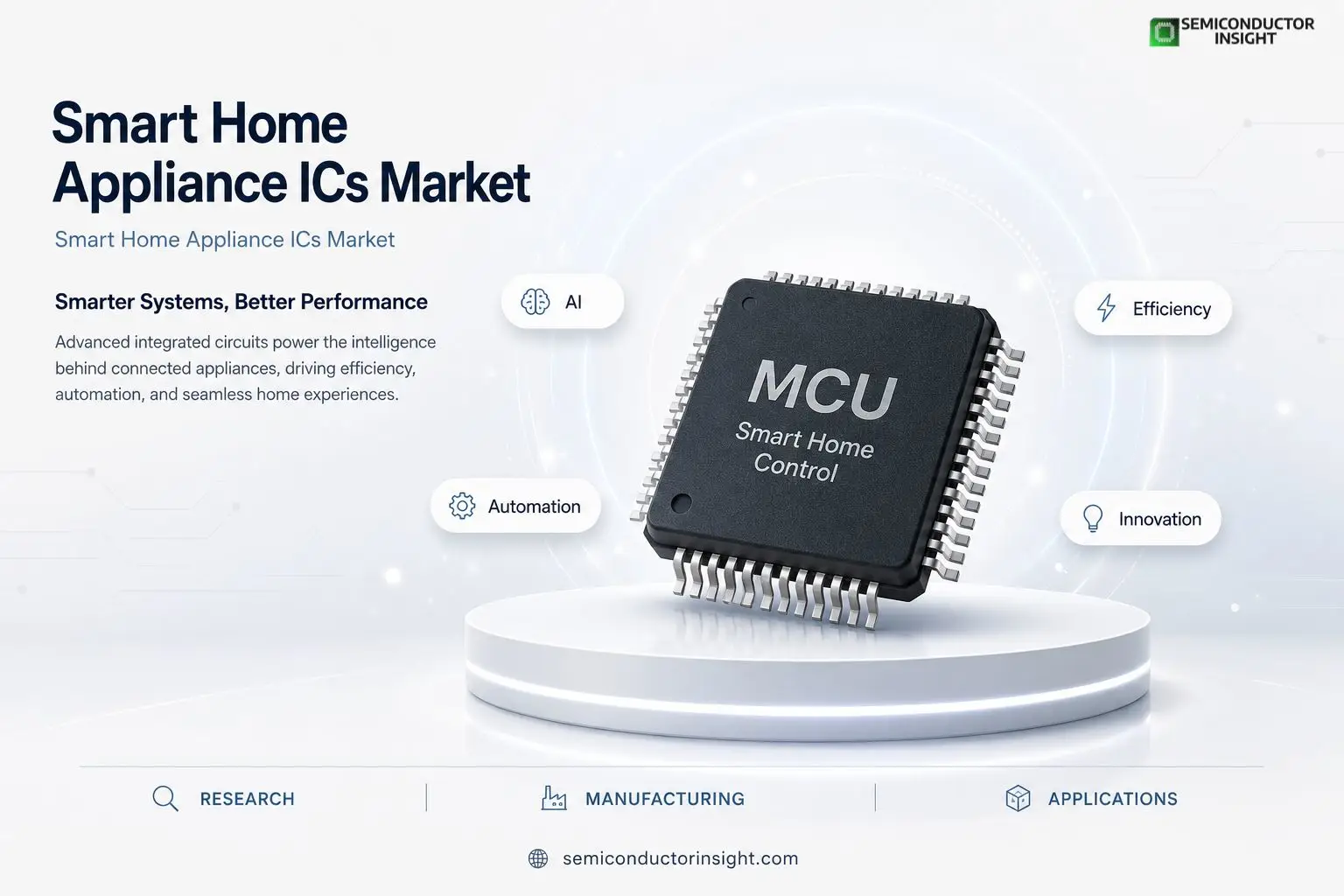
What Role Do MCUs Play in the Expanding Smart Home Appliance ICs Market?
Integrated circuits tailored for smart home appliances have become the silent brains behind modern household convenience. These specialized chips handle everything from sensor data processing to wireless communication, turning ordinary refrigerators, washing machines, and lighting systems into responsive, energy-aware devices that learn user habits and integrate into larger home networks.
How Microcontrollers Transform Everyday Appliance Performance?
Modern smart appliances rely heavily on low-power microcontrollers and system-on-chip designs. In a typical smart refrigerator, these ICs monitor temperature fluctuations in real time, adjust compressor cycles automatically, and even suggest inventory management through connected apps. STMicroelectronics and NXP chips frequently power such features, offering robust processing while keeping energy consumption minimal for always-on connectivity.
Washing machines with embedded ICs detect fabric types via sensors and optimize wash cycles accordingly, reducing water usage by up to hundreds of liters per household annually in active installations. These chips enable predictive maintenance alerts, notifying users before mechanical issues arise based on vibration and motor performance data.
Leading Lighting Brands Excelling in Smart Home Ecosystem Compatibility
Philips Hue stands out for its deep integration across major platforms, working seamlessly with Amazon Alexa, Google Assistant, and Apple Home through dedicated bridges and open protocols.
The system supports millions of color and white bulbs that sync with appliance routines, such as dimming lights when a smart TV activates or coordinating with security cameras.
IKEA’s Tradfri line and Signify-owned WiZ provide affordable yet highly compatible options, often praised in user setups for straightforward pairing with voice assistants and Matter-enabled ecosystems.
These brands allow lighting to respond dynamically to appliance status for instance, brightening kitchen lights when the oven preheat completes.
Edge Computing Capabilities Reshaping Appliance Intelligence
Edge processing in appliance ICs allows devices to make decisions locally without constant cloud reliance, improving response times and privacy. A smart thermostat equipped with such chips analyzes occupancy patterns on-device and adjusts heating or cooling instantly. This approach reduces latency in voice command execution and maintains functionality during internet outages.
Real World Deployments Showcasing Global Adoption Patterns
In Europe, connected washing machines and dishwashers using advanced ICs help households align energy use with renewable grid availability. One notable implementation involves appliances that shift cycles to off-peak hours automatically. Asian markets see rapid rollout in rice cookers and air conditioners with Wi-Fi enabled chips that integrate with national smart grid initiatives.
U.S. examples include smart ovens that use internal sensors and processing units to achieve precise cooking results while sharing status with home hubs. Production of these connected white goods has scaled significantly, with global shipments of smart appliances contributing to hundreds of millions of IoT devices overall.
- Wireless Protocol Innovations Enhancing Device Interoperability
- The shift toward unified standards like Matter allows ICs from different manufacturers to communicate reliably.
- Chips supporting Thread, Zigbee, and Wi-Fi combinations reduce fragmentation.
- For lighting and appliances, this means a single command can dim lights while adjusting the thermostat or starting the dishwasher.
- Security Features Built Into Modern Home Appliance Chips
- Contemporary ICs incorporate hardware-based encryption and secure boot mechanisms to protect against unauthorized access.
- Regular firmware updates delivered over-the-air keep systems resilient as threats evolve.
- Manufacturers emphasize isolated processing zones that separate critical control functions from network interfaces.
- Energy Management Applications Powered by Specialized ICs
- Power semiconductor ICs optimize consumption across appliances.
- In LED lighting systems integrated with smart controls, these components enable fine-tuned dimming and scheduling that can cut residential electricity use notably.
- Sensors paired with efficient MCUs track usage patterns, feeding data into home energy dashboards.
Material Science Innovations Enabling More Compact Appliance ICs
Advancements in semiconductor materials are helping manufacturers develop smaller, more efficient integrated circuits for modern smart home appliances. As consumers demand slimmer designs and greater functionality, appliance makers are increasingly adopting advanced process technologies that allow more computing power to be packed into limited spaces.
In power-intensive applications such as air conditioners, robotic vacuum cleaners, washing machines, and smart refrigerators, wide-bandgap semiconductor materials are gaining attention. Silicon carbide (SiC) and gallium nitride (GaN) devices offer faster switching speeds, improved thermal performance, and lower energy losses compared to conventional silicon-based solutions. These characteristics contribute to improved motor control, reduced heat generation, and enhanced energy efficiency in household appliances.
AI and Voice Processing Reshaping Appliance Intelligence
- Artificial intelligence is becoming an increasingly important feature within smart home appliances, creating demand for more capable integrated circuits. Manufacturers are incorporating dedicated AI processing engines and neural network accelerators directly into appliance ICs to support faster and more responsive interactions.
- Rather than sending every command to cloud servers, many modern appliances can now process basic voice recognition tasks locally. This reduces response times and improves privacy while ensuring continued operation even during temporary network interruptions.
- For example, smart ovens can recognize voice instructions to adjust cooking temperatures, while intelligent air purifiers automatically modify settings based on indoor air quality data. Smart speakers equipped with advanced appliance control capabilities can coordinate multiple connected devices simultaneously, allowing users to control lighting, climate systems, and kitchen appliances through a single voice command.
- As edge AI capabilities continue to improve, appliance electronics are evolving from simple connected devices into intelligent systems capable of learning user preferences and automating routine household tasks.
For additional report info, feel free to view our most recent edition: https://semiconductorinsight.com/report/smart-home-appliance-ics-market/
Sustainability Efforts in Chip Manufacturing for Home Use
Producers focus on reducing rare material usage and improving recyclability of components. Designs that extend appliance lifespans through better monitoring contribute to lower electronic waste volumes globally.
Smart Home Appliance ICs Market continues to evolve rapidly, supporting more intuitive, efficient, and secure living spaces around the world.

Comments (0)