
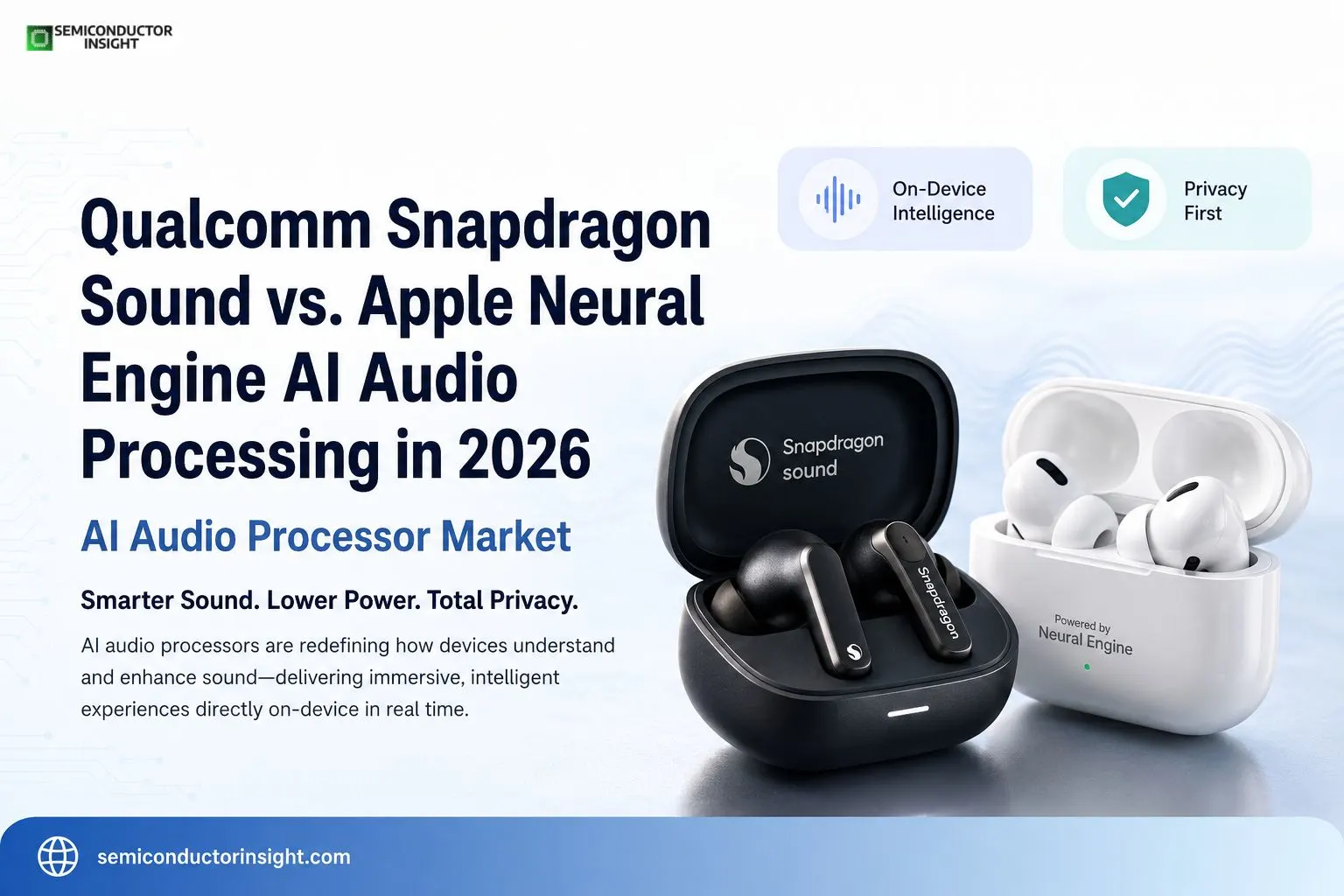
Qualcomm Snapdragon Sound vs. Apple Neural Engine AI Audio Processing in 2026
The semiconductor landscape continues evolving rapidly as specialized processors handle complex audio tasks with remarkable efficiency. AI audio processors stand at the intersection of signal processing and machine learning, enabling devices to understand, enhance, and generate sound in real time while operating at low power levels suitable for portable and always-on applications.
These chips go far beyond traditional digital signal processors by incorporating dedicated neural network acceleration. They manage everything from noise suppression during calls to spatial audio rendering and voice recognition without constant cloud dependency. This shift supports privacy-focused experiences and reduces latency in everyday interactions.
Exploring Real-World Deployments Shaping Modern Audio Experiences
Ø Qualcomm’s Snapdragon Sound platform demonstrates strong momentum across smartphones, earbuds, and speakers. The technology combines hardware and software optimizations for crystal-clear calls, lossless audio streaming over Bluetooth, and adaptive features that respond to environmental changes. Multiple OEMs have adopted it, delivering consistent performance across wireless accessories. Recent generations include dedicated low-power units for AI tasks like personalized sound profiles and advanced noise cancellation.
Ø Apple integrates its Neural Engine across A-series and M-series chips to power on-device audio capabilities. This includes real-time voice processing for Siri, noise suppression, and spatial audio calculations. The architecture keeps sensitive audio data local, supporting privacy while delivering responsive experiences in devices like AirPods and iPhones. Applications range from Face ID audio cues to enhanced transcription features.
Ø Chinese semiconductor efforts also advance the field. Rockchip’s RK2118G processor, built on a 22nm process, supports Dolby Atmos and features a dedicated audio neural processing unit for immersive playback and enhancement. Such developments highlight growing global capabilities in specialized audio silicon.
Inside the Architecture Powering Efficient On-Device Intelligence
Modern AI audio processors typically combine traditional DSP elements with neural processing units optimized for tensor operations common in machine learning models. This hybrid approach handles both classical signal processing tasks, such as echo cancellation and equalization, alongside AI-driven features like adaptive beamforming or sound source separation.
Low power consumption remains critical. Many designs target sub-milliwatt operation for always-listening modes, allowing keyword detection or environmental awareness without draining batteries. Qualcomm’s Sensing Hub and similar components exemplify this focus on ultra-efficient continuous monitoring.
RISC-V based solutions are gaining attention for flexibility. Collaborations like Andes Technology with partners have produced edge-side AI audio processors using open architectures, potentially accelerating customization for specific applications in IoT and wearable’s.
Breakthrough Applications Emerging Across Industries
ü In consumer electronics, AI audio processors enable hearables that go beyond playback. Features include hearing compensation, context-aware transparency modes, and direct cloud interactions with minimal phone dependency. Gaming benefits from ultra-low latency audio positioning that enhances immersion.
ü Automotive systems use these processors for voice assistants that function reliably in noisy cabins, passenger-specific audio zoning, and integration with advanced driver assistance through sound-based alerts.
ü Professional and broadcast sectors explore real-time source separation and AI-enhanced mixing tools. Smart home devices leverage them for better far-field voice recognition and adaptive audio that matches room acoustics.
ü Anker’s custom Thus chip represents another step, positioning AI audio processing directly into premium earbuds and IoT products for on-device intelligence.
Global Momentum and Supply Chain Considerations
Government initiatives like the CHIPS and Science Act in the United States bolster domestic semiconductor capabilities, including areas relevant to AI and specialized processors. These efforts aim to strengthen research, manufacturing, and workforce development in technologies foundational to future audio intelligence.
International collaboration and competition drive innovation. Companies balance performance, efficiency, and manufacturing resilience across regions. The emphasis on on-device processing aligns with broader data sovereignty and security priorities.
Technical Challenges and Creative Solutions
Balancing computational demands with thermal and power constraints pushes engineering boundaries. Designers optimize models for integer or low-precision arithmetic to maintain accuracy while fitting within tight budgets. Real-time requirements demand careful pipeline orchestration between different processing elements.
Advances in audio-specific neural architectures help address these issues. Techniques for efficient noise reduction, perceptual quality improvement, and generative audio fill expanding use cases from music production to accessibility tools.
Curious about the report? Dive into our newest updated version at no cost: https://semiconductorinsight.com/report/ai-audio-processor-market/
Looking at Integration Trends in Next-Generation Devices
System-on-chip designs increasingly incorporate audio AI as a core feature rather than an add-on. This supports tighter integration with sensors, connectivity modules, and other accelerators. The result appears in smoother experiences across smartphones, wearables, smart displays, and automotive infotainment.
· Developers gain tools and frameworks to deploy custom models, accelerating innovation in areas like personalized audio tuning or creative sound design.
· Open standards and ecosystems play important roles in fostering broader adoption.
The evolution of AI audio processors reflects deeper semiconductor trends toward specialization and efficiency. As these technologies mature, they enable richer, more intuitive sound interactions while respecting power and privacy boundaries. Continued progress promises even more seamless integration of intelligent audio into daily life worldwide.

Comments (0)