
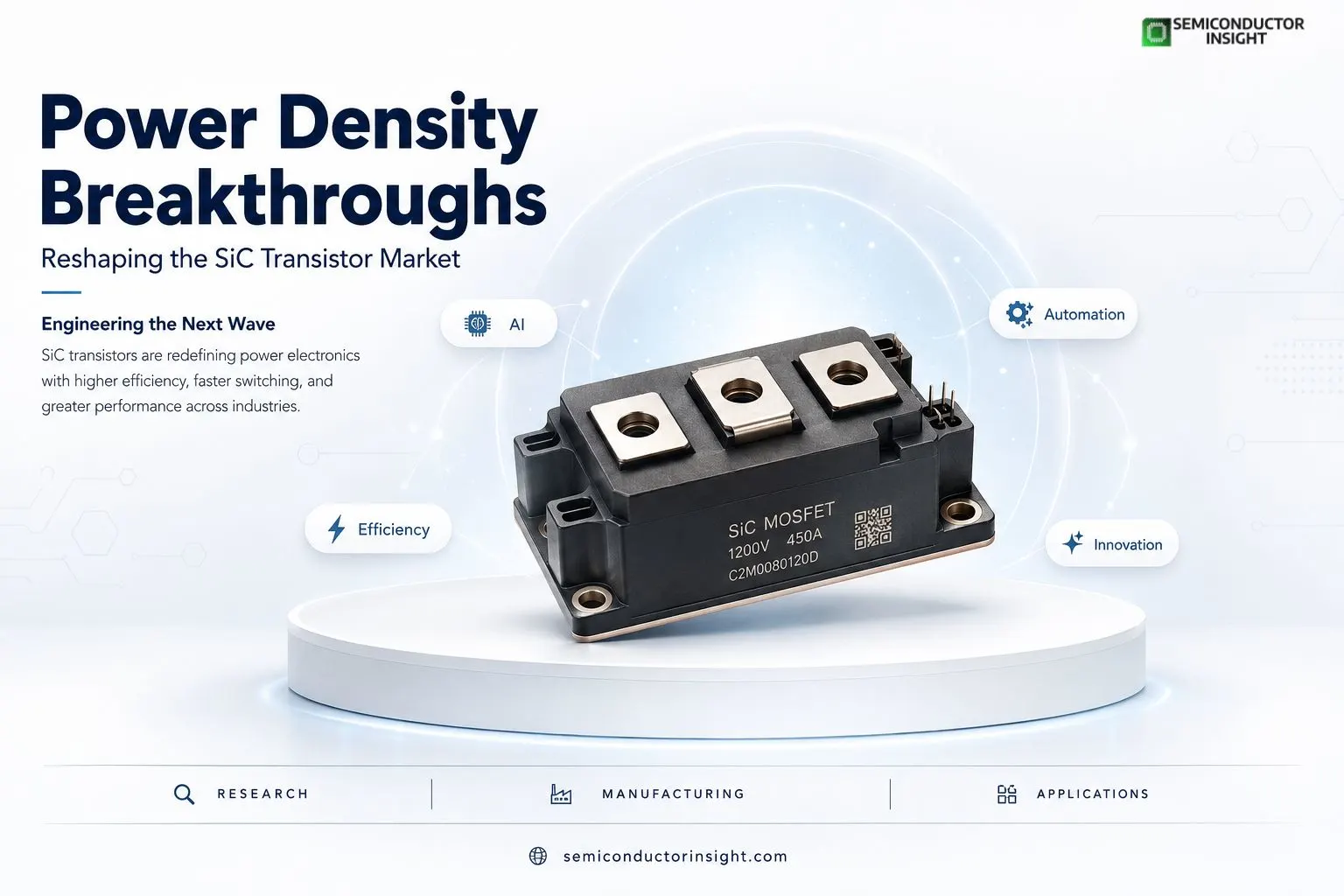
Power Density Breakthroughs Reshaping the SiC Transistor Market
For decades, silicon served as the foundation of modern power electronics. Today, however, a new generation of devices built on silicon carbide (SiC) is changing how energy is converted, stored, and delivered. From ultra-fast electric vehicle charging stations to renewable energy installations and industrial automation systems, SiC transistors are becoming a defining technology in the transition toward higher efficiency electrical infrastructure.
SiC transistors can function at greater voltages, hotter temperatures, and faster switching frequencies while lowering energy losses, in contrast to conventional silicon devices.This combination is making them increasingly attractive in sectors where efficiency directly affects operating costs and system performance.
The Voltage Revolution Happening Inside Electric Vehicles
One of the strongest indicators of SiC adoption is the growing shift toward 800-volt electric vehicle architectures.
Several recently launched premium EV platforms now rely on SiC-based power electronics to improve driving range and charging performance. Faster switching capabilities reduce inverter losses, allowing more battery energy to reach the motor.
Global EV sales surpassed 17 million vehicles in 2024 according to international energy statistics, while public charging infrastructure exceeded 5 million charging points worldwide. As charging networks expand and vehicle performance expectations increase, manufacturers are integrating more SiC devices into traction inverters and onboard charging systems.
Why Engineers Are Replacing Traditional Power Devices?
The discussion around SiC is no longer focused solely on semiconductor specifications. Engineers increasingly evaluate total system benefits.
Key improvements include:
- Lower switching losses
- Reduced cooling requirements
- Smaller passive components
- Higher operating temperatures
- Increased power density
- Faster charging capability
- Improved system reliability
In many high-voltage applications, these advantages translate into lighter equipment, lower energy consumption, and reduced maintenance requirements.
The Factory Floor Is Becoming a New Growth Engine
While electric vehicles attract significant attention, industrial applications are emerging as another major destination for SiC transistors.
Modern manufacturing facilities increasingly deploy high-efficiency motor drives, robotic systems, and power conversion equipment that operate continuously throughout the day. Even small efficiency gains can generate substantial energy savings across large production environments.
Industries such as steel manufacturing, chemical processing, semiconductor fabrication, and logistics automation are evaluating wide-bandgap technologies as part of broader energy optimization programs.
A Material That Starts Long Before the Chip
- The SiC transistor story begins with crystal growth and wafer production.
- Silicon carbide wafers require highly specialized manufacturing processes compared with conventional silicon. Recent investments across the United States, Europe, Japan, and China have focused on expanding wafer production capacity to support future demand.
- Several leading manufacturers announced new 200 mm SiC wafer initiatives, a milestone expected to improve manufacturing efficiency and increase output volumes for advanced power devices.
Don’t Forget to Surf Our Updated Report for More Detailed Analysis: https://semiconductorinsight.com/report/sic-transistor-market/
The Silent Connection between Renewable Energy and SiC
Solar farms, battery storage installations, and grid-scale energy systems are creating new opportunities for SiC transistors.
Global renewable power capacity additions exceeded 580 gigawatts in 2024, according to international energy agencies. Every large-scale renewable project requires efficient power conversion between generation assets, storage systems, and transmission infrastructure.
Higher switching efficiency allows renewable installations to minimize conversion losses, making SiC devices increasingly attractive for utility-scale applications.
Smart Living Ecosystems That Depend on Advanced Power Electronics
As connected homes become more sophisticated, the demand for efficient power management extends beyond industrial and automotive environments.
Many smart lighting ecosystems now operate alongside advanced energy management platforms that benefit from high-efficiency semiconductor technologies throughout the power chain.
Among the most widely integrated smart lighting platforms are:
- Signify through its Philips Hue ecosystem
- Legrand smart lighting solutions
- Acuity Brands connected controls
- Lutron Electronics automation platforms
These systems commonly integrate with voice assistants, energy monitoring platforms, occupancy sensors, and home automation hubs, demonstrating how advanced semiconductor technologies support the broader connected-device ecosystem.
From Component to Strategic Infrastructure
The importance of SiC transistors is expanding beyond the semiconductor industry itself. They now sit at the intersection of transportation electrification, renewable energy deployment, industrial efficiency, and intelligent infrastructure.
As automakers launch higher-voltage platforms, utilities modernize energy networks, and manufacturers seek greater operational efficiency, SiC transistors are evolving from specialized components into foundational building blocks of modern power architecture. Their influence increasingly extends far beyond the chip, shaping how energy moves through the global economy.

Comments (0)