
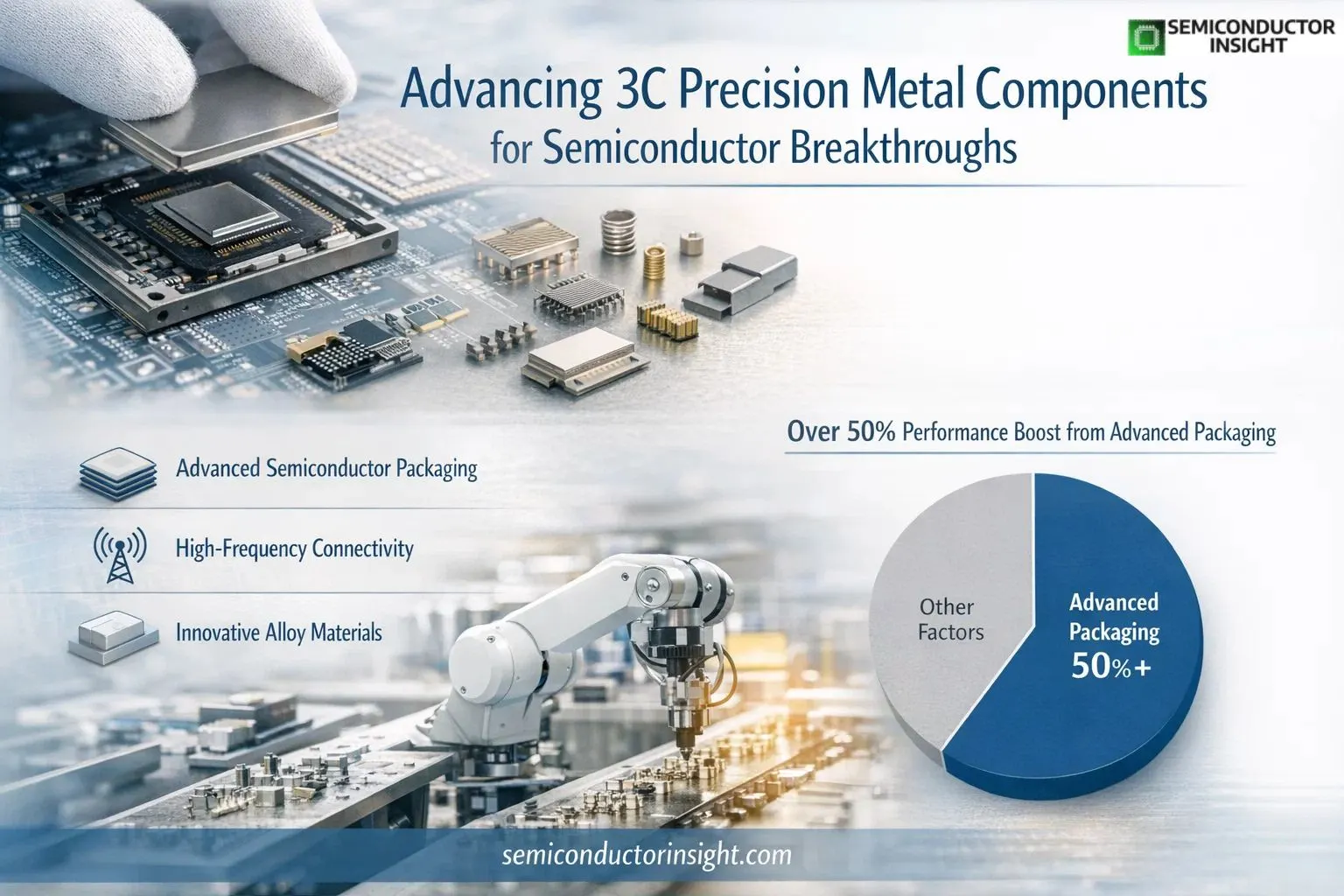
Pioneering Advances in the 3C Precision Metal Components Market for Semiconductor Breakthroughs
The real story of semiconductor advancement isn’t always inside the chip it often lies in the microscopic metal frameworks that hold everything together. From ultra-thin connectors to high-precision shielding components, 3C precision metal components quietly define the performance, durability, and scalability of modern electronics. These components are engineered at tolerances so tight that even a minor deviation can disrupt signal integrity or thermal stability.
As semiconductor devices shrink and performance expectations rise, these precision components are no longer secondary they are becoming performance-critical elements in the electronics value chain.
Precision Components Enabling Advanced Semiconductor Packaging
· Semiconductor packaging has evolved far beyond basic protection.
· Today, it plays a crucial role in heat dissipation, signal transmission, and structural integrity. This is where 3C precision metal components step in supporting advanced packaging formats such as system-in-package and chiplet architectures.
· Industry disclosures from semiconductor packaging leaders highlight that advanced packaging now contributes to over 50% of performance improvements in certain high-end chips. This shift underscores how critical supporting components have become in enabling next-generation designs.
· Metal lids, heat spreaders, and micro-connectors are engineered to exact specifications, ensuring minimal interference and maximum efficiency.
· Without these components, achieving reliable high-density integration would be nearly impossible.
High Speed Connectivity Demands Ultra Fine Metal Engineering
The transition to 5G, AI computing, and high-speed data transfer is pushing connectivity requirements to new limits. Precision metal components are essential in maintaining signal integrity at high frequencies.
Connectors, shielding cases, and contact springs must handle increasing data loads while minimizing electromagnetic interference. According to technical publications from electronics manufacturing associations, signal loss at high frequencies can increase by up to 30% without proper shielding and precision alignment.
This has driven innovation in micro-stamping and CNC machining, enabling manufacturers to produce components with extremely fine geometries. The result is a new class of high-frequency ready components designed for modern semiconductor ecosystems.
Material Innovation Driving Performance Gains
· Material selection is becoming a defining factor in the 3C precision metal components market. Traditional metals are being replaced or enhanced with advanced alloys such as magnesium, aluminum blends, and high-conductivity copper variants.
· Magnesium alloys, for instance, are gaining attention for their lightweight properties and thermal efficiency. In high-performance devices, reducing component weight while maintaining strength contributes directly to better thermal management and energy efficiency.
· Recent studies from electronics manufacturers show that switching to optimized alloys can improve heat dissipation efficiency by 15-20%, especially in compact devices like smartphones and laptops. This makes material innovation a strategic advantage rather than just a design choice.
For More Detailed Insights You Can Surf Our Latest Report Here: https://semiconductorinsight.com/report/3c-precision-metal-components-market/
Automation and Smart Manufacturing on the Shop Floor
The production of precision metal components has entered a new phase with the adoption of automation and smart manufacturing systems. High-speed stamping machines, robotic assembly lines, and AI-driven quality inspection systems are now standard in advanced facilities.
Manufacturing reports from industry bodies indicate that automated inspection systems can reduce defect rates by nearly 40%, ensuring consistent quality at scale. This is particularly important in semiconductor applications, where even microscopic defects can lead to functional failures.
Smart factories are also enabling real-time monitoring and adaptive production, allowing manufacturers to maintain tight tolerances while scaling output. This shift toward intelligent manufacturing is redefining how precision components are produced.
Integration with Consumer Electronics and AI Hardware
· 3C precision metal components are deeply embedded in consumer electronics, from smartphones to high-performance computing devices. As AI hardware becomes more complex, the demand for precision-engineered components continues to grow.
· In devices like GPUs and AI accelerators, metal components play a key role in thermal management and structural stability. Their ability to support compact yet powerful designs makes them indispensable in modern electronics.
· The increasing complexity of AI-driven devices is pushing manufacturers to innovate continuously, ensuring that components meet the demands of next-generation computing architectures.
Supply Chain Depth and Vertical Integration Strategies
One of the defining characteristics of this market is the emphasis on supply chain control. Leading manufacturers are investing in vertical integration bringing processes like material processing, stamping, machining, and finishing under one roof.
This approach not only improves efficiency but also ensures better quality control and faster turnaround times. In a market where precision is everything, having end-to-end control over production can significantly reduce variability.
Recent industry case examples show that vertically integrated manufacturers can cut production lead times by 20-25%, giving them a competitive edge in fast-moving semiconductor supply chains.

Comments (0)