
Palm Vein Recognition Sensor Market Growth Accelerates Across Banking and Smart Healthcare Systems
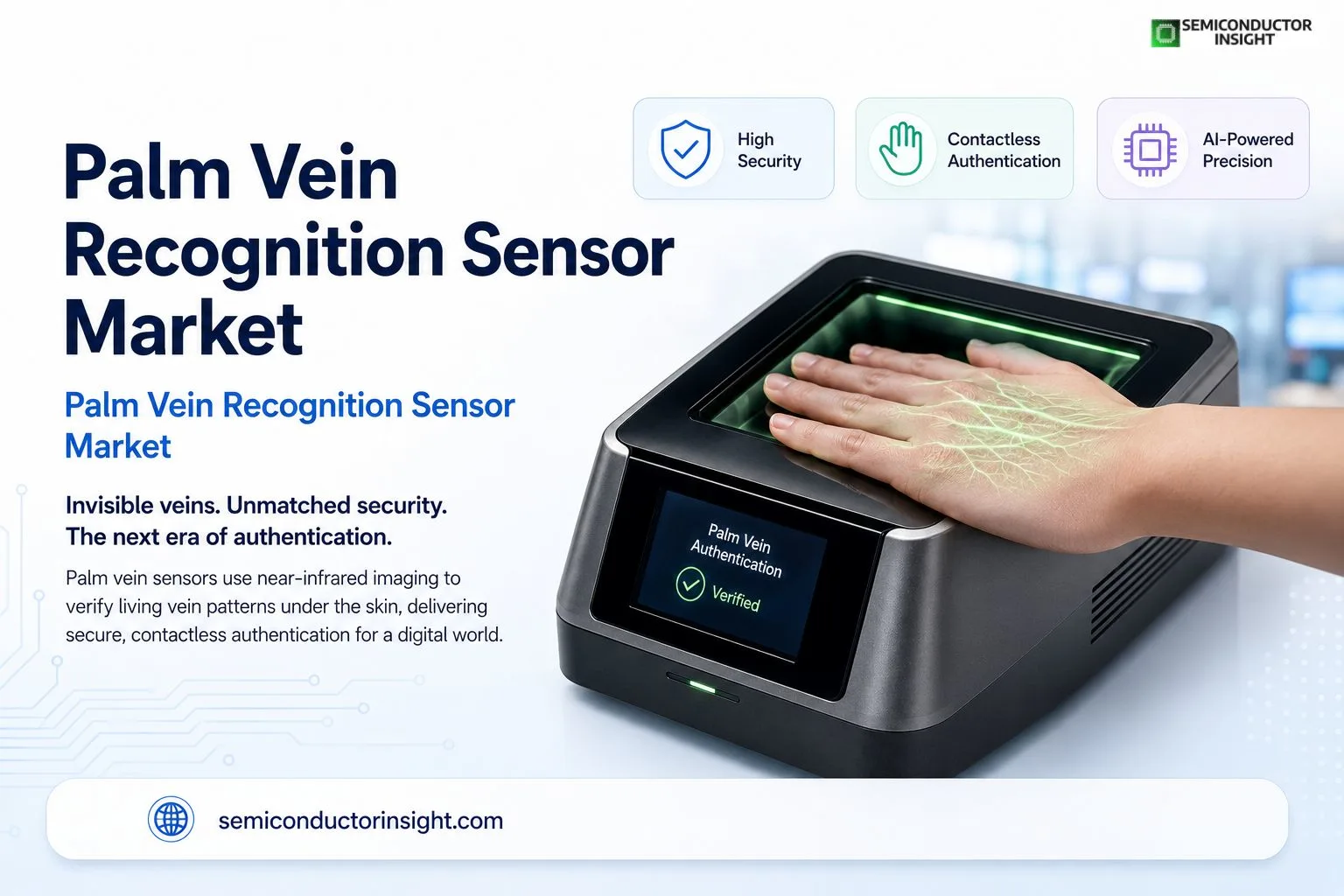
Contactless authentication is rapidly evolving beyond facial recognition and fingerprints, with palm vein recognition sensors now entering the spotlight as a highly sophisticated alternative. In contrast to conventional biometric systems, palm vein authentication uses near-infrared light to assess the distinct vein patterns beneath the skin, making duplication very challenging.
This hidden biological mapping is now attracting banks, hospitals, semiconductor manufacturers, mobility companies, and government agencies searching for more secure authentication methods.
The timing is significant. Worldwide cybercrime losses crossed USD 10 trillion in recent years, according to cybersecurity monitoring organizations, while biometric spoofing incidents involving fake fingerprints and facial masks have increased sharply across digital payment ecosystems. Palm vein recognition is emerging as a viable alternative because it verifies living tissue circulation rather than surface-level identity traits. That difference is becoming critical in high-security environments.
Popular Products;
- SecureEye Palm Vein S-B20CB: A popular, high-speed unit capable of storing 500 palm templates and offering 1: N identification, priced around 10,999 INR.
- Mantra Palm Scanner: Known for its high-performance infrared imaging to detect vein patterns.
- Himax WiseEyeVein Module: Features an ultra-low-power AI processor and an image sensor for embedded applications.
Semiconductor Engineering behind the Rise of Vein Mapping Systems
Modern palm vein systems are heavily dependent on semiconductor innovation. The core sensing architecture combines near-infrared LEDs, CMOS image sensors, AI-enabled microcontrollers, and edge-processing chips that detect microscopic blood vessels in milliseconds. Improvements in semiconductor packaging are also reducing sensor size, allowing palm vein modules to move beyond bulky enterprise systems into compact kiosks, payment terminals, and even automotive cabins.
- Japanese banking infrastructure was among the earliest to adopt of palm vein authentication, with several ATM networks integrating the technology to prevent fraud.
- More recently, hospitals in parts of Europe and Asia have started using palm vein scanners to reduce patient identity mismatches during admissions and medicine distribution.
- These systems are particularly valuable because vein patterns remain stable over time and are less affected by cuts, dirt, or external skin conditions.
The semiconductor angle is becoming even more important as manufacturers develop low-power imaging chips optimized for continuous biometric sensing. In 2025, several electronics suppliers introduced infrared sensor arrays consuming less than 40 milliwatts of power, opening opportunities for battery-powered portable authentication devices and smart wearable’s.
Discover Fresh Findings from Our Recently Published Analysis: https://semiconductorinsight.com/report/palm-vein-recognition-sensor-market/
Hospitals Are Turning Palm Vein Sensors into Medical Identity Keys
- Healthcare is becoming one of the strongest real-world testing grounds for this technology. Patient identification errors continue to burden hospitals globally.
- Studies published by medical safety organizations estimate that identification mismatches contribute to thousands of preventable treatment complications each year.
- Palm vein recognition is now being integrated into patient registration systems to reduce duplicate records and accelerate contactless verification.
- Hospitals in Singapore and South Korea have experimented with biometric-linked outpatient systems that allow a simple palm scan to retrieve medical history, insurance details, and prescription data within seconds.
- The appeal increased after the pandemic normalized touch-free interactions. Unlike fingerprint scanners, palm vein systems operate without direct contact, reducing contamination concerns in medical environments.
- Semiconductor companies supplying infrared imaging modules are therefore witnessing increasing demand from healthcare device manufacturers rather than only traditional security vendors.
Banking Security Is Entering a Post-Password Era
Financial institutions are also pushing the technology into mainstream deployment. Password theft, SIM swap fraud, and phishing attacks have exposed the limitations of conventional login systems. Palm vein authentication presents a more challenging target because the biometric pattern lies beneath the skin and requires blood flow detection.
Several financial service providers in Asia have already linked palm vein authentication with ATM withdrawals and branch access verification. In some pilot deployments, transaction approval times reportedly dropped below two seconds while reducing authentication failure rates compared with fingerprint-based systems.
The volume opportunity is substantial. Global digital payment transactions exceeded 1.3 trillion transactions annually across retail and online ecosystems, creating immense pressure for stronger authentication infrastructure. Semiconductor manufacturers developing high-speed biometric processors are now targeting fintech integration as a major revenue channel.
Smart Mobility Is Creating Unexpected Demand
- One of the newest developments is the integration of palm vein recognition into smart mobility systems. Automotive technology firms are testing driver authentication systems that use palm scans to unlock vehicles, activate personalized cabin settings, and authorize payments in connected cars.
- Airports are exploring similar concepts. Biometric checkpoints using touchless identity verification are becoming attractive for reducing passenger congestion while maintaining higher security standards. Palm vein sensors are increasingly viewed as more privacy-friendly than facial recognition because they do not continuously capture visible images of identity in public spaces.
- Meanwhile, AI integration is making the systems faster and more adaptive. Edge AI chips can now process vein patterns locally, rather than sending sensitive biometric information to cloud servers, helping organizations address growing data privacy concerns under international regulations.
Invisible Biometrics Could Define the Next Semiconductor Race
Palm vein recognition sensors sit at the intersection of semiconductor miniaturization, cybersecurity, healthcare digitization, and smart infrastructure. No longer experimental, they are being deployed in real-world environments where speed, privacy, and security are essential.
As digital identity evolves, invisible biometrics could shape a defining shift, powered by continued semiconductor innovation that makes authentication faster, smaller, and smarter.

Comments (0)