
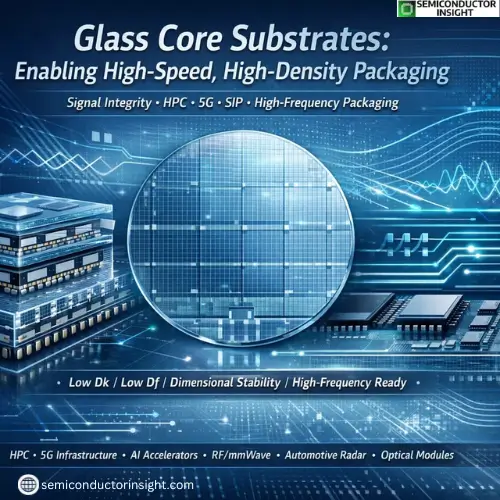
Next-Gen Glass Substrates: Enabling High-Density AI Chip Integration
In the evolving semiconductor ecosystem, where miniaturization and performance define competitive advantage, glass core substrates are emerging as a pivotal technology in advanced packaging. As chips become denser and system requirements escalate, the substrate once the humble foundation is now a strategic enabler of higher speed, better signal integrity, and thermal stability.
Glass core substrates are rapidly gaining traction as alternatives to traditional organic and FR-4 substrates in areas such as high-frequency applications, advanced system-in-package (SiP), 5G, and high-performance computing (HPC). Their remarkable dielectric properties, dimensional stability, and low loss characteristics make them highly attractive for next-generation semiconductor packages.
Today’s semiconductor industry demands packaging solutions that go far beyond mechanical support they must manage signal integrity, power distribution, thermal performance, and manufacturability simultaneously. Glass core substrates are emerging as a response to this multi-dimensional challenge.
Why Glass Core Substrates Are Gaining Ground: A Technical Perspective
The semiconductor packaging landscape is shifting because traditional organic substrates struggle to keep pace with the requirements of higher data rates and finer line pitches. Glass core substrates address these limitations with key physical and electrical advantages:
- Exceptional Dielectric Performance
Glass cores possess a low dielectric constant (Dk) and very low dielectric loss (Df) compared to conventional organic substrates. This translates to reduced signal attenuation, improved high-frequency performance, and better signal integrity essential for emerging standards like 5G, PCIe Gen-5/6, and next-generation AI accelerators.
- Dimensional Stability and Precision
Glass offers superior mechanical stability with minimal expansion under thermal stress. This is critical as advanced node packages push trace widths and spacings into the micron range. Dimensionally stable substrates reduce warpage and alignment errors during high-temperature processes, resulting in higher yield and reliability.
- High Frequency and High Bandwidth Compatibility
As frequencies climb, performance degradation due to substrate losses becomes a constraining factor. Glass core materials exhibit excellent high-frequency characteristics, making them ideal for RF components, mmWave applications, and high-speed SerDes channels aboard advanced interposers and packages.
These advantages help explain why high-end applications from 5G infrastructure to HPC accelerators, and from automotive radars to optical module interfaces are positioning glass core substrates at the forefront of advanced packaging strategies.
Manufacturing Challenges and Industry Adaptations
Despite the clear benefits, glass core substrates bring unique manufacturing and cost challenges:
- Processing Complexity: Glass core material handling and patterning require specialized equipment. High precision drilling and via formation on glass demand investment in lithography adjustments and process optimization.
- Cost Considerations: Compared to traditional organic substrates, glass cores have higher base material costs and longer processing times in early adoption phases. However, as production scales and yields improve, economies of scale are expected to narrow these gaps.
- Integration with Existing Assembly Lines: Manufacturers must adapt surface treatment, lamination, and thermal cycling processes to accommodate the different physical characteristics of glass. This raises short-term implementation challenges for packaging houses that run mixed substrate lines.
- Overall, these challenges are not showstoppers but they necessitate strategic investments in tooling and process expertise. Suppliers ready to adapt gain a clear technological lead in segments where performance simply cannot be compromised.
To Know More about the Report, You Can Freely Browse Our Latest Updated Report:
https://semiconductorinsight.com/report/glass-core-substrates-for-semiconductor-packaging-market/
Regulatory and Supply Chain Impacts on Adoption
Like all advanced materials in the semiconductor segment, glass core substrates are influenced by geopolitical dynamics and supply chain reshoring efforts. Governments and industry consortia are crafting incentives and manufacturing strategies to bolster domestic semiconductor packaging capabilities.
These macro-level shifts affect material sourcing, trade routes, and capacity planning and they underscore the strategic importance of substrates in long-term semiconductor supply stability.
As technology nodes continue to shrink and performance expectations rise, glass core substrates are expected to grow from a specialty solution to a mainstream packaging choice in high-performance markets.
Future developments likely include:
- More cost-effective glass processing technologies, lowering barriers to entry
- Hybrid substrate architectures combining glass with organic layers for optimized performance/cost balance
- New substrate design standards that further support 7nm and beyond system-in-package configurations
All these elements point to a sustained and evolving growth trajectory for the market.
Glass core substrates represent a paradigm shift in semiconductor packaging moving beyond conventional materials and unlocking new levels of performance and reliability. Their role in advanced computing, high-frequency communications, and automotive electronics highlights a broader trend: substrate technology is no longer a background player, but a central component of semiconductor innovation.
As demand for high-speed, high-density packaging continues to grow, the glass core substrate market will define how modern electronic systems achieve the performance thresholds they need today and into the future.

Comments (0)