
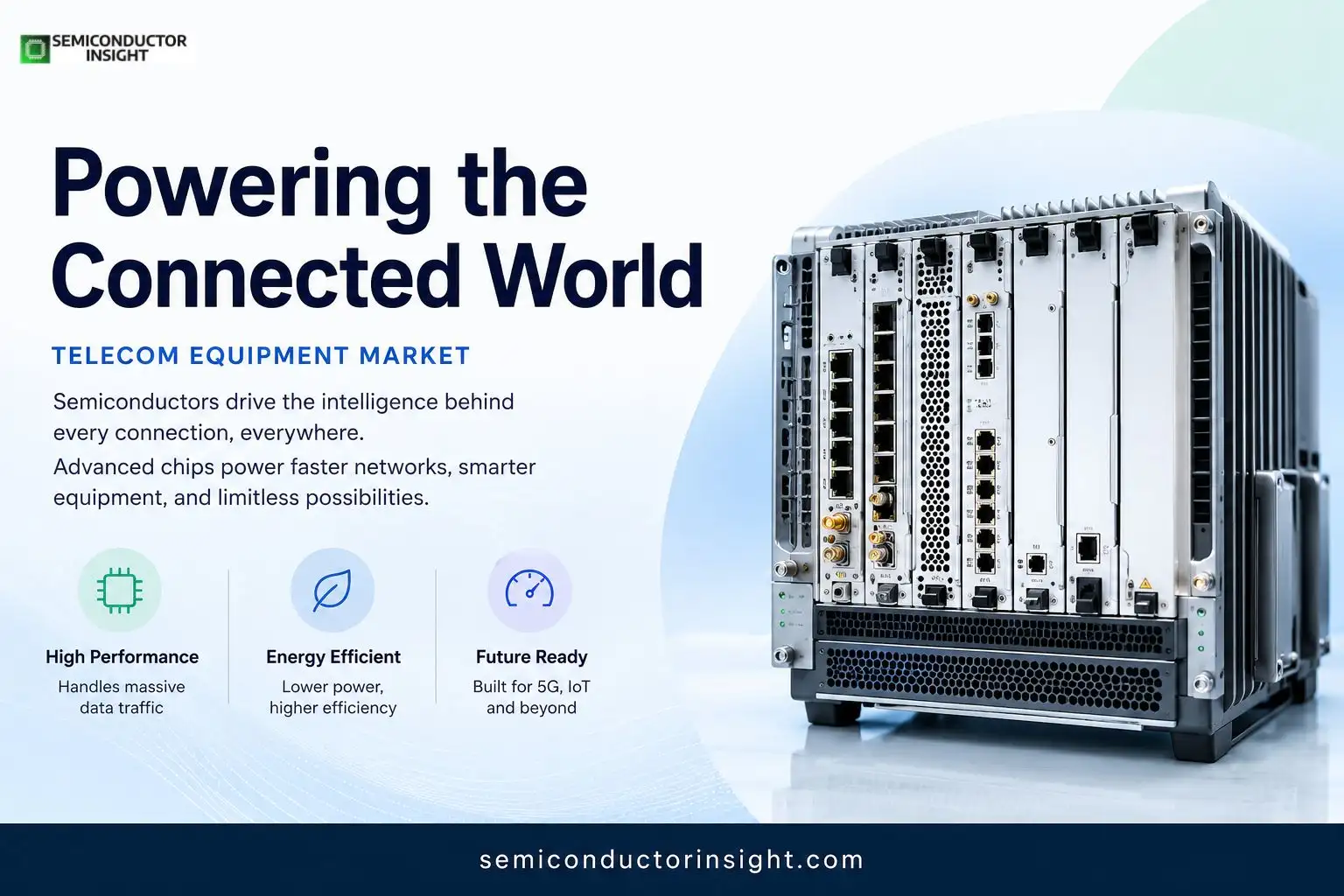
Massive MIMO vs. Traditional Antennas in the Telecom Equipment Market 2026
Telecom equipment forms the backbone of modern connectivity, encompassing a vast array of semiconductor-driven hardware that keeps data flowing across continents. From massive base stations to compact routers and switches, these technologies rely heavily on advanced chips for signal processing, power management, and high-speed data handling.
Semiconductors enable the precision and efficiency required in today’s networks, supporting everything from voice calls to ultra-low latency applications. As deployment scales globally, the integration of cutting-edge processors and memory solutions continues to redefine performance benchmarks.
To find out more, feel free to browse our latest updated relevant report: https://semiconductorinsight.com/report/telecom-grade-thermoelectric-modules-market/
Network Infrastructure Evolution in Action
Operators worldwide push forward with dense deployments to meet surging demand for bandwidth. China, for instance, reported around 4.76 million 5G base stations operational by late 2025 according to official ministry updates, illustrating the massive scale of infrastructure buildouts.
Such volumes highlight how semiconductor components in radio units and baseband processors handle enormous traffic loads while maintaining reliability in varied environments.
Similar efforts in Europe and North America focus on upgrading legacy systems with new generations of equipment optimized for standalone architectures.
Semiconductor Integration Driving Core Capabilities
- At the heart of telecom gear lie MOSFETs and specialized integrated circuits that power transceivers, amplifiers, and microprocessors.
- These elements, which accounted for a notable portion of the microprocessor market in earlier assessments, facilitate rapid signal modulation and efficient energy use.
- Routers and switches benefit from high-throughput designs that manage packet flows across fiber and wireless links, while customer premises devices like modems incorporate chips for seamless protocol conversion.
- This deep embedding ensures equipment can scale with traffic growth without proportional increases in physical size or power draw.
Global Deployment Scenarios and Real World Rollouts
In Asia, carriers have accelerated installations to cover urban and rural zones, with India witnessing ambitious programs by major operators targeting hundreds of cities. South Korea and Japan continue refining standalone networks using advanced Massive MIMO configurations.
Across the Atlantic, U.S. providers leverage federal initiatives to expand coverage, incorporating equipment that supports diverse spectrum bands. These ongoing projects demonstrate practical applications where semiconductor advancements translate directly into faster download speeds and broader accessibility, often reaching averages of hundreds of megabits per second in optimized areas.
Top Performers for 5G Rollout Success
- Selecting optimal gear for 5G deployment involves evaluating radio access solutions that combine high-capacity antennas with powerful processing units.
- Equipment featuring integrated Massive MIMO arrays stands out for urban densification, delivering superior coverage and user capacity.
- Baseband units with robust AI optimization capabilities help manage network slicing for varied use cases like industrial IoT or enhanced mobile broadband.
- Operators frequently prioritize modular designs allowing incremental upgrades, ensuring compatibility with existing fiber backhaul while supporting millimeter wave and sub-6 GHz frequencies for balanced performance.
- Case deployments show these systems excelling in high-traffic venues, providing consistent low-latency connections essential for emerging applications.
Transmission and Switching Advancements
Transmission hardware has evolved to handle terabit-level capacities through wavelength division multiplexing and coherent optics, powered by sophisticated semiconductor lasers and detectors. Public switching systems now incorporate virtualized elements that reduce reliance on traditional racks, streamlining operations in data centers and central offices.
These developments support the convergence of telecom and IT infrastructures, where equipment blurs lines between networking and computing resources. Recent magazine features on global projects underscore how such gear facilitates massive connectivity for billions of devices.
Sustainability Aspects in Equipment Design
Manufacturers emphasize energy-efficient semiconductors to lower the carbon footprint of large-scale networks. Innovations in power amplifiers and cooling integration help base stations operate with reduced consumption even during peak loads.
Deployment examples from various countries reveal a trend toward greener infrastructure, where updated equipment replaces older units to achieve better performance per watt. ITU data on global internet usage, reaching estimates of 6 billion people or about 74 percent of the population in recent years, further drives the need for scalable, responsible solutions.
Edge Computing and IoT Enablement
- Telecom equipment increasingly incorporates edge processing capabilities, bringing computation closer to users through specialized chips in small cells and gateways.
- This setup minimizes latency for applications ranging from autonomous vehicles to smart city sensors.
- Global initiatives showcase deployments where routers and base stations aggregate data from thousands of endpoints, leveraging semiconductor memory advancements for real-time analytics.
- Such configurations prove vital as machine-to-machine connections multiply across industries.
The telecom equipment landscape pulses with semiconductor ingenuity, enabling networks that connect societies and fuel digital economies on an unprecedented scale. Through continuous hardware refinements and strategic global installations, this sector sustains momentum toward more inclusive and capable communication infrastructures.

Comments (0)