
Intelligent Assistive Robots Market Boosting Next-Gen Semiconductor Applications
Assistive robotics is no longer a futuristic concept it is becoming a critical part of modern healthcare, rehabilitation, and elderly care ecosystems. These robots are designed to enhance human capability, not replace it, helping individuals regain independence and improve quality of life. What makes this transformation even more powerful is the deep integration of semiconductor technologies that enable real-time decision-making, precision control, and adaptive learning.
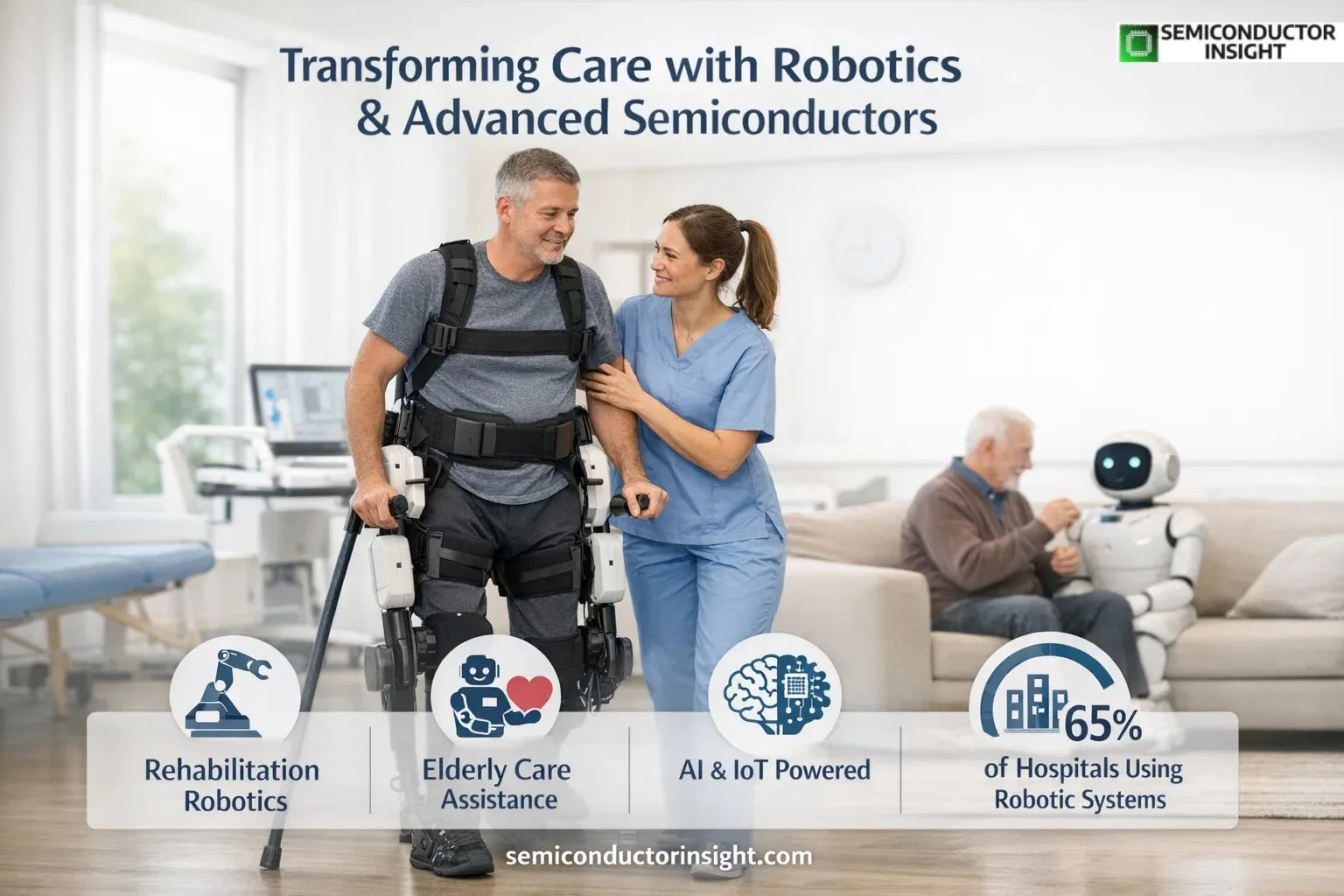
Recent data from healthcare technology publications and government-backed innovation programs suggests that over 65% of hospitals in developed healthcare systems have begun integrating some form of robotic assistance, ranging from surgical support to patient mobility devices. This rising adoption is directly linked to advancements in microprocessors, sensors, and AI-enabled chips.
Semiconductor Intelligence Powering Assistive Precision
At the core of every assistive robot lies a sophisticated semiconductor ecosystem. These systems rely on embedded chips for sensing, computing, and communication. Modern assistive robots use AI accelerators and edge processors capable of processing data locally, reducing latency and enabling faster responses.
For example, wearable robotic exoskeletons used in rehabilitation depend on motion sensors and microcontrollers that interpret signals in milliseconds. Studies published in biomedical engineering journals indicate that robotic-assisted therapy has improved patient recovery outcomes by nearly 30% in mobility-related treatments compared to traditional therapy methods.
Semiconductor innovation is also enabling energy-efficient designs. Low-power chips ensure that assistive robots can function longer without frequent charging, which is critical in healthcare environments where reliability is non-negotiable.
Smart Healthcare Integration beyond Traditional Robotics
- Assistive robotics is expanding beyond hospitals into home care and remote monitoring systems.
- With aging populations increasing globally where individuals aged 60+ are expected to reach over 1.4 billion by 2030 according to global health organizations the need for intelligent assistance is accelerating.
- Robots equipped with advanced semiconductors are now capable of monitoring vital signs, detecting falls, and even providing cognitive support for patients with neurological conditions. These systems integrate IoT-enabled chips that allow seamless communication between devices, healthcare providers, and cloud-based platforms.
- A notable example includes robotic companions used in elderly care that can recognize speech patterns and emotional cues, supported by natural language processing chips. These innovations are bridging the gap between human care and digital intelligence.
Rehabilitation Robotics Enhancing Recovery Outcomes
Rehabilitation is one of the most impactful applications of assistive robotics. Robotic arms, gait trainers, and exoskeletons are being used extensively in physical therapy centers. Clinical reports suggest that patients using robotic-assisted rehabilitation show up to 40% higher engagement levels, which directly influences recovery speed.
Semiconductors play a crucial role in enabling adaptive feedback systems. These systems analyze patient movements and adjust resistance or assistance levels dynamically. This real-time adaptability is made possible through embedded processors and advanced sensor integration.
In stroke rehabilitation, assistive robots have demonstrated measurable improvements in motor function recovery, especially when combined with AI-driven predictive analytics. These systems learn from patient behavior and personalize therapy sessions accordingly.
Check out our updated report for detailed insights: https://semiconductorinsight.com/report/humanoid-healthcare-assistive-robot-market/
Human-Machine Collaboration Redefining Daily Living
Assistive robots are increasingly being designed for daily living assistance, supporting tasks such as mobility, communication, and household activities. From robotic wheelchairs with autonomous navigation to robotic arms that assist individuals with disabilities, the focus is on enhancing independence.
Semiconductor advancements have enabled features like computer vision, voice recognition, and environmental mapping. Reports from technology adoption studies highlight that nearly 50% of assistive device users prefer AI-enabled robotic systems due to their adaptability and ease of use.
In real-world scenarios, assistive robots are being deployed in smart homes where they interact with other connected devices, creating a fully integrated support system. These ecosystems rely heavily on semiconductor chips that manage connectivity, processing, and security.
Priority Markets Influencing the Coming Years of Care Robotics
- Wearable exoskeletons and exosuits, such ReWalk, REX, and Soft Knee/Hip Exosuits, help people walk, improve their gait, and recover from injuries. They come in a range of weights, from small soft devices to heavy mechanical constructions.
- Manipulators and robotic arms help with everyday tasks like feeding and picking things up. They generally employ shared autonomy to map the user’s remaining movement to the robot’s movement.
- Socially Assistive Robots (SAR): These robots help people with autism or the elderly by providing companionship, therapy, and cognitive training. They also help with social interaction.
- Mobility and Navigation Aids: Technologies like the self-steering robot cane enable those who can’t see well get around safely by finding obstacles and giving them feedback.
- Personal Care Robots: Robots like the Panasonic hair washing robot or soft-inflatable lifters help with cleaning and other jobs around the house.
Transforming Care through Robotics and Next Gen Semiconductor Solutions
Deeper personalisation, better human contact, and increased dependability are key components of assistive robotics’ future. Robotic systems that are smarter, faster, and more efficient will be made possible by semiconductor technologies, which will continue to play a fundamental part in this evolution.
Emerging trends such as neuromorphic computing and edge AI are expected to further enhance the capabilities of assistive robots. These technologies mimic human brain functions, allowing robots to process information more naturally and respond with greater accuracy.
As healthcare systems continue to evolve, assistive robotics will become a standard component of patient care, supported by continuous advancements in semiconductor innovation. The convergence of these two industries is not just transforming technology it is redefining how care is delivered in the modern world.

Comments (0)