
IE5 Compressor Duty Motors vs. Conventional Industrial Motors for Semiconductor Facilities Which Performs Better in 2026
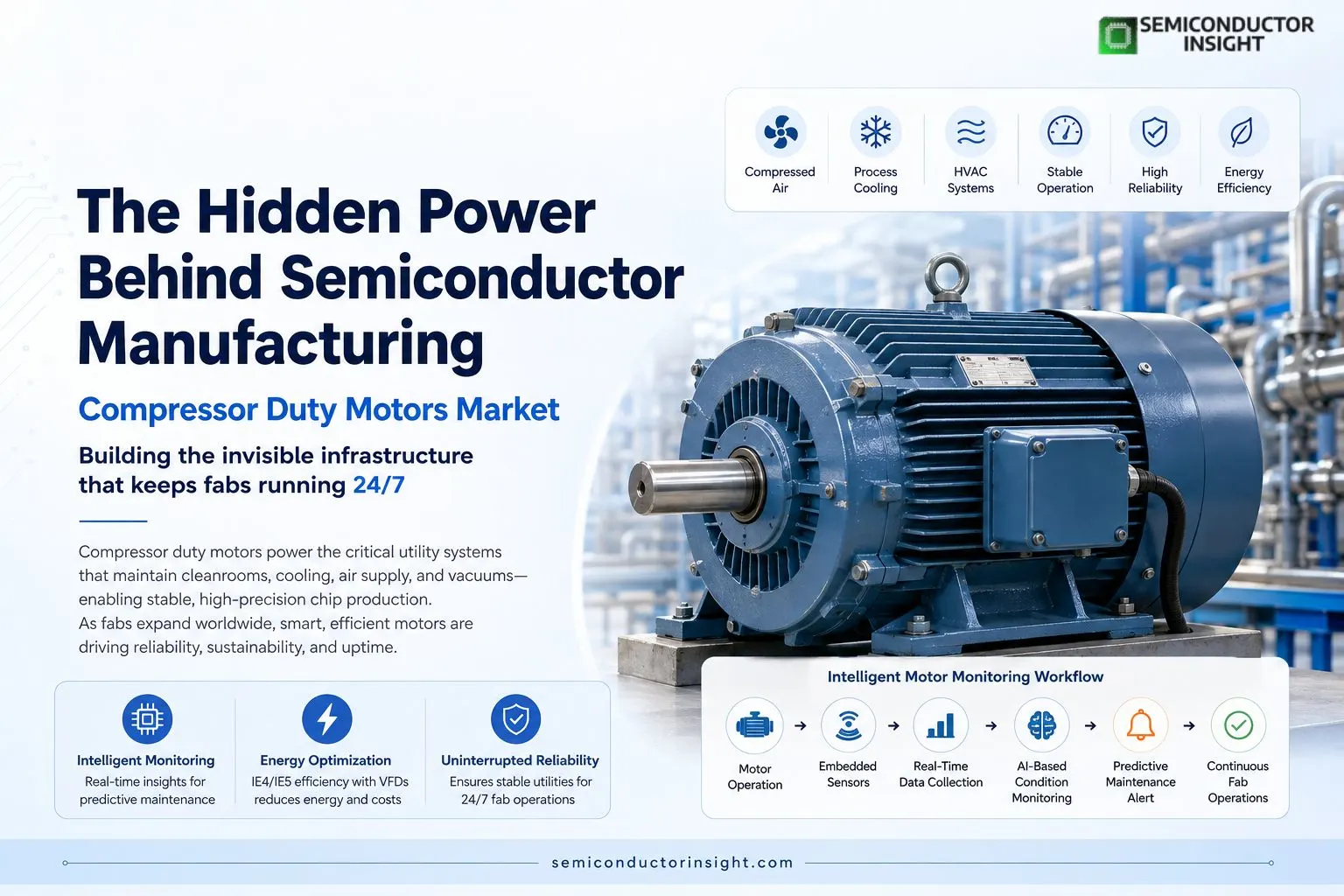
While semiconductor headlines often focus on advanced lithography systems, AI processors, and wafer fabrication equipment, one of the least visible yet most essential technologies sits behind the scenes. Compressor duty motors keep compressed air systems, process cooling equipment, HVAC units, vacuum infrastructure, and utility plants operating continuously inside semiconductor fabrication facilities.
As global investment in new wafer fabs accelerates, these specialized motors are becoming indispensable for maintaining stable manufacturing environments where even slight variations in temperature, humidity, or air pressure can affect chip production.
Semiconductor Fabs Depend on More than Manufacturing Equipment
A semiconductor fabrication plant functions like an interconnected ecosystem where production equipment and facility infrastructure operate simultaneously. Compressor duty motors provide mechanical power for air compressors, chilled water circulation, refrigeration systems, and environmental control equipment that support cleanroom conditions.
Modern semiconductor facilities operate 24 hours a day, 365 days a year, making uninterrupted motor performance essential. According to industry publications from SEMI, leading wafer fabrication plants process tens of thousands of wafers every month, while advanced cleanrooms maintain particle concentrations measured in only a few particles per cubic meter under ISO Class 1 standards.
Even a short interruption in compressed air or cooling systems can affect manufacturing stability, demonstrating why compressor duty motors have become an integral component of semiconductor infrastructure rather than simply industrial utility equipment.
Every Advanced Chip Begins Inside a Precisely Controlled Environment
Chip manufacturing demands extraordinary environmental consistency. Semiconductor cleanrooms require carefully regulated airflow, humidity, vibration, and temperature throughout hundreds of manufacturing steps.
Compressor duty motors support multiple facility systems simultaneously:
- Industrial compressed air networks
- Process gas compression
- Central cooling plants
- Chilled water circulation
- HVAC air handling systems
- Vacuum generation support
- Facility utility operations
Rather than directly manufacturing semiconductors, these motors ensure production equipment receives stable utility support, allowing lithography, etching, deposition, and wafer inspection systems to perform within extremely narrow operating tolerances.
Global Fab Construction Is Expanding Supporting Infrastructure
The worldwide expansion of semiconductor manufacturing is increasing demand for industrial utility equipment alongside production tools.
Recent announcements illustrate this trend:
- TSMC continues expanding advanced fabrication capacity in Taiwan, Japan, Germany, and the United States.
- Intel is constructing multiple new fabrication facilities under long-term manufacturing expansion programs.
- Samsung Electronics continues investing in advanced semiconductor production complexes.
- Several new fabs under development require extensive mechanical infrastructure including compressor systems, chilled water plants, air handling equipment, and precision utility networks.
A single leading-edge semiconductor manufacturing campus may include hundreds of large industrial motors, supporting thousands of individual utility assets operating around the clock.
Facility Utilities Are Becoming Smarter Than Ever
The latest compressor duty motors are no longer standalone mechanical devices. Manufacturers increasingly integrate variable frequency drives, vibration sensors, thermal monitoring, and Industrial Internet of Things (IIoT) connectivity directly into motor systems.
These intelligent capabilities enable predictive maintenance, reducing unexpected shutdowns and improving energy efficiency across semiconductor utility operations. Digital monitoring platforms continuously evaluate operating temperature, bearing condition, electrical load, and motor vibration, allowing maintenance teams to identify performance changes before failures occur.
As semiconductor manufacturers pursue higher productivity and greater operational resilience, intelligent compressor duty motors are evolving into connected assets that contribute directly to factory reliability rather than simply supplying mechanical power.
Energy Efficiency Has Become a Facility-Level Engineering Priority
- Electric motors account for a significant share of industrial electricity consumption worldwide. According to the International Energy Agency and the U.S. Department of Energy, electric motor systems are responsible for around 40-50% of global electricity consumption in industrial applications. Within semiconductor manufacturing, compressor duty motors continuously power compressors, chilled-water systems, cooling towers, and ventilation equipment, making efficiency improvements highly valuable.
- To reduce operating costs and energy use, many newly commissioned semiconductor facilities are replacing conventional motors with IE4 Super Premium Efficiency and IE5 Ultra Premium Efficiency models.
- When combined with Variable Frequency Drives (VFDs), these motors can optimize speed according to real-time demand instead of running continuously at full capacity. For facilities operating 24 hours a day, even small efficiency gains translate into substantial annual energy savings while supporting corporate sustainability targets.
You can freely browse our most recent updated report to learn more about it before scrolling further: https://semiconductorinsight.com/report/compressor-duty-motors-market/
Predictive Intelligence Is Replacing Reactive Maintenance
Modern semiconductor fabs cannot afford unexpected utility failures. A malfunction in a compressor or cooling system can interrupt highly sensitive manufacturing processes, leading to production delays and costly downtime.
Today’s compressor duty motors increasingly incorporate digital sensors that monitor vibration, temperature, current, shaft alignment, and bearing health. These data points are transmitted to centralized maintenance platforms where AI-assisted analytics detect abnormal operating patterns before failures occur.
Instead of waiting for scheduled inspections, engineering teams receive early warnings that enable planned maintenance during production windows. This predictive approach improves equipment availability while extending motor service life and reducing emergency repair costs.
Intelligent Motor Monitoring Workflow
Motor Operation
│
▼
Embedded Sensors
│
▼
Real-Time Data Collection
│
▼
AI-Based Condition Monitoring
│
▼
Predictive Maintenance Alert
│
▼
Continuous Fab Operations

Comments (0)