
How Float Level Switches Market Contribute to Safer and More Efficient Semiconductor Wafer Processing Operations Globally?
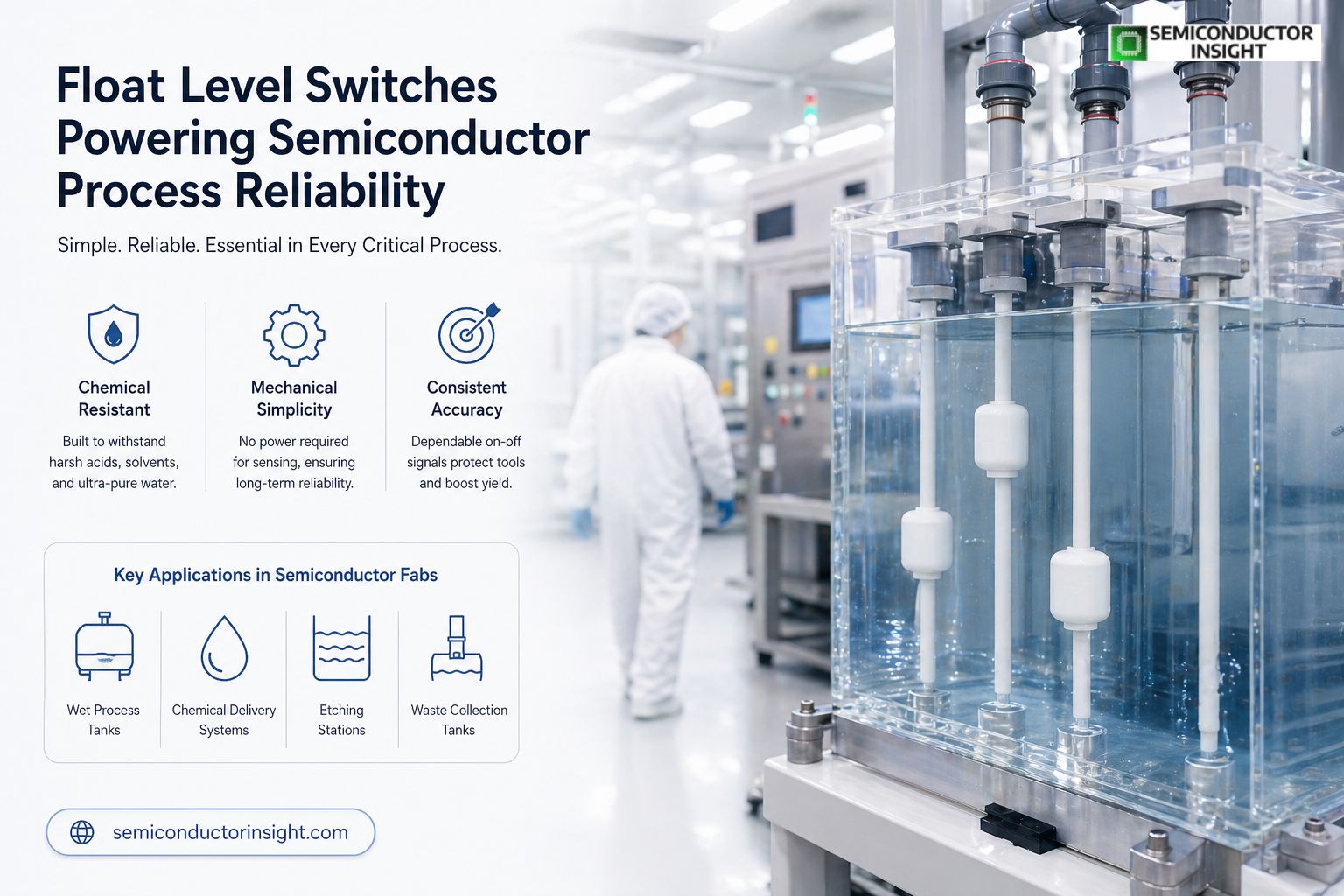
In the highly controlled world of semiconductor manufacturing, where even microscopic contamination can ruin entire wafer batches worth thousands of dollars, every component must perform with absolute dependability. Float level switches stand out as one of the most trusted point-level detection devices because they operate on a straightforward mechanical principle that requires no power for the sensing itself, making them inherently reliable in environments filled with aggressive acids, solvents, and ultra-pure deionized water.
These switches play a silent but vital role in wet processing stations, chemical delivery systems, etching baths, and waste collection tanks throughout fabrication facilities. As chipmakers push toward smaller process nodes and higher yields, the demand for switches that resist corrosion while delivering consistent on-off signals has grown steadily, reflecting the industry’s need for fail-safe liquid management that protects both equipment and expensive production runs.
- A typical float level switch consists of a buoyant float containing a magnet that rides up and down a stem as liquid levels change.
- Inside the stem sits a hermetically sealed reed switch essentially two thin metal reeds in a glass envelope.
- When the magnet in the float moves into position, it pulls the reeds together or apart, opening or closing an electrical circuit that can trigger pumps, valves, alarms, or automated shutdown sequences.
- This contact-free magnetic actuation means there are no sliding seals or exposed moving parts that could introduce particles or wear out quickly in harsh chemical vapors.
- Semiconductor-grade versions often use materials like PTFE (Teflon), PVDF, or 316 stainless steel for all wetted parts to ensure full compatibility with aggressive process chemicals such as hydrofluoric acid, sulfuric acid mixtures, and organic solvents without leaching contaminants or degrading over time.
Smart Level Control in Wet Processing Systems
Float level switches ensure stable chemical levels in semiconductor wet benches, where even small imbalances can affect wafer quality or cause safety risks. Installed inside tanks or along vessel walls, they automatically control fill and drain cycles by responding to rising or falling liquid levels, triggering alarms or pump actions as needed.
Level Rise → Float Trigger → Pump Stop or High-Level Alert
Level Drop → Float Reset → Refill Activation or Low-Level Warning
Their simple mechanical design delivers consistent performance in harsh chemical environments, avoiding issues like vapor interference or frequent calibration seen in electronic sensors. With sealed construction, they also prevent contamination, making them a reliable and low-maintenance solution for continuous semiconductor operations.
Unlock the newest report findings with the full access link: https://semiconductorinsight.com/report/float-level-switch-market/
Chemical Compatibility Challenges and Material Solutions in Semiconductor Applications
- Semiconductor processing involves some of the most demanding chemical environments in industry, with highly corrosive acids, bases, and solvents that quickly degrade standard materials.
- Float level switches designed for these conditions use specialized polymers and metals chosen for their inertness and mechanical strength.
- PTFE floats and stems offer exceptional resistance across a broad range of aggressive media, while PVDF provides a strong balance of chemical compatibility and structural rigidity.
- For applications needing higher temperature or pressure tolerance, all-stainless-steel constructions, particularly 316 or 316L grades, deliver durability without compromising cleanliness standards required in cleanrooms.
- Engineers often consult detailed compatibility charts when specifying switches, ensuring the float material will not swell, crack, or release ions that could contaminate wafers.
- In etching and cleaning stations, where hydrofluoric acid mixtures are common, Teflon-based switches have become a preferred choice because they maintain buoyancy and smooth movement even after prolonged exposure.
- This attention to material science helps fabs achieve the ultra-high purity levels demanded by advanced nodes, where a single particle or ionic impurity can cause yield-killing defects.
- Many manufacturers now offer custom configurations with polished surfaces and electro polished stems to further minimize particle generation and support stringent semiconductor cleanliness protocols.
Emerging Enhancements Blending Tradition with Modern Semiconductor Needs
While the core magnetic reed principle remains unchanged due to its proven reliability, recent designs incorporate digital outputs and improved diagnostics in some hybrid models, using semiconductor sensors alongside traditional floats for added intelligence without sacrificing simplicity.
High-temperature versions now handle conditions exceeding 120°C in certain processes, and multi-level units allow finer granularity in monitoring complex tank arrays. Portable or modular switch designs also support flexible reconfiguration as fabs upgrade tools or adjust process flows.
As semiconductor manufacturing grows more sophisticated with larger wafers, more process steps, and stricter environmental controls float level switches continue to prove their worth through unmatched reliability in the harshest conditions. They represent a perfect marriage of simple physics and advanced material engineering, delivering the consistent performance that high-stakes chip production demands.

Comments (0)