
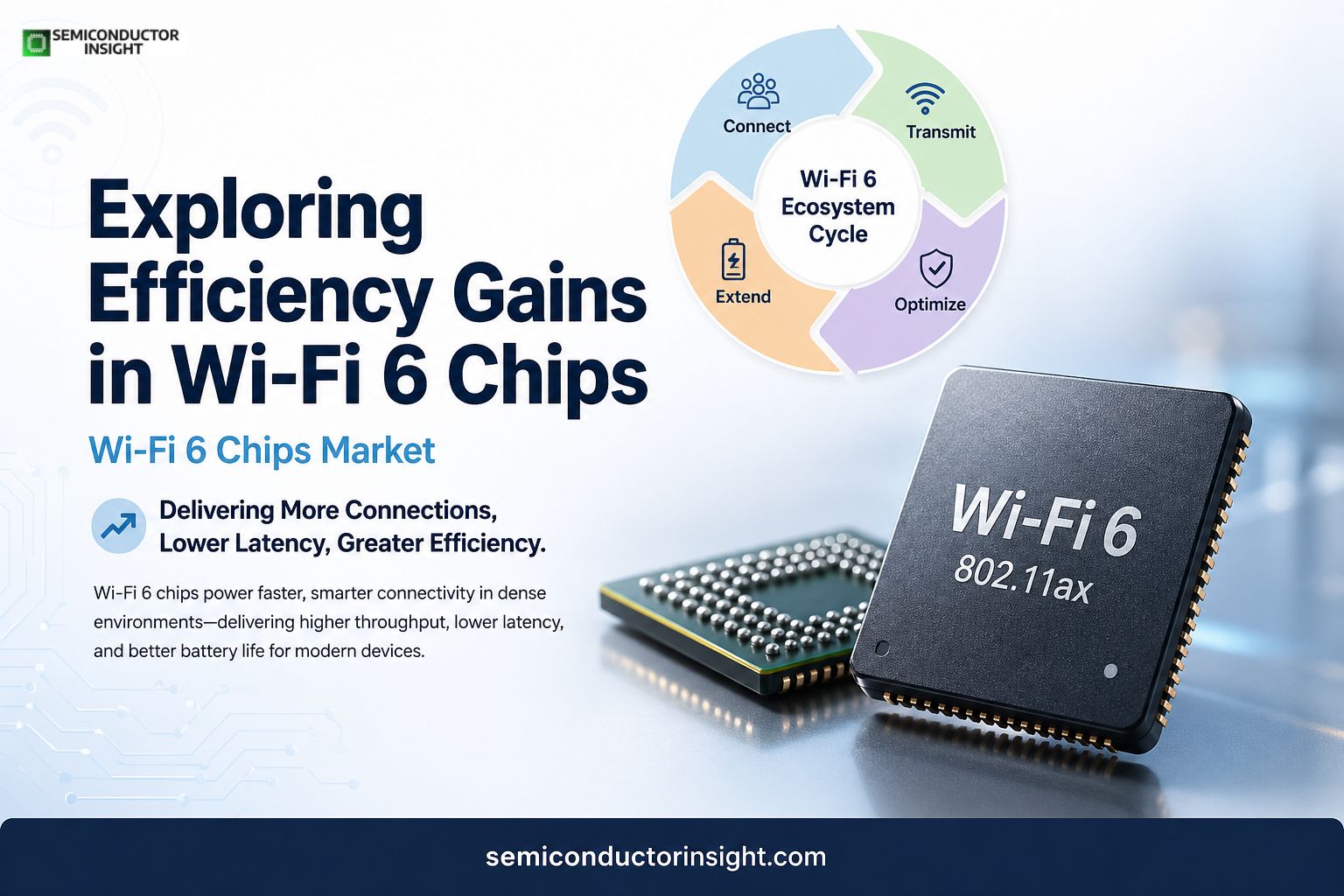
Exploring Efficiency Gains in Wi-Fi 6 Chips Market
In the world of modern connectivity, few components work harder behind the scenes than the chips that power Wi-Fi 6. Also known as IEEE 802.11ax, this standard marked a significant leap in wireless technology by focusing not just on raw speed but on efficiency in crowded environments. These semiconductor solutions enable devices to handle more simultaneous connections, reduce latency, and operate more reliably whether in busy offices, smart homes, or public spaces.
At its core, Wi-Fi 6 introduced technologies like Orthogonal Frequency Division Multiple Access (OFDMA), which divides channels into smaller resource units so multiple devices can transmit data at once without waiting their turn. It also brought improved MU-MIMO for both uplink and downlink, better power management through Target Wake Time, and support for 1024-QAM modulation for higher data rates. These features, embedded deeply into the silicon, allow networks to deliver up to four times the throughput per area compared to previous generations while maintaining compatibility with older devices.
Leading Semiconductor Players Defining the Space
- Several innovative companies have been instrumental in bringing Wi-Fi 6 capabilities to market.
- Qualcomm stands out with its Snapdragon and Networking Pro platforms, widely integrated into smartphones, laptops, and networking equipment for strong performance in mobile and IoT scenarios.
- Broadcom delivers robust chipsets favored in high-end routers, enterprise access points, and consumer devices, emphasizing reliability and high throughput.
- MediaTek has gained strong traction, particularly in cost-effective yet capable solutions for smartphones, routers, and smart home products across global markets.
- Other notable contributors include Realtek, known for accessible PC and peripheral solutions, and Marvell, which focuses on infrastructure and specialized applications.
- These firms continue refining designs that balance power efficiency, thermal performance, and integration density critical factors as devices shrink and battery life expectations rise.
Engineering for Real-World Density
What sets Wi-Fi 6 chips apart is their ability to thrive in dense deployments. Traditional Wi-Fi struggled when dozens of devices competed for airtime in the same space. The new architecture uses longer symbol durations and better interference management to maintain consistent performance even in apartment buildings, airports, or conference centers. Semiconductor designers achieved this by optimizing radio front-ends, baseband processing, and MAC-layer scheduling directly in hardware.
This efficiency matters enormously for emerging uses. Video conferencing, cloud gaming, 4K/8K streaming, and industrial IoT sensors all benefit from lower latency and more predictable bandwidth. In smart factories or healthcare settings, reliable wireless links support real-time monitoring without constant human intervention.
Power Efficiency and Integration Trends
One of the most appreciated advancements lies in how these chips manage energy. Target Wake Time allows devices to schedule when they wake up to communicate, dramatically extending battery life in phones, tablets, and sensors. Chipmakers have integrated multi-band support, advanced beamforming, and tighter system-level co-design with other semiconductors like application processors and Bluetooth controllers.
This high level of integration reduces board space and component count, helping manufacturers create sleeker, more affordable devices. As the industry transitions toward Wi-Fi 6E (which adds the 6 GHz band) and beyond, the foundational work in 802.11ax silicon provides a solid platform for further enhancements in speed and capacity.
Lastly, for more in-depth information, don’t forget to read our most recent exclusive report: https://semiconductorinsight.com/report/wi-fi-6-802-11ax-chips-market/
A Fundamental Shift in Wireless Silicon
- The development of Wi-Fi 6 chips reflects a broader evolution in semiconductor design moving from simply chasing peak speeds to creating intelligent, efficient systems that perform well under pressure.
- Engineers and product teams appreciate how these solutions deliver tangible improvements in user experience without requiring massive infrastructure overhauls.
As more devices join global networks and demand for seamless connectivity grows, the thoughtful engineering inside Wi-Fi 6 chips continues to prove its value. These small pieces of silicon quietly enable the reliable, high-capacity wireless experiences we increasingly take for granted, forming an essential layer in the connected world we are building.
Their ongoing refinement will support everything from everyday consumer gadgets to sophisticated enterprise and industrial applications for years to come.

Comments (0)