MARKET INSIGHTS
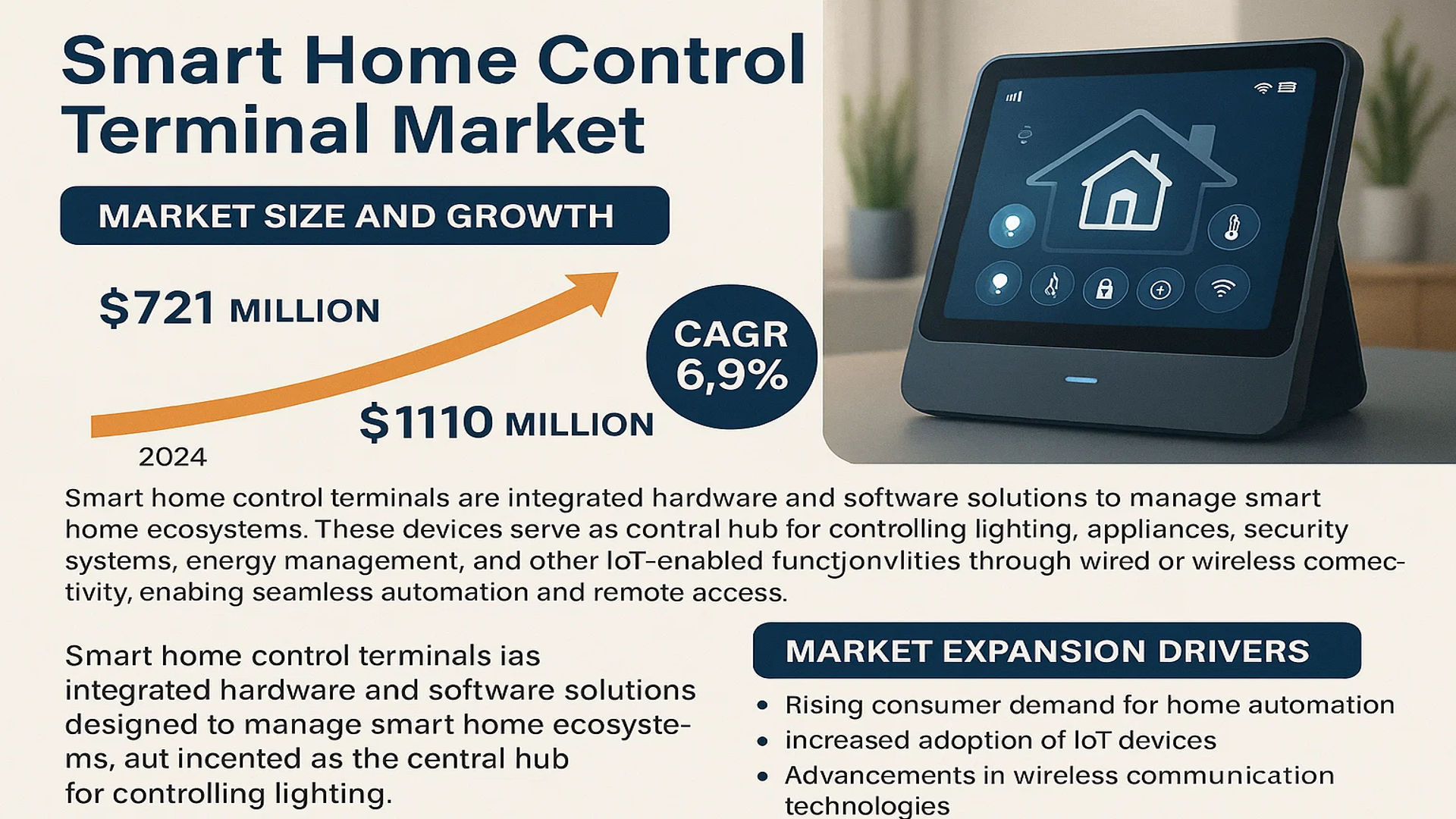
The global Smart Home Control Terminal Market was valued at 721 million in 2024 and is projected to reach US$ 1110 million by 2032, at a CAGR of 6.9% during the forecast period.
Smart home control terminals are integrated hardware and software solutions designed to manage smart home ecosystems. These devices serve as the central hub for controlling lighting, appliances, security systems, energy management, and other IoT-enabled functionalities through wired or wireless connectivity. They support multiple protocols, including Bluetooth, Wi-Fi, and proprietary technologies, enabling seamless automation and remote access.
The market is expanding due to rising consumer demand for home automation, increased adoption of IoT devices, and advancements in wireless communication technologies. However, interoperability challenges and high installation costs remain barriers. Key players such as Aqara, Control4, and Xiaomi dominate the market with innovative solutions, driving competition and technological integration.
MARKET DRIVERS
Rising Adoption of IoT and Smart Home Technologies Fueling Market Growth
The global smart home control terminal market is experiencing significant growth, driven primarily by the rapid adoption of Internet of Things (IoT) technologies in residential and commercial spaces. The number of connected devices per household has seen exponential growth, with projections indicating that the average smart home will contain over 20 connected devices by 2025. This proliferation of smart devices creates substantial demand for centralized control solutions that can seamlessly manage diverse ecosystems of connected products.
Increasing Consumer Demand for Home Automation and Energy Efficiency
Growing environmental consciousness and rising energy costs are compelling consumers to seek intelligent solutions for home energy management. Smart home control terminals enable real-time monitoring and optimization of energy consumption across lighting, HVAC, and appliances, potentially reducing household energy usage by 20-30%. The market is further propelled by government initiatives promoting smart home technologies as part of broader sustainability programs, with several countries offering tax incentives for energy-efficient home automation systems.
Recent advancements in voice control technology and artificial intelligence have significantly enhanced the functionality and user experience of smart home controllers. Integration with popular voice assistants has become standard, allowing for more natural and intuitive control of home environments. Leading manufacturers are increasingly incorporating machine learning algorithms that anticipate user preferences and automate routine adjustments.
MARKET RESTRAINTS
High Installation Costs and Technical Complexity Limit Wider Adoption
While the smart home control terminal market shows strong growth potential, significant barriers remain. The substantial upfront costs associated with comprehensive smart home systems pose a major challenge, particularly in price-sensitive markets. Professional installation of advanced control systems can often exceed several thousand dollars, putting these solutions out of reach for many middle-income households.
Interoperability Challenges
The lack of universal standards among smart device manufacturers creates compatibility issues that hinder seamless integration. Consumers frequently encounter difficulties when attempting to connect products from different brands to a centralized control system. This fragmentation in the market forces users to either limit their product choices or invest in additional bridging hardware, adding complexity and cost to implementations.
Privacy and Security Concerns
Growing awareness of cybersecurity risks associated with IoT devices has made some consumers hesitant to adopt comprehensive smart home systems. Several high-profile incidents of home network breaches have highlighted vulnerabilities in connected devices, prompting calls for more robust security measures in control terminal devices.
MARKET OPPORTUNITIES
Emerging Markets Present Significant Growth Potential
The rapid urbanization in developing economies, combined with rising disposable incomes, creates substantial opportunities for smart home control terminal providers. While smart home adoption in these regions currently lags behind developed markets, growth rates are significantly higher, suggesting tremendous potential for market expansion. Several manufacturers have begun tailoring products specifically for these markets, offering more affordable entry-level solutions with core functionality.
Technological advancements in wireless protocols, particularly the emergence of Matter as a unifying standard, are expected to address many current interoperability challenges. Industry participation in this standardization effort includes over 200 companies working collaboratively to develop solutions that will simplify device integration while maintaining robust security standards.
Integration with Smart City Infrastructure Creates New Applications
The convergence of smart home technologies with broader smart city initiatives presents compelling new opportunities. Municipal partnerships exploring integration between home energy management systems and smart grids could enable innovative demand-response programs that benefit both utilities and consumers. These developments are expected to create new revenue streams for control terminal manufacturers through value-added services and data analytics platforms.
MARKET CHALLENGES
Shortage of Skilled Professionals Impacts Market Growth
The growing complexity of smart home systems has created a significant gap in qualified installation and integration professionals. This skills shortage is particularly acute in emerging markets and represents a key challenge for manufacturers seeking to expand their global footprint. Many companies are responding by developing comprehensive training programs and certification systems to cultivate local talent pools.
Consumer Education Requirements
Many potential customers remain unaware of the full capabilities of modern smart home control systems or how they might benefit their daily lives. Overcoming this knowledge gap requires substantial investment in consumer education through demonstration centers, instructional content, and hands-on experience programs.
Regulatory Compliance Complexity
The regulatory landscape for smart home technologies varies significantly across regions, with some jurisdictions implementing stringent requirements for data privacy and device security. Navigating these diverse requirements adds complexity to product development and market entry strategies, particularly for smaller manufacturers with limited compliance resources.
SMART HOME CONTROL TERMINAL MARKET TRENDS
Integration of AI and IoT Driving Smart Home Control Terminal Adoption
The global smart home control terminal market is witnessing significant growth due to rapid advancements in artificial intelligence (AI) and the Internet of Things (IoT). The increasing penetration of voice-controlled assistants like Amazon Alexa, Google Assistant, and Apple Siri has led to a surge in demand for smart home control systems that seamlessly integrate with these platforms. These terminals now offer advanced functionalities such as predictive automation, learning user behavior patterns, and optimizing energy consumption. The rise of interoperability protocols like Matter, which ensures seamless communication between devices from different brands, is further accelerating market adoption.
Other Trends
Growing Preference for Wi-Fi and Bluetooth Enabled Terminals
Wireless connectivity has become a dominant trend in smart home control systems, with Wi-Fi and Bluetooth-enabled terminals leading the charge. Wi-Fi-based control terminals, in particular, are gaining traction due to their ability to support high data transfer speeds and remote access. Bluetooth remains a cost-effective solution for localized control, especially in compact smart home setups. The increasing shift from traditional wired hubs to wireless smart terminals allows homeowners to retrofit existing systems without extensive rewiring. This trend is particularly prominent in residential applications, where ease of installation and scalability are key decision-making factors.
Expansion of Smart Home Automation in Commercial Spaces
While residential adoption continues to dominate, smart home control terminals are increasingly being deployed in commercial settings such as offices, hotels, and retail spaces. Businesses are leveraging these systems to enhance energy efficiency, improve security, and provide personalized comfort settings for occupants. The integration of smart lighting, HVAC control, and security systems through centralized terminals offers significant operational cost reductions. The hospitality sector, in particular, is embracing smart room automation to elevate guest experiences with features like voice-controlled room settings and automated check-in procedures.
COMPETITIVE LANDSCAPE
Key Industry Players
Major Players Compete Through Innovation and Strategic Partnerships
The global Smart Home Control Terminal Market features a dynamic competitive landscape, characterized by technology giants and specialized manufacturers vying for dominance. Xiaomi and Samsung emerge as frontrunners, leveraging their extensive consumer electronics ecosystems to integrate smart home solutions seamlessly. Xiaomi’s Aqara ecosystem, in particular, has gained significant traction in Asia and Europe due to its affordable yet feature-rich product lineup.
Control4 and Crestron maintain strong positions in the premium segment, catering to luxury smart home installations with their sophisticated control systems and professional integration services. These players differentiate themselves through high-end design aesthetics and robust interoperability with third-party devices.
Meanwhile, Huawei has been making strategic inroads through its HiLink platform, particularly in the Chinese market where it benefits from strong brand recognition and government support for domestic technology solutions. The company’s recent partnerships with real estate developers have significantly expanded its installed base.
Emerging players like ORVIBO and LifeSmart are disrupting the market with innovative AI-powered solutions and flexible pricing models. These agile competitors focus on user-friendly interfaces and quick deployment capabilities, appealing particularly to younger demographic segments.
List of Key Smart Home Control Terminal Companies Profiled
- Aqara (China)
- UNIHIKER (China)
- Control4 Corporation (U.S.)
- Crestron Electronics (U.S.)
- Haier (China)
- Huawei Technologies (China)
- Insteon (U.S.)
- LG Electronics (South Korea)
- LifeSmart (China)
- Samsung (South Korea)
- SmartThings (South Korea)
- Xiaomi (China)
- Zipato (Croatia)
Segment Analysis:
By Type
Wi-Fi Type Segment Leads Due to High Compatibility with IoT Ecosystems
The market is segmented based on type into:
- Bluetooth Type
- Wi-Fi Type
- Zigbee
- Z-Wave
- Others
By Application
Residential Segment Dominates Owing to Rising Demand for Smart Home Solutions
The market is segmented based on application into:
- Residential
- Commercial
- Industrial
By Functionality
Security & Surveillance Segment Gains Traction with Increased Safety Concerns
The market is segmented based on functionality into:
- Lighting Control
- Security & Surveillance
- HVAC Control
- Entertainment Systems
- Energy Management
By Connectivity
Cloud-based Solutions Expand with Demand for Remote Access Features
The market is segmented based on connectivity into:
- Wired
- Wireless
- Hybrid
Regional Analysis: Smart Home Control Terminal Market
Asia-Pacific
The Asia-Pacific region dominates the global smart home control terminal market, driven by rapid urbanization, increasing disposable incomes, and government initiatives promoting smart city development. China leads the market with extensive IoT infrastructure and strong local manufacturers like Xiaomi, Huawei, and Aqara, accounting for over 40% of regional revenue. Smart home adoption is particularly high in South Korea and Japan, where tech-savvy consumers prioritize automation and energy efficiency. Emerging markets like India and Southeast Asia show strong growth potential due to expanding middle-class populations and rising demand for connected living solutions. However, price sensitivity in developing countries limits the adoption of premium smart home systems.
North America
North America represents the second-largest market for smart home control terminals, characterized by high consumer awareness and early technology adoption. The U.S. accounts for nearly 80% of regional demand, with major players like Control4, Crestron, and Insteon driving innovation in home automation. Stringent data privacy regulations and increasing concerns about cybersecurity shape product development priorities. Canada shows steady growth, supported by smart home tax incentives in several provinces. The presence of tech giants investing in voice assistant integration (Amazon Alexa, Google Assistant) further propels market expansion, though interoperability challenges between different ecosystems remain a key restraint.
Europe
Europe maintains a strong position in the smart home control terminal market, with Germany, the UK, and France constituting the largest sub-markets. The region benefits from strict energy efficiency regulations and high consumer environmental consciousness, driving demand for smart thermostats and energy management systems. EU-wide initiatives like the Green Deal encourage sustainable smart home solutions, while local manufacturers like HDL Automation and Cozify compete with global brands. Privacy-centric consumers in Nordic countries favor locally developed solutions with robust data protection. However, complex installation requirements and high initial costs slow adoption rates in Southern and Eastern European countries.
Middle East & Africa
The Middle East demonstrates rapid smart home control terminal adoption, particularly in Gulf Cooperation Council (GCC) countries implementing smart city visions like Saudi Arabia’s NEOM and UAE’s Smart Dubai. High-net-worth individuals and luxury residential projects fuel demand for premium automation systems, with vendors like Crestron and Samsung capturing significant market share. South Africa leads adoption in sub-Saharan Africa through urban middle-class growth, though infrastructure limitations and low internet penetration hinder widespread deployment. The region shows long-term potential as governments invest in digital transformation, but economic diversification efforts currently prioritize industrial over residential automation.
South America
South America represents the smallest but fastest-growing regional market, with Brazil and Argentina accounting for over 60% of regional sales. Increasing mobile penetration and the expanding e-commerce sector facilitate smart home product accessibility. However, economic instability and currency fluctuations create pricing volatility for imported systems. Local manufacturers focus on budget-friendly solutions, while international brands target high-end residential and commercial projects in major cities. Government smart grid initiatives in Chile and Colombia indirectly support home automation adoption, though lack of technical expertise among consumers and installers remains a significant market barrier.
Report Scope
This market research report provides a comprehensive analysis of the Global Smart Home Control Terminal market, covering the forecast period 2024–2032. It offers detailed insights into market dynamics, technological advancements, competitive landscape, and key trends shaping the industry.
Key focus areas of the report include:
- Market Size & Forecast: Historical data and future projections for revenue, unit shipments, and market value across major regions and segments. The global market was valued at USD 721 million in 2024 and is projected to reach USD 1,110 million by 2032, growing at a CAGR of 6.9%.
- Segmentation Analysis: Detailed breakdown by product type (Bluetooth, Wi-Fi, Others), application (Home, Commercial), and end-user industry to identify high-growth segments and investment opportunities.
- Regional Outlook: Insights into market performance across North America, Europe, Asia-Pacific, Latin America, and the Middle East & Africa, including country-level analysis. The U.S. and China are key markets driving regional growth.
- Competitive Landscape: Profiles of leading market participants, including Aqara, Control4, Crestron, Haier, Huawei, Samsung, Xiaomi, and others, covering their product offerings, R&D focus, and recent developments.
- Technology Trends & Innovation: Assessment of emerging technologies, including AI/IoT integration, voice control advancements, and interoperability standards like Matter.
- Market Drivers & Restraints: Evaluation of factors driving market growth, such as rising smart home adoption, along with challenges like high costs and interoperability issues.
- Stakeholder Analysis: Insights for component suppliers, OEMs, system integrators, investors, and policymakers regarding strategic opportunities in the evolving smart home ecosystem.
Primary and secondary research methods are employed, including interviews with industry experts, data from verified sources, and real-time market intelligence to ensure the accuracy and reliability of the insights presented.
FREQUENTLY ASKED QUESTIONS:
What is the current market size of Global Smart Home Control Terminal Market?
-> Smart Home Control Terminal Market was valued at 721 million in 2024 and is projected to reach US$ 1110 million by 2032, at a CAGR of 6.9% during the forecast period.
Which key companies operate in Global Smart Home Control Terminal Market?
-> Key players include Aqara, Control4, Crestron, Haier, Huawei, Samsung, Xiaomi, LG Electronics, SmartThings, and other leading smart home technology providers.
What are the key growth drivers?
-> Key growth drivers include rising adoption of smart home devices, increasing demand for home automation, technological advancements in IoT, and growing consumer preference for energy-efficient solutions.
Which region dominates the market?
-> North America currently leads in market share, while Asia-Pacific is expected to witness the fastest growth due to rapid urbanization and smart city initiatives.
What are the emerging trends?
-> Emerging trends include voice-controlled terminals, AI-powered automation, increased focus on cybersecurity, and the development of unified smart home ecosystems.

Get Sample Report PDF for Exclusive Insights
Report Sample Includes
- Table of Contents
- List of Tables & Figures
- Charts, Research Methodology, and more...
 Download Sample Report PDF