
EV Current Sensor Market: Powering the Next Wave of Electric Mobility
The global shift toward electric mobility is no longer an emerging storyline it’s the backbone of the automotive industry’s future. As vehicle manufacturers race to increase driving range, reduce charging times, and enhance system safety, one component has quietly become mission-critical: the EV current sensor. These compact devices, responsible for accurately measuring battery, motor, and charging currents, are now shaping how efficiently, safely, and intelligently next-generation EVs operate.
While batteries and motors often steal the spotlight, it’s the precision of current sensing that ensures thermal stability, prevents system overload, optimizes power consumption, and supports fast-charging architectures. As the EV market matures, EV Current Sensor Market is entering a phase of rapid transformation driven by innovation, regulatory pressures, and the need for real-time digital intelligence.
Browse Our Detailed Report For More Insights: https://semiconductorinsight.com/report/ev-current-sensor-market/
Why Current Sensors Have Become the Brainstem of EV Power Electronics
Modern EVs are sophisticated power systems. They operate on high-power traction batteries, multi-phase motor drives, fast-charging capabilities, and multiple auxiliary systems each requiring real-time monitoring.
This is where current sensors step in.
- Battery Management Systems (BMS): From state-of-charge (SoC) to state-of-health (SoH), BMS relies heavily on current sensing accuracy. Approx. 1-2% measurement deviation can dramatically impact range prediction, thermal control, and battery life cycles.
- Traction Motor Control: High-precision sensors help determine torque output, enabling smoother acceleration and better energy regeneration.
- Fast Charging Compatibility: As 350kW ultra-fast chargers become mainstream, EVs require sensors that can handle rapid surges, high heat loads, and transient currents without compromising safety.
- Safety Compliance: Global EV safety norms now demand higher accuracy, redundancy, and insulation performance in sensing components.
The convergence of these requirements has moved the market from traditional shunt-based sensors to Hall-effect, fluxgate, and TMR (Tunnel Magneto resistance) solutions technologies offering higher precision, wider temperature ranges, and better isolation.
Where the Market Is Growing the Fastest
Asia-Pacific Leads the Charge
Thanks to large-scale EV adoption in China, Japan, and South Korea, APAC maintains the largest share of the market. China’s strong domestic sensor manufacturing ecosystem further accelerates technology penetration.
North America & Europe Catching Up
The push for energy independence, aggressive carbon-neutral targets, and expansion of charging infrastructure are prompting automakers to invest heavily in advanced current-sensing technologies.
Key Market Trends Reshaping the EV Current Sensor Landscape
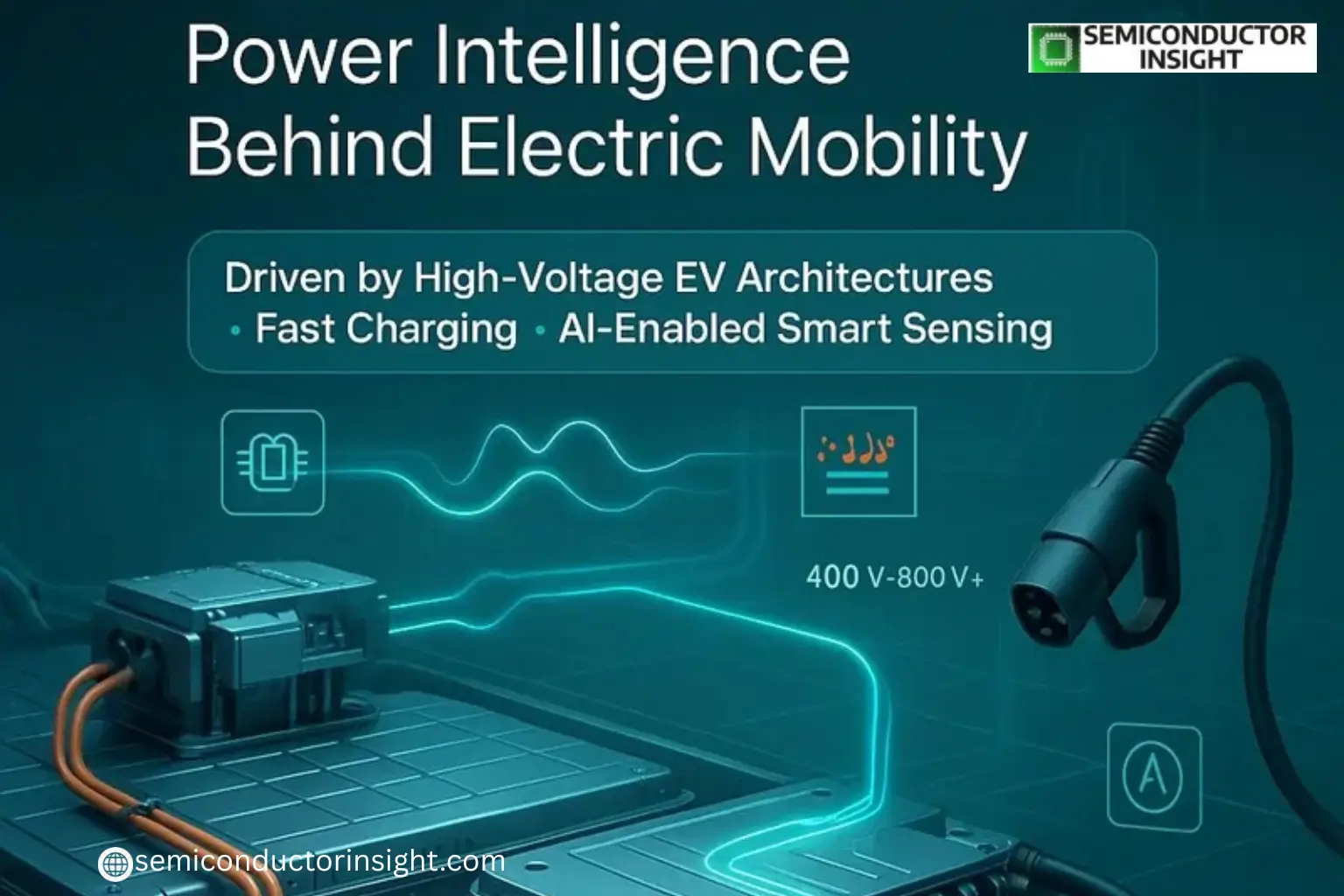
Shift toward High-Voltage Architectures (800V & Beyond)
- Premium EV platforms from Porsche, Hyundai, and Lucid are now adopting 800V systems for faster charging and smaller cable diameters.
- As a result, manufacturers are developing sensors with higher bandwidth, improved insulation, and lower thermal drift to support these voltages.
Integration of AI-Enabled Smart Sensing
- Smart sensors are emerging as a new frontier integrating diagnostics, digital calibration, and AI-based predictive analysis. These sensors can:
- Predict overheating events
- Identify abnormal current spikes
- Optimize charging cycles
- Extend battery life
- OEMs are increasingly preferring such intelligent components to reduce manual calibration time and maintenance costs.
Miniaturization without Compromising Accuracy
- EV manufacturers want smaller sensors to fit compact power electronics, especially in upcoming urban EVs and two-wheelers. The challenge? Shrinking the sensor while maintaining:
- High accuracy
- Low noise
- Strong electromagnetic immunity
This trend is accelerating innovations in chip-level current sensing and integrated ASIC architectures.
Growing Adoption of Contactless Current Sensors
- With EVs pushing the boundaries of efficiency and thermal stability, contactless sensors are becoming mainstream due to:
- Lower heat generation
- Increased operational lifespan
- Reduced power losses
- Elevated safety
- These sensors play a critical role in high-power inverters and DC fast-charging systems.
Challenges Still Holding Back the Market
Despite surging demand, the EV current sensor industry faces a few technical hurdles:
- Trade-off between size and precision
- Thermal instability in high-current environments
- Cost pressures from automakers
- Need for redundancy to meet safety certifications
Manufacturers are working on hybrid sensing solutions combining Hall sensors with shunt resistors and ASICs to overcome these barriers.
Wrapping Statement: Current Sensors Will Define the Future of EV Performance
As the EV industry moves into a new era of high-voltage systems, ultra-fast charging, and AI-driven vehicle intelligence, current sensors are evolving from simple measurement tools into advanced safety and efficiency enablers. Their role will only become more critical as automakers focus on extending battery life, improving range, and enhancing vehicle reliability.
In many ways, the evolution of EV current sensors mirrors the evolution of electric mobility itself: smarter, faster, safer, and more efficient.

Comments (0)