MARKET INSIGHTS
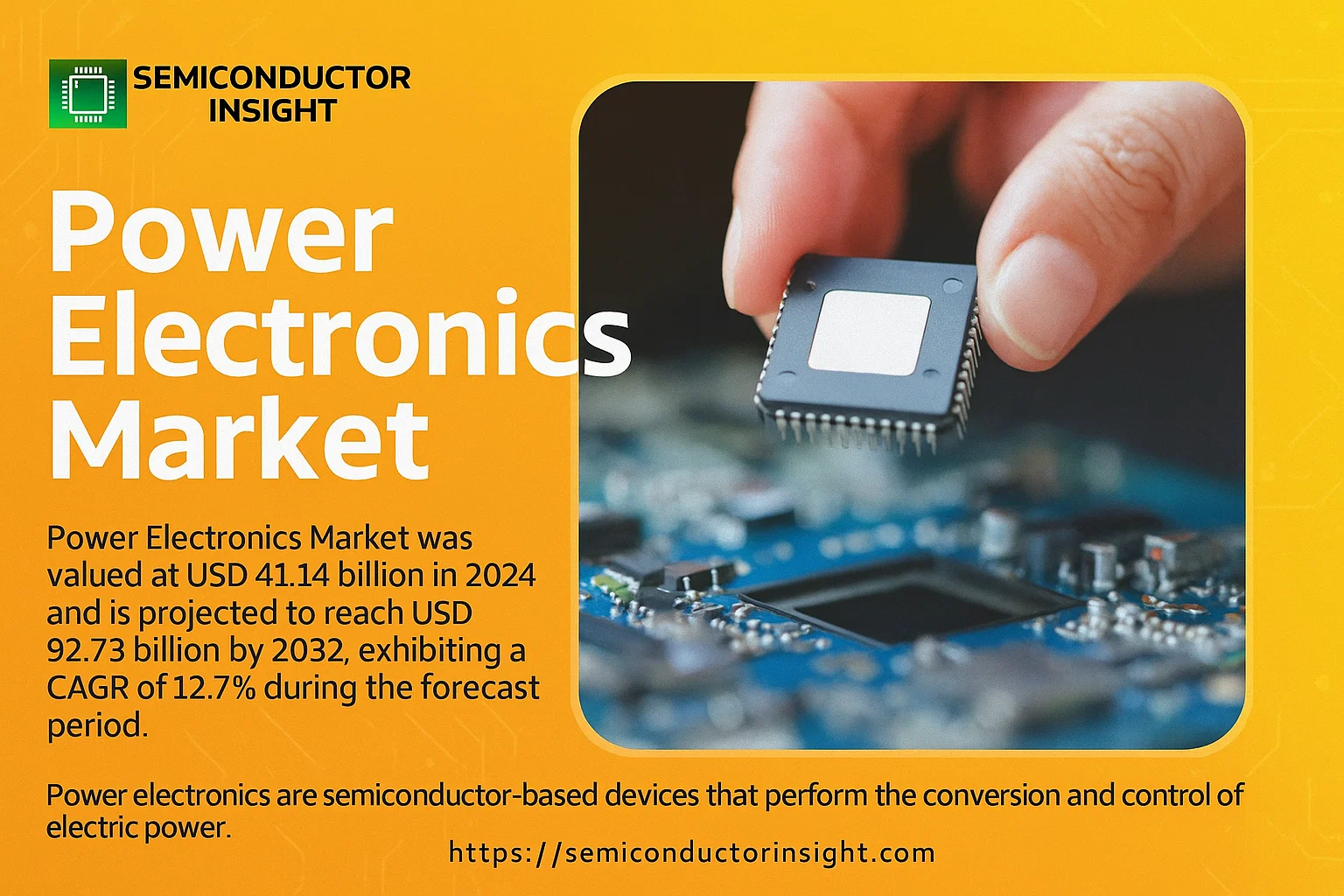
Global Power Electronics Market was valued at USD 41.14 billion in 2024 and is projected to reach USD 92.73 billion by 2032, exhibiting a CAGR of 12.7% during the forecast period.
Power electronics are semiconductor-based devices that perform the conversion and control of electric power. They encompass a range of components including power discrete devices (such as MOSFETs and IGBTs), power ICs, and power modules. These components are integral to managing and converting electrical energy efficiently in a wide variety of applications.
The market growth is primarily driven by the accelerating transition to electric vehicles (EVs) and the associated charging infrastructure, which demands high-performance power electronics for traction inverters, onboard chargers, and charging stations. The global push for renewable energy, particularly solar and wind, is another significant driver as it requires extensive use of power electronics in inverters, converters, and grid storage systems. Furthermore, the increasing demand for energy-efficient consumer electronics, industrial motor drives, and data center power supplies is contributing to market expansion. The market is also benefiting from the ongoing adoption of wide-bandgap semiconductors (like Silicon Carbide and Gallium Nitride), which offer superior performance and efficiency compared to traditional silicon-based components.
Key players in the market include Infineon Technologies, ON Semiconductor, and STMicroelectronics, who along with Mitsubishi Electric, Vishay Intertechnology, and Toshiba, are focusing on developing advanced wide-bandgap semiconductor products and expanding their manufacturing capacities to meet the growing demand.
MARKET DRIVERS
Accelerated Electrification Across Industries
The global push for electrification is a primary driver for the power electronics market. The transition to electric vehicles (EVs), renewable energy integration, and industrial automation demand highly efficient power conversion and management systems. Wide-bandgap semiconductors, such as silicon carbide (SiC) and gallium nitride (GaN), are seeing accelerated adoption due to their superior efficiency and performance in high-temperature and high-frequency applications compared to traditional silicon.
Rising Demand for Energy Efficiency
Stringent government regulations and rising energy costs worldwide are compelling manufacturers and consumers to seek more energy-efficient solutions. Power electronics are critical for reducing energy losses in applications ranging from consumer electronics to smart grids. This focus on efficiency is driving innovation in power management integrated circuits (PMICs) and advanced motor drives.
➤ The global market for SiC power semiconductors is projected to grow at a compound annual growth rate of over 30% in the coming years, reflecting the rapid adoption in automotive and industrial sectors.
Furthermore, the proliferation of 5G technology and data centers is creating substantial demand for robust and efficient power supplies and voltage regulators, solidifying the market’s growth trajectory.
MARKET CHALLENGES
Supply Chain Constraints and Material Costs
The power electronics market faces significant challenges related to the supply chain for raw materials and finished components. Geopolitical tensions and post-pandemic disruptions have impacted the availability of essential materials like silicon wafers and substrates for wide-bandgap semiconductors. Fluctuations in the prices of raw materials, including rare-earth elements used in magnetics, also pose a persistent challenge to cost stability and production planning for manufacturers.
Other Challenges
Technical Complexity and Thermal Management
Designing power electronic systems for higher power densities and efficiencies introduces significant technical hurdles. Effective thermal management is critical, as higher operating temperatures can degrade component reliability and lifespan. This requires sophisticated cooling solutions and advanced packaging technologies, increasing both design complexity and overall system cost.
Standardization and Reliability Concerns
The rapid pace of innovation, particularly with new semiconductor materials, often outpaces the development of industry-wide standards for testing and qualification. Ensuring long-term reliability and gaining customer confidence for new power devices in safety-critical applications, such as automotive and aerospace, remains a considerable challenge.
MARKET RESTRAINTS
High Initial Investment and Development Costs
The development and fabrication of advanced power electronics, especially those based on wide-bandgap semiconductors, require substantial capital investment. The costs associated with specialized manufacturing equipment, research and development, and certification processes are significant. These high barriers to entry can slow down the commercialization of new technologies and limit market participation to a few large, established players, potentially restraining overall market growth.
Cyclical Nature of End-User Industries
The power electronics market is highly dependent on demand from cyclical industries such as automotive, industrial manufacturing, and consumer electronics. Economic downturns or reduced capital expenditure in these sectors can lead to volatile demand for power electronic components, creating uncertainty for manufacturers and investors and acting as a restraining factor on steady market expansion.
MARKET OPPORTUNITIES
Expansion in Renewable Energy and Energy Storage
The global transition to renewable energy sources presents a massive opportunity for the power electronics market. Solar inverters, wind turbine converters, and battery energy storage systems (BESS) all rely heavily on advanced power electronic components for efficient energy conversion and grid integration. The increasing deployment of large-scale renewable projects and the growing residential solar market are key growth vectors.
Growth of Electric and Hybrid Vehicles
The automotive industry’s shift toward electrification is a dominant opportunity. Power electronics are the backbone of EVs, governing everything from the main traction inverter and onboard charger to the DC-DC converter. As EV production volumes increase and technology advances toward higher voltage architectures, the demand for robust, high-performance power modules and discrete devices is expected to surge dramatically.
Advent of AI and Edge Computing
The rise of artificial intelligence and the need for processing at the edge are creating new demands for efficient power delivery in compact form factors. Power management solutions for AI accelerators, GPUs, and edge data centers require unprecedented levels of efficiency and power density, opening up new avenues for innovation in voltage regulator modules (VRMs) and point-of-load (POL) converters.
Power Electronics Market Trends
Rapid Market Expansion and Dominant Applications
The global Power Electronics market is on a trajectory of significant growth, with its valuation projected to surge from $41,140 million in 2024 to $92,730 million by 2032, representing a compound annual growth rate (CAGR) of 12.7%. This robust expansion is primarily fueled by the accelerating adoption of energy-efficient technologies across numerous industries. The market is characterized by intense competition, with the top three manufacturers—Infineon, Onsemi, and STMicroelectronics—collectively holding approximately 31% of the global market share. The dominance of these key players underscores the importance of technological innovation and scale in this critical sector.
Other Trends
MOSFET Technology Leads Product Segments
Within the diverse product landscape of the Power Electronics market, MOSFETs (Silicon and Silicon Carbide) have emerged as the leading segment, accounting for nearly 15% of the market. The continued demand for MOSFETs is driven by their widespread use in applications requiring high switching speeds and efficiency, such as power supplies and motor drives. The growing adoption of wide-bandgap semiconductors like Silicon Carbide (SiC) and Gallium Nitride (GaN) is a key trend, as these materials offer superior performance over traditional silicon, enabling higher efficiency and power density in next-generation electronic systems.
Automotive and Transportation as the Key Growth Driver
The Automotive and Transportation sector stands as the largest application segment, commanding about 34% of the market. This dominance is directly linked to the global transition to electric vehicles (EVs), which extensively rely on power electronics for traction inverters, onboard chargers, and DC-DC converters. The expansion of EV charging infrastructure, including charging piles, further solidifies this segment’s leading position. Additional high-growth applications include industrial control systems, consumer electronics, and renewable energy integration, particularly in PV, energy storage, and wind power systems, highlighting the market’s pivotal role in the global shift towards electrification and sustainability.
COMPETITIVE LANDSCAPE
Key Industry Players
A Market Characterized by Strategic Consolidation and Intense R&D Focus
The global Power Electronics market is a highly competitive and concentrated space, dominated by a handful of global technology giants. The competitive landscape is led by European and Japanese semiconductor powerhouses, with Infineon Technologies, onsemi, and STMicroelectronics collectively holding approximately 31% of the market share as of 2024. These leaders have established dominance through extensive product portfolios covering a wide range of devices like IGBTs, MOSFETs, and power modules, significant investment in research and development for next-generation wide-bandgap semiconductors (SiC and GaN), and strong, long-standing relationships across key downstream sectors, particularly automotive and industrial control. Competition is intensifying as these players aggressively expand manufacturing capacity for silicon carbide (SiC) and gallium nitride (GaN) components to secure their positions in the high-growth electric vehicle and renewable energy markets.
Beyond the top three, the market includes numerous other significant global and regional players who compete by specializing in niche product segments or applications. Companies like Mitsubishi Electric (through its subsidiary Vincotech), Toshiba, and Fuji Electric are formidable competitors in the high-power module segment for industrial and rail transit applications. Meanwhile, firms such as ROHM Semiconductor, Texas Instruments, and Nexperia are key players in discrete power semiconductors and ICs for consumer electronics and automotive systems. The competitive dynamics are further shaped by regional champions, especially in Asia, with companies like Hangzhou Silan Microelectronics and China Resources Microelectronics Limited expanding their presence. The industry is also witnessing strategic mergers and acquisitions, such as Littelfuse’s acquisition of IXYS, as companies seek to broaden their technological capabilities and market reach.
List of Key Power Electronics Companies Profiled
- Infineon Technologies AG
- onsemi
- STMicroelectronics
- Mitsubishi Electric Corporation (Vincotech)
- Nexperia
- Vishay Intertechnology, Inc.
- Toshiba Electronic Devices & Storage Corporation
- Fuji Electric Co., Ltd.
- ROHM Semiconductor
- Renesas Electronics Corporation
- Diodes Incorporated
- Littelfuse, Inc. (IXYS)
- Texas Instruments Incorporated
- Wolfspeed, Inc. (formerly Cree)
- Microchip Technology Inc.
Segment Analysis:
| Segment Category | Sub-Segments | Key Insights |
| By Type |
|
MOSFET dominates the market due to its exceptional versatility and efficiency in a broad range of voltage and frequency applications, particularly in power supplies and motor drives. The transition towards silicon carbide (SiC) and gallium nitride (GaN) variants is gaining significant momentum, driven by the demand for higher efficiency, faster switching speeds, and better thermal performance in next-generation electronic systems, positioning these advanced materials as key growth drivers for the future. |
| By Application |
|
Automotives & Charging Piles is the leading application segment, fueled by the global transition to electric vehicles which requires sophisticated power management for traction inverters, onboard chargers, and DC-DC converters. The parallel expansion of charging infrastructure creates substantial demand. Furthermore, the renewable energy sector, encompassing solar, wind, and energy storage systems, represents a major high-growth area as it relies heavily on power electronics for efficient energy conversion and grid integration. |
| By End User |
|
Automotive OEMs represent the most influential end-user segment, as they are the primary drivers of innovation and volume demand for advanced power modules and discrete components. Their requirements for greater vehicle electrification, from hybrid systems to full battery electric platforms, set the performance benchmarks for the entire industry. Industrial manufacturers also constitute a critical and stable end-user base, utilizing power electronics for motor drives, robotics, and factory automation systems that require robust and reliable performance. |
| By Material Technology |
|
Silicon remains the foundational material technology due to its maturity, cost-effectiveness, and well-established manufacturing infrastructure, serving the vast majority of mainstream applications. However, Silicon Carbide and Gallium Nitride are rapidly emerging as the leading growth technologies, offering superior performance characteristics that are essential for high-power, high-frequency, and high-temperature applications in electric vehicles, fast-charging systems, and renewable energy, signaling a significant technological shift in the market. |
| By Power Rating |
|
Medium Power applications form the core of the market, encompassing a wide array of uses in industrial motor drives, automotive systems, and consumer appliances where a balance of performance, size, and cost is critical. The High Power segment is experiencing dynamic growth, driven by demanding applications in renewable energy generation, rail transportation, and industrial heavy machinery that require components capable of handling very high voltages and currents with maximum efficiency and reliability. |
Regional Analysis: Power Electronics Market
Asia-Pacific
The region’s unparalleled strength lies in its integrated supply chain, from raw silicon wafers to finished power modules. Countries like China and Taiwan are global centers for semiconductor foundries, while Japan and South Korea lead in advanced materials like silicon carbide and gallium nitride. This vertical integration ensures a reliable and cost-effective supply of critical components, attracting major global OEMs to establish production facilities and R&D centers within the region to be close to the source of innovation and manufacturing.
The explosive growth of the electric vehicle industry in China and government mandates for industrial energy efficiency are massive demand drivers. Power electronics are fundamental to EV powertrains, charging infrastructure, and industrial motor drives. Local manufacturers have become leaders in producing high-volume, cost-competitive IGBTs and MOSFETs essential for these applications, constantly pushing the boundaries on power density and thermal performance to meet the stringent requirements of next-generation transportation and automated factories.
As the world’s largest market for solar panels and wind turbines, Asia-Pacific’s demand for inverters and power conversion systems is immense. Power electronics are critical for connecting renewable sources to the grid, managing power flow, and ensuring stability. This has spurred significant investment in developing more efficient and robust solar inverters, wind turbine converters, and energy storage systems, with local companies capturing a dominant share of the global market for these essential green technologies.
The region’s thriving consumer electronics industry, from smartphones to home appliances, demands ever-smaller and more efficient power management ICs and voltage regulators. This drives continuous R&D into wide-bandgap semiconductors like GaN, which enable faster charging and higher efficiency. Leading technology companies and universities in Japan and South Korea are at the forefront of developing next-generation power electronic materials and device architectures, ensuring the region remains a hub for innovation.
North America
North America remains a critical and technologically advanced region, characterized by strong demand from the aerospace, defense, and data center sectors. The United States is a leader in high-performance, high-reliability power electronics for military applications, electric aircraft, and space systems, where quality and performance are paramount over cost. The region also experiences robust growth driven by the expansion of cloud computing infrastructure, requiring sophisticated power conversion and backup systems for massive data centers. Significant investment in renewable energy, particularly large-scale solar and wind farms, further stimulates the market for high-power inverters and grid-scale energy storage solutions, with a focus on innovation and premium products.
Europe
Europe’s power electronics market is strongly influenced by its ambitious environmental policies and leading automotive industry. The region is a pioneer in the transition to electric mobility, with stringent emission regulations pushing automakers to rapidly electrify their fleets, creating substantial demand for automotive-grade power modules and charging infrastructure components. Furthermore, Europe’s commitment to the Green Deal fosters growth in renewable energy installations, particularly offshore wind and solar, driving the need for advanced grid integration technologies. The presence of several major industrial automation companies also sustains demand for high-precision motor drives and industrial power supplies, emphasizing energy efficiency and reliability.
South America
The power electronics market in South America is developing, with growth primarily fueled by investments in energy infrastructure and industrial modernization. Countries like Brazil and Chile are focusing on expanding their renewable energy capacity, particularly wind and solar power, which increases the need for power conversion equipment. The mining industry, a significant economic sector, is adopting more efficient motor drives and power systems to reduce operational costs and environmental impact. While the market is smaller compared to other regions, urbanization and gradual industrial automation present steady opportunities for growth in power management solutions for buildings and manufacturing facilities.
Middle East & Africa
This region presents a market with diverse opportunities, largely driven by major infrastructure projects and a strategic shift towards renewable energy diversification. Gulf Cooperation Council countries are investing heavily in solar power plants to reduce dependence on hydrocarbons, creating demand for large-scale inverters and grid stabilization systems. Simultaneously, ongoing urbanization and construction projects across the region fuel demand for power electronics in building automation, HVAC systems, and data centers. In Africa, the focus is on improving electrification rates and developing industrial bases, which will gradually increase the adoption of basic to intermediate power electronic systems over the long term.
Report Scope
This market research report provides a comprehensive analysis of the Power Electronics Market , covering the forecast period 2025–2032. It offers detailed insights into market dynamics, technological advancements, competitive landscape, and key trends shaping the industry.
Key focus areas of the report include:
- Market Overview: The report begins with an overview outlining its current market scenario, key growth indicators, and industry transformation drivers. It discusses macroeconomic factors, demand–supply balance, regulatory landscape, and the strategic role of semiconductors in powering advancements across industries such as automotive, telecommunications, consumer electronics, and industrial automation.
- Market Size & Forecast: Historical data and future projections for revenue, unit shipments, and market value across major regions and segments.
- Segmentation Analysis: Detailed breakdown by product type, technology, application, and end-user industry to identify high-growth segments and investment opportunities.
- Regional Insights: Insights into market performance across North America, Europe, Asia-Pacific, Latin America, and the Middle East & Africa, including country-level analysis where relevant.
- Competitive Landscape: Profiles of leading market participants, including their product offerings, R&D focus, manufacturing capacity, pricing strategies, and recent developments such as mergers, acquisitions, and partnerships.
- Technology Trends & Innovation: Assessment of emerging technologies, integration of AI/IoT, semiconductor design trends, fabrication techniques, and evolving industry standards.
- Market Drivers & Restraints: Evaluation of factors driving market growth along with challenges, supply chain constraints, regulatory issues, and market-entry barriers.
- Stakeholder Insights: Insights for component suppliers, OEMs, system integrators, investors, and policymakers regarding the evolving ecosystem and strategic opportunities.
Primary and secondary research methods are employed, including interviews with industry experts, data from verified sources, and real-time market intelligence to ensure the accuracy and reliability of the insights presented.
FREQUENTLY ASKED QUESTIONS:
What is the current market size of Power Electronics Market?
-> Global Power Electronics Market was valued at USD 41,140 million in 2024 and is projected to reach USD 92,730 million by 2032, exhibiting a CAGR of 12.7% during the forecast period.
Which key companies operate in Power Electronics Market?
-> Key players include Infineon, Onsemi, STMicroelectronics, Mitsubishi Electric (Vincotech), Nexperia, Vishay Intertechnology, Toshiba, Fuji Electric, Rohm, and Renesas Electronics, among others. The top three companies hold a combined market share of about 31%.
What are the key growth drivers?
-> Key growth drivers include rising demand across automotive and transportation sectors, advancements in consumer electronics, expansion of renewable energy infrastructure, and increasing adoption of industrial automation.
Which region dominates the market?
-> Asia is a dominant region in the Power Electronics market, with China being a major contributor. The region’s growth is fueled by strong manufacturing bases and high demand from end-use industries.
What are the emerging trends?
-> Emerging trends include the adoption of wide-bandgap semiconductors like SiC and GaN, integration of power electronics in electric vehicle charging infrastructure, and the development of energy-efficient solutions for data centers and renewable energy systems.

Get Sample Report PDF for Exclusive Insights
Report Sample Includes
- Table of Contents
- List of Tables & Figures
- Charts, Research Methodology, and more...
 Download Sample Report PDF