
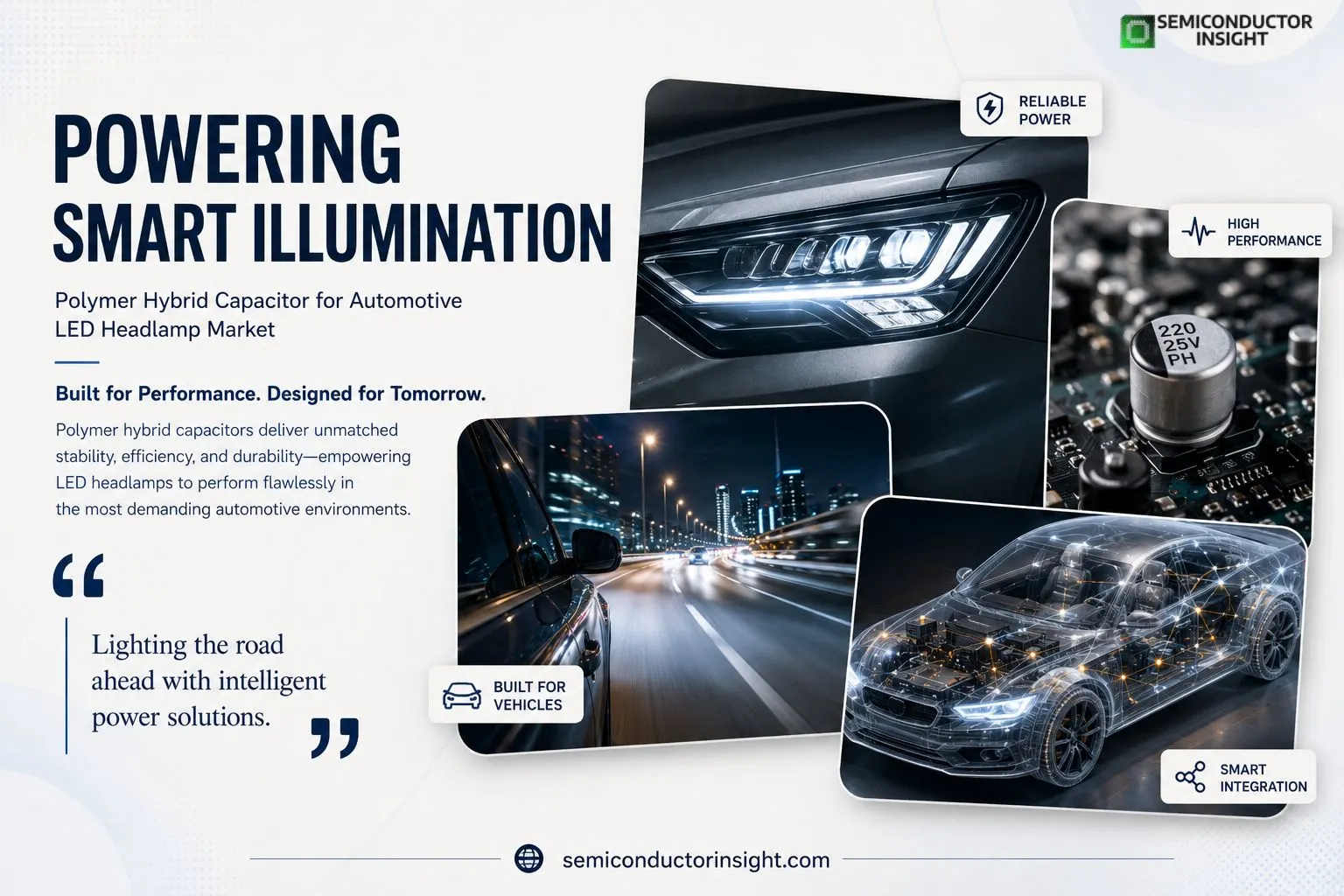
Engineering Advantages of Polymer Hybrid Capacitor Technology within Automotive LED Headlamp Circuits
Polymer hybrid capacitors have carved a vital niche in automotive electronics, particularly within the demanding environment of LED headlamp power supplies. These components blend the high capacitance of traditional electrolytic designs with the low equivalent series resistance (ESR) and stability of conductive polymer technology, delivering robust performance under vibration, temperature extremes, and high ripple currents typical in vehicle lighting circuits.
In LED headlamp applications, these capacitors stabilize voltage in DC-DC converters and boost circuits, preventing flicker and ensuring consistent illumination even during rapid power fluctuations from the vehicle’s electrical system. Manufacturers like Nichicon highlight their use in LED headlights alongside ECUs and braking systems, where reliability over extended temperature ranges proves essential.
The Technical Edge in Harsh Automotive Conditions
- Hybrid polymer aluminum electrolytic capacitors stand out for their ability to handle high ripple currents in compact packages.
- This characteristic allows engineers to reduce the number of parallel components in power circuits for headlamps, saving space and weight while enhancing overall system durability.
- In automotive settings, where temperatures can swing dramatically and vibrations are constant, these devices maintain low ESR values, minimizing heat generation and extending operational life.
- Wikipedia notes that hybrid types combine solid polymer electrolyte with liquid elements, achieving superior performance metrics compared to standard electrolytics.
- This hybrid construction supports higher withstand voltages and better endurance, critical for matrix LED or adaptive driving beam (ADB) systems that dynamically adjust light patterns for safety and efficiency.
Integration with Advanced Vehicle Electronics
Modern LED headlamps go beyond basic illumination. They incorporate sensors, cameras, and control units for features like automatic high-beam adjustment and glare-free lighting. Polymer hybrid capacitors contribute here by providing stable power delivery to these integrated modules, supporting faster response times and precise current control. Their vibration resistance up to high g-forces makes them suitable for placement near engines or suspension areas where space constraints are tight.
Case examples from industry implementations show these capacitors replacing multiple multilayer ceramic capacitors (MLCCs) in output stages of boost converters for headlights. One documented approach used hybrid devices to replace several large-case MLCCs, simplifying the design while improving thermal management and reliability in the compact headlamp assembly.
Energy Efficiency and Regulatory Alignment
Automotive LED lighting aligns with global pushes for energy conservation. LED headlamps consume significantly less power than older halogen or HID systems, extending battery range in electric vehicles and reducing overall vehicle emissions.
Hybrid capacitors enhance this efficiency by lowering power losses in the driver circuitry. Government initiatives worldwide promote such advancements through vehicle efficiency standards, indirectly boosting adoption of high-performance passives like these capacitors.
Don’t Forget to Surf Our Updated Report for More Detailed Analysis: https://semiconductorinsight.com/report/polymer-hybrid-capacitor-for-automotive-led-headlamp-market/
Smart Connectivity and System Synergies
How Leading Lighting Solutions Mesh with Connected Vehicle Ecosystems?
Premium automotive lighting providers excel when paired with broader smart ecosystems. Companies specializing in adaptive LED matrices often integrate seamlessly with vehicle infotainment and home connectivity platforms.
For instance, systems from major German and Japanese automakers allow headlamp data to feed into broader vehicle networks, enabling over-the-air updates and synchronization with smart home hubs for features like remote diagnostics or personalized lighting profiles upon approach. This convergence turns the headlamp into an active node within the Internet of Vehicles, enhancing safety through real-time environmental awareness.
Material Innovations Driving Performance Gains
- Ongoing developments focus on elevating temperature ratings and ripple current capabilities.
- Newer hybrid series operate reliably at 105°C or higher for 10,000 hours, addressing the heat buildup in tightly sealed headlamp housings.
- Conductive polymer enhancements further reduce leakage current, preserving energy in always-on or standby modes common in modern vehicles.
Real-world deployments in mild-hybrid and full EV platforms demonstrate how these capacitors support 48V architectures, where stable power management is paramount for lighting alongside other electrified systems like power steering or pumps. Their compact size aids in overall vehicle lightweighting efforts, contributing to better range and handling.

Comments (0)