
How the Electrochemical Phosphine Sensor Market is Reshaping Industrial Monitoring?
Phosphine, a colorless and highly toxic gas, has long been used in semiconductor doping, fumigation, and specialty chemical processes. What has changed recently is not the gas itself, but the urgency around detecting it at extremely low concentrations. Electrochemical phosphine sensors are emerging as a silent backbone of safety systems, especially in semiconductor fabs where even a few parts per million can disrupt processes or endanger workers.
In fabrication units handling silicon wafers, phosphine is commonly used in ion implantation and diffusion processes. A single leak incident in controlled environments can halt production lines worth millions of dollars per day. This has pushed manufacturers to integrate compact, highly responsive sensors directly into equipment rather than relying only on ambient monitoring systems.
Semiconductor Fabrication Floors Driving Sensor Miniaturization
- Modern semiconductor facilities are no longer just cleanrooms; they are hyper-controlled ecosystems where gas detection must match nanometer-scale precision.
- Electrochemical phosphine sensors are now being engineered with MEMS-compatible designs, allowing them to be embedded into wafer processing tools.
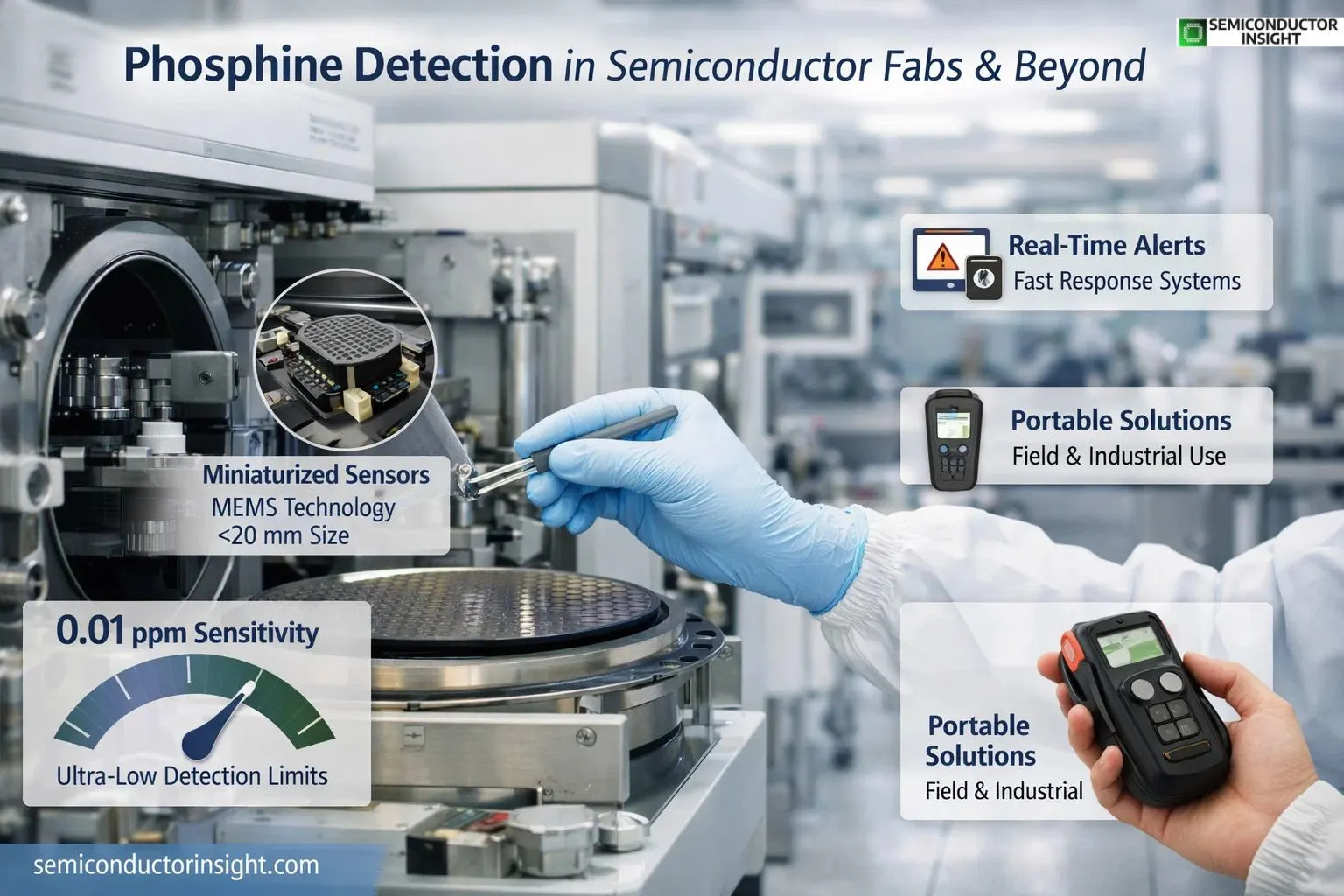
- Recent advancements show sensors shrinking to sizes below 20 mm while maintaining detection limits as low as 0.01 ppm. This level of sensitivity is critical when dealing with advanced nodes like 5 nm and below, where contamination risks directly impact chip yield.
- Equipment manufacturers are increasingly embedding these sensors into gas cabinets and delivery lines, ensuring real-time shutoff capabilities.
Material Science Breakthroughs Enhancing Detection Accuracy
The core of electrochemical sensors lies in their electrode materials and electrolyte stability. Researchers are experimenting with nanostructured catalysts and advanced polymers to improve selectivity against interfering gases like ammonia or hydrogen sulfide.
For instance, platinum-based electrodes combined with ionic liquid electrolytes are showing improved stability across temperature variations from -20°C to 50°C. This is particularly useful in outdoor industrial setups such as grain storage facilities, where phosphine is used as a fumigant and environmental conditions fluctuate significantly.
Check out the full report for extended market insights: https://semiconductorinsight.com/report/electrochemical-phosphine-sensor-market/
Real World Incidents Reshaping Safety Protocols
Industrial safety regulations are often reactive, and phosphine detection is no exception. In recent years, multiple fumigation-related exposure cases in agricultural warehouses across Asia and North America have led to stricter monitoring requirements.
One notable example involved a storage facility where phosphine levels exceeded 2 ppm due to improper ventilation. Workers reported respiratory distress within minutes, prompting regulatory bodies to mandate continuous monitoring systems rather than periodic checks. As a result, demand for portable and wearable electrochemical phosphine sensors has increased significantly, especially in logistics and food storage industries.
Integration with Smart Monitoring Ecosystems
Electrochemical phosphine sensors are no longer standalone devices. They are becoming integral nodes in connected industrial ecosystems. With IoT integration, these sensors now transmit real-time data to centralized dashboards, enabling predictive maintenance and automated alerts.
In semiconductor fabs, sensor networks are linked with AI-driven control systems that can trigger immediate process shutdowns or ventilation adjustments. Some facilities report response times under 2 seconds from detection to corrective action, significantly reducing risk exposure.
Portable Detection Meets Cost Efficient Scaling in Modern Sensor Adoption
- Electrochemical phosphine sensing is no longer confined to fixed industrial setups; it is rapidly expanding into portable, field-ready solutions while simultaneously becoming more economically viable for widespread use.
- Compact detectors, often weighing under 300 grams, now offer continuous monitoring for up to 24 hours on a single charge, making them highly practical for on-ground operations. Agricultural inspectors and pest control teams increasingly depend on these handheld devices during fumigation cycles, where real-time detection is essential to prevent hazardous exposure.
- In India, large-scale grain storage facilities operated under government systems are steadily integrating such portable sensors to safeguard workers handling bulk produce during phosphine-based treatments.
- At the same time, the economics behind these sensors have shifted significantly, enabling broader adoption beyond large semiconductor facilities.
- Advances in semiconductor manufacturing, particularly wafer-level production techniques, have reduced integration costs by nearly 30% over the past five years. This shift has made high-precision phosphine detection accessible to mid-sized industries that previously relied on basic safety measures. Improved scalability in production has also extended sensor lifespans to around 2 to 3 years, lowering maintenance cycles and replacement expenses.
- The result is a balanced ecosystem where portability and affordability work together, accelerating the deployment of reliable phosphine monitoring across both industrial and field environments.
Calibration Intelligence and Long Term Reliability
One of the biggest challenges historically has been sensor drift. Modern electrochemical phosphine sensors are now equipped with self-calibration features using embedded microcontrollers. These systems can adjust baseline readings automatically, ensuring accuracy over extended periods.
Some advanced units incorporate dual-sensor redundancy, where one sensor continuously validates the other. This approach is particularly useful in mission-critical environments like semiconductor cleanrooms, where even minor inaccuracies can lead to false alarms or missed detections.
Expanding Relevance beyond Traditional Industries
While semiconductors and agriculture remain primary users, new applications are emerging. Waste management facilities, renewable energy plants, and even shipping containers are now being equipped with phosphine detection systems.
With global trade increasing, phosphine is often used to protect goods during transit. Monitoring its presence inside containers ensures compliance with safety standards before unloading, protecting workers at ports and logistics hubs.

Comments (0)