

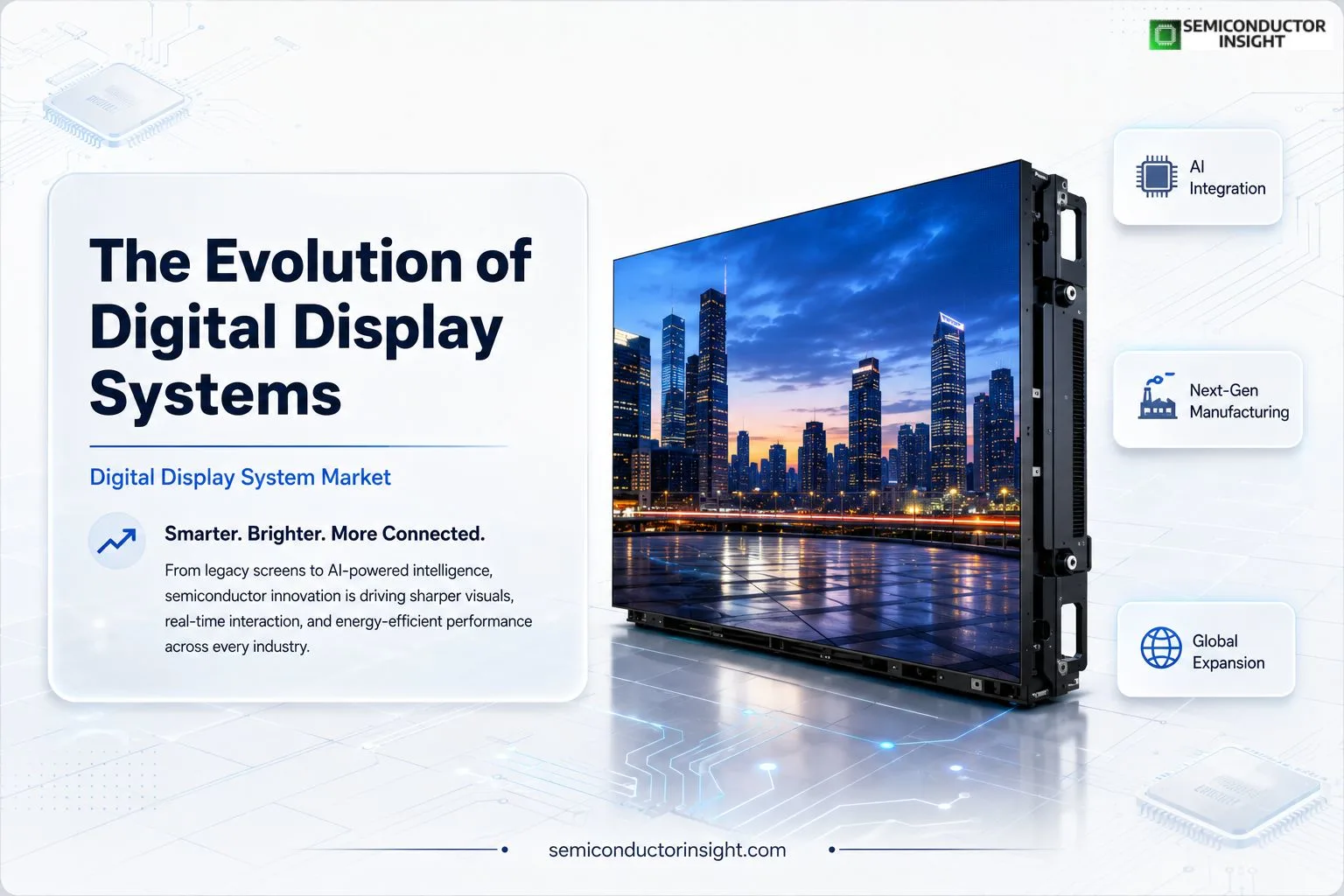
Digital Display System Market Adapts to 5G with Specialized Semiconductor Modules
Digital display systems have come a long way since the days of bulky cathode-ray tubes that dominated airports and stock exchanges for decades. Modern setups rely heavily on semiconductor technologies thin-film transistors, light-emitting diodes, and integrated circuits that make vibrant, responsive visuals possible in everything from retail stores to public transit hubs. These systems deliver everything from real-time flight updates to interactive museum exhibits, blending hardware precision with software smarts.
Early electronic displays used electromechanical flags or Nixie tubes for simple numeric readouts, but the shift to solid-state semiconductors opened the floodgates. Metal-oxide-semiconductor field-effect transistors (MOSFETs) and integrated circuits allowed millions of pixels to work together seamlessly, turning static signs into dynamic multimedia platforms. Wikipedia traces this evolution, noting how liquid crystal displays (LCDs) and later organic light-emitting diodes (OLEDs) displaced older tech thanks to semiconductor advancements in the late 20th century.
Real-World Deployments Shaping Global Adoption
- Consider transportation centers worldwide. Digital passenger information systems in European rail networks use low-power electronic paper displays backed by semiconductor controllers to show timetables that update infrequently yet remain visible under varying light conditions. One provider serving government agencies integrated e-paper solutions to cut electricity costs significantly in smart city projects, where displays run for years on minimal energy.
- In the United States, government offices have rolled out networked digital signage for visitor wayfinding and emergency alerts. Munich’s regional administrative center, handling thousands of daily visitors, deployed hundreds of managed displays for navigation and announcements, improving flow and reducing staff workload. Similar setups appear in U.S. federal buildings, where centralized content systems push real-time safety information during incidents.
- Retail environments tell another story. Large LED video walls in shopping malls leverage semiconductor-driven driver chips for seamless content switching, while interactive kiosks in stores let customers browse inventories via touch interfaces powered by embedded processors. These installations often incorporate audience sensors again relying on semiconductor vision chips to tailor promotions based on foot traffic patterns without storing personal data.
Emerging Technologies Elevating Performance
MicroLED stands out as a game-changer. Unlike traditional LCDs needing backlights, each microscopic LED pixel in these arrays acts as its own light source, promising higher brightness, better contrast, and longer lifespans. Semiconductor fabrication techniques enable precise placement of these tiny emitters, suiting large-format digital signage in stadiums or outdoor billboards that must perform in direct sunlight. Research highlights ongoing efforts to scale production, with prototypes already demonstrating superior efficiency over OLED in high-luminance scenarios.
- OLED technology, matured through semiconductor organic layers, delivers perfect blacks and flexible form factors ideal for curved or wearable displays.
- Manufacturers integrate thin-film transistor backplanes semiconductor circuits controlling each pixel to achieve fast response times crucial for video content in digital signage.
- Transparent variants even allow viewers to see through displays while viewing overlaid information, opening doors for augmented retail windows or vehicle dashboards.
Energy efficiency gains matter immensely for large deployments. Semiconductor optimizations in power management chips help displays consume far less electricity than older plasma or CRT systems, supporting 24/7 operation in public spaces. Government-led smart city initiatives often prioritize these traits to lower operational costs and environmental footprints.
Integration with Broader Tech Ecosystems
Digital display systems no longer operate in isolation. Semiconductors enable IoT connectivity, letting displays pull live data from weather services, traffic feeds, or inventory databases. In airports, for instance, semiconductor-powered media players sync flight boards with gate changes instantly. Content management software running on robust processors allows remote scheduling across thousands of screens worldwide.
Interactive features shine here too. Touch overlays combined with gesture recognition chips turn passive viewers into active participants think museum kiosks where visitors explore exhibits or hospital displays guiding patients. Audience measurement tools using anonymized computer vision (powered by edge semiconductor processors) help operators refine content without privacy risks.
Military and industrial applications demand ruggedness. High-performance semiconductor displays withstand vibration, extreme temperatures, and shock in vehicles or command centers, delivering critical data reliably where failure isn’t an option.
Stay connected for additional in-depth information right here: https://semiconductorinsight.com/report/digital-display-system-market/
Challenges and Forward Momentum
Scaling advanced technologies like MicroLED involves manufacturing hurdles around yield rates and costs, but semiconductor industry progress in precision assembly continues to address them. Supply chain resilience for key materials also influences rollout speeds globally, especially as nations invest in domestic production capabilities.
Hybrid approaches mixing digital with traditional elements bridge gaps in cost-sensitive areas. Meanwhile, 5G and edge computing semiconductors accelerate low-latency updates, making displays more responsive in fast-paced environments like sports venues or emergency response coordination.
The digital display system market continues evolving through these semiconductor innovations, creating more engaging, efficient, and intelligent visual communication tools. From government buildings sharing vital updates to commercial spaces captivating customers, the fusion of semiconductor prowess with display hardware delivers experiences that inform, entertain, and connect people worldwide. As fabrication techniques refine further, expect even more immersive and sustainable solutions to emerge in the coming years.

Comments (0)