
Integrated Flight Systems Expanding the Cockpit Display Market
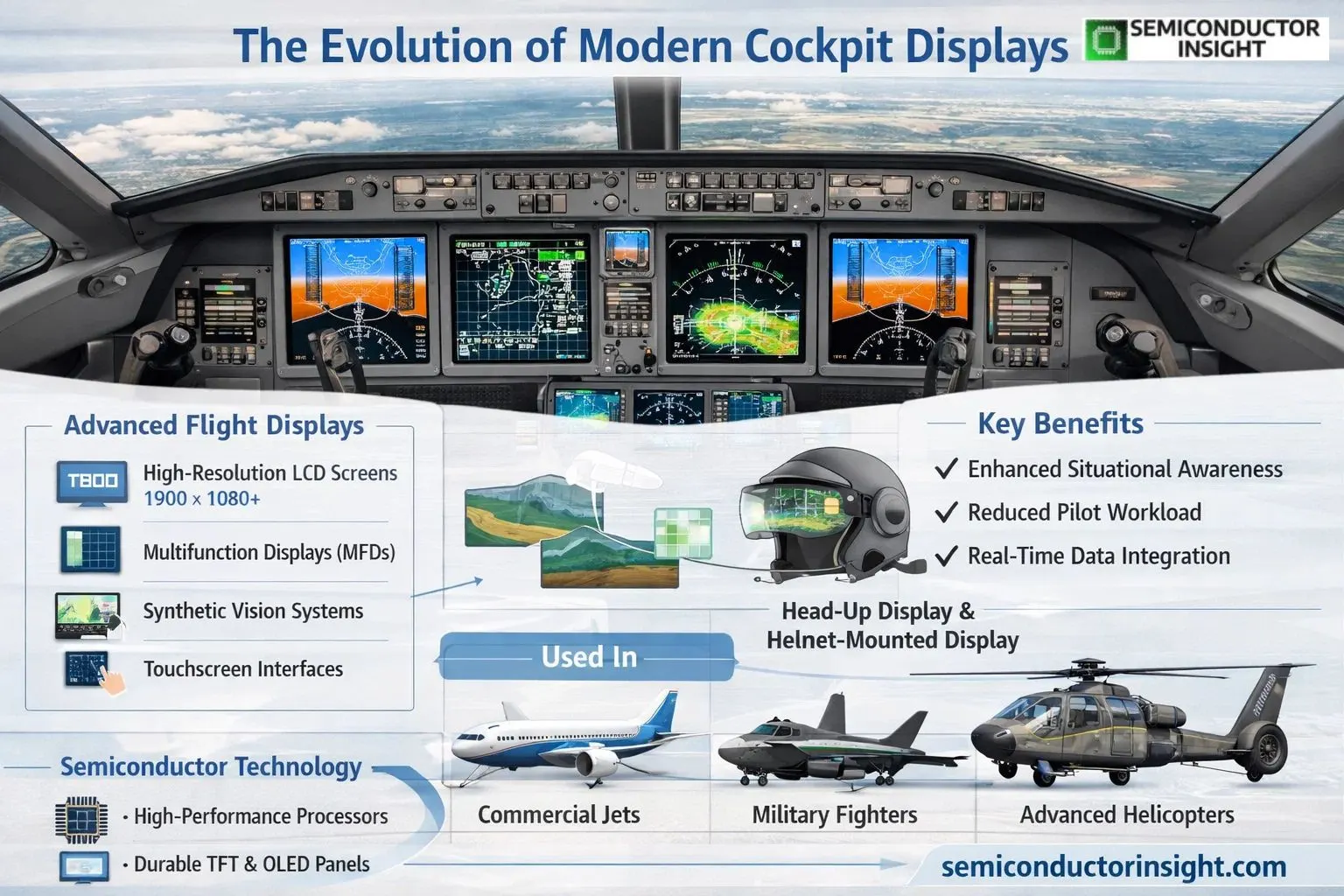
Aircraft cockpits have undergone a remarkable technological transformation over the last few decades. Traditional analog gauges and mechanical instruments are increasingly being replaced by digital flight displays that integrate multiple data sources into a single interface. These modern avionics systems form the foundation of Cockpit Display Market, where advanced semiconductor display panels, processors, and graphics technologies enable pilots to access critical flight information in real time.
Today’s commercial and military aircraft rely heavily on glass cockpit systems that use high-resolution LCD or LED display panels. These screens combine navigation data, engine performance metrics, weather radar information, and flight management system outputs into a single digital environment. The integration of these functions significantly reduces pilot workload while improving situational awareness during complex flight operations.
According to aviation technology publications, more than 90% of newly manufactured commercial aircraft now feature digital glass cockpit systems rather than traditional analog instrumentation. This transition reflects the broader shift toward digitized avionics powered by semiconductor-based display technologies.
Semiconductor Display Technologies Powering Modern Avionics
Semiconductors play a crucial role in cockpit display systems because they enable high-performance graphics processing and durable display hardware capable of operating in demanding environments. Flight displays must function reliably across extreme temperatures, high altitudes, and strong vibration conditions.
Modern cockpit displays often use thin-film transistor LCD panels or active-matrix displays designed specifically for aviation electronics. Some advanced systems support resolutions exceeding 1900 × 1080 pixels, allowing pilots to view detailed maps, terrain graphics, and flight data simultaneously.
Another key innovation involves multifunction displays (MFDs) and primary flight displays (PFDs). In many aircraft, a cockpit may contain 4 to 6 integrated digital screens, each dedicated to navigation, flight parameters, or engine monitoring. This modular layout ensures that critical flight information remains accessible even if one display fails.
Semiconductor graphics processors also enable synthetic vision systems that generate three-dimensional terrain imagery for pilots, helping improve safety during low-visibility conditions such as heavy fog or night-time landings.
Feel Free to Reach Our Most Recent Updates of the Report: http://semiconductorinsight.com/report/cockpit-display-market/
Aviation Safety and Data Visualization Advancements
- One of the major advantages of digital cockpit displays is their ability to present complex information in a clear visual format. Instead of scanning dozens of analog gauges, pilots can interpret flight data through color-coded alerts, graphical indicators, and interactive navigation maps.
- Studies from aviation safety organizations indicate that advanced display systems can improve pilot situational awareness by nearly 35% in high-workload flight conditions. These improvements are particularly valuable during takeoff, landing, and emergency scenarios.
- Modern avionics also incorporate touch interfaces and customizable layouts. Pilots can reorganize display information based on flight phase or mission requirements. Some military aircraft systems allow mission data, targeting information, and navigation maps to appear simultaneously on a single screen.
- Another growing trend is the integration of head-up displays and helmet-mounted displays that project flight information directly into the pilot’s field of view. These technologies complement cockpit displays and further enhance operational awareness.
Recent Industry Developments and Aircraft Examples
The Boeing 777X, one of the newest wide-body aircraft under development, features large touchscreen cockpit displays designed to provide improved data visualization and pilot interface efficiency. The flight deck integrates multiple high-resolution digital panels to streamline flight operations.
Similarly, the Airbus A350 uses advanced glass cockpit technology with large integrated displays that allow pilots to monitor flight systems through centralized digital dashboards. The aircraft’s cockpit includes several multifunction screens that combine navigation, flight control, and aircraft system information.
In military aviation, the Lockheed Martin F-35 Lightning II represents one of the most advanced cockpit display implementations. The fighter jet uses a panoramic cockpit display system that spans nearly 50 centimeters across the flight deck, enabling pilots to view mission data, radar information, and navigation maps on a single integrated screen.
Expanding Role of Integrated Avionics Systems
As aviation technology evolves, cockpit displays are becoming increasingly connected with other aircraft systems. Modern flight decks integrate display panels with autopilot systems, weather radar, satellite navigation, and aircraft health monitoring platforms.
In many aircraft, avionics networks now process thousands of data signals every second to deliver real-time information to cockpit screens. Some advanced aircraft systems can manage more than 300 flight parameters simultaneously, ensuring that pilots receive comprehensive operational data throughout the flight.
The ongoing advancement of glass cockpit systems, high-performance semiconductors, and integrated avionics software continues to shape the future of digital aviation technology. As aircraft manufacturers adopt larger displays, better graphics processors, and smarter flight interfaces, cockpit displays will remain a central component of next-generation flight decks.

Comments (0)