
CHIPS Act and Global Supply Initiatives 2026: Advancing Domestic IR Sensor Manufacturing Capabilities
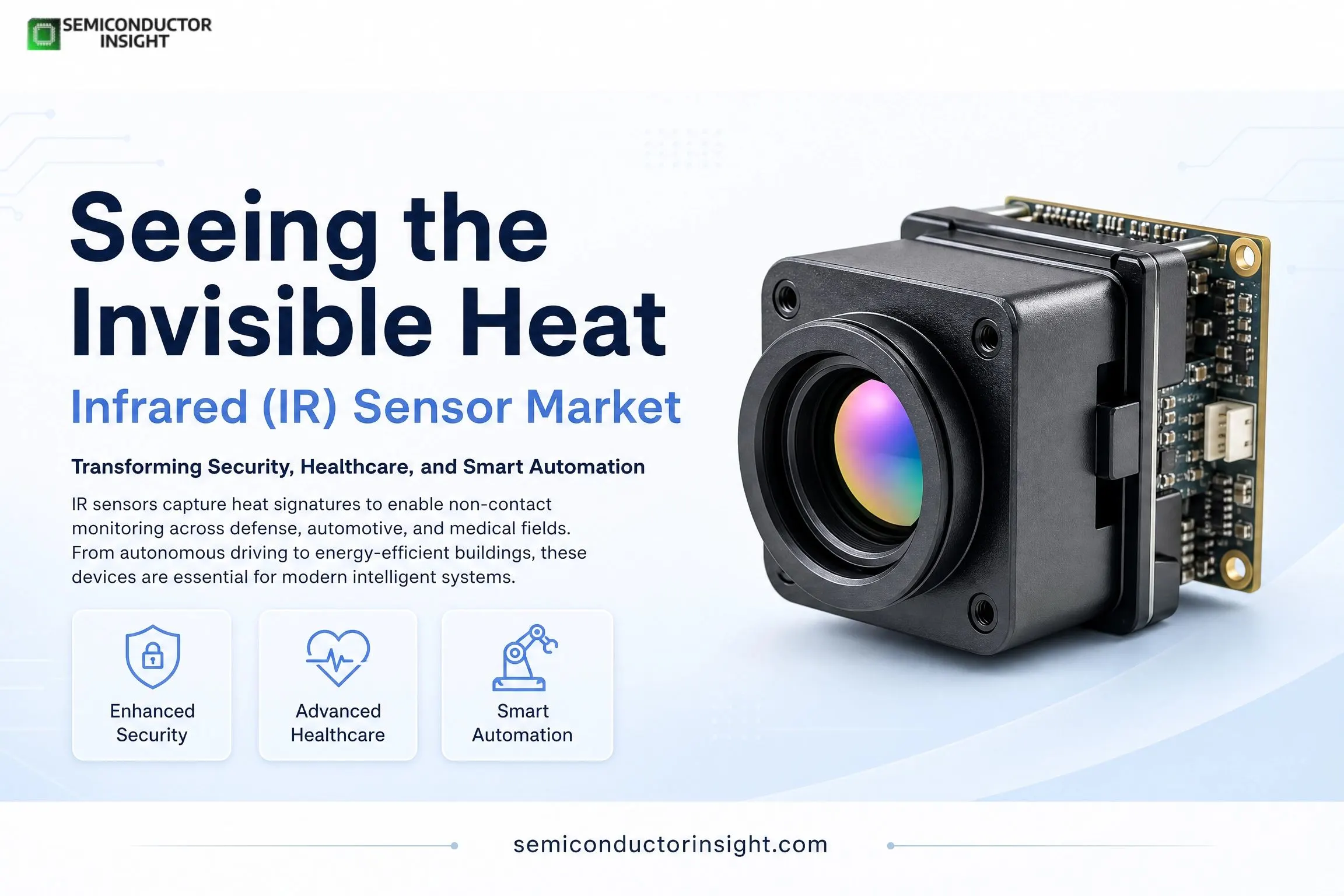
Infrared sensors capture heat signatures invisible to the human eye, converting thermal radiation into usable electronic signals. These devices operate across various wavelength bands, enabling detection of temperature differences as small as fractions of a degree.
Their non-contact nature makes them invaluable for scenarios where physical interaction is impractical or unsafe, from monitoring industrial machinery to supporting medical screenings.
Defense Applications and National Security Integration
Military organizations worldwide deploy IR sensors extensively for surveillance, target acquisition, and threat detection. Systems mounted on vehicles, aircraft, and handheld units provide critical situational awareness during low-visibility conditions.
Raytheon and Lynred deliver high-performance cooled detectors used in advanced missile warning and reconnaissance platforms, while Teledyne contributes specialized imaging solutions for aerospace defense contracts. These technologies often incorporate cryogenic cooling to enhance sensitivity for long-range operations.
- Medical and Healthcare Deployment Examples
- Hospitals and clinics increasingly rely on IR sensors for fever screening and diagnostic imaging. Contactless thermometers and thermal cameras help identify elevated body temperatures rapidly, proving especially useful during public health responses.
- Companies like Melexis and ams OSRAM supply compact, accurate components integrated into wearable monitors and clinical equipment, supporting continuous patient observation without discomfort.
- Recent implementations in emergency departments demonstrate faster triage processes during peak demand periods.
- Automotive Safety and Autonomous Driving Systems
- Modern vehicles incorporate IR sensors for pedestrian detection, blind-spot monitoring, and adaptive cruise control enhancements, particularly in adverse weather or darkness.
- Panasonic and Omron provide reliable modules that feed data into driver assistance systems, improving reaction times.
- Ongoing tests in autonomous fleets show these sensors complementing visible-light cameras by delivering consistent performance where lidar or radar might face limitations due to environmental factors.
Industrial Monitoring and Process Optimization
Factories use IR sensors to detect hotspots in electrical panels, monitor pipeline integrity, and ensure quality control in manufacturing lines. InfraTec and Honeywell offer rugged solutions capable of operating in harsh environments, helping maintenance teams identify issues before failures occur. Case examples from steel plants and chemical facilities highlight reductions in unplanned downtime through continuous thermal mapping of critical equipment.
Environmental and Scientific Research Contributions
Scientists employ IR sensors for climate monitoring, volcano activity tracking, and ecosystem studies. Satellite-based systems and ground stations utilize components from Hamamatsu Photonics to measure surface temperatures and gas concentrations over vast areas. Murata Manufacturing supplies miniaturized sensors for portable field instruments used in biodiversity surveys, allowing researchers to gather data in remote locations with minimal disturbance.
To find out more, feel free to browse our latest updated report: https://semiconductorinsight.com/report/infrared-ir-sensor-market-3/
Consumer and Smart Home Innovations
Infrared (IR) technology has become a fundamental component of modern smart homes, enabling devices to respond intelligently to occupancy, movement, and environmental changes while improving convenience and energy efficiency. Advanced IR sensors are now integrated into smart thermostats, security cameras, video doorbells, smart lighting systems, robotic vacuum cleaners, and home appliances to deliver real-time automation without relying solely on cameras or microphones.
Companies such as TE Connectivity, Texas Instruments, and other sensor manufacturers continue developing compact, low-power IR sensing solutions that support occupancy detection, gesture recognition, and thermal monitoring. For example, smart thermostats equipped with passive infrared (PIR) sensors can automatically adjust heating and cooling based on room occupancy, reducing unnecessary energy consumption. Similarly, IR-enabled lighting systems activate only when movement is detected, helping minimize electricity usage in residential and commercial buildings.
Building Automation and Energy Efficiency Uses
- Infrared sensing has become an essential technology in modern commercial buildings, industrial facilities, hospitals, educational institutions, and public infrastructure, where maintaining energy efficiency and occupant comfort are key operational priorities. Networks of IR sensors continuously monitor occupancy, temperature variations, and thermal anomalies, enabling building management systems to optimize heating, ventilation, and air conditioning (HVAC) operations in real time.
- Commercial buildings increasingly use thermal imaging and IR monitoring to detect insulation defects, overheating electrical equipment, air leakage, and mechanical faults before they develop into costly failures. Predictive maintenance supported by thermal sensing helps facility managers schedule repairs proactively while minimizing equipment downtime.
- The U.S. Department of Energy estimates that HVAC systems account for approximately 35% to 40% of total energy consumption in commercial buildings, highlighting the significant opportunity for intelligent sensor-driven optimization. Furthermore, the International Energy Agency reports that buildings contribute nearly 37% of global energy-related CO₂ emissions when operational and construction activities are combined. By integrating IR sensors with artificial intelligence and cloud-based building management platforms, organizations can significantly improve energy efficiency while maintaining indoor environmental quality.
- Several smart city initiatives across Europe, Asia, and North America are also deploying interconnected IR sensor networks to monitor public buildings, transportation hubs, and municipal infrastructure. These projects generate continuous thermal data that supports district-level energy planning, infrastructure maintenance, and sustainability initiatives aimed at reducing urban energy consumption.
Gesture Recognition and Human-Machine Interfaces
Infrared sensing is transforming the way people interact with machines by enabling touchless, intuitive, and highly responsive human-machine interfaces (HMIs). Unlike conventional touchscreens, IR-based gesture recognition allows users to control equipment using simple hand movements, reducing physical contact while improving usability in environments where hygiene, safety, or accessibility are critical.
This technology is increasingly being incorporated into public information kiosks, interactive retail displays, gaming consoles, collaborative robots, automotive infotainment systems, industrial control panels, and medical devices. In healthcare environments, touchless IR interfaces have gained particular importance by allowing surgeons, clinicians, and laboratory personnel to navigate digital imaging systems or adjust equipment settings without removing protective gloves or contaminating sterile environments.

Comments (0)