
Automotive Wire Harnessing Tape Market Transforming Vehicle Safety and Connectivity
In today’s automotive landscape, vehicles are no longer just mechanical machines they are complex electronic ecosystems. From infotainment systems to advanced driver assistance technologies, the demand for structured, protected wiring has never been higher. This is where automotive wire harnessing tapes quietly play a critical role.
These tapes are not just used for bundling wires; they ensure insulation, protect against abrasion, reduce noise, and maintain long-term reliability. As wiring architectures grow denser and more advanced, the importance of high-performance harnessing tapes continues to rise.
Rising Wiring Density Is Reshaping Tape Demand
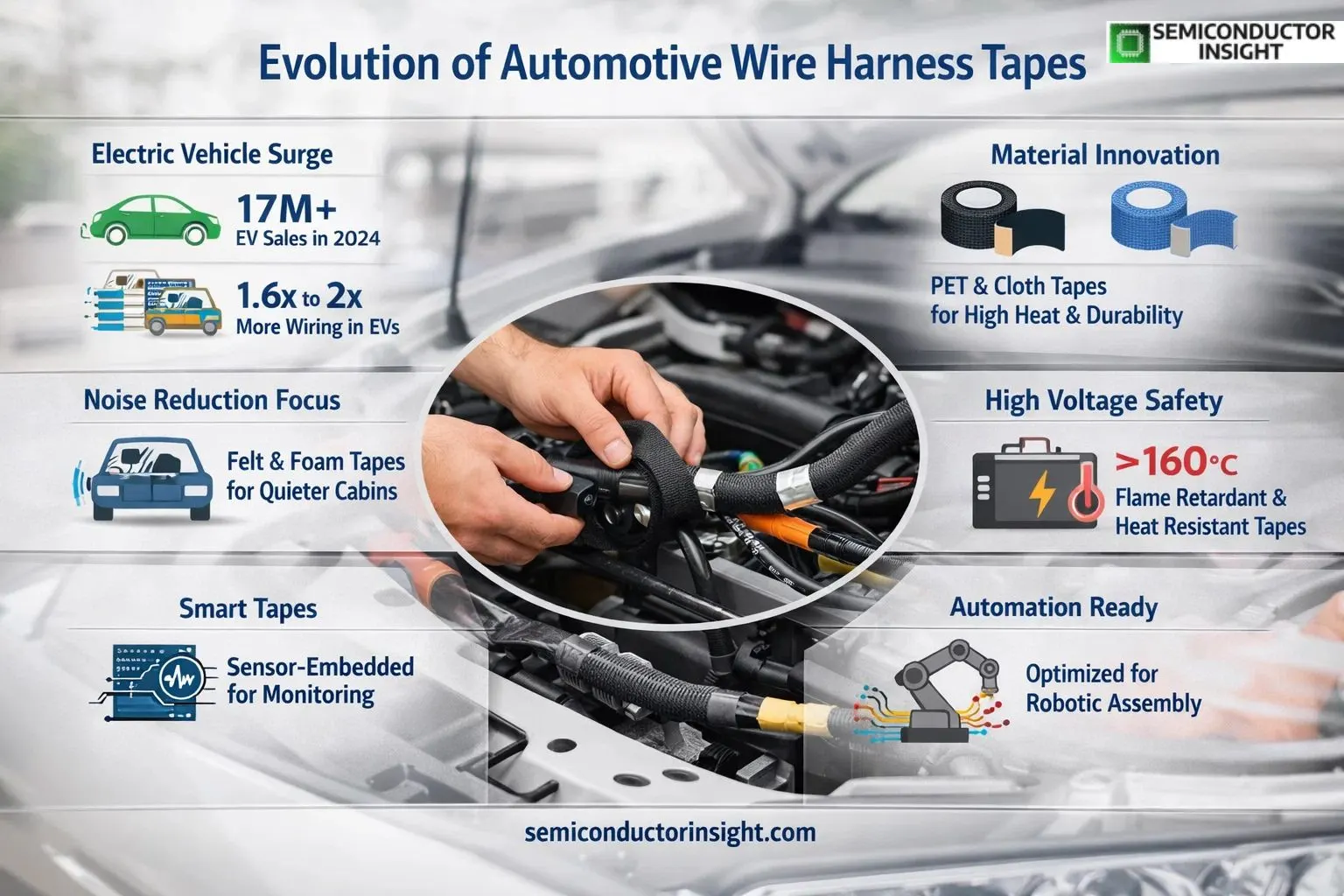
- Modern vehicles are witnessing a sharp increase in wiring complexity. According to the International Energy Agency, electric car sales crossed 17 million units in 2024, accounting for over 20% of total vehicle sales globally.
- This shift directly impacts tape consumption. Electric vehicles require 6 to 2 times more wiring compared to internal combustion vehicles, significantly increasing the need for insulation and protection materials.
- Additionally, the average EV uses approximately 6.8 square meters of wire harness tape, compared to 4.1 square meters in conventional vehicles, highlighting how electrification is intensifying material demand.
Material Innovation Becoming a Competitive Differentiator
Material science is becoming central to this market. Traditional PVC tapes still dominate due to affordability and insulation efficiency, but they face limitations in high-temperature environments.
Newer materials such as PET and cloth-based tapes are gaining preference because of their superior heat resistance, durability, and abrasion protection, especially in EV battery systems and high-voltage zones.
In fact, cloth tapes alone contribute to nearly 35% of usage in automotive applications, driven by their flexibility and noise-dampening capabilities.
Manufacturers are increasingly investing in multi-layer and hybrid adhesive technologies to combine insulation, cushioning, and vibration resistance into a single solution reducing assembly complexity while improving performance.
Noise Reduction and Cabin Comfort Emerging as Key Focus Areas
One of the lesser-discussed yet rapidly growing applications of wire harness tapes is noise reduction. With the rise of electric vehicles where engine noise is minimal cabin noise from wiring vibrations has become more noticeable.
Automakers are now integrating felt and foam tapes to reduce NVH (Noise, Vibration, Harshness), especially in premium vehicles. These materials are designed to absorb vibrations and eliminate rattling sounds, enhancing overall passenger comfort.
This shift reflects a broader trend where tapes are no longer just protective components they are becoming performance-enhancing elements within vehicle interiors.
Safety and Thermal Resistance in High Voltage Environments
- As vehicles transition toward higher voltage architectures, safety requirements are becoming stricter.
- Wire harness tapes must now withstand extreme temperatures, often exceeding 160°C in EV battery compartments.
- Failure is not an option industry data indicates that around 14% of wiring-related warranty issues in commercial vehicles are linked to tape degradation or adhesive failure, emphasizing the need for advanced materials.
- This has led to the development of flame-retardant and high-dielectric tapes specifically designed for high-voltage environments, ensuring both electrical safety and long-term reliability.
Smart and Functional Tapes Entering the Innovation Pipeline
A new wave of innovation is pushing the boundaries of what these tapes can do. Emerging developments include smart tapes embedded with sensors capable of detecting overheating, tampering, or micro-damage within wiring systems.
These intelligent materials align with the broader automotive shift toward connected and autonomous vehicles, where real-time diagnostics and predictive maintenance are becoming essential.
At the same time, EMI shielding tapes are gaining traction as vehicles integrate more electronic components, ensuring stable signal transmission and compliance with regulatory standards.
In the end, before we end, don’t forget to check out our latest exclusive related report for more in-depth information: https://semiconductorinsight.com/report/automotive-wire-market/
OEM Expectations and Manufacturing Evolution
Automotive manufacturers are increasingly demanding tapes that support automated assembly processes. With wire harness assembly still largely manual, there is a growing push toward robotics and precision manufacturing to improve quality and efficiency.
Tapes must now offer consistent adhesion, easy application, and compatibility with automated systems making process efficiency just as important as material performance.
The automotive wire harnessing tape market is evolving far beyond its traditional role. It now sits at the intersection of electrification, material science, and vehicle intelligence.
As vehicles become more connected, electrified, and safety-driven, these seemingly simple components are turning into high-performance solutions quietly enabling the future of mobility.

Comments (0)