In the semiconductor value chain, the spotlight often shines on chip design and wafer fabrication, but the real transformation happens in the final stages assembly and testing. This is where Outsourced Semiconductor Assembly and Test (OSAT) Market operates, acting as the bridge between silicon wafers and fully functional chips ready for deployment. These specialized firms’ package delicate dies, connect them to substrates, and rigorously test performance before chips are shipped into smartphones, cars, and data centres. The importance of OSAT has grown significantly with the rise of advanced computing. As chips become smaller and more powerful, packaging is no longer a backend activity it is a critical innovation layer. Market Pulse Driven by Scale and Specialization The OSAT ecosystem has expanded into a multi-billion-dollar industry, reflecting its essential role in semiconductor manufacturing. In 2024, the global OSAT market crossed approximately USD 43-44 billion, with steady growth driven by consumer electronics recovery and automotive demand. By 2024, total revenues reached about $42.1 billion, marking continued expansion despite supply chain fluctuations. Volume-wise, the scale is even more striking. Assembly services alone processed over 500 million semiconductor units in 2024, while Asia-Pacific handled nearly 888 million units, dominating global throughput. This highlights how OSAT is not just about value it is a high-volume, precision-driven industry operating at massive scale. Advanced Packaging Becomes the Real Differentiator A major shift within the OSAT space is the transition from traditional packaging to advanced formats. Technologies such as fan-out wafer-level packaging and flip-chip designs are now widely adopted for high-performance chips. In fact, advanced packaging formats now contribute over 30-35% of packaging usage in communication and mobile processors. This shift is largely driven by artificial intelligence and high-performance computing. AI chips require faster data transfer, better thermal management, and compact integration all of which depend heavily on advanced packaging rather than just transistor scaling. Recent industry developments also show companies investing heavily in larger panel-level packaging systems to reduce costs while increasing efficiency. These innovations are redefining how chips are assembled, making OSAT players key enablers of next-generation computing. AI Boom Turning OSAT into a Strategic Bottleneck The surge in AI workloads has reshaped the semiconductor supply chain, and OSAT providers are now at the center of this transformation. According to recent industry updates, advanced packaging capacity is expected to grow by nearly 80% by 2026 to meet AI-driven demand. Unlike traditional chip manufacturing, advanced packaging requires specialized infrastructure and expertise that only a few players possess. This has created a bottleneck effect, where OSAT companies are no longer just service providers but strategic partners for chipmakers. From GPUs to AI accelerators, nearly every cutting-edge chip today depends on sophisticated packaging techniques, making OSAT a critical enabler of performance gains. India and Emerging Economies Enter the Scene One of the most notable recent trends is the geographic expansion of OSAT facilities beyond traditional hubs like Taiwan and China. India, for instance, is rapidly positioning itself as a new destination for semiconductor backend operations. Projects such as Tata Electronics’ ₹27,000 crore OSAT facility in Assam and Kaynes Semicon’s plant in Gujarat are expected to begin large-scale operations by 2026. In fact, India recently exported its first packaged multi-chip module to a U.S. company, marking a significant milestone in its semiconductor journey. These developments indicate a broader shift toward supply chain diversification, as countries aim to reduce dependency on a few concentrated regions. Automotive and Edge Devices Expanding the Scope Beyond smartphones and computing, OSAT demand is increasingly coming from automotive and industrial applications. In 2024 alone, automotive-related semiconductor packaging exceeded 210 million units, up sharply from previous years. Electric vehicles, advanced driver-assistance systems (ADAS), and IoT devices require highly reliable and durable chips. This has pushed OSAT providers to enhance testing capabilities, ensuring chips can withstand extreme conditions while maintaining performance. Additionally, communications devices accounted for nearly 28% of total OSAT application share, followed by computing and automotive sectors, showing diversified demand streams. Take a moment to check our latest report before moving forward: https://semiconductorinsight.com/report/global-outsourced-semiconductor-assembly-and-test-osat-market/ Top 3 Key Players Shaping the OSAT Landscape ASE Technology Holding - The largest OSAT provider globally, known for its leadership in advanced packaging and large-scale manufacturing capabilities. Amkor Technology - A key U.S.-based player with strong presence in automotive and advanced packaging solutions. JCET Group (Jiangsu Changjiang Electronics Technology) - A major Chinese OSAT company expanding aggressively in global markets. These companies are investing heavily in R&D, automation, and capacity expansion to meet the evolving demands of AI, 5G, and electric mobility. Redefining the Semiconductor Value Chain OSAT market is no longer a backend service it has evolved into a critical innovation hub within the semiconductor ecosystem. As chips become more complex and applications more demanding, the importance of assembly and testing continues to rise. From enabling AI breakthroughs to supporting electric vehicles and global supply chain shifts, OSAT providers are quietly shaping the future of technology. Their role is no longer invisible it is foundational to the next era of semiconductor advancement.
Advanced Chip Architectures Rising with Solder Ball for Advanced Packaging Market

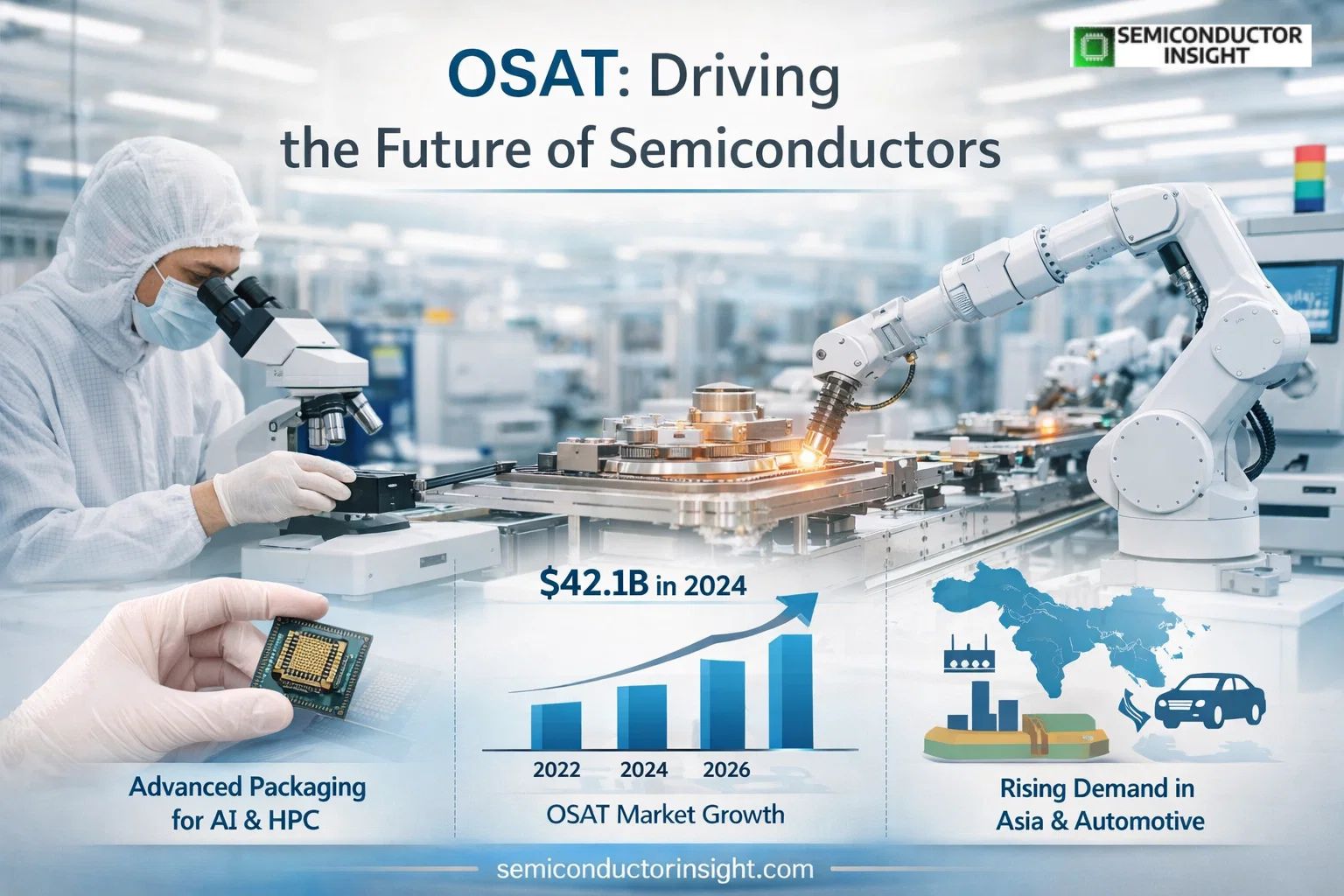
In the semiconductor value chain, the spotlight often shines on chip design and wafer fabrication, but the real transformation happens in the final stages assembly and testing. This is where Outsourced Semiconductor Assembly and Test (OSAT) Market operates, acting as the bridge between silicon wafers and fully functional chips ready for deployment. These specialized firms’ package delicate dies, connect them to substrates, and rigorously test performance before chips are shipped into smartphones, cars, and data centres.

The importance of OSAT has grown significantly with the rise of advanced computing. As chips become smaller and more powerful, packaging is no longer a backend activity it is a critical innovation layer.

Market Pulse Driven by Scale and Specialization

  • The OSAT ecosystem has expanded into a multi-billion-dollar industry, reflecting its essential role in semiconductor manufacturing.
  • In 2024, the global OSAT market crossed approximately USD 43-44 billion, with steady growth driven by consumer electronics recovery and automotive demand. By 2024, total revenues reached about $42.1 billion, marking continued expansion despite supply chain fluctuations.
  • Volume-wise, the scale is even more striking. Assembly services alone processed over 500 million semiconductor units in 2024, while Asia-Pacific handled nearly 888 million units, dominating global throughput.
  • This highlights how OSAT is not just about value it is a high-volume, precision-driven industry operating at massive scale.

Advanced Packaging Becomes the Real Differentiator

A major shift within the OSAT space is the transition from traditional packaging to advanced formats. Technologies such as fan-out wafer-level packaging and flip-chip designs are now widely adopted for high-performance chips. In fact, advanced packaging formats now contribute over 30-35% of packaging usage in communication and mobile processors.

This shift is largely driven by artificial intelligence and high-performance computing. AI chips require faster data transfer, better thermal management, and compact integration all of which depend heavily on advanced packaging rather than just transistor scaling.

Recent industry developments also show companies investing heavily in larger panel-level packaging systems to reduce costs while increasing efficiency. These innovations are redefining how chips are assembled, making OSAT players key enablers of next-generation computing.

AI Boom Turning OSAT into a Strategic Bottleneck

The surge in AI workloads has reshaped the semiconductor supply chain, and OSAT providers are now at the center of this transformation. According to recent industry updates, advanced packaging capacity is expected to grow by nearly 80% by 2026 to meet AI-driven demand.

Unlike traditional chip manufacturing, advanced packaging requires specialized infrastructure and expertise that only a few players possess. This has created a bottleneck effect, where OSAT companies are no longer just service providers but strategic partners for chipmakers.

From GPUs to AI accelerators, nearly every cutting-edge chip today depends on sophisticated packaging techniques, making OSAT a critical enabler of performance gains.

India and Emerging Economies Enter the Scene

One of the most notable recent trends is the geographic expansion of OSAT facilities beyond traditional hubs like Taiwan and China. India, for instance, is rapidly positioning itself as a new destination for semiconductor backend operations.

Projects such as Tata Electronics’ ₹27,000 crore OSAT facility in Assam and Kaynes Semicon’s plant in Gujarat are expected to begin large-scale operations by 2026. In fact, India recently exported its first packaged multi-chip module to a U.S. company, marking a significant milestone in its semiconductor journey.

These developments indicate a broader shift toward supply chain diversification, as countries aim to reduce dependency on a few concentrated regions.

Automotive and Edge Devices Expanding the Scope

Beyond smartphones and computing, OSAT demand is increasingly coming from automotive and industrial applications. In 2024 alone, automotive-related semiconductor packaging exceeded 210 million units, up sharply from previous years.

Electric vehicles, advanced driver-assistance systems (ADAS), and IoT devices require highly reliable and durable chips. This has pushed OSAT providers to enhance testing capabilities, ensuring chips can withstand extreme conditions while maintaining performance.

Additionally, communications devices accounted for nearly 28% of total OSAT application share, followed by computing and automotive sectors, showing diversified demand streams.

Take a moment to check our latest report before moving forward: https://semiconductorinsight.com/report/global-outsourced-semiconductor-assembly-and-test-osat-market/

Top 3 Key Players Shaping the OSAT Landscape

  • ASE Technology Holding – The largest OSAT provider globally, known for its leadership in advanced packaging and large-scale manufacturing capabilities.
  • Amkor Technology – A key U.S.-based player with strong presence in automotive and advanced packaging solutions.
  • JCET Group (Jiangsu Changjiang Electronics Technology) – A major Chinese OSAT company expanding aggressively in global markets.

These companies are investing heavily in R&D, automation, and capacity expansion to meet the evolving demands of AI, 5G, and electric mobility.

Redefining the Semiconductor Value Chain

OSAT market is no longer a backend service it has evolved into a critical innovation hub within the semiconductor ecosystem. As chips become more complex and applications more demanding, the importance of assembly and testing continues to rise.

From enabling AI breakthroughs to supporting electric vehicles and global supply chain shifts, OSAT providers are quietly shaping the future of technology. Their role is no longer invisible it is foundational to the next era of semiconductor advancement.

Comments (0)


Leave a Reply

Your email address will not be published. Required fields are marked *