Wearable Health Devices Market Insights
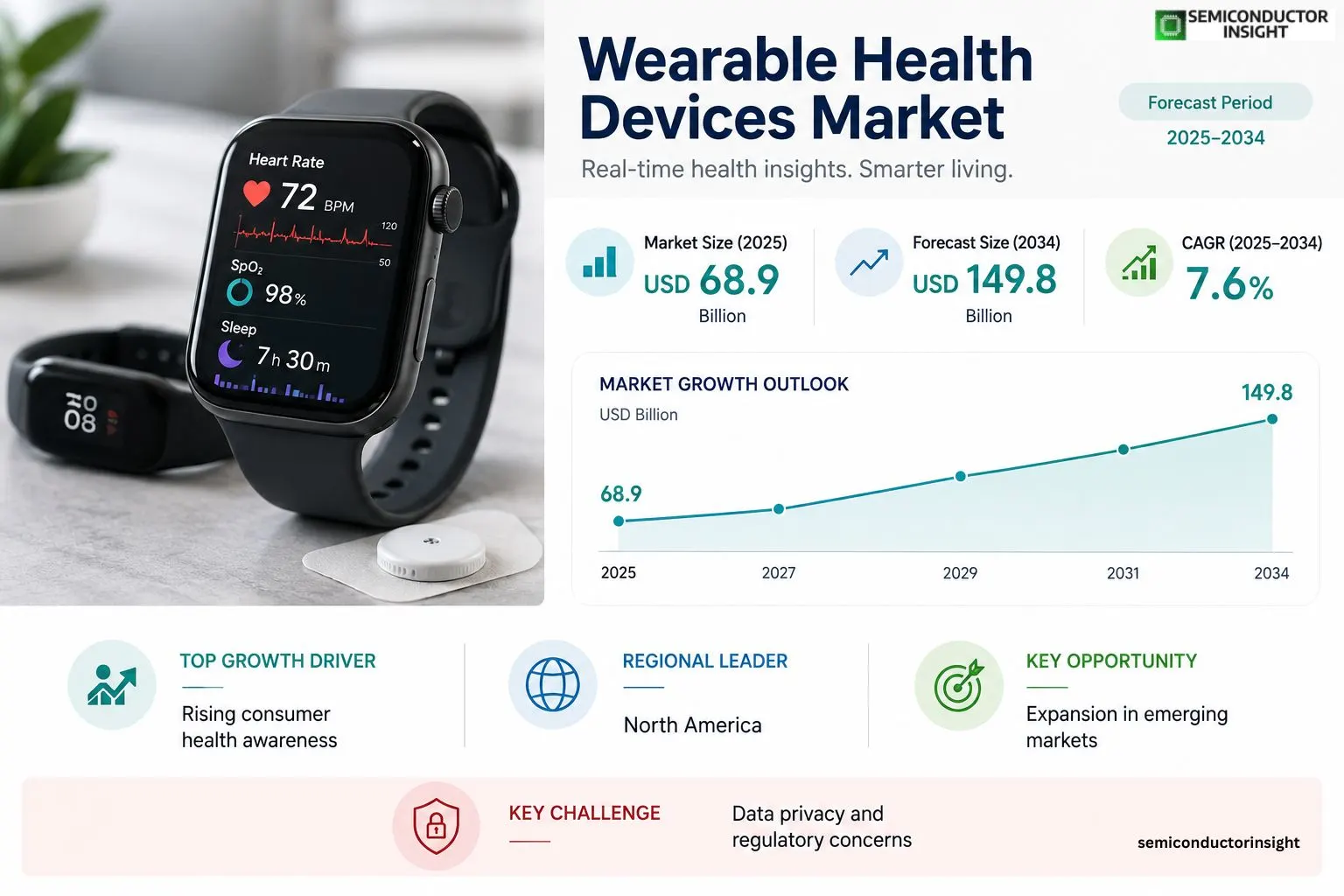
wearable health devices market size was valued at USD 68.9 billion in 2025. The market is projected to grow from USD 71.3 billion in 2025 to USD 149.8 billion by 2034, exhibiting a CAGR of 7.6% during the forecast period.
Wearable health devices are electronic sensors integrated into accessories such as smartwatches, fitness bands, patches or clothing that continuously track physiological signals,including heart rate, blood‑oxygen saturation, sleep patterns and activity metrics,and transmit data for real‑time analysis.The market is accelerating because chronic disease prevalence is rising worldwide and consumers are increasingly proactive about personal wellness; however, challenges remain around data privacy and regulatory approval. Furthermore, breakthroughs in flexible biosensors and AI‑driven analytics are expanding functionality while reducing costs, prompting major players,Apple Inc., Google’s Fitbit division, Garmin Ltd., Samsung Electronics and Xiaomi Corp.,to launch next‑generation models throughout 2023‑2024.
MARKET DRIVERS
Rising Consumer Health Awareness
Wearable Health Devices Market is propelled by increasing public focus on preventive health. In 2023, more than 68% of adults in major economies reported using at least one health‑monitoring device, up from 54% in 2020. This surge reflects growing demand for real‑time data on heart rate, sleep patterns, and activity levels.
Advancements in Sensor Technology
Innovations such as flexible ECG electrodes and non‑invasive glucose monitors have improved accuracy while reducing device size. Manufacturers claim a 30% reduction in power consumption, enabling battery life extensions to 14 days, which encourages broader adoption across age groups.
➤ “Integration of AI analytics with wearable sensors is expected to double the value‑added services offered by 2026,” analysts note.
Corporate wellness programs are also a key catalyst; companies investing in employee health platforms have reported a 22% decrease in sick‑leave days, reinforcing the business case for expanding Wearable Health Devices Market.
MARKET CHALLENGES
Data Privacy Concerns
Consumers remain wary of how health data is stored and shared. Recent surveys indicate that 41% of potential users hesitate to purchase devices due to uncertainty about data security, which hinders market penetration in regions with stringent privacy regulations.
Other Challenges
Interoperability Issues
Many devices operate on proprietary platforms, limiting seamless integration with electronic health records and reducing the overall utility for healthcare providers.
MARKET RESTRAINTS
High Initial Cost
The premium pricing of advanced wearables, often exceeding $300 for models with clinical‑grade sensors, restricts adoption among price‑sensitive segments. While economies of scale are expected to drive costs down, current price barriers remain a significant restraint for market growth.
MARKET OPPORTUNITIES
Expansion into Emerging Markets
Rapid urbanization and increasing smartphone penetration in Asia‑Pacific and Latin America present untapped opportunities. Forecasts suggest that these regions could contribute an additional $12 billion to the market by 2030, driven by affordable device tiers and localized health initiatives.
Wearable Health Devices Market Trends
Integration of AI‑Driven Analytics
Wearable Health Devices Market is experiencing a rapid shift toward advanced analytics that transform raw sensor data into actionable health insights. AI algorithms embedded in smartwatches and fitness bands now recognize patterns in heart‑rate variability, sleep stages, and oxygen saturation, delivering personalized recommendations in real time. This capability not only enhances user engagement but also supports preventive care initiatives by flagging early signs of chronic conditions. As manufacturers embed more sophisticated machine‑learning models, the devices become valuable data sources for clinicians and insurers, fostering a collaborative ecosystem that blurs the line between consumer electronics and medical-grade monitoring.
Other Trends
Advancements in Flexible Biosensor Materials
New polymer‑based biosensors are redefining the form factor of wearable health devices. These flexible materials conform to skin and textile surfaces, enabling continuous monitoring without compromising comfort. Recent prototypes integrate stretchable electrodes that capture electrocardiogram signals while remaining invisible under clothing. The reduced manufacturing cost of such materials is encouraging broader adoption in mid‑range product lines, expanding the market beyond premium segments. As reliability improves, developers are exploring multi‑parameter patches that simultaneously track glucose, lactate, and hydration levels, opening pathways for chronic disease management in everyday settings.
Privacy Regulations and Consumer Trust
Regulatory scrutiny around data privacy is shaping product strategies across Wearable Health Devices Market. Emerging standards require transparent data‑handling practices, encryption at rest and in transit, and clear consent mechanisms for users. Companies are investing in edge‑processing capabilities that analyze health metrics locally on the device, minimizing the need to transmit sensitive information to cloud servers. This approach not only complies with tightening regulations but also reassures consumers wary of data breaches. By prioritizing privacy‑by‑design, manufacturers are building trust that fuels sustained adoption and long‑term market growth.
COMPETITIVE LANDSCAPEKey Industry Players
Wearable Health Devices Market Competitive Overview
Wearable Health Devices Market is currently led by a handful of technology giants that combine robust hardware platforms with integrated software ecosystems. Apple Inc. leverages its Apple Watch series to capture a broad consumer base, offering advanced health sensors, ECG, and blood‑oxygen monitoring. Google’s Fitbit division provides a differentiated approach through its extensive data‑analytics services and strong focus on community engagement. Samsung Electronics competes aggressively with its Galaxy Watch lineup, embedding sophisticated biosensors and AI‑driven insights. Xiaomi Corp. pursues volume‑driven growth, delivering affordable fitness bands that still incorporate HR and SpO₂ tracking. Garmin Ltd. targets the performance‑oriented segment, supplying rugged devices with precise GPS and advanced sport metrics. Together, these players command the majority of market share, shape pricing dynamics, and set the pace for innovation across hardware form‑factors, sensor accuracy, and cloud‑based health platforms.Beyond the dominant tier, a diverse set of niche specialists contributes depth and specialization to the ecosystem. Philips Healthcare focuses on clinical‑grade wearables that integrate with hospital information systems. Abbott Laboratories advances continuous glucose monitoring through its FreeStyle Libre series, expanding the health‑monitoring scope. Dexcom offers FDA‑cleared CGM wearables that are increasingly interoperable with mainstream smartwatches. Whoop provides subscription‑based performance analytics targeting athletes and high‑performance professionals. Oura Health’s smart ring emphasizes sleep and recovery metrics. Huawei and Polar deliver competitive alternatives in the Asian and European markets, respectively. Medtronic’s cardiac monitoring wearables and BioTelemetry’s remote patient monitoring solutions illustrate the growing convergence of medical‑grade devices with consumer wearables, underscoring a fragmented yet rapidly consolidating competitive landscape.
List of Key Wearable Health Devices Companies Profiled
- Apple Inc.
- Fitbit (Google)
- Samsung Electronics
- Garmin Ltd.
- Xiaomi Corp.
- Philips Healthcare
- Abbott Laboratories
- Dexcom, Inc.
- Whoop Inc.
- Oura Health Ltd.
- Huawei Technologies Co., Ltd.
- Polar Electro Oy
- Medtronic plc
- BioTelemetry, Inc.
Segment Analysis:
| Segment Category | Sub-Segments | Key Insights |
| By Type |
|
Smartwatches are emerging as the dominant form factor because they combine seamless user interaction with robust sensor suites.
|
| By Application |
|
Continuous physiological monitoring drives most of the strategic focus because it aligns with preventive health trends.
|
| By End User |
|
Individual consumers are the primary driver of adoption, motivated by self‑tracking curiosity and desire for proactive health management.
|
| By Technology |
|
AI‑driven analytics platforms are reshaping how wearable data is interpreted, moving from raw metrics to predictive health insights.
|
| By Health Condition |
|
Cardiovascular health segment leads due to heightened consumer awareness of heart‑related risk factors.
|
Regional Analysis: North America
United States
The consumer fitness tracking segment continues to dominate, with a focus on activity tracking, sleep monitoring, and basic health metrics. Demand is strong from millennials and Gen Z seeking to improve their lifestyle.
Wearable devices are increasingly employed for managing chronic conditions such as diabetes, heart disease, and hypertension. Remote patient monitoring capabilities are gaining traction, enabling timely interventions.
Integration of wearable data into electronic health records (EHRs) is becoming more prevalent, facilitating better clinical decision-making and personalized treatment plans.
Innovations in areas like continuous glucose monitoring (CGM) and advanced biosensors are shaping the future of wearable health technology for the US market.
North America
North America is characterized by a mature and competitive landscape within Wearable Health Devices Market. The market has witnessed consistent growth, propelled by increasing health awareness, technological advancements, and rising disposable incomes. The region benefits from a well-established healthcare infrastructure and a strong consumer base receptive to health-enhancing technologies. The focus is shifting from basic fitness tracking to more sophisticated devices capable of monitoring a wider range of health parameters, particularly those related to chronic disease management. Government initiatives promoting preventative healthcare are also contributing to market expansion. However, data privacy regulations and cybersecurity concerns present potential challenges for continued growth. The trend towards personalized health and wellness solutions is a defining factor in the North American market.
Europe
Europe’s Wearable Health Devices Market demonstrates significant potential, with a growing emphasis on preventative healthcare and digital health solutions. Countries like Germany, the UK, and France are leading the way in adopting wearable technologies. Regulatory frameworks, such as the GDPR, influence data handling practices and require robust security measures. The market is witnessing a strong interest in devices that support remote patient monitoring and telehealth applications. A key trend is the integration of wearable data with existing healthcare systems. While the market is fragmented, there’s a growing consolidation among key players. Focus areas include solutions for elderly care and chronic disease management to meet the demands of an aging population.
Asia-Pacific
The Asia-Pacific Wearable Health Devices Market is experiencing rapid expansion, driven by increasing disposable incomes, growing health consciousness, and the rising prevalence of chronic diseases. China and India are key markets, with a large and tech-savvy consumer base. Mobile health (mHealth) initiatives and government support for digital health are fueling growth. The market is characterized by a wide range of players, including local manufacturers and international brands. Affordability is a major factor influencing adoption in this region. The focus is on basic fitness trackers and devices that offer affordable health monitoring solutions. The integration of wearable data with healthcare providers is still in its early stages but is expected to gain momentum in the coming years. Personalized health tracking and proactive health management are key growth drivers.
South America
South America presents a burgeoning market for Wearable Health Devices, with increasing awareness of health and wellness. Brazil and Mexico are the largest markets in the region. The rising prevalence of chronic diseases, coupled with increasing smartphone penetration, is driving demand. The market is relatively price-sensitive, with a focus on affordable fitness trackers and basic health monitoring devices. Government initiatives promoting digital health are gradually gaining traction. Challenges include limited healthcare infrastructure and varying levels of digital literacy. The market is expected to witness significant growth in the coming years, particularly as technology becomes more accessible and affordable. The demand for devices supporting remote patient care is also increasing.
Middle East & Africa
The Middle East & Africa Wearable Health Devices Market is an emerging market with significant growth potential. Rising disposable incomes, increasing health consciousness, and government initiatives promoting healthcare are driving demand. The market is characterized by a growing interest in fitness trackers and devices that support chronic disease management. The adoption of wearable technology is influenced by cultural factors and varying levels of digital literacy. The focus is on devices that offer personalized health insights and remote patient monitoring capabilities. The region presents opportunities for both established players and new entrants. Challenges include limited healthcare infrastructure in some areas and the need for localized solutions. The market is poised for substantial expansion in the long term, driven by increasing awareness and affordability.
Report Scope
This market research report provides a comprehensive analysis of the Wearable Health Devices Market , covering the forecast period 2026–2034. It offers detailed insights into market dynamics, technological advancements, competitive landscape, and key trends shaping the industry.
Key focus areas of the report include:
- Market Overview: The report begins with an overview outlining its current market scenario, key growth indicators, and industry transformation drivers. It discusses macroeconomic factors, demand–supply balance, regulatory landscape, and the strategic role of semiconductors in powering advancements across industries such as automotive, telecommunications, consumer electronics, and industrial automation.
- Market Size & Forecast: Historical data and future projections for revenue, unit shipments, and market value across major regions and segments.
- Segmentation Analysis: Detailed breakdown by product type, technology, application, and end-user industry to identify high-growth segments and investment opportunities.
- Regional Insights: Insights into market performance across North America, Europe, Asia-Pacific, Latin America, and the Middle East & Africa, including country-level analysis where relevant.
- Competitive Landscape: Profiles of leading market participants, including their product offerings, R&D focus, manufacturing capacity, pricing strategies, and recent developments such as mergers, acquisitions, and partnerships.
- Technology Trends & Innovation: Assessment of emerging technologies, integration of AI/IoT, semiconductor design trends, fabrication techniques, and evolving industry standards.
- Market Drivers & Restraints: Evaluation of factors driving market growth along with challenges, supply chain constraints, regulatory issues, and market-entry barriers.
- Stakeholder Insights: Insights for component suppliers, OEMs, system integrators, investors, and policymakers regarding the evolving ecosystem and strategic opportunities.
Primary and secondary research methods are employed, including interviews with industry experts, data from verified sources, and real-time market intelligence to ensure the accuracy and reliability of the insights presented.
FREQUENTLY ASKED QUESTIONS:
What is the current market size of Wearable Health Devices Market?
-> Wearable Health Devices Market was valued at USD 68.9 billion in 2025 and is expected to reach USD 149.8 billion by 2034.
Which key companies operate in Wearable Health Devices Market?
-> Key players include Apple Inc., Google’s Fitbit division, Garmin Ltd., Samsung Electronics, and Xiaomi Corp.
What are the key growth drivers?
-> Key growth drivers include rising chronic disease prevalence, increasing consumer focus on personal wellness, breakthroughs in flexible biosensor technology, and AI‑driven analytics that enhance device functionality while lowering costs.
Which region dominates the market?
-> The reference does not specify a single dominant region for Wearable Health Devices Market.
What are the emerging trends?
-> Emerging trends include flexible and stretchable biosensors, AI‑enabled health analytics, integration of wearables with broader IoT ecosystems, and the development of multi‑parameter monitoring platforms that combine heart‑rate, oxygen saturation, sleep, and activity tracking.
Get Sample Report PDF for Exclusive Insights
Report Sample Includes
- Table of Contents
- List of Tables & Figures
- Charts, Research Methodology, and more...
 Download Sample Report PDF