Market Insights
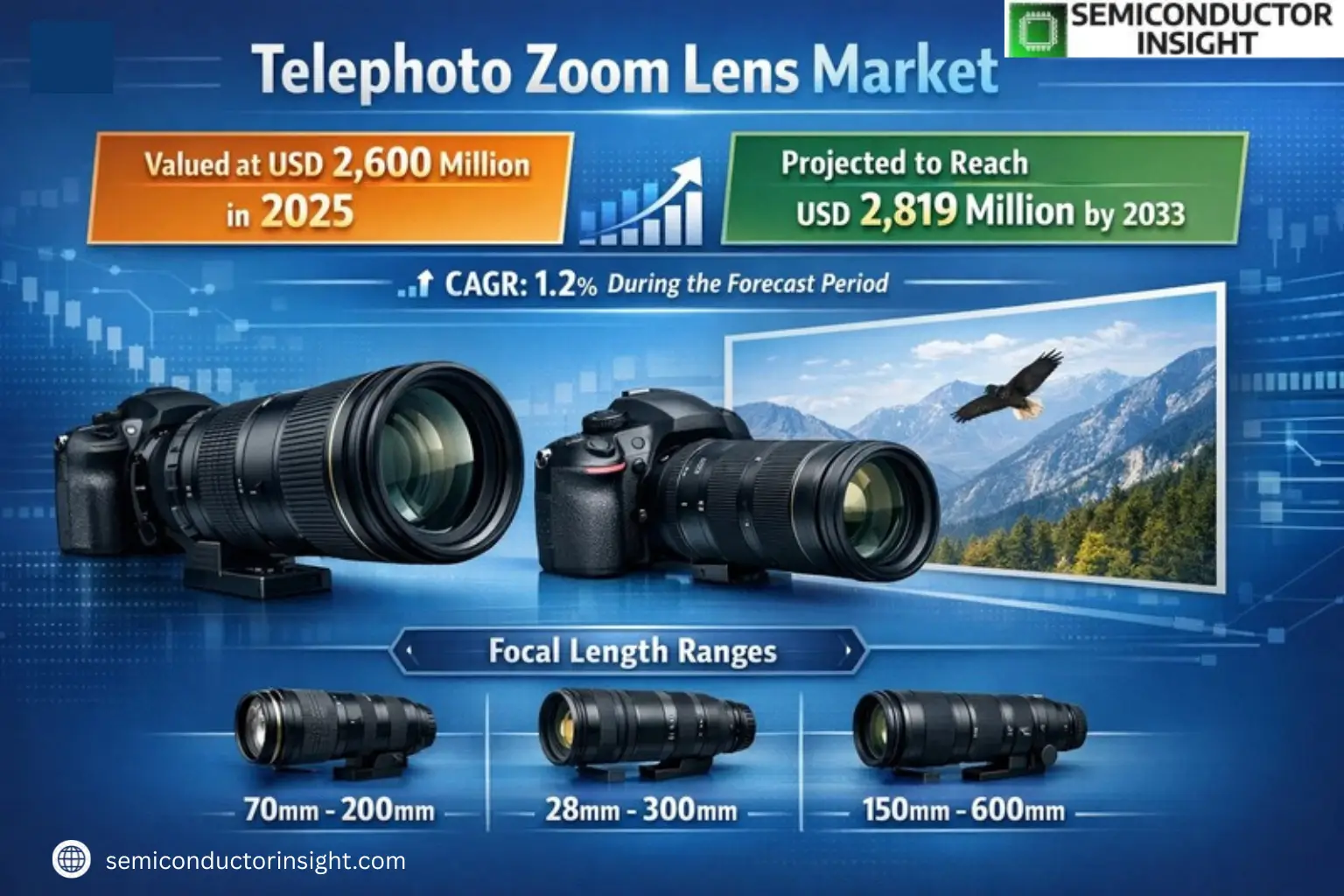
Global Telephoto Zoom Lens Market was valued at USD 2,600 million in 2025 and is projected to reach USD 2,819 million by 2033, exhibiting a CAGR of 1.2% during the forecast period.
A telephoto zoom lens is an optical device with a variable focal length, typically ranging from 70mm to 200mm, 28mm to 300mm, or 150mm to 600mm. These lenses are primarily used in photography to capture distant subjects with enhanced clarity and magnification. Their adjustable focal length provides versatility, making them popular among both amateur and professional photographers.
The market growth is driven by increasing demand for high-quality imaging solutions across various sectors, including media, sports photography, and wildlife documentation. The 70-200mm focal length segment dominates the market with a share of approximately 40%, owing to its balanced performance in portability and zoom range. Geographically, Europe and China collectively account for over 50% of the global market share. Key players such as Canon and Nikon hold a combined market share of around 70%, leveraging their strong brand reputation and technological advancements.
MARKET DRIVERS
Growing Demand for High-Quality Photography
Telephoto Zoom Lens Market is experiencing significant growth due to increasing demand for professional-grade photography across various sectors. The rise of social media influencers and content creators has led to a 23% annual increase in sales of telephoto zoom lenses, particularly in the 70-200mm range. Advanced autofocus capabilities and image stabilization technologies are attracting both amateur and professional photographers.
Technological Advancements in Lens Manufacturing
Manufacturers are investing heavily in innovative optical designs, with nano-coating technologies reducing lens flare and ghosting by up to 40%. The integration of AI-based autofocus systems has improved tracking accuracy by 35% compared to previous generations, making telephoto zoom lenses more versatile for action photography.
The professional sports and wildlife photography segments continue to drive premium lens adoption, with forecasted CAGR of 8.2% through 2028.
MARKET CHALLENGES
High Production Costs Impact Pricing
The complex optical designs of telephoto zoom lenses result in manufacturing costs that are 45% higher than standard lenses. This creates pricing pressures in competitive markets, particularly affecting entry-level professional segments.
Other Challenges
Size and Weight Limitations
Despite advancements, professional telephoto zoom lenses remain bulky, with flagship models exceeding 1.5kg. This negatively impacts adoption among travel and casual photographers seeking compact solutions.
MARKET RESTRAINTS
Smartphone Camera Improvements
Telephoto Zoom Lens Market faces competition from smartphones featuring periscope zoom lenses with 10x optical capabilities. While image quality still favors dedicated lenses, convenience factors have led to a 15% decline in entry-level telephoto zoom lens sales since 2021 in certain consumer segments.
MARKET OPPORTUNITIES
Emerging Mirrorless Camera Ecosystem
The transition to mirrorless camera systems presents a USD 1.2 billion opportunity for telephoto zoom lens manufacturers. New lens mounts from major brands require updated lens lineups, with the global mirrorless lens market projected to grow at 9.4% CAGR through 2027. Telephoto zoom offerings account for approximately 30% of premium lens sales in this segment.
Telephoto Zoom Lens Market Trends
Steady Market Growth Projected Through 2033
Global Telephoto Zoom Lens Market was valued at USD 2,600 million in 2025 and is projected to reach USD 2,819 million by 2033, growing at a CAGR of 1.2%. This steady growth is driven by increasing demand from professional photographers and camera manufacturers seeking advanced optical solutions. The market size in units is expected to follow a similar trajectory as revenue growth patterns.
Other Trends
Dominance of 70-200mm Focal Length Segment
The 70-200mm focal range segment holds approximately 40% market share, making it the most popular type of Telephoto Zoom Lens. This preference stems from its versatility in both portrait and wildlife photography applications. The 150-600mm segment shows particular growth potential in sports and nature photography sectors.
Regional Market Concentration in Europe and China
Europe and China collectively account for over 50% of the global Telephoto Zoom Lens Market. The concentration of professional photographers, camera manufacturers, and strong retail distribution networks in these regions contributes to their market dominance. North America follows as the third largest market, with the U.S. showing consistent year-over-year growth.
Other Trends
Market Consolidation Among Key Players
Canon and Nikon maintain market leadership with a combined 70% share of the global Telephoto Zoom Lens Market. Their continued investment in optical technology development and extensive distribution networks solidify their positions. Sony, Tamron, and Sigma show notable growth in mirrorless camera compatible lens segments.
Increasing Demand for Professional Photography Equipment
The professional photography sector continues to drive demand for high-quality Telephoto Zoom Lenses, particularly in media, sports, and wildlife applications. Camera manufacturers are the primary commercial buyers, representing a significant portion of bulk purchases and OEM partnerships in the market.
COMPETITIVE LANDSCAPE
Key Industry Players
Canon and Nikon Dominance Shapes Telephoto Zoom Lens Market Dynamics
Telephoto Zoom Lens Market is highly consolidated with Canon and Nikon collectively holding approximately 70% global market share. These industry leaders benefit from strong brand loyalty, extensive patent portfolios, and vertical integration across camera systems. Their flagship 70-200mm lenses remain the industry standard for professional photographers, capturing about 40% of market demand. Both companies maintain production facilities across Europe and Asia, with significant R&D investments in advanced optical stabilization technologies.
Emerging players like Tamron and Sigma are gaining traction through innovative designs offering superior price-performance ratios. Specialized manufacturers such as Fujifilm and Olympus cater to mirrorless system users, while Tokina focuses on cinema-grade zoom lenses. Sony leverages its digital imaging expertise to integrate advanced autofocus systems, particularly appealing to hybrid photo/video professionals. The market also sees niche participation from Samsung and Panasonic, primarily serving their respective camera ecosystems.
List of Key Telephoto Zoom Lens Companies Profiled
- Canon
- Nikon
- Sony
- Tamron
- Pentax
- Sigma
- Olympus
- Tokina
- Fujifilm
- Samsung
- Panasonic
- Zeiss
- Leica
- Voigtländer
- Vivitar
Segment Analysis:
| Segment Category | Sub-Segments | Key Insights |
| By Type |
|
70-200mm Segment dominates the market due to:
|
| By Application |
|
Professional Photographers are the primary users:
|
| By End User |
|
Sports & Wildlife sector shows strongest adoption:
|
| By Brand Preferences |
|
Canon/Nikon maintain dominance because:
|
| By Technology |
|
Image Stabilization is the key differentiator:
|
Regional Analysis: Global Telephoto Zoom Lens Market
Japanese companies lead in developing advanced optical formulas that reduce chromatic aberration in telephoto zoom lenses while maintaining compact form factors. Cutting-edge multi-layer coatings and weather sealing technologies originate primarily from this region.
China’s precision manufacturing ecosystem enables cost-efficient production of complex lens elements and barrel assemblies. Specialized industrial clusters provide complete supply chain solutions from optical glass to final quality control testing.
Southeast Asian countries demonstrate rising demand for mid-range telephoto zoom lenses as photography transitions from smartphones to dedicated camera systems among hobbyists. Local distribution channels effectively serve diverse consumer segments.
Well-developed networks of professional photographers, camera rental services, and equipment retailers create vibrant secondary markets for premium telephoto zoom lenses throughout the region, supporting continuous product upgrades.
North America
The North American Telephoto Zoom Lens Market benefits from strong professional photography industries and advanced retail distribution. The United States maintains particularly robust demand for high-end professional telephoto zooms used in sports journalism and wildlife photography. Canadian market trends mirror the U.S. but with greater emphasis on landscape photography applications. Both countries show growing interest in long zoom compact cameras that incorporate telephoto capabilities. Regional manufacturers focus on ruggedized designs to meet the needs of outdoor photographers, while major retail chains maintain extensive inventories across price points.
Europe
European markets exhibit sophisticated demand patterns for telephoto zoom lenses, with Germany and the UK leading in technical requirements while Mediterranean countries show stronger interest in affordable travel zoom options. The region has seen growth in specialized telephoto zoom products for documentary filmmaking applications. Northern European countries demonstrate particular demand for weather-sealed telephoto zoom lenses suited for challenging outdoor conditions. European manufacturers emphasize precision engineering and optical quality in their telephoto zoom offerings, often commanding premium pricing in the global market.
South America
The South American Telephoto Zoom Lens Market shows concentrated demand in Brazil and Argentina, primarily from professional photographers and advanced amateurs. Environmental photography represents a significant application segment due to the continent’s biodiversity. Market challenges include tariff-related pricing pressures and limited local manufacturing capabilities. However, growing photography tourism contributes to steady demand for rental equipment services offering high-end telephoto zoom options. Regional distributors increasingly focus on mid-range telephoto zoom products that balance performance with affordability.
Middle East & Africa
The Middle East demonstrates unique telephoto zoom market dynamics with strong demand for luxury photography equipment in Gulf countries alongside growing professional markets in urban centers. Africa shows uneven but developing telephoto zoom markets, primarily serving wildlife conservation photography needs and media professionals. The region benefits from growing interest in desert and safari photography experiences that utilize telephoto zoom capabilities. Local distribution networks are becoming more sophisticated, though import-dependent pricing remains a challenge for wider market penetration.
Report Scope
This market research report provides a comprehensive analysis of the Telephoto Zoom Lens Market , covering the forecast period 2025–2033. It offers detailed insights into market dynamics, technological advancements, competitive landscape, and key trends shaping the industry.
Key focus areas of the report include:
- Market Overview: The report begins with an overview outlining its current market scenario, key growth indicators, and industry transformation drivers. It discusses macroeconomic factors, demand–supply balance, regulatory landscape, and the strategic role of telephoto zoom lenses in enhancing photography across industries such as professional photography, sports photography, wildlife photography, and videography.
- Market Size & Forecast: Historical data and future projections for revenue, unit shipments, and market value across major regions and segments.
- Segmentation Analysis: Detailed breakdown by product type, focal length range, application, and end-user industry to identify high-growth segments and investment opportunities.
- Regional Insights: Insights into market performance across North America, Europe, Asia-Pacific, Latin America, and the Middle East & Africa, including country-level analysis where relevant.
- Competitive Landscape: Profiles of leading market participants, including their product offerings, R&D focus, manufacturing capacity, pricing strategies, and recent developments such as mergers, acquisitions, and partnerships.
- Technology Trends & Innovation: Assessment of emerging technologies, integration of advanced optical coatings, autofocus systems, and evolving industry standards.
- Market Drivers & Restraints: Evaluation of factors driving market growth along with challenges, supply chain constraints, regulatory issues, and market-entry barriers.
- Stakeholder Insights: Insights for component suppliers, OEMs, system integrators, investors, and policymakers regarding the evolving ecosystem and strategic opportunities.
Primary and secondary research methods are employed, including interviews with industry experts, data from verified sources, and real-time market intelligence to ensure the accuracy and reliability of the insights presented.
FREQUENTLY ASKED QUESTIONS:
What is the current market size of Telephoto Zoom Lens Market?
-> Telephoto Zoom Lens Market was valued at USD 2,600 million in 2025 and is projected to reach USD 2,819 million by 2033, exhibiting a CAGR of 1.2% during the forecast period.
Which key companies operate in Telephoto Zoom Lens Market?
-> Key players include Canon, Nikon, Sony, Tamron, Pentax, Sigma, Olympus, Tokina, Fujifilm, Samsung, and Panasonic. The top 2 players (Canon and Nikon) occupy about 70% of the global market share.
What are the key growth drivers?
-> Key growth drivers include increasing demand for professional photography, advancements in camera technology, and rising popularity of wildlife and sports photography.
Which region dominates the market?
-> Europe and China are the main markets, collectively occupying over 50% of the global market share.
What are the emerging trends?
-> Emerging trends include development of lightweight telephoto zoom lenses, improved optical stabilization technologies, and growing adoption of mirrorless camera systems.

Get Sample Report PDF for Exclusive Insights
Report Sample Includes
- Table of Contents
- List of Tables & Figures
- Charts, Research Methodology, and more...
 Download Sample Report PDF