MARKET INSIGHTS
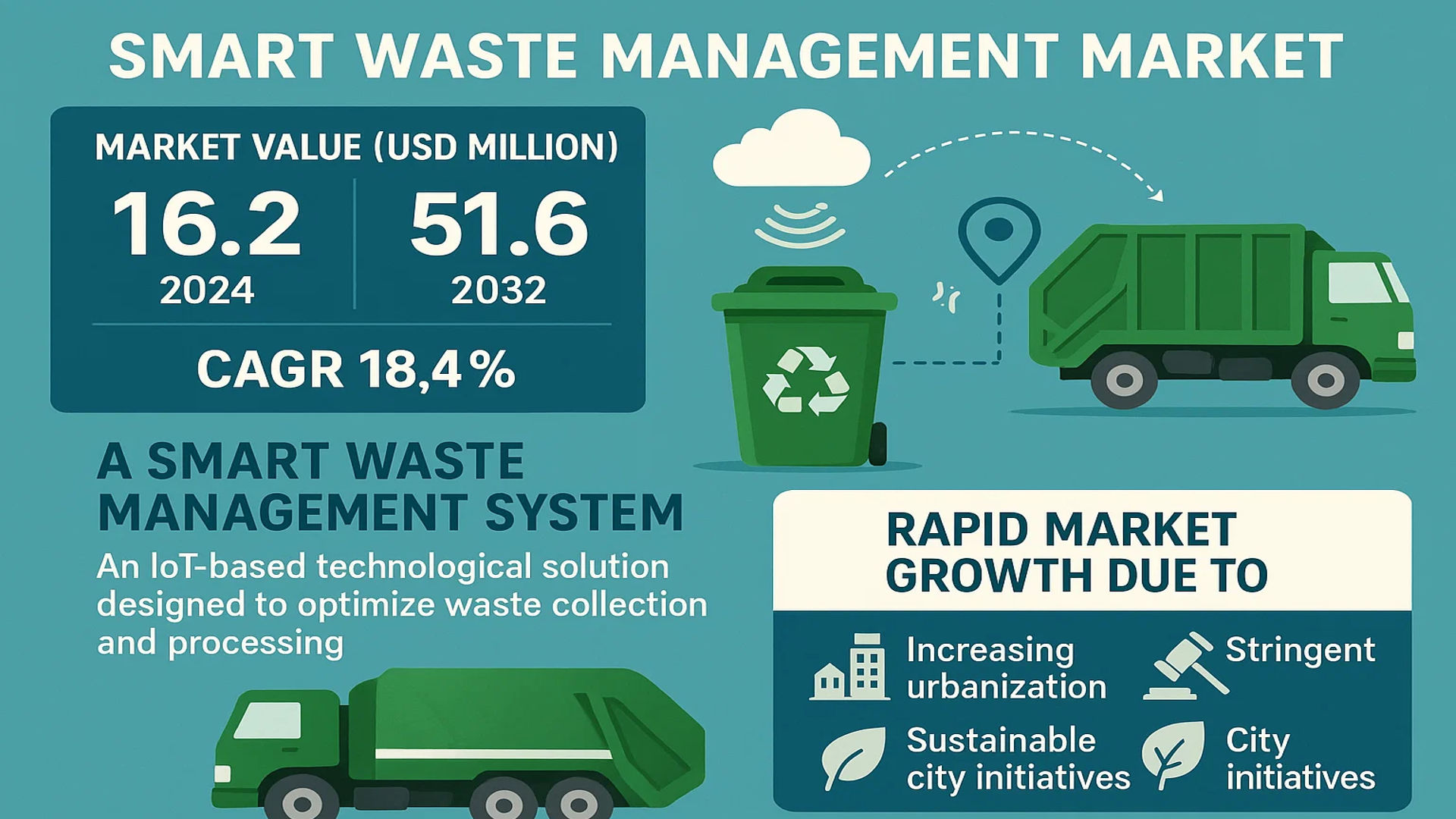
The global Smart Waste Management Market was valued at 16.2 million in 2024 and is projected to reach US$ 51.6 million by 2032, at a CAGR of 18.4% during the forecast period.
A smart waste management system is an IoT-based technological solution designed to optimize waste collection and processing. These systems utilize sensors, often embedded in bins and containers, to collect real-time data on fill levels, which is then transmitted via wireless mesh networks to a central platform. This enables dynamic routing for collection vehicles, reducing operational costs and environmental impact.
The market is experiencing rapid growth due to several factors, including increasing urbanization, stringent government regulations on waste disposal, and a growing focus on sustainable city initiatives. Furthermore, the integration of advanced technologies like data analytics and cloud computing is enhancing system efficiency. Key players such as Bigbelly Solar, Enevo, and Compology are driving innovation; for instance, Bigbelly’s solar-powered compacting stations have been deployed in over 60 countries, demonstrating the scalable adoption of these solutions.
MARKET DYNAMICS
MARKET DRIVERS
Rising Urbanization and Environmental Regulations to Accelerate Market Adoption
Global urbanization trends are creating unprecedented pressure on municipal waste management systems, with over 55% of the world’s population now residing in urban areas. This demographic shift generates massive waste volumes that traditional collection methods cannot efficiently handle, driving demand for smart waste management solutions. These systems utilize sensor technology, IoT connectivity, and data analytics to optimize collection routes, reduce operational costs, and minimize environmental impact. Regulatory mandates worldwide are further accelerating adoption, with numerous governments implementing stringent waste management policies and sustainability targets. The European Union’s Circular Economy Action Plan, for instance, mandates member states to achieve 65% municipal waste recycling by 2035, creating substantial market opportunities for smart waste technologies that enhance recycling efficiency and reduce landfill dependence.
Technological Advancements and Cost Efficiency to Propel Market Growth
Continuous innovation in sensor technology, wireless communication, and data analytics is significantly enhancing the capabilities and affordability of smart waste management systems. Modern smart bins equipped with ultrasonic sensors can monitor fill levels with 98% accuracy, while solar-powered compacting units can reduce collection frequency by up to 80%. The integration of artificial intelligence and machine learning algorithms enables predictive analytics for waste generation patterns, allowing municipalities and waste management companies to optimize collection schedules and resource allocation. These technological improvements are driving down operational costs while increasing system efficiency, making smart waste solutions increasingly attractive for both public and private sector applications across diverse geographic markets.
Increasing Smart City Initiatives and Sustainability Goals to Boost Market Expansion
The global smart city movement is creating substantial opportunities for smart waste management integration, with investments in smart city technologies projected to exceed $1 trillion annually by 2025. Municipalities worldwide are incorporating smart waste solutions as fundamental components of their urban infrastructure modernization efforts, recognizing their role in achieving sustainability objectives and improving quality of life. These systems not only reduce carbon emissions through optimized collection routes but also provide valuable data for urban planning and environmental monitoring. The alignment of smart waste management with broader environmental, social, and governance (ESG) criteria is further driving adoption among corporations and municipalities seeking to demonstrate their commitment to sustainable practices and environmental stewardship.
MARKET CHALLENGES
High Initial Investment and Infrastructure Limitations to Constrain Market Penetration
Despite the clear operational benefits, smart waste management systems face significant adoption barriers due to substantial upfront capital requirements. The installation of smart bins, sensor networks, and central monitoring systems typically requires investments ranging from $2,000 to $6,000 per unit, creating financial challenges for municipalities and waste management companies with limited budgets. This financial barrier is particularly pronounced in developing regions where infrastructure funding is constrained and waste management may not represent a budgetary priority. The challenge is compounded by the need for complementary infrastructure, including reliable wireless networks and power sources, which may be unavailable or inconsistent in certain geographic areas, limiting the feasibility of comprehensive smart waste system implementation.
Other Challenges
Data Security and Privacy Concerns
The collection and transmission of operational data through wireless networks introduces significant cybersecurity vulnerabilities that must be addressed. Smart waste systems generate substantial volumes of sensitive data regarding collection patterns, operational efficiency, and even consumer behavior, creating attractive targets for cyber attacks. Ensuring robust data protection measures while maintaining system functionality represents an ongoing challenge for manufacturers and operators, particularly as regulatory frameworks for data privacy continue to evolve across different jurisdictions.
Integration with Existing Infrastructure
Retrofitting smart technology into established waste management ecosystems presents substantial technical and logistical difficulties. Many municipalities operate mixed fleets of collection vehicles and utilize diverse container types, creating compatibility issues that complicate system-wide implementation. The transition from traditional to smart waste management requires careful planning, staff training, and potentially phased implementation strategies to minimize operational disruption while achieving the desired efficiency improvements.
MARKET RESTRAINTS
Limited Technical Expertise and Standardization Issues to Hinder Market Development
The specialized nature of smart waste management technology creates significant workforce challenges, as the industry faces a shortage of professionals with expertise in IoT systems, data analytics, and waste management operations. This skills gap is particularly acute in emerging markets where technical education infrastructure may be underdeveloped. The absence of universal technical standards further complicates market growth, as proprietary systems from different manufacturers often lack interoperability, creating vendor lock-in situations and limiting flexibility for operators. These technical and standardization barriers slow adoption rates and increase the total cost of ownership, particularly for organizations seeking to implement comprehensive smart waste solutions across multiple locations or jurisdictions.
MARKET OPPORTUNITIES
Emerging Technologies and Public-Private Partnerships to Create New Growth Avenues
Advancements in complementary technologies are opening new opportunities for smart waste management systems. The integration of computer vision and artificial intelligence enables automated waste sorting and classification at the point of collection, significantly enhancing recycling rates and material recovery. Meanwhile, blockchain technology offers potential solutions for tracking waste streams and verifying recycling claims, addressing growing demands for transparency in waste management operations. These technological innovations are creating additional value propositions beyond basic collection optimization, expanding the potential applications and revenue streams for smart waste management providers.
Public-private partnerships represent another significant growth opportunity, as municipalities seek external expertise and funding to modernize their waste management infrastructure. These collaborations allow cities to implement advanced smart waste solutions without bearing the full financial burden, while private companies gain access to large-scale deployment opportunities and valuable operational data. The success of these partnerships in various pilot cities demonstrates their potential to accelerate market growth while distributing risks and rewards appropriately between public and private sector participants.
SMART WASTE MANAGEMENT MARKET TRENDS
Integration of IoT and AI Technologies to Emerge as a Dominant Trend
The proliferation of Internet of Things (IoT) sensors and Artificial Intelligence (AI) is fundamentally reshaping waste management operations on a global scale. These technologies enable real-time monitoring of bin fill levels, optimizing collection routes to reduce fuel consumption and operational costs. For instance, smart bins equipped with ultrasonic sensors can transmit data to central management systems, allowing for dynamic scheduling rather than fixed routes. This has led to documented efficiency gains; municipalities utilizing these systems have reported collection frequency reductions of up to 50%, translating to significant cost savings and a lower carbon footprint. Furthermore, AI-powered analytics are being deployed to predict waste generation patterns, allowing for proactive resource allocation and improved planning for seasonal fluctuations or special events. The convergence of these technologies is creating a more responsive, data-driven waste management ecosystem that prioritizes efficiency and environmental sustainability.
Other Trends
Sustainability and Circular Economy Initiatives
Global emphasis on sustainability and the transition towards a circular economy is a powerful catalyst for smart waste management adoption. Governments and corporations are under increasing pressure to meet stringent waste reduction targets and improve recycling rates. Smart systems provide the verifiable data necessary to track progress toward these goals. For example, they can identify contamination in recycling streams, enabling targeted public education campaigns to improve material quality. This data-driven approach is crucial, as even a 5% increase in recycling efficiency can have a substantial economic and environmental impact on a city-wide scale. The integration of smart technology is therefore no longer just an operational upgrade but a strategic imperative for organizations committed to corporate social responsibility and regulatory compliance.
Rising Urbanization and Regulatory Pressures
Rapid urbanization, particularly in emerging economies, is placing unprecedented strain on traditional waste management infrastructures. City populations are growing, generating more waste than ever before, while available landfill space is shrinking. This challenge is compounded by stricter government regulations aimed at reducing landfill waste and promoting recycling. In response, municipal authorities are increasingly turning to smart waste solutions to do more with less. These systems help manage the complexities of urban waste streams more effectively, ensuring regulatory adherence while controlling costs. The hardware segment, including smart bins and sensor networks, is a critical component of this expansion, forming the physical backbone that collects the essential data for these advanced management platforms to function effectively.
COMPETITIVE LANDSCAPE
Key Industry Players
Companies Leverage IoT and Data Analytics to Gain Competitive Edge
The competitive landscape of the global smart waste management market is fragmented, characterized by a mix of established technology firms and specialized startups. This dynamic is driven by rapid technological innovation, particularly in Internet of Things (IoT) sensors, data analytics platforms, and cloud-based management software. While no single player dominates globally, several have carved out significant market share through early innovation and strategic deployments.
Bigbelly Solar (U.S.) is widely recognized as a pioneer and a leading player, primarily due to its comprehensive solar-powered compacting bin systems and its strong foothold in municipal deployments across North America and Europe. The company’s growth is attributed to its integrated hardware and software solution, which offers real-time fullness monitoring and efficient collection route optimization.
Enevo (Finland) and Compology (U.S.) also hold significant shares, with their growth fueled by advanced, camera-based sensor technology and powerful predictive analytics software. These companies have successfully expanded beyond traditional waste bins to service industrial and commercial waste containers, demonstrating the versatility of their technology.
Furthermore, these companies are aggressively pursuing growth through continuous product innovation, strategic partnerships with waste hauling corporations, and geographical expansion into emerging markets in Asia-Pacific and the Middle East, which are expected to significantly increase their market presence over the coming years.
Meanwhile, players like OnePlus Systems (U.S.) and Urbiotica (Spain) are strengthening their positions through significant investments in R&D for low-power, long-range communication technologies like LoRaWAN and NB-IoT. Their focus on developing cost-effective and scalable solutions is crucial for penetrating price-sensitive markets and ensuring sustained growth amidst intensifying competition.
List of Key Smart Waste Management Companies Profiled
- Bigbelly Solar (U.S.)
- OnePlus Systems (U.S.)
- Compology (U.S.)
- Enevo (Finland)
- SmartBin (Ireland)
- Urbiotica (Spain)
- IoTsens (Spain)
Segment Analysis:
By Type
Hardware Segment Dominates the Market Due to its Critical Role as the Physical Infrastructure for Data Collection
The market is segmented based on type into:
- Hardware
- Subtypes: Smart bins and containers, sensor modules, communication gateways, and others
- Service
- Subtypes: Consulting, deployment and integration, support and maintenance
By Application
Public Occasion Segment Leads Due to High Adoption by Municipalities for Urban Waste Management Efficiency
The market is segmented based on application into:
- Public Occasion
- Subtypes: Municipal waste collection, public spaces, and others
- Non-Public Occasion
- Subtypes: Commercial establishments, industrial facilities, and others
By Technology
IoT and Sensor Technology Segment is Fundamental for Enabling Real-Time Monitoring and Data-Driven Operations
The market is segmented based on technology into:
- IoT and Sensor Technology
- RFID Technology
- GPS and Navigation Systems
- Data Analytics and Software Platforms
By End User
Municipalities Segment is the Largest End User Driven by the Need for Sustainable and Cost-Effective Urban Planning
The market is segmented based on end user into:
- Municipalities
- Commercial and Industrial
- Subtypes: Retail, hospitality, manufacturing, and others
- Healthcare and Pharmaceutical
- Others
Regional Analysis: Smart Waste Management Market
North America
North America represents the most advanced and mature market for smart waste management solutions globally, driven by stringent environmental policies, high technology adoption rates, and significant municipal investments. The United States, in particular, leads the region with numerous cities implementing IoT-enabled waste bins and route optimization software to reduce operational costs and environmental impact. Federal and state initiatives, such as grants for smart city projects, further accelerate deployment. However, high initial investment remains a barrier for some municipalities, though the long-term savings in fuel and labor costs are compelling adoption. Key players like Bigbelly Solar and OnePlus Systems have strong market presence here, offering integrated hardware and software solutions that cater to both public and private waste management needs.
Europe
Europe is a close second in market development, characterized by strong regulatory frameworks promoting waste reduction and recycling under the EU Circular Economy Action Plan. Countries like Germany, the UK, and the Nordic nations are at the forefront, deploying sensor-based smart bins and data analytics platforms to enhance collection efficiency and meet sustainability targets. The region’s focus on reducing carbon emissions and achieving high recycling rates drives investment in smart waste technologies. However, the fragmentation of waste management responsibilities across numerous local authorities can slow large-scale, unified deployments. Despite this, innovation thrives, with companies like Enevo and SmartBin expanding their services across European cities.
Asia-Pacific
The Asia-Pacific region is experiencing the fastest growth in the smart waste management market, fueled by rapid urbanization, growing environmental awareness, and government-led smart city initiatives. China and India are major contributors, with large-scale urban projects incorporating waste management technologies to tackle increasing volumes of municipal solid waste. While cost sensitivity leads to a higher reliance on basic hardware solutions, there is a noticeable shift toward more advanced, data-driven systems. Challenges include infrastructure variability and the need for greater regulatory enforcement, but the immense population density in cities creates a strong use case for optimization technologies to manage waste effectively and economically.
South America
South America is an emerging market where smart waste management adoption is gradually increasing, primarily in larger urban centers and economically stable countries like Brazil and Argentina. The drivers include growing waste generation and the desire to improve public health and urban livability. However, economic volatility and budget constraints often limit the scope of technology investments, leading to slower adoption compared to North America or Europe. Projects that are implemented tend to focus on cost-saving measures, such as route optimization for collection vehicles, rather than comprehensive smart bin networks. Long-term growth potential exists as environmental regulations tighten and urban infrastructure modernizes.
Middle East & Africa
The Middle East & Africa region shows nascent but promising growth in smart waste management, with development concentrated in more affluent and urbanized areas such as the UAE, Saudi Arabia, and Israel. These countries are integrating waste technology into broader smart city and sustainability visions, driven by environmental goals and tourism-related image concerns. In contrast, other parts of the region face significant challenges due to limited funding, less developed infrastructure, and pressing basic service needs. Nonetheless, pilot projects and foreign investments are gradually introducing smart solutions, focusing on areas with high waste generation rates and a need for efficient public services.
Report Scope
This market research report provides a comprehensive analysis of the global and regional Smart Waste Management markets, covering the forecast period 2025–2032. It offers detailed insights into market dynamics, technological advancements, competitive landscape, and key trends shaping the industry.
Key focus areas of the report include:
- Market Size & Forecast: Historical data and future projections for revenue, unit shipments, and market value across major regions and segments.
- Segmentation Analysis: Detailed breakdown by product type, technology, application, and end-user industry to identify high-growth segments and investment opportunities.
- Regional Outlook: Insights into market performance across North America, Europe, Asia-Pacific, Latin America, and the Middle East & Africa, including country-level analysis where relevant.
- Competitive Landscape: Profiles of leading market participants, including their product offerings, R&D focus, manufacturing capacity, pricing strategies, and recent developments such as mergers, acquisitions, and partnerships.
- Technology Trends & Innovation: Assessment of emerging technologies, integration of AI/IoT, sensor technology trends, data analytics techniques, and evolving industry standards.
- Market Drivers & Restraints: Evaluation of factors driving market growth along with challenges, supply chain constraints, regulatory issues, and market-entry barriers.
- Stakeholder Analysis: Insights for component suppliers, OEMs, system integrators, investors, and policymakers regarding the evolving ecosystem and strategic opportunities.
Primary and secondary research methods are employed, including interviews with industry experts, data from verified sources, and real-time market intelligence to ensure the accuracy and reliability of the insights presented.
FREQUENTLY ASKED QUESTIONS:
What is the current market size of Global Smart Waste Management Market?
-> Smart Waste Management Market was valued at 16.2 million in 2024 and is projected to reach US$ 51.6 million by 2032, at a CAGR of 18.4% during the forecast period.
Which key companies operate in Global Smart Waste Management Market?
-> Key players include Bigbelly Solar, OnePlus Systems, Compology, Enevo, SmartBin, Urbiotica, and IoTsens, among others.
What are the key growth drivers?
-> Key growth drivers include increasing urbanization, government initiatives for smart cities, rising environmental concerns, and demand for operational efficiency in waste collection.
Which region dominates the market?
-> North America currently holds the largest market share, while Asia-Pacific is expected to be the fastest-growing region during the forecast period.
What are the emerging trends?
-> Emerging trends include integration of AI-powered analytics, IoT sensor networks, solar-powered waste bins, and cloud-based waste management platforms.

Get Sample Report PDF for Exclusive Insights
Report Sample Includes
- Table of Contents
- List of Tables & Figures
- Charts, Research Methodology, and more...
 Download Sample Report PDF