MARKET INSIGHTS
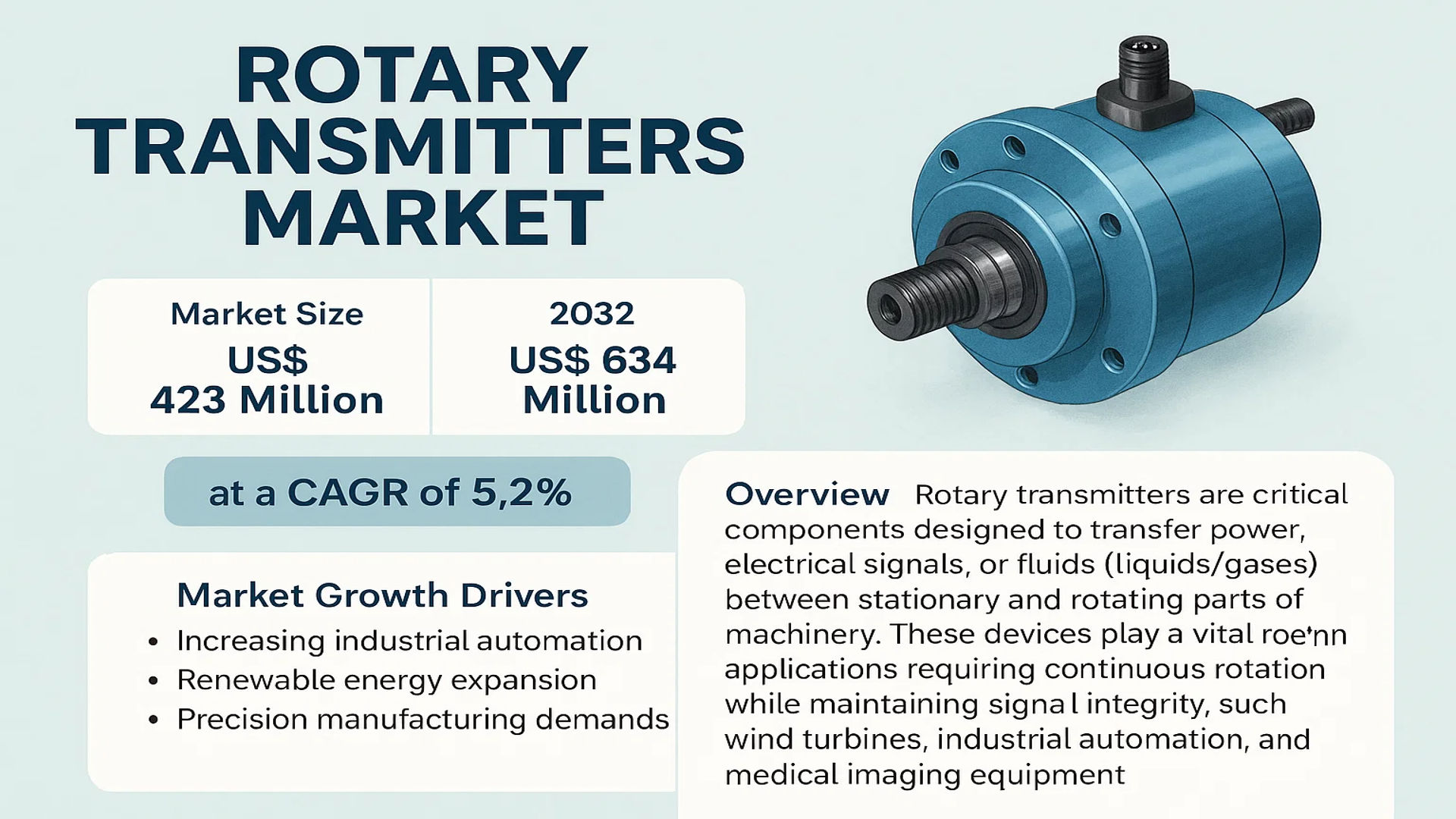
The global Rotary Transmitters Market size was valued at US$ 423 million in 2024 and is projected to reach US$ 634 million by 2032, at a CAGR of 5.2% during the forecast period 2025-2032.
Rotary transmitters are critical components designed to transfer power, electrical signals, or fluids (liquids/gases) between stationary and rotating parts of machinery. These devices play a vital role in applications requiring continuous rotation while maintaining signal integrity, such as wind turbines, industrial automation systems, and medical imaging equipment. Common variants include slip rings, rotary unions, and wireless data transmitters, each optimized for specific operational requirements.
The market growth is driven by increasing industrial automation, renewable energy expansion, and precision manufacturing demands. While the automotive sector remains a key adopter, emerging applications in robotics and medical devices present new opportunities. However, technological complexities and high precision requirements pose challenges for manufacturers. Leading companies like Rotork, TE Connectivity, and Meridian Laboratory are investing in compact, high-speed designs to meet evolving industry needs.
MARKET DYNAMICS
MARKET DRIVERS
Growing Industrial Automation Adoption to Fuel Rotary Transmitter Demand
The global push towards industrial automation is significantly driving the rotary transmitters market. As factories increasingly adopt Industry 4.0 technologies, there is rising demand for reliable motion control components that can operate in high-precision industrial environments. Rotary transmitters play a critical role in these automated systems by enabling accurate signal transmission between rotating machinery and control units. The industrial automation market is projected to grow at over 8% annually, creating substantial opportunities for rotary transmitter manufacturers. Their ability to withstand harsh industrial conditions while maintaining signal integrity makes them indispensable in modern manufacturing setups.
Expansion of Automotive Sector to Accelerate Market Growth
Automotive manufacturers are increasingly incorporating rotary transmitters in various applications ranging from steering systems to transmission controls. The growing production of electric vehicles, which require sophisticated motion control systems, is particularly driving demand. With global electric vehicle sales surpassing 10 million units in 2023, representing a 35% increase from the previous year, this presents significant growth potential for rotary transmitter suppliers. The technology’s ability to provide accurate angular position feedback makes it essential for advanced driver assistance systems (ADAS) and autonomous driving applications that are becoming standard in modern vehicles.
Medical Device Innovation Creates New Application Areas
The medical industry’s rapid technological advancement is opening new opportunities for rotary transmitters in precision medical equipment. Surgical robots, diagnostic imaging systems, and patient monitoring devices increasingly rely on high-accuracy rotational position sensing. The global medical device market, valued at over $500 billion, continues to expand with particular growth in minimally invasive surgical tools where rotary transmitters enable precise instrument control. Their ability to maintain sterility while providing reliable performance in critical medical applications makes them valuable components in healthcare technology.
MARKET RESTRAINTS
High Initial Costs and Complex Integration to Limit Market Penetration
While rotary transmitters offer numerous advantages, their relatively high cost compared to simpler alternatives remains a significant barrier to adoption. The precision engineering required to manufacture these components results in higher prices that may deter cost-sensitive industries. Additionally, integrating rotary transmitters into existing systems often requires specialized technical expertise and potential system redesigns, creating additional implementation challenges. This is particularly evident in small and medium enterprises that may lack the resources for such upgrades.
Technical Limitations in Extreme Environments Pose Challenges
Rotary transmitters face operational limitations in extreme environmental conditions, particularly in applications involving very high temperatures, excessive vibration, or exposure to corrosive elements. While manufacturers continue to improve product durability, these constraints restrict use in certain industrial and energy sector applications where such conditions are common. The need for frequent maintenance or protective enclosures in harsh environments adds to the total cost of ownership, making some end-users hesitant to adopt the technology.
MARKET OPPORTUNITIES
Emerging Renewable Energy Sector Presents Growth Potential
The rapid expansion of renewable energy infrastructure, particularly in wind power generation, offers significant opportunities for rotary transmitter manufacturers. Modern wind turbines require reliable rotation sensing equipment for pitch control and yaw systems. With global wind energy capacity expected to grow by over 60% in the next five years, this represents a substantial market for advanced rotary transmitter solutions designed specifically for renewable energy applications. The ability to operate in remote locations with minimal maintenance makes them ideal for these applications.
Development of Smart Factories to Drive Innovation
The transition to smart manufacturing is prompting development of next-generation rotary transmitters with enhanced connectivity and diagnostic capabilities. These advanced versions can provide real-time performance data and predictive maintenance alerts, adding significant value in Industry 4.0 environments. As manufacturers increasingly adopt IoT-enabled equipment, the demand for smart rotary transmitters capable of seamless integration with digital twin systems and predictive analytics platforms is expected to grow substantially. This technological evolution presents opportunities for manufacturers to differentiate their offerings and command premium pricing.
MARKET CHALLENGES
Supply Chain Disruptions Continue to Impact Production
The rotary transmitter market continues to face challenges from global supply chain disruptions affecting the availability of critical components. Many manufacturers rely on specialized materials and electronic components that have experienced shortages and price fluctuations in recent years. These supply constraints can delay production timelines and increase manufacturing costs, ultimately affecting product availability and pricing in the market. The situation is particularly challenging for smaller manufacturers with limited supplier networks.
Increasing Competition from Alternative Technologies
Rotary transmitter manufacturers face growing competition from alternative sensing technologies that may offer cost or performance advantages in certain applications. Contactless sensing methods and emerging optical technologies continue to advance, potentially displacing traditional rotary transmitters in some market segments. Manufacturers must invest in continuous innovation to maintain their competitive position while addressing the specific needs of different industry verticals.
ROTARY TRANSMITTERS MARKET TRENDS
Industrial Automation and Motion Control Systems to Drive Market Growth
The rotary transmitters market is witnessing robust growth due to the rising demand for automation across industries, particularly in manufacturing, automotive, and energy sectors. Rotary transmitters play a critical role in systems requiring high-precision motion control and real-time data transmission. The global industrial automation market is expanding rapidly, with projections indicating a growth rate of approximately 9% CAGR over the next decade, further reinforcing the demand for these components. Additionally, advancements in wireless technologies are enabling the integration of rotary transmitters into smart factory setups, where seamless data transmission between rotating and stationary parts is essential.
Other Trends
Increasing Demand in Renewable Energy Applications
Rotary transmitters are increasingly utilized in renewable energy systems, particularly in wind turbines and solar tracking systems, where reliable signal transmission under high rotational stress is crucial. The global renewable energy sector is expected to grow at a compound annual growth rate (CAGR) of 8.4% from 2024 to 2032, boosting the adoption of high-performance rotary transmitters. These devices ensure efficient energy conversion by maintaining precise alignment and real-time monitoring capabilities, making them indispensable in modern renewable energy infrastructure.
Medical and Robotic Applications Fueling Innovation
The medical and robotics industries are emerging as significant growth areas for rotary transmitters, driven by the need for precise motion control in surgical robotics and diagnostic equipment. The robotic-assisted surgery market alone is projected to reach $35 billion by 2030, creating substantial demand for compact, high-reliability transmitters capable of operating in sterile environments. Manufacturers are now focusing on developing miniature and high-durability transmitters to meet the stringent requirements of medical applications, further broadening the market scope.
COMPETITIVE LANDSCAPE
Key Industry Players
Global Leaders Drive Innovation in Rotary Transmitter Technology
The global rotary transmitters market exhibits a moderately fragmented competitive landscape, with established players maintaining dominance through technological innovation while smaller firms compete through niche specialization. Rotork plc currently leads the market, commanding an estimated 18% revenue share in 2024, owing to its comprehensive portfolio spanning hydraulic, pneumatic, and electric rotary actuators with integrated transmitter solutions.
TE Connectivity and Meridian Laboratory Inc. collectively hold approximately 22% market share, attributed to their strong foothold in industrial automation applications and precision measurement technologies. Their growth is further propelled by strategic partnerships with OEMs across automotive and energy sectors.
Several European manufacturers are gaining traction through specialized solutions. BFI Betriebstechnik GmbH has emerged as a key player in high-temperature rotary signal transmission, while Venturetec Rotating Systems GmbH dominates in slip ring technology for renewable energy applications. These companies are expanding their global footprint through distribution agreements and localized manufacturing.
The competitive intensity is increasing as Asian manufacturers like L&J Technologies enter the market with cost-competitive offerings, particularly in the medium voltage segment. Meanwhile, established players are responding with value-added services including predictive maintenance solutions and IIoT integration capabilities.
List of Key Rotary Transmitter Manufacturers
- Rotork plc (UK)
- TE Connectivity (Switzerland)
- Meridian Laboratory Inc. (U.S.)
- BFI Betriebstechnik GmbH (Germany)
- Jordil Technic (Switzerland)
- TDS (U.S.)
- Binsfeld Engineering (U.S.)
- Venturetec Rotating Systems GmbH (Germany)
- L&J Technologies (China)
- TESTEM GmbH (Germany)
Segment Analysis:
By Type
Digital Signal Segment Dominates Due to Enhanced Precision in Motion Control Applications
The market is segmented based on type into:
- Analog Signal
- Digital Signal
- Others
By Application
Automobile Industry Leads with High Demand for Rotary Signal Transmission in Steering and Suspension Systems
The market is segmented based on application into:
- Automobile Industry
- Medical Industry
- Energy Industry
- Others
By Technology
Optical Sensing Gains Traction Due to Superior Accuracy in Harsh Environments
The market is segmented based on technology into:
- Optical Sensing
- Magnetic Sensing
- Contact-Based
By Operation Mode
Multi-Turn Operation Prevails in Industrial Applications Requiring Continuous Rotation Monitoring
The market is segmented based on operation mode into:
- Single-Turn
- Multi-Turn
Regional Analysis: Rotary Transmitters Market
Asia-Pacific
The Asia-Pacific region dominates the global rotary transmitters market, holding the largest revenue share in 2024. This leadership stems from robust industrial automation expansion across China, Japan, and India, coupled with significant advancements in automotive manufacturing and renewable energy projects. China, accounting for over 35% of regional demand, sees strong adoption of digital signal transmitters in electric vehicle production lines and wind turbine installations. While cost-effective analog solutions remain popular in Southeast Asia for budget-sensitive applications, Japan leads in high-precision optical rotary transmitter innovations for medical robotics. The region’s growth is further bolstered by government initiatives like India’s “Make in India” program, which promotes domestic manufacturing of automation components.
North America
North America maintains technological leadership in advanced rotary transmitter solutions, particularly in medical and aerospace applications. The U.S. market, valued at approximately $280 million in 2024, benefits from stringent FDA requirements for medical device components and substantial R&D investments by key players like TE Connectivity and Rotork. Canada’s growing robotics sector and Mexico’s expanding automotive manufacturing base create additional demand spikes. Recent developments include increased adoption of wireless rotary transmitters in Industry 4.0 implementations, with cybersecurity becoming a critical purchase consideration. However, higher product costs compared to Asian imports occasionally limit market penetration in price-sensitive segments.
Europe
European demand focuses on energy-efficient and precise rotary transmitters, driven by the region’s strong machinery manufacturing sector and renewable energy transition. Germany’s industrial automation sector accounts for nearly 25% of regional consumption, with particular emphasis on multi-turn absolute encoders for CNC machinery. The EU’s strict EMC directives and RoHS compliance requirements have accelerated development of eco-friendly models with reduced electromagnetic interference. Notable trends include growing integration of IoT capabilities in rotary transmitters for predictive maintenance applications. While Western Europe shows mature market characteristics, Eastern Europe presents growth opportunities as manufacturing facilities upgrade legacy equipment.
South America
The South American market exhibits moderate growth potential, with Brazil representing over 60% of regional demand concentrated in mining and oil & gas applications. Economic volatility continues to impact capital expenditure on industrial automation, leading to preference for durable analog transmitters over premium digital models. Argentina’s renewable energy projects and Chile’s mining sector modernization drive selective demand spikes. Infrastructure limitations in power transmission applications create niche opportunities for robust rotary transmitter solutions capable of operating in harsh environments. Market expansion remains constrained by import dependency and currency fluctuations affecting equipment procurement budgets.
Middle East & Africa
This emerging market shows promising growth in oilfield applications and infrastructure development projects across GCC countries. The UAE leads in adoption of explosion-proof rotary transmitters for hazardous environments, while Saudi Arabia’s Vision 2030 industrialization plans stimulate demand in manufacturing sectors. Africa’s market remains highly fragmented, with South Africa accounting for most sophisticated applications in mining equipment. Challenges include limited local technical support capabilities and preference for low-cost alternatives. However, increasing investments in smart city projects and desalination plants present long-term opportunities for rotary transmitter suppliers offering customized solutions.
Technology Focus Across Regions
Digital rotary transmitters are gaining faster adoption in developed markets (70% of North American/European sales) due to Industry 4.0 requirements, while analog models maintain 55% share in price-sensitive emerging markets. Wireless functionality represents the fastest-growing segment globally, projected to capture 25% of the market by 2032, particularly in applications requiring reduced wiring complexity in rotating machinery.
Report Scope
This market research report provides a comprehensive analysis of the global and regional Rotary Transmitters markets, covering the forecast period 2025–2032. It offers detailed insights into market dynamics, technological advancements, competitive landscape, and key trends shaping the industry.
Key focus areas of the report include:
- Market Size & Forecast: Historical data and future projections for revenue, unit shipments, and market value across major regions and segments.
- Segmentation Analysis: Detailed breakdown by product type (Analog Signal, Digital Signal, Others), application (Automobile, Medical, Energy Industries), and end-user industries.
- Regional Outlook: Insights into market performance across North America, Europe, Asia-Pacific, Latin America, and the Middle East & Africa, including country-level analysis.
- Competitive Landscape: Profiles of leading market participants including TDS, Meridian Laboratory Inc., Jordil Technic, BFI Betriebstechnik GmbH, and their product portfolios, R&D focus, and strategic initiatives.
- Technology Trends & Innovation: Assessment of emerging technologies in rotary signal transmission, integration with Industry 4.0 systems, and advancements in materials science.
- Market Drivers & Restraints: Evaluation of factors such as industrial automation growth, renewable energy sector expansion, and challenges like component miniaturization requirements.
- Stakeholder Analysis: Strategic insights for OEMs, system integrators, component suppliers, and investors regarding market opportunities and competitive positioning.
The research employs both primary and secondary methodologies, including expert interviews, validated market data, and comprehensive competitive analysis to ensure accuracy and reliability.
FREQUENTLY ASKED QUESTIONS:
What is the current market size of Global Rotary Transmitters Market?
-> Rotary Transmitters Market size was valued at US$ 423 million in 2024 and is projected to reach US$ 634 million by 2032, at a CAGR of 5.2% during the forecast period 2025-2032.
Which key companies operate in Global Rotary Transmitters Market?
-> Key players include TDS, Meridian Laboratory Inc., Jordil Technic, BFI Betriebstechnik GmbH, Binsfeld Engineering, Rotork, and TE Connectivity, among others.
What are the key growth drivers?
-> Primary growth drivers include increasing industrial automation, expansion of renewable energy infrastructure, and demand for precise motion control systems across multiple industries.
Which region dominates the market?
-> Europe currently leads in market share, while Asia-Pacific shows the highest growth potential due to rapid industrialization.
What are the emerging trends?
-> Emerging trends include development of wireless rotary transmitters, integration with IoT platforms, and advanced materials for harsh environment applications.

Get Sample Report PDF for Exclusive Insights
Report Sample Includes
- Table of Contents
- List of Tables & Figures
- Charts, Research Methodology, and more...
 Download Sample Report PDF