MARKET INSIGHTS
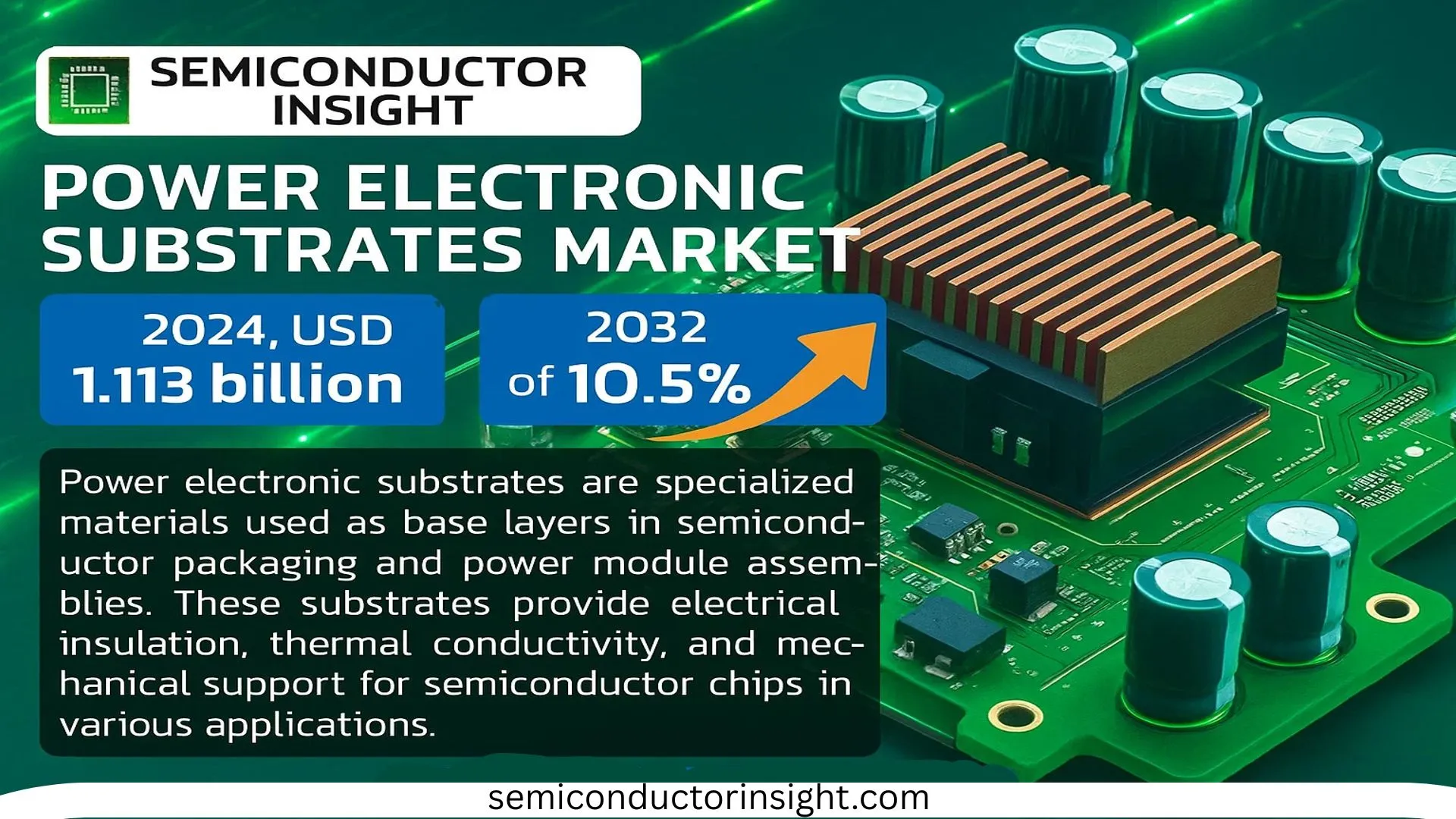
Global Power Electronic Substrates Market was valued at USD 1.113 billion in 2024 and is projected to reach USD 2.203 billion by 2032, exhibiting a CAGR of 10.5% during the forecast period.
Power electronic substrates are specialized materials used as base layers in semiconductor packaging and power module assemblies. These substrates provide electrical insulation, thermal conductivity, and mechanical support for semiconductor chips in various applications. The market includes Direct Bonded Copper (DBC), Active Metal Brazed (AMB), Insulated Metal Substrate (IMS), and other substrate technologies designed for high-power applications across multiple industries.
The market growth is driven by increasing demand for energy-efficient power electronics, expansion of electric vehicle production, and growing investments in renewable energy infrastructure. Additionally, advancements in wide-bandgap semiconductors like silicon carbide (SiC) and gallium nitride (GaN) require advanced substrate materials capable of handling higher temperatures and power densities. The market is also benefiting from government initiatives promoting clean energy and electrification across major economies.
Asia-Pacific dominates the global market with approximately 45% market share, followed by North America and Europe with about 23% each. This distribution reflects both manufacturing concentration and adoption rates of advanced power electronics across different regions.
MARKET DRIVERS
Proliferation of Electric Vehicles (EVs) and Hybrid Electric Vehicles (HEVs)
The transition towards electric mobility is a primary driver for the power electronic substrates market. These substrates, which include Direct Bonded Copper (DBC) and Active Metal Brazed (AMB) ceramics, are essential for manufacturing high-performance power modules used in EV/HEV inverters, onboard chargers, and DC-DC converters. The demand for vehicles with higher power density and better thermal management is pushing the adoption of advanced substrate materials like silicon nitride (Si3N4) and aluminum nitride (AlN) to replace traditional aluminum oxide (Al2O3). Global EV sales are projected to grow at a compound annual growth rate (CAGR) of over 20% in the coming years, directly fuelling market expansion.
Expansion of Renewable Energy Infrastructure
Investments in renewable energy generation, particularly in solar and wind power, are creating substantial demand for robust power electronic systems. Substrates are critical components in the insulated-gate bipolar transistors (IGBTs) and MOSFETs used within solar inverters and wind turbine converters. These applications require substrates that can handle high voltages, high temperatures, and offer excellent isolation properties. The global push for decarbonization, supported by government policies and declining technology costs, is accelerating the installation of renewable energy capacity, thereby driving the market for high-reliability power electronic substrates.
➤ The market for wide-bandgap semiconductors like Silicon Carbide (SiC) and Gallium Nitride (GaN) is a significant growth catalyst. These semiconductors operate at higher frequencies and temperatures than traditional silicon, necessitating substrates with superior thermal conductivity, such as AlN and Si3N4, to effectively dissipate heat and maximize device performance and longevity.
Furthermore, the ongoing industrial automation and growth in consumer electronics contribute to steady demand. Industrial motor drives, uninterruptible power supplies (UPS), and advanced gaming consoles all rely on power modules built on these substrates to ensure efficiency and reliability.
MARKET CHALLENGES
High Material and Manufacturing Costs
The production of advanced ceramic substrates, particularly those using AlN and Si3N4, involves complex processes like sintering and metalization, which are energy-intensive and require specialized equipment. The raw materials themselves, such as high-purity aluminum nitride powder, are expensive. These high costs can be a barrier to adoption, especially in price-sensitive applications, and put pressure on manufacturers’ profit margins. Achieving economies of scale remains a key challenge for wider market penetration.
Other Challenges
Technical and Supply Chain Complexities
The market faces challenges related to the stringent technical requirements for thermal cycling performance, coefficient of thermal expansion (CTE) matching, and bond strength. Any defect can lead to module failure. Additionally, the supply chain for high-quality ceramic powders and specialized metalization materials can be fragile, potentially leading to disruptions and price volatility, which complicates production planning and cost management for substrate manufacturers.
MARKET RESTRAINTS
Maturity and Cost-Competitiveness of Alternative Technologies
While advanced substrates offer superior performance, well-established and lower-cost alternatives like epoxy-based printed circuit boards (PCBs) and standard Al2O3 ceramics continue to be sufficient for many mid- and low-power applications. The performance benefits of AlN or Si3N4 substrates do not always justify their higher cost in these segments, restraining market growth. The entrenched position and continuous improvement of these alternative solutions create significant competitive pressure on the adoption of premium substrate materials.
Technical Limitations in Extreme Conditions
Despite their advantages, current substrate technologies face limitations under extreme operational conditions. For instance, the long-term reliability under intense thermal cycling, especially with large temperature swings, can be a concern. Pushing the boundaries of power density and operating temperature for next-generation applications, such as in aerospace or extreme fast-charging for EVs, requires further material science innovations that are still in development, temporarily restraining market potential in these cutting-edge areas.
MARKET OPPORTUNITIES
Advent of Ultra-Wide Bandgap Semiconductors
The emerging development of ultra-wide bandgap semiconductors, such as Gallium Oxide (Ga2O3) and Diamond, presents a significant long-term opportunity. These materials promise even greater performance than SiC and GaN, but they will require substrate solutions that can handle unprecedented power densities and thermal loads. This creates a frontier for research and development into next-generation substrate materials and bonding technologies, positioning innovative companies to capture value in future high-performance power electronics markets.
Growth in 5G Infrastructure and Data Centers
The global rollout of 5G networks and the expansion of hyperscale data centers are creating robust demand for efficient power conversion and management systems. Power modules used in 5G base stations and server power supplies require high-frequency operation and excellent thermal performance, driving the need for advanced substrates. The energy efficiency demands of these sectors make the performance benefits of substrates like AlN increasingly compelling, opening up a substantial and growing addressable market.
Power Electronic Substrates Market Trends
Robust Market Expansion Driven by High-Growth Applications
The global Power Electronic Substrates market is on a significant growth trajectory, with its value projected to surge from 1113 million US dollars in 2024 to 2203 million US dollars by 2032. This represents a compound annual growth rate (CAGR) of 10.5% during the forecast period. The expansion is primarily fueled by the escalating demand from key sectors such as consumer electronics and automotive industries, which rely heavily on advanced power modules for energy efficiency and performance. The increasing adoption of electric vehicles, renewable energy systems, and industrial automation is creating sustained demand for high-performance substrates.
Other Trends
Dominance of Direct Bonded Copper (DBC) Technology
In terms of product type, DBC substrates continue to dominate the market, holding a share of over 50%. This leadership is attributed to their superior thermal conductivity, high electrical insulation, and excellent mechanical strength, making them the preferred choice for high-power applications. While DBC leads, other substrate types like Active Metal Brazed (AMB) and Insulated Metal Substrates (IMS) are also gaining traction in specific applications that require different performance characteristics, indicating a diverse technological landscape.
Asia-Pacific as the Uncontested Regional Leader
Geographically, the Asia-Pacific region is the largest market for power electronic substrates, accounting for approximately 45% of the global share. This dominance is driven by the region’s strong manufacturing base for consumer electronics, the rapid adoption of electric vehicles, particularly in China, and significant investments in industrial automation. North America and Europe follow, each holding a substantial share of about 23%. The market features a competitive landscape with key global players like Kyocera, Rogers Corporation, and Tong Hsing, who are continuously innovating to maintain their market positions amid rising global demand.
COMPETITIVE LANDSCAPE
Key Industry Players
A Market Dominated by Specialized Material Science Leaders
The global Power Electronic Substrates market is characterized by the presence of a few dominant international players with strong technological expertise and extensive product portfolios. Japanese and American companies hold significant market share, with Kyocera and Rogers Corporation being widely recognized as industry leaders. These companies have established a stronghold through their advanced manufacturing capabilities, particularly in the high-volume Direct Bonded Copper (DBC) substrate segment, which commands over 50% of the market. The competitive landscape is consolidated, with the top five companies accounting for a substantial portion of global revenue. Competition is primarily based on product performance, thermal management properties, reliability, and the ability to innovate for next-generation power modules used in electric vehicles, renewable energy systems, and industrial automation.
Beyond the top-tier players, a number of other significant companies compete effectively in niche segments or specific geographic regions. Taiwanese manufacturer Tong Hsing and German-based Heraeus Electronics are prominent players with strong global footprints. Several Asian manufacturers, including Denka, KCC, and DOWA, leverage regional supply chain advantages and cost competitiveness, especially in the Asia-Pacific region, which is the largest market, accounting for approximately 45% of global demand. Chinese companies like Nanjing Zhongjiang New Material Science & Technology are also expanding their presence, focusing on the domestic market and cost-sensitive applications. This secondary tier of competitors often specializes in specific substrate types like Active Metal Brazed (AMB) or Insulated Metal Substrates (IMS), catering to diverse application needs across consumer electronics, automotive, and energy sectors.
List of Key Power Electronic Substrates Companies Profiled
- Kyocera
- Rogers Corporation
- Tong Hsing
- Heraeus Electronics
- Denka
- KCC
- DOWA
- Nanjing Zhongjiang New Material Science & Technology
- Amogreentech
- Ferrotec
- NGK Electronics Devices
- Stellar Industries Corp
- Remtec
- Zibo Linzi Yinhe High-Tech Development
Segment Analysis:
| Segment Category | Sub-Segments | Key Insights |
| By Type |
|
DBC substrates are the dominant technology, prized for their optimal combination of high thermal conductivity and robust mechanical strength, making them the preferred solution for high-power applications. The market for AMB is growing significantly due to its superior performance in extreme temperature environments, which is increasingly critical for next-generation power modules. IMS substrates maintain a strong position in cost-sensitive applications where moderate thermal management is sufficient. The evolving demands for higher power density and reliability across all electronics sectors continue to drive innovation and material selection within this segment. |
| By Application |
|
Consumer Electronics represents the largest application segment, driven by the pervasive need for efficient thermal management in compact devices like smartphones and laptops. The Automotive sector is a major growth engine, with the rapid electrification of vehicles requiring advanced substrates for power control units, inverters, and onboard chargers. The Energy sector demand is bolstered by investments in renewable energy systems and smart grid infrastructure, which rely on high-performance power electronics. Industrial Equipment applications demand substrates that ensure reliability and longevity in harsh operational environments, supporting a steady market. |
| By End User |
|
Power Module Manufacturers are the primary end users, as they integrate substrates into complete power modules for sale to OEMs. These manufacturers drive demand for high-quality, reliable substrates and work closely with material suppliers to meet specific technical requirements. OEMs constitute a significant segment, increasingly involved in specifying substrate performance to ensure the durability and efficiency of their final products. The Aftermarket/Component Suppliers segment caters to maintenance, repair, and small-scale production needs, emphasizing availability and compatibility over cutting-edge performance specifications. |
| By Material |
|
Ceramic-based materials, particularly alumina and aluminum nitride, are the leading segment due to their excellent electrical insulation and thermal management properties, which are fundamental to substrate functionality. Metal-based substrates are crucial for providing the necessary thermal dissipation and structural support within the power modules. The development of Composite & Other Advanced Materials is a key area of innovation, aimed at achieving even higher thermal performance and reliability to meet the demanding requirements of future power electronics applications, pushing the boundaries of material science. |
| By Manufacturing Technology |
|
Direct Bonding technologies, including DBC and AMB, are the dominant manufacturing processes, favored for creating durable, high-performance substrates capable of withstanding significant thermal and mechanical stress. Thick Film Technology remains important for applications requiring complex circuitry and cost-effective production. Thin Film Technology is utilized for high-precision applications where fine-line resolution and minimal thickness are critical, often seen in advanced microelectronics. The choice of manufacturing technology is a crucial determinant of the substrate’s final performance characteristics, cost, and suitability for specific applications. |
Regional Analysis: Power Electronic Substrates Market
Asia-Pacific
The region’s dominance is rooted in its unparalleled manufacturing infrastructure, particularly in semiconductor and electronics production. Integrated supply chains for raw materials like alumina and aluminum nitride, coupled with advanced ceramic processing facilities, allow for efficient and large-scale production of substrates. This ecosystem supports both high-volume standard products and specialized custom solutions demanded by global customers, making it the primary sourcing destination.
Intensive R&D investments from both corporate entities and national programs focus on enhancing substrate properties like thermal conductivity, coefficient of thermal expansion matching, and reliability under high power cycling. This drive for innovation leads to the development of next-generation substrates essential for wide-bandgap semiconductors (SiC, GaN), solidifying the region’s role as a technology pioneer rather than just a manufacturing center.
Massive local markets for electric vehicles, industrial automation, and consumer electronics create a powerful internal demand pull. The rapid electrification of transportation and push for energy efficiency in the region’s manufacturing sector directly translates into sustained high demand for the power electronic modules that rely on these advanced substrates, creating a virtuous cycle of production and consumption.
Supportive government policies, including subsidies for electric vehicle adoption, targets for renewable energy integration, and funding for advanced materials research, create a highly favorable environment for market growth. These initiatives de-risk investment in new substrate technologies and production capacity, encouraging continuous market expansion and reinforcing the region’s competitive advantage on the global stage.
North America
North America maintains a strong position as a key innovation and high-value manufacturing hub for power electronic substrates. The market is characterized by a strong focus on research and development, particularly in partnership with leading universities and national laboratories, driving advancements in materials science for substrates used in demanding applications like aerospace, defense, and next-generation electric vehicles. The presence of major semiconductor companies and power module manufacturers fosters a demand for high-reliability, specialized substrates. While the volume of manufacturing may be lower than in Asia-Pacific, the region excels in producing substrates for high-performance, low-volume applications where quality, reliability, and advanced thermal management are paramount. The push for electrification in the automotive and industrial sectors, supported by government initiatives, continues to stimulate demand for advanced substrate solutions.
Europe
The European market for power electronic substrates is distinguished by its strong automotive industry and stringent regulations promoting energy efficiency and renewable energy. This drives significant demand for substrates used in electric vehicle powertrains, industrial drives, and solar/wind power conversion systems. The region has a robust base of specialized material suppliers and substrate manufacturers who focus on high-quality, durable products that meet rigorous automotive and industrial standards. Collaborative research initiatives within the European Union aimed at advancing power electronics for green technologies further stimulate innovation in substrate materials, particularly for silicon carbide and gallium nitride applications. The market is competitive, with a emphasis on technological sophistication and environmental sustainability in manufacturing processes.
South America
The South American market for power electronic substrates is emerging, with growth primarily driven by the gradual modernization of industrial infrastructure and increasing investments in renewable energy projects, particularly in countries like Brazil and Chile. The demand is currently concentrated on more standard substrate types for industrial motor drives and power supplies. The market is less developed in terms of local high-tech manufacturing, relying heavily on imports from North America, Europe, and Asia-Pacific. However, the growing awareness of energy efficiency and the potential for electric mobility present future growth opportunities. The market dynamics are characterized by a focus on cost-effectiveness and reliability for essential industrial applications rather than cutting-edge technological innovation.
Middle East & Africa
The market in the Middle East & Africa is in a nascent stage but shows potential for growth linked to economic diversification efforts, particularly in the Gulf Cooperation Council countries. Investments in infrastructure, including power generation, transmission, and industrial projects, are creating initial demand for power electronic substrates used in control systems and power conversion. The renewable energy sector, especially solar power, is another area of developing interest. However, the region currently has limited local manufacturing capability and relies almost entirely on imports. Market dynamics are shaped by large-scale infrastructure projects and a growing focus on securing stable and efficient power systems, presenting a long-term opportunity for substrate suppliers as the regional industrial base matures.
Report Scope
This market research report provides a comprehensive analysis of the Power Electronic Substrates Market, covering the forecast period 2025–2032. It offers detailed insights into market dynamics, technological advancements, competitive landscape, and key trends shaping the industry.
Key focus areas of the report include:
- Market Overview: The report begins with an overview outlining its current market scenario, key growth indicators, and industry transformation drivers. It discusses macroeconomic factors, demand–supply balance, regulatory landscape, and the strategic role of semiconductors in powering advancements across industries such as automotive, telecommunications, consumer electronics, and industrial automation.
- Market Size & Forecast: Historical data and future projections for revenue, unit shipments, and market value across major regions and segments.
- Segmentation Analysis: Detailed breakdown by product type, technology, application, and end-user industry to identify high-growth segments and investment opportunities.
- Regional Insights: Insights into market performance across North America, Europe, Asia-Pacific, Latin America, and the Middle East & Africa, including country-level analysis where relevant.
- Competitive Landscape: Profiles of leading market participants, including their product offerings, R&D focus, manufacturing capacity, pricing strategies, and recent developments such as mergers, acquisitions, and partnerships.
- Technology Trends & Innovation: Assessment of emerging technologies, integration of AI/IoT, semiconductor design trends, fabrication techniques, and evolving industry standards.
- Market Drivers & Restraints: Evaluation of factors driving market growth along with challenges, supply chain constraints, regulatory issues, and market-entry barriers.
- Stakeholder Insights: Insights for component suppliers, OEMs, system integrators, investors, and policymakers regarding the evolving ecosystem and strategic opportunities.
Primary and secondary research methods are employed, including interviews with industry experts, data from verified sources, and real-time market intelligence to ensure the accuracy and reliability of the insights presented.
FREQUENTLY ASKED QUESTIONS:
What is the current market size of Power Electronic Substrates Market?
-> Global Power Electronic Substrates Market was valued at USD 1113 million in 2024 and is projected to reach USD 2203 million by 2032, exhibiting a CAGR of 10.5% during the forecast period.
Which key companies operate in Power Electronic Substrates Market?
-> Key players include Kyocera, Rogers Corporation, Tong Hsing, Heraeus Electronics, Denka, among others.
What are the key growth drivers?
-> Key growth drivers include increasing demand for consumer electronics, automotive electrification, and the expansion of renewable energy infrastructure.
Which region dominates the market?
-> Asia-Pacific is the largest market, with a share of about 45%, followed by North America and Europe.
What are the emerging trends?
-> Emerging trends include advancements in DBC and AMB substrate technologies, integration of high-power modules, and the push for materials with higher thermal conductivity.

Get Sample Report PDF for Exclusive Insights
Report Sample Includes
- Table of Contents
- List of Tables & Figures
- Charts, Research Methodology, and more...
 Download Sample Report PDF