
MARKET INSIGHTS
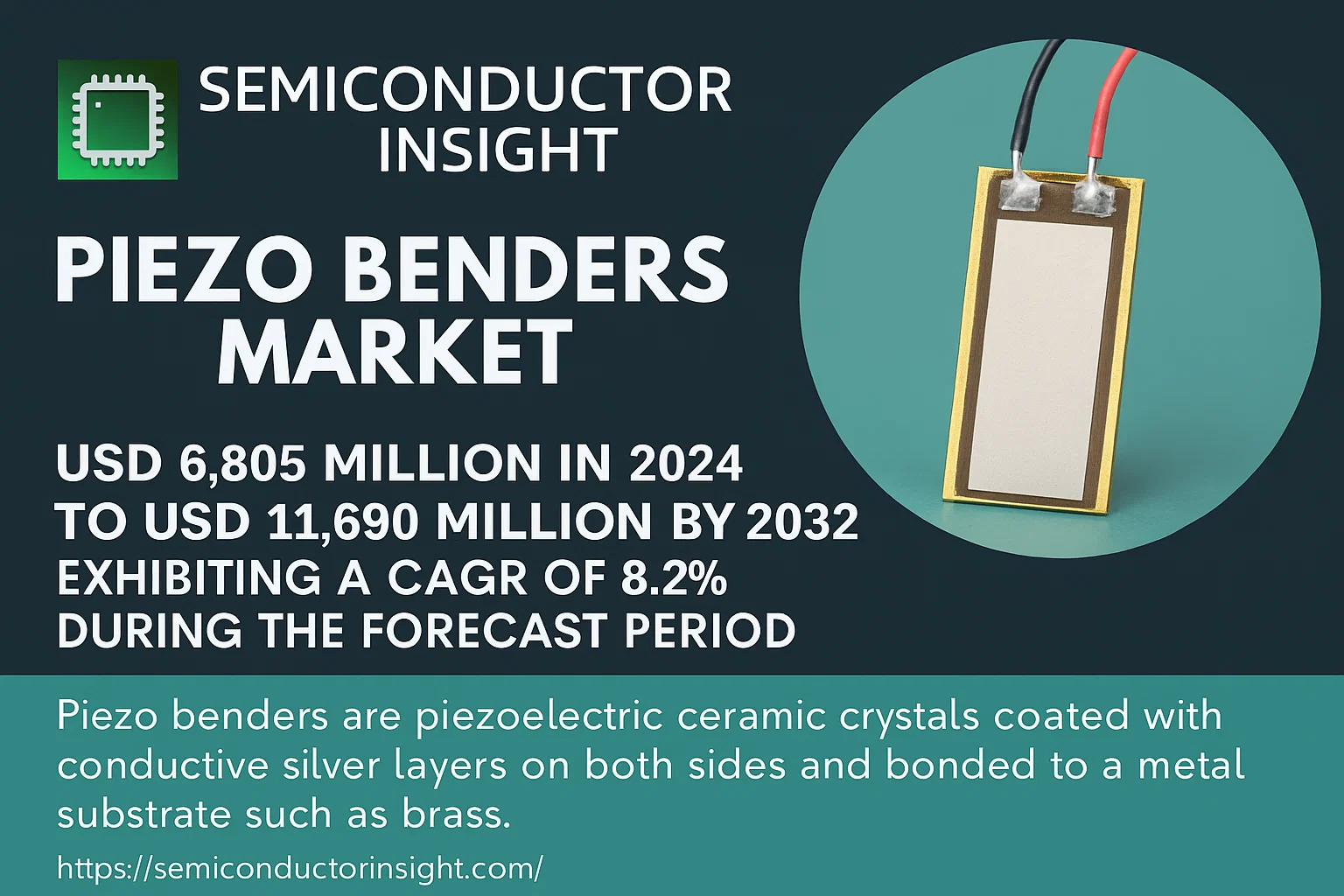
Global Piezo Benders Market size was valued at USD 6,805 million in 2024 to USD 11,690 million by 2032, exhibiting a CAGR of 8.2% during the forecast period.
Piezo benders are piezoelectric ceramic crystals coated with conductive silver layers on both sides and bonded to a metal substrate such as brass, nickel alloy, or stainless steel. These components convert electrical energy into precise mechanical displacement, making them essential for applications requiring high-precision motion control or vibration generation.
The market growth is driven by increasing demand across industries such as consumer electronics, automotive, and medical devices. While Japan dominates as the largest consumption region with a 25% market share, North America follows closely at 22%. Key players MURATA and TDK collectively hold 29% of the global market, reflecting the industry’s concentrated competitive landscape. Technological advancements in actuator design and expanding applications in industrial automation are further accelerating market expansion.
MARKET DRIVERS
Rising Demand for Miniaturized and Energy-Efficient Actuators
The global push for device miniaturization across consumer electronics, medical devices, and industrial automation is a primary driver for the piezo benders market. These components offer high precision and rapid response times in compact form factors, making them ideal for applications where space is limited. Their low power consumption is particularly valuable in battery-operated and portable devices. The transition towards more efficient and smaller components is accelerating adoption.
Expansion in Automotive and Medical Applications
Innovation in automotive sectors, such as advanced driver-assistance systems (ADAS), fuel injection systems, and haptic feedback interfaces, relies on reliable micro-actuation. Similarly, the medical device industry utilizes piezo benders in drug delivery systems, surgical tools, and diagnostic equipment. Growth in these high-value industries directly fuels market expansion, with the medical segment projected to grow by over 8% annually.
➤ Technological advancements in material science, leading to higher displacement and longer life cycles for piezo ceramics, are fundamentally enhancing product performance and expanding application possibilities.
The need for reliable and maintenance-free components in industrial IoT and smart manufacturing is also contributing to increased usage. Piezo benders provide the durability and precision required for continuous operation in harsh environments.
MARKET CHALLENGES
High Cost of Raw Materials and Manufacturing
The production of high-quality piezo ceramics involves expensive raw materials like lead zirconate titanate (PZT) and complex manufacturing processes, including precise sintering and poling. This results in a higher final product cost compared to traditional electromagnetic actuators, which can be a barrier to adoption in price-sensitive markets. Fluctuations in the prices of rare-earth elements further exacerbate cost instability.
Other Challenges
Technical Limitations in High-Load Applications
Piezo benders generate limited force and are susceptible to mechanical failure under high static loads or impact, restricting their use in heavy-duty industrial applications. Performance can also degrade significantly in extreme temperature environments.
Fragmented Supply Chain and Intense Competition
The market is characterized by the presence of numerous small and medium-sized enterprises, leading to pricing pressures. Managing a complex global supply chain for specialized materials presents logistical and quality control challenges for manufacturers.
MARKET RESTRAINTS
Environmental and Regulatory Pressures
The use of lead-based materials in many piezo ceramics faces increasing scrutiny due to environmental regulations such as the RoHS directive. Developing compliant, lead-free alternatives that match the performance of PZT is technologically challenging and costly, potentially slowing market growth in regulated regions like Europe and North America.
Competition from Alternative Technologies
Electromagnetic motors, shape memory alloys, and electrostatic actuators present viable alternatives for specific applications, often at a lower cost. In cases where extreme precision or high-frequency operation is not critical, these competing technologies can limit the addressable market for piezo benders.
MARKET OPPORTUNITIES
Emerging Applications in Energy Harvesting and IoT
The integration of piezo benders into energy harvesting systems to power wireless sensor nodes and low-power IoT devices represents a significant growth avenue. Their ability to convert ambient mechanical vibrations into electrical energy is ideal for creating self-powered systems in smart infrastructure and remote monitoring applications.
Advancements in Lead-Free Piezoelectric Materials
Ongoing research into high-performance, environmentally friendly materials like sodium potassium niobate (KNN) and barium titanate is creating new market opportunities. Success in commercializing these materials will open up sectors currently restricted by regulations and tap into the growing demand for green technologies.
Growth in Consumer Electronics and Haptics
The demand for enhanced user interfaces in smartphones, wearables, and gaming controllers is driving the adoption of piezo benders for precise haptic feedback. This trend is expected to continue as consumers seek more immersive and responsive tactile experiences.
Piezo Benders Market Trends
Robust Global Market Expansion
The global Piezo Benders market is on a strong growth trajectory, with a valuation of $6805 million in 2024 projected to reach $11690 million by 2032, representing a compound annual growth rate (CAGR) of 8.2%. This significant expansion is underpinned by increasing adoption across a diverse range of applications, from consumer electronics to industrial automation. The fundamental component, a piezo ceramic crystal coated with silver and bonded to a metal substrate like brass or stainless steel, enables precise actuation and sensing capabilities that are in high demand. Market analysis indicates consistent growth in both revenue and sales volume, reflecting the component’s critical role in modern technology.
Other Trends
Concentrated Manufacturer Landscape
The competitive landscape is characterized by a high level of concentration, with the top two manufacturers, MURATA and TDK, collectively holding approximately 29% of the global market share. This dominance underscores the importance of technological expertise and large-scale manufacturing capabilities in this sector. The presence of other key players like MORGAN, TAIYO YUDEN, and KYOCERA ensures a competitive environment that drives innovation, particularly in enhancing the performance and reliability of ring benders and plate benders, which are the primary product types.
Regional Consumption Dynamics
Regionally, Japan stands as the largest market for Piezo Benders, accounting for nearly 25% of global consumption. This is closely followed by North America, which holds a 22% market share. The strong presence in these regions is driven by advanced manufacturing sectors and high demand for electronic components. Asia, excluding Japan, represents a significant area of future growth potential, with countries like China and South Korea rapidly increasing their consumption as their electronics and industrial manufacturing bases expand.
Segmentation by Application Driving Diversification
The application landscape for Piezo Benders is segmented into buzzers, actuators, sensors, and others, with each segment contributing to market diversification. Actuators and sensors represent key growth areas due to their essential functions in automation, precision instruments, and consumer devices. The versatility of the technology allows it to be tailored for specific performance requirements in different applications, ensuring its continued relevance. This diversification across applications helps mitigate market risks and supports sustained long-term growth, making the Piezo Benders market a dynamic and evolving sector.
COMPETITIVE LANDSCAPE
Key Industry Players
A Market Dominated by Global Electronics Giants and Specialized Component Suppliers
The competitive landscape of the global Piezo Benders market is characterized by the dominance of a few large multinational electronics component manufacturers. MURATA and TDK Corporation collectively command a significant portion of the market, with their combined share estimated at approximately 29%. This concentration reflects their extensive manufacturing capabilities, robust global distribution networks, and strong presence in key end-use industries such as consumer electronics and automotive. The market structure is moderately consolidated, where these top players leverage economies of scale and continuous R&D investment to maintain their leading positions. Japan is the largest regional market, accounting for nearly 25% of global consumption, which further strengthens the position of the leading Japanese manufacturers.
Beyond the market leaders, a diverse range of specialized manufacturers and suppliers compete in various niches. Companies like KYOCERA, CeramTec, and PI Ceramic are significant players, often focusing on high-performance or custom piezo ceramic solutions for specialized applications in medical devices, industrial automation, and aerospace. Other notable participants, such as TAIYO YUDEN, MORGAN Advanced Materials, and APC International, contribute to the market’s dynamism through technological innovation and by catering to specific application segments like actuators and sensors. The competitive environment is further fueled by regional players, particularly in Asia, who compete aggressively on price for high-volume, standard product segments.
List of Key Piezo Benders Companies Profiled
- MURATA
- TDK Corporation
- MORGAN Advanced Materials
- TAIYO YUDEN
- KYOCERA
- CeramTec
- PI Ceramic
- Exelis
- Sparkler Ceramics
- KEPO Electronics
- APC International
- TRS Technologies
- Noliac (a part of CTS Corporation)
- Smart Material Corp.
- SensorTech
Segment Analysis:
| Segment Category | Sub-Segments | Key Insights |
| By Type |
|
Plate Benders represent the leading type segment due to their superior versatility and ease of integration into a wide array of devices. Their thin, flat profile makes them particularly suitable for applications where compact form factors are critical, such as in consumer electronics and medical devices. The consistent performance and relatively straightforward manufacturing process of plate benders contribute to their dominant market position. While ring benders are essential for applications requiring radial displacement, such as certain types of pumps and valves, the broader applicability of plate benders across industries solidifies their leadership. The ‘Other’ category includes specialized designs that cater to niche, high-value applications with unique geometric or performance requirements. |
| By Application |
|
Actuators form the leading application segment, driven by the critical role of precise and rapid mechanical movement in modern automation and instrumentation. Piezo benders are favored for their high resolution, fast response times, and reliability in actuation tasks found in industrial equipment, optical systems, and automotive components. The transition towards miniaturization and the demand for energy-efficient components further bolster the demand for piezo-based actuators. While buzzers represent a mature and high-volume application, particularly in consumer electronics for audible alerts, the growth in sophisticated automation and robotics gives the actuator segment a more dynamic and expansive growth trajectory. The sensor application is also significant, especially for detecting vibration, force, and displacement with high sensitivity. |
| By End User |
|
Consumer Electronics is the dominant end-user segment, largely due to the pervasive use of piezo benders in devices like smartphones, wearables, and household appliances for haptic feedback and audible notifications. The relentless drive for product innovation and enhanced user experience in this sector creates a consistent and high-volume demand. The automotive industry is also a major and rapidly growing end user, integrating piezo components into advanced driver-assistance systems (ADAS), cabin controls, and fuel injection systems. Industrial manufacturing relies on piezo benders for precision automation and monitoring equipment, while the healthcare sector utilizes them in diagnostic instruments and drug delivery systems, valuing their precision and reliability. |
| By Material Substrate |
|
Brass is the leading material substrate used in piezo benders, primarily chosen for its excellent combination of mechanical properties, ease of fabrication, and cost-effectiveness. Its good electrical conductivity and solderability make it ideal for a wide range of standard applications. Nickel alloy substrates are selected for applications requiring higher strength, durability, and corrosion resistance, often found in demanding industrial or automotive environments. Stainless steel substrates are utilized in specialized applications where superior corrosion resistance and robustness are paramount, such as in medical devices or harsh environmental conditions, though they often come at a higher cost compared to brass. |
| By Sales Channel |
|
Direct Sales constitute the leading channel for the piezo benders market, especially for large-volume orders from major OEMs in the consumer electronics and automotive industries. This channel allows for close technical collaboration, customized product development, and streamlined supply chain management. Distributors play a crucial role in serving small to medium-sized enterprises and providing regional market coverage, offering inventory availability and logistical support. The online retail channel is an emerging segment, gaining traction for the sale of smaller quantities, prototyping components, and replacement parts, facilitated by the growth of B2B e-commerce platforms that cater to engineers and procurement specialists. |
Regional Analysis: Piezo Benders Market
The region’s unparalleled concentration of electronics manufacturing provides a massive, consistent demand base for piezo benders used in speakers, actuators, and sensors. This deep integration within global supply chains makes it the primary production and consumption center.
The thriving automotive industry, especially in China, Japan, and South Korea, increasingly incorporates piezo benders for applications like fuel injectors, touch-sensitive controls, and vibration sensors, driven by trends towards electrification and smart vehicles.
Strong governmental initiatives promoting high-tech industries and substantial investments in research and development foster continuous innovation in piezoelectric materials and applications, securing a competitive advantage for regional manufacturers.
A growing medical technology sector utilizes piezo benders for portable diagnostic devices, drug delivery systems, and ultrasonic imaging equipment, with regional companies leading in the development of cost-effective, advanced medical solutions.
North America
North America represents a highly advanced and innovation-driven market for piezo benders, characterized by strong demand from the aerospace, defense, and medical technology sectors. The region is home to numerous leading technology firms and research institutions that pioneer new applications, particularly in precision instrumentation and industrial automation. Strict regulatory standards and a focus on high-reliability components in sectors like healthcare and aerospace ensure a market for premium, high-performance piezo benders. Collaborative ecosystems between universities, corporations, and government agencies foster a continuous pipeline of innovation, though manufacturing is often more specialized and lower volume compared to Asia-Pacific.
Europe
The European market for piezo benders is mature and technologically sophisticated, with significant demand stemming from the automotive, industrial manufacturing, and healthcare industries. Germany, in particular, is a key player due to its strong automotive sector and leadership in industrial automation (Industry 4.0), where piezo actuators are critical for precision control. The region emphasizes high-quality, reliable components with a strong focus on research and development, supported by a well-established network of technical universities and corporate R&D centers. Environmental regulations and a shift towards green technologies also drive innovation in energy-efficient piezo applications.
South America
The South American market for piezo benders is emerging and relatively niche, with growth primarily linked to industrial automation investments and the medical device sector in countries like Brazil. The market is characterized by a reliance on imports for advanced components, with local manufacturing capacity still developing. Demand is gradually increasing as regional industries modernize, but market penetration is limited by economic volatility and less developed technological infrastructure compared to other regions. Opportunities exist in specific applications for consumer electronics assembly and automotive manufacturing localized within the region.
Middle East & Africa
The Middle East & Africa region represents a smaller but growing segment of the piezo benders market, with demand primarily driven by the healthcare sector and industrial projects in Gulf Cooperation Council countries. The market is in a developing phase, with most advanced components being imported. Growth is supported by investments in healthcare infrastructure and diversification efforts in oil-rich economies towards technology and manufacturing. However, the market faces challenges related to limited local manufacturing and a lower level of integration into global high-tech supply chains compared to other regions.
Report Scope
This market research report provides a comprehensive analysis of the Piezo Benders Market, covering the forecast period 2025–2032. It offers detailed insights into market dynamics, technological advancements, competitive landscape, and key trends shaping the industry.
Key focus areas of the report include:
- Market Overview: The report begins with an overview outlining its current market scenario, key growth indicators, and industry transformation drivers. It discusses macroeconomic factors, demand–supply balance, regulatory landscape, and the strategic role of semiconductors in powering advancements across industries such as automotive, telecommunications, consumer electronics, and industrial automation.
- Market Size & Forecast: Historical data and future projections for revenue, unit shipments, and market value across major regions and segments.
- Segmentation Analysis: Detailed breakdown by product type, technology, application, and end-user industry to identify high-growth segments and investment opportunities.
- Regional Insights: Insights into market performance across North America, Europe, Asia-Pacific, Latin America, and the Middle East & Africa, including country-level analysis where relevant.
- Competitive Landscape: Profiles of leading market participants, including their product offerings, R&D focus, manufacturing capacity, pricing strategies, and recent developments such as mergers, acquisitions, and partnerships.
- Technology Trends & Innovation: Assessment of emerging technologies, integration of AI/IoT, semiconductor design trends, fabrication techniques, and evolving industry standards.
- Market Drivers & Restraints: Evaluation of factors driving market growth along with challenges, supply chain constraints, regulatory issues, and market-entry barriers.
- Stakeholder Insights: Insights for component suppliers, OEMs, system integrators, investors, and policymakers regarding the evolving ecosystem and strategic opportunities.
Primary and secondary research methods are employed, including interviews with industry experts, data from verified sources, and real-time market intelligence to ensure the accuracy and reliability of the insights presented.
FREQUENTLY ASKED QUESTIONS:
What is the current market size of Piezo Benders Market?
-> Piezo Benders Market size was valued at USD 6,805 million in 2024 to USD 11,690 million by 2032, exhibiting a CAGR of 8.2% during the forecast period.
Which key companies operate in Piezo Benders Market?
-> Key players include MURATA, TDK, MORGAN, TAIYO YUDEN, KYOCERA, CeramTec, PI Ceramic, and Exelis, among others. The top two manufacturers, MURATA and TDK, hold about 29% of the global market share.
What are the key growth drivers?
-> Key growth drivers are analyzed through primary research involving manufacturers, suppliers, distributors, and industry experts, covering sales, revenue, demand, price changes, product developments, industry trends, drivers, challenges, and potential risks.
Which region dominates the market?
-> Japan is the largest consumption region, with a market share of nearly 25%. North America is the second largest consumption region with a 22% market share.
What are the emerging trends?
-> The report provides analysis of emerging trends based on quantitative and qualitative assessment to help readers develop business strategies, assess the competitive situation, and make informed decisions regarding Piezo Benders.

Get Sample Report PDF for Exclusive Insights
Report Sample Includes
- Table of Contents
- List of Tables & Figures
- Charts, Research Methodology, and more...
 Download Sample Report PDF


