MARKET INSIGHTS
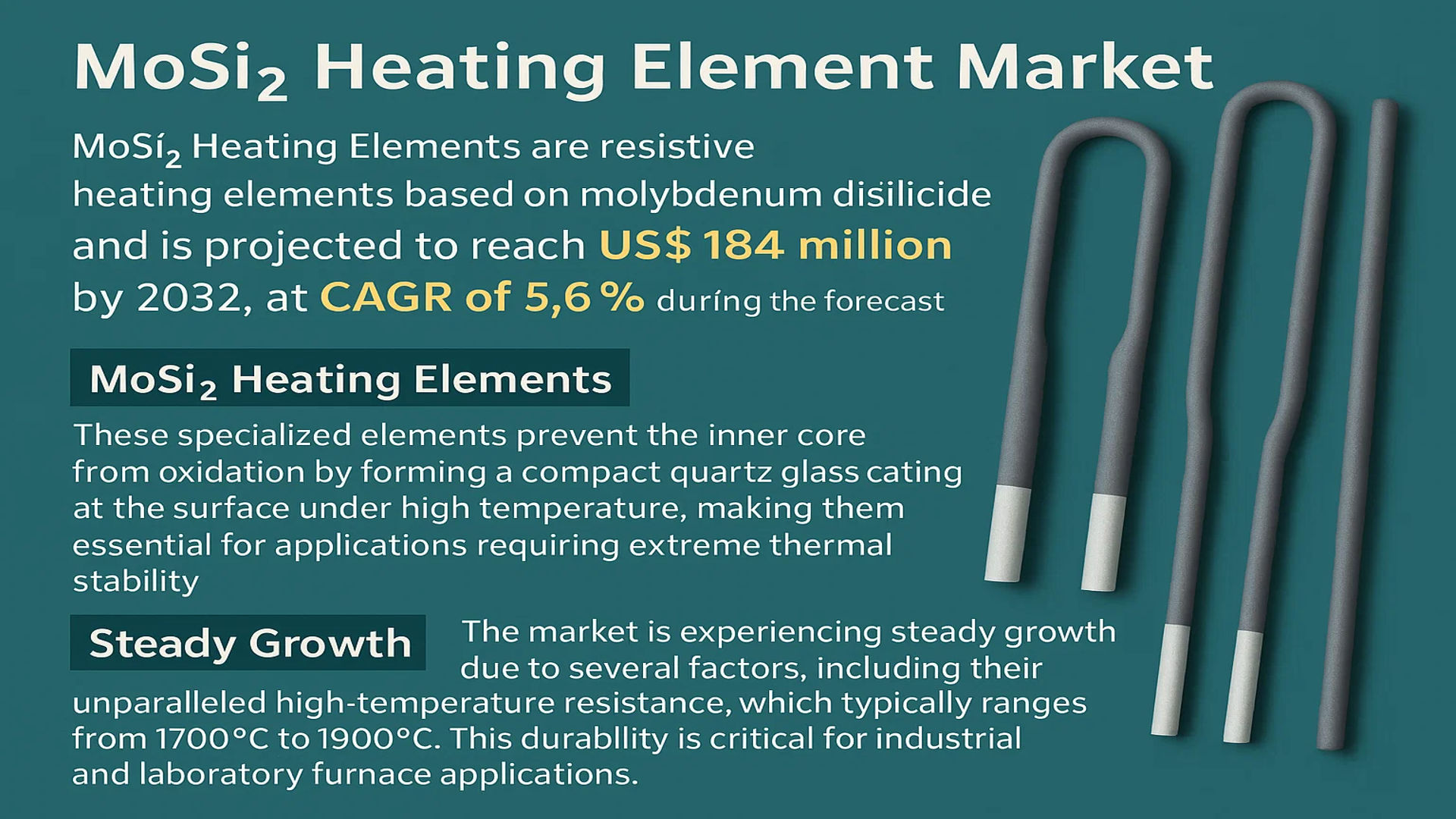
The global MoSi2 Heating Element Market was valued at 125 million in 2024 and is projected to reach US$ 184 million by 2032, at a CAGR of 5.6% during the forecast period.
MoSi2 Heating Elements are resistive heating elements based on molybdenum disilicide. These specialized elements prevent the inner core from oxidation by forming a compact quartz glass coating at the surface under high temperature, making them essential for applications requiring extreme thermal stability.
The market is experiencing steady growth due to several factors, including their unparalleled high-temperature resistance, which typically ranges from 1700°C to 1900°C. This durability is critical for industrial and laboratory furnace applications. Furthermore, the growing demand from the industrial furnace sector, which holds a dominant 76% market share, is a primary driver. The Asia-Pacific region leads global consumption, accounting for approximately 42% of the market, driven by rapid industrialization and expanding manufacturing capabilities in countries like China and Japan. Key players such as Kanthal, I Squared R, and ZIRCAR operate in this market with extensive product portfolios.
MARKET DYNAMICS
MARKET DRIVERS
Superior High-Temperature Performance and Durability to Propel Market Expansion
MoSi2 heating elements are renowned for their exceptional ability to operate reliably at extreme temperatures ranging from 1700°C to 1900°C, making them indispensable in high-temperature industrial and laboratory furnace applications. The formation of a protective quartz glass coating at elevated temperatures prevents oxidation of the inner molybdenum disilicide core, ensuring long service life and consistent performance. This durability is particularly critical in industries such as metallurgy, ceramics, and semiconductor manufacturing, where furnace temperatures regularly exceed 1600°C. The 1800°C grade elements dominate the market with approximately 57% share, reflecting the industrial preference for higher temperature capabilities. This performance advantage drives adoption across multiple sectors requiring precise thermal processing under extreme conditions.
Rapid Industrialization and Expanding Manufacturing Sector to Accelerate Demand
The ongoing industrialization in emerging economies, particularly in the Asia-Pacific region, is significantly driving demand for MoSi2 heating elements. With the region accounting for approximately 42% of global consumption, countries like China, Japan, and South Korea are experiencing substantial growth in manufacturing sectors that utilize high-temperature furnaces. The steel industry alone requires numerous high-temperature processing steps, while the expanding electronics and semiconductor sectors depend on precision heating elements for component manufacturing. Industrial furnace applications represent 76% of the total market share, underscoring the critical role these elements play in modern manufacturing processes. The continuous expansion of manufacturing capabilities in these regions ensures sustained demand for reliable high-temperature heating solutions.
Technological Advancements in Energy Efficiency to Stimulate Market Growth
Recent technological innovations focusing on energy efficiency and improved thermal management are driving the adoption of MoSi2 heating elements in diverse industrial applications. Advanced furnace designs incorporating these elements demonstrate significantly reduced energy consumption while maintaining precise temperature control. The elements’ ability to provide uniform heating distribution and rapid thermal response makes them ideal for modern, efficiency-focused industrial processes. Furthermore, ongoing research into enhanced element designs and manufacturing techniques continues to improve performance characteristics, making them more attractive to cost-conscious industrial operators seeking to optimize their thermal processing operations while reducing environmental impact.
MARKET CHALLENGES
High Manufacturing and Replacement Costs to Constrain Market Penetration
The market faces significant challenges due to the substantial costs associated with manufacturing and replacing MoSi2 heating elements. The production process requires specialized equipment and high-purity raw materials, including molybdenum and silicon, which contribute to elevated manufacturing expenses. Additionally, the complex manufacturing techniques needed to create the protective quartz glass coating add to production costs. When elements require replacement, the expense extends beyond the component itself to include furnace downtime and installation labor, creating substantial operational costs for end-users. These financial barriers particularly affect small and medium-sized enterprises operating in price-sensitive markets, limiting broader market adoption.
Other Challenges
Brittleness and Mechanical Vulnerability
The inherent brittleness of MoSi2 heating elements presents operational challenges in industrial environments. Despite their excellent high-temperature performance, these elements are susceptible to mechanical damage during installation, maintenance, or from thermal shock. This vulnerability requires careful handling procedures and specialized installation expertise, adding to operational complexity and costs. In applications where mechanical vibration or physical contact might occur, the risk of element failure increases significantly, potentially leading to unplanned downtime and additional replacement expenses.
Limited Temperature Cycling Capability
MoSi2 elements demonstrate reduced lifespan when subjected to frequent temperature cycling between room temperature and operating temperatures. The thermal expansion characteristics of the materials can lead to microcracking in the protective coating over multiple cycles, eventually compromising the element’s oxidation resistance. This limitation restricts their use in applications requiring frequent start-up and shutdown cycles, narrowing their applicability in certain industrial processes where thermal cycling is inherent to the production methodology.
MARKET RESTRAINTS
Competition from Alternative Heating Technologies to Limit Market Growth
MoSi2 heating elements face increasing competition from alternative heating technologies that offer different performance characteristics and cost structures. Silicon carbide elements, while operating at lower maximum temperatures, provide greater mechanical strength and better resistance to thermal shock. Graphite elements offer even higher temperature capabilities and faster heating rates in certain applications. Metallic heating elements, though limited to lower temperatures, provide superior durability and easier replacement procedures. The availability of these alternatives creates pricing pressure and limits market expansion opportunities for MoSi2 elements, particularly in applications where their specific high-temperature capabilities are not absolutely essential.
Specialized Installation Requirements and Technical Expertise Shortage to Hinder Adoption
The installation and maintenance of MoSi2 heating elements require specialized knowledge and technical expertise that is not universally available across all markets. Proper installation necessitates understanding of electrical connections, thermal expansion considerations, and protective atmosphere requirements. The shortage of qualified technicians familiar with these specific elements creates implementation barriers, particularly in emerging markets where technical training infrastructure may be limited. This expertise gap can lead to improper installation, reduced element lifespan, and increased failure rates, creating reluctance among potential users to adopt this technology despite its performance advantages.
Atmosphere Sensitivity and Application Limitations to Restrict Market Scope
MoSi2 heating elements exhibit sensitivity to certain furnace atmospheres that can limit their application scope. While they perform excellently in oxidizing atmospheres due to their protective coating formation, they are vulnerable to reducing atmospheres that can damage the protective layer. Certain chemical environments containing volatile compounds can also degrade element performance and lifespan. These limitations restrict their use in specific industrial processes where atmosphere control is challenging or where reducing conditions are required, thereby narrowing the addressable market for these heating elements compared to more atmosphere-tolerant alternatives.
MARKET OPPORTUNITIES
Expansion into Emerging High-Tech Industries to Create New Growth Avenues
The continuous development of advanced materials and high-technology manufacturing processes presents significant growth opportunities for MoSi2 heating elements. Emerging applications in lithium-ion battery production, advanced ceramic composites, and semiconductor manufacturing require precisely controlled high-temperature environments that align perfectly with MoSi2 capabilities. The growing demand for these high-tech products, coupled with increasingly stringent quality requirements, drives need for reliable high-temperature heating solutions. Additionally, research institutions and development laboratories are increasingly utilizing these elements for materials research and development, creating a growing niche market segment with specialized requirements.
Development of Hybrid and Composite Heating Solutions to Open New Applications
Technological innovation in composite heating element designs presents substantial opportunities for market expansion. Research into combining MoSi2 with other materials to create hybrid elements that maintain high-temperature capabilities while improving mechanical properties and thermal shock resistance shows promising results. These developments could open new application areas where current MoSi2 elements face limitations, particularly in processes requiring frequent thermal cycling or where mechanical robustness is critical. The successful commercialization of such advanced composite elements could significantly broaden the addressable market beyond current limitations.
Growing Focus on Energy Efficiency and Sustainability to Drive Replacement Demand
Increasing global emphasis on energy efficiency and sustainable manufacturing practices creates opportunities for MoSi2 heating element adoption in furnace upgrade and modernization projects. As industrial operators seek to reduce energy consumption and environmental impact, replacing older, less efficient heating systems with advanced MoSi2 elements becomes increasingly attractive. The elements’ ability to provide precise temperature control and uniform heating contributes to improved process efficiency and reduced energy waste. This sustainability focus, combined with potential regulatory incentives for energy-efficient equipment, drives replacement demand and market growth in established industrial regions undergoing manufacturing modernization.
MOSI2 HEATING ELEMENT MARKET TRENDS
Advancements in High-Temperature Furnace Technologies to Emerge as a Trend in the Market
The MoSi2 heating element market is experiencing significant transformation due to advancements in high-temperature furnace technologies, which are enhancing the performance and application scope of these critical components. Recent innovations focus on improving energy efficiency, operational lifespan, and thermal stability, particularly in the dominant 1800°C grade segment, which holds approximately 57% of the global market share. Manufacturers are increasingly integrating smart control systems and IoT-enabled monitoring to optimize heating cycles and reduce energy consumption by up to 15% in industrial settings. Furthermore, developments in material science have led to the creation of more robust protective quartz glass coatings, extending element lifespan in corrosive atmospheres common in metallurgical and ceramic processing. Because these elements must operate reliably in extreme environments, such technological progress is crucial for maintaining their competitive edge against alternative heating solutions.
Other Trends
Rapid Industrialization in Asia-Pacific Region
The Asia-Pacific region’s rapid industrialization is a primary catalyst for MoSi2 heating element demand, accounting for around 42% of global consumption. Countries like China, Japan, and South Korea are expanding their manufacturing capabilities in sectors such as steel production, electronics, and advanced ceramics, all of which rely heavily on high-temperature industrial furnaces. This growth is supported by substantial infrastructure investments and government initiatives promoting advanced manufacturing, which in turn drives the need for durable and efficient heating solutions. While North America and Europe maintain steady demand due to established industrial bases, the Asia-Pacific market’s expansion is notably faster, with projected growth rates exceeding the global average of 5.6% CAGR, reinforcing the region’s pivotal role in shaping market dynamics.
Increasing Adoption in Laboratory and Research Applications
Beyond industrial furnaces, which command a 76% market share, there is growing adoption of MoSi2 heating elements in laboratory and research settings. These applications require precise temperature control and reliability for processes such as materials testing, pharmaceutical research, and semiconductor development. The elements’ ability to maintain stable temperatures up to 1900°C makes them indispensable in advanced R&D environments. Furthermore, the push for innovation in nanotechnology and renewable energy materials is increasing their utilization in specialized furnaces. This trend is supported by rising R&D expenditures globally, particularly in developed regions, where investment in high-precision equipment is critical for maintaining technological leadership. However, the high initial cost of these elements remains a consideration for smaller laboratories, though their long-term benefits often justify the investment.
COMPETITIVE LANDSCAPE
Key Industry Players
Companies Focus on Technological Innovation and Geographic Expansion to Gain Competitive Edge
The competitive landscape of the global MoSi2 heating element market is fragmented, featuring a mix of established international players and specialized regional manufacturers. While the market is dominated by industrial furnace applications, which account for approximately 76% of the total market share, competition is intensifying as companies strive to develop more energy-efficient and durable heating solutions capable of withstanding extreme temperatures up to 1900°C.
Kanthal, a part of the Sandvik Group, is widely recognized as a global leader in this space. The company’s dominance stems from its extensive product portfolio covering all temperature grades (1700°C, 1800°C, and 1900°C) and its strong technological expertise in high-temperature heating solutions. Their global distribution network and continuous investment in research and development have solidified their position, particularly in the European and North American markets.
I Squared R and ZIRCAR have also established significant market presence, particularly in specialized industrial applications. These companies have carved out strong niches by focusing on custom-designed MoSi2 elements for specific furnace requirements in sectors like ceramics and metallurgy. Their growth is further supported by strategic partnerships with furnace manufacturers and ongoing product innovation aimed at enhancing element lifespan and thermal efficiency.
Meanwhile, several Chinese manufacturers are rapidly expanding their global footprint. Companies like Henan Songshan, Yantai Torch, and Zhengzhou Chida are leveraging the extensive manufacturing infrastructure in the Asia-Pacific region, which consumes approximately 42% of global MoSi2 heating elements. These players compete aggressively on price while simultaneously improving their product quality to meet international standards, enabling them to capture increasing market share in both domestic and export markets.
Additionally, companies are strengthening their market positions through geographic expansion and capacity investments. For instance, SCHUPP and MHI have been focusing on expanding their presence in emerging economies, where industrialization is driving demand for high-temperature industrial furnaces. Their growth strategies include establishing local manufacturing facilities and developing distribution partnerships to better serve regional customers.
List of Key MoSi2 Heating Element Companies Profiled
- Kanthal (Sweden)
- I Squared R (U.S.)
- Henan Songshan (China)
- ZIRCAR (U.S.)
- Yantai Torch (China)
- MHI (Japan)
- SCHUPP (Germany)
- Zhengzhou Chida (China)
- Shanghai Caixing (China)
- SILCARB (India)
- JX Advanced Metals (Japan)
- Dengfeng Jinyu (China)
- Zhengzhou Mingxin (China)
- Zhengzhou Chiheng (China)
- American Elements (U.S.)
- Stanford Advanced Materials (U.S.)
Segment Analysis:
By Type
1800°C Grade Segment Dominates the Market Due to Optimal Balance of Performance and Cost-Efficiency
The market is segmented based on type into:
- 1700°C Grade
- 1800°C Grade
- 1900°C Grade
By Application
Industrial Furnaces Segment Leads Due to High Demand from Metallurgy and Ceramics Manufacturing
The market is segmented based on application into:
- Industrial Furnaces
- Laboratory Furnaces
By End-User Industry
Metallurgy and Steel Production Segment Holds Significant Share Owing to Intensive High-Temperature Processing Requirements
The market is segmented based on end-user industry into:
- Metallurgy and Steel Production
- Ceramics and Glass Manufacturing
- Electronics and Semiconductor
- Research and Development Laboratories
- Others
By Element Shape
U-Shaped Elements are Widely Adopted for Their Ease of Installation and Uniform Heat Distribution
The market is segmented based on element shape into:
- U-Shaped Elements
- Straight Rod Elements
- W-Shaped Elements
- Custom Configurations
Regional Analysis: MoSi2 Heating Element Market
Asia-Pacific
The Asia-Pacific region is the undisputed leader in the global MoSi2 Heating Element market, accounting for approximately 42% of total consumption. This dominance is fueled by massive industrial expansion, particularly in the metallurgy, ceramics, and electronics sectors across China, Japan, and South Korea. China, as the world’s largest manufacturing hub, drives a significant portion of this demand, with its vast network of industrial furnaces requiring reliable, high-temperature heating solutions. The region’s rapid industrialization, coupled with substantial investments in infrastructure and technology, creates a robust and continuous demand for 1800°C grade elements, which hold the largest market share. While cost sensitivity remains a factor, the focus is increasingly shifting towards high-efficiency and durable components to support advanced manufacturing processes.
Europe
Europe represents a mature and technologically advanced market for MoSi2 Heating Elements, characterized by stringent industrial standards and a strong emphasis on energy efficiency and innovation. The region’s well-established automotive, aerospace, and specialty glass industries are key consumers, demanding high-performance elements that comply with rigorous EU environmental and safety regulations. Research and development activities are particularly strong here, focusing on enhancing the longevity and operational efficiency of heating elements. However, the market faces pressure from high operational costs and competition from alternative heating technologies. Despite this, the presence of leading industrial furnace manufacturers and a commitment to technological advancement ensures steady demand for premium-grade MoSi2 elements.
North America
The North American market is driven by advanced technological applications and a strong presence in high-value industries such as semiconductor manufacturing, aerospace, and advanced materials research. The United States, in particular, is a significant consumer, with a focus on high-precision laboratory and industrial furnaces that require the extreme temperature capabilities of 1900°C grade elements. Market growth is supported by continuous investments in R&D and the modernization of industrial infrastructure. However, the market is also characterized by high cost sensitivity and intense competition from domestic and international suppliers. The demand is primarily for reliable, high-quality elements that offer long service life and reduced maintenance, aligning with the region’s focus on operational excellence.
South America
The South American market for MoSi2 Heating Elements is emerging, with growth potential tied to the gradual industrialization and development of the mining, metals, and ceramics sectors in countries like Brazil and Argentina. The market is currently constrained by economic volatility, which limits large-scale investments in advanced industrial equipment. Consequently, demand is often focused on more cost-effective 1700°C grade elements for basic industrial applications. The lack of stringent regulatory frameworks and slower adoption of advanced technologies also hinders market expansion. Nonetheless, as industrial activities pick up pace, there is a growing recognition of the need for efficient heating solutions, presenting long-term opportunities for market penetration.
Middle East & Africa
The MoSi2 Heating Element market in the Middle East & Africa is in a nascent stage, with development primarily driven by infrastructure projects and the gradual expansion of local manufacturing capabilities. The region shows potential in sectors like ceramics and metallurgy, particularly in nations with active industrial policies. However, market growth is challenged by limited technical expertise, funding constraints, and a reliance on imported heating solutions. The focus is predominantly on durability and reliability under harsh operational conditions, but the adoption of high-temperature grades is slow due to economic and infrastructural limitations. Long-term growth will depend on increased industrialization and investments in local manufacturing infrastructure.
Report Scope
This market research report provides a comprehensive analysis of the global and regional MoSi2 Heating Element markets, covering the forecast period 2025–2032. It offers detailed insights into market dynamics, technological advancements, competitive landscape, and key trends shaping the industry.
Key focus areas of the report include:
- Market Size & Forecast: Historical data and future projections for revenue, unit shipments, and market value across major regions and segments.
- Segmentation Analysis: Detailed breakdown by product type, temperature grade, application, and end-user industry to identify high-growth segments and investment opportunities.
- Regional Outlook: Insights into market performance across North America, Europe, Asia-Pacific, Latin America, and the Middle East & Africa, including country-level analysis where relevant.
- Competitive Landscape: Profiles of leading market participants, including their product offerings, R&D focus, manufacturing capacity, pricing strategies, and recent developments such as mergers, acquisitions, and partnerships.
- Technology Trends & Innovation: Assessment of emerging technologies, integration of advanced materials, furnace design trends, fabrication techniques, and evolving industry standards.
- Market Drivers & Restraints: Evaluation of factors driving market growth along with challenges, supply chain constraints, regulatory issues, and market-entry barriers.
- Stakeholder Analysis: Insights for component suppliers, OEMs, system integrators, investors, and policymakers regarding the evolving ecosystem and strategic opportunities.
Primary and secondary research methods are employed, including interviews with industry experts, data from verified sources, and real-time market intelligence to ensure the accuracy and reliability of the insights presented.
FREQUENTLY ASKED QUESTIONS:
What is the current market size of Global MoSi2 Heating Element Market?
-> MoSi2 Heating Element Market was valued at 125 million in 2024 and is projected to reach US$ 184 million by 2032, at a CAGR of 5.6% during the forecast period..
Which key companies operate in Global MoSi2 Heating Element Market?
-> Key players include Kanthal, I Squared R, ZIRCAR, MHI, SCHUPP, Henan Songshan, Yantai Torch, and American Elements, among others.
What are the key growth drivers?
-> Key growth drivers include high-temperature resistance and durability, growing industrial furnace demand, technological advancements, and rapid industrialization in emerging economies.
Which region dominates the market?
-> Asia-Pacific dominates the market, holding approximately 42% of the global market share.
What are the emerging trends?
-> Emerging trends include development of higher temperature grades, energy-efficient furnace designs, and increased adoption in semiconductor manufacturing and advanced ceramics.

Get Sample Report PDF for Exclusive Insights
Report Sample Includes
- Table of Contents
- List of Tables & Figures
- Charts, Research Methodology, and more...