MARKET INSIGHTS
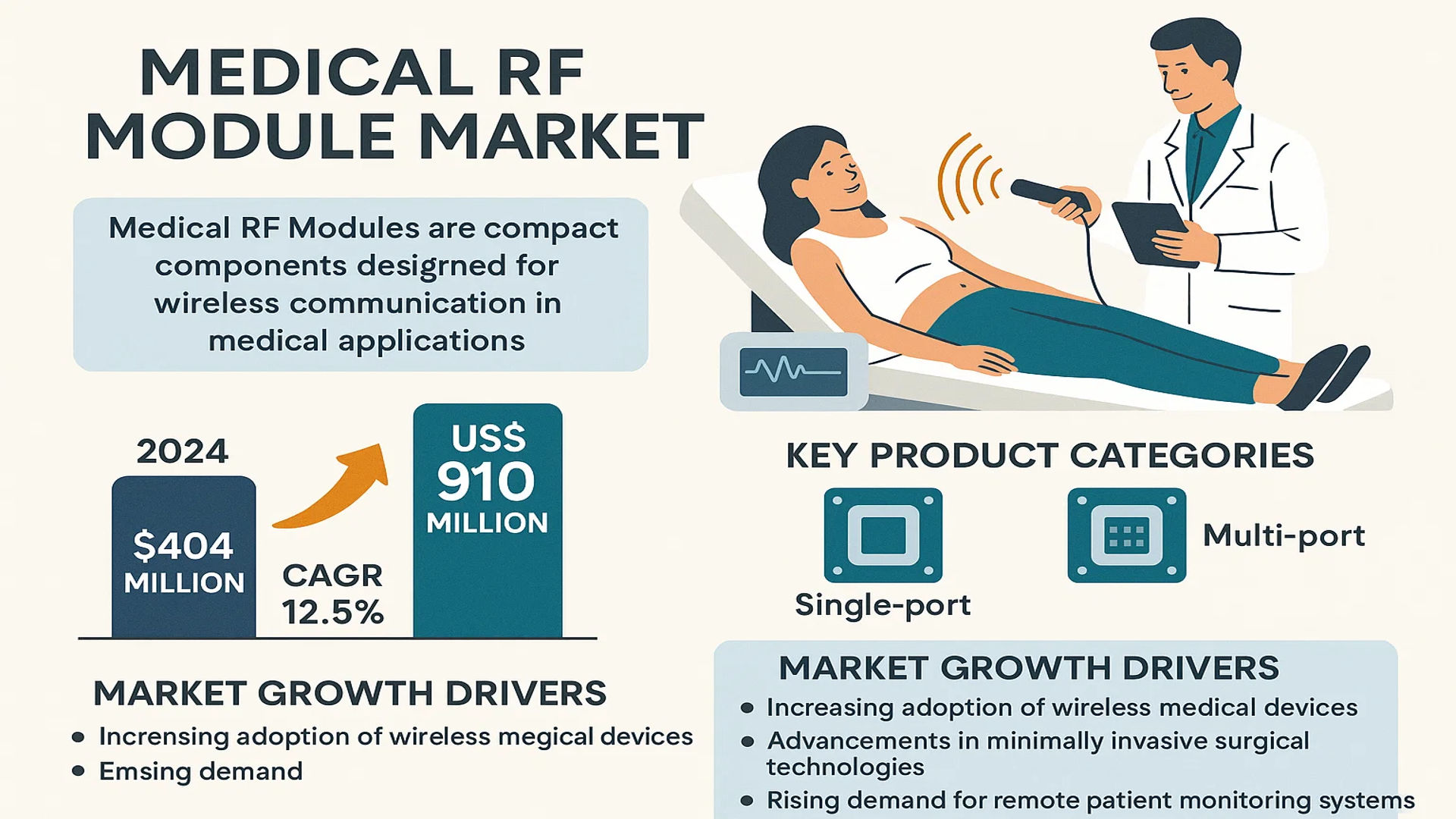
The global Medical RF Module market was valued at 404 million in 2024 and is projected to reach US$ 910 million by 2032, at a CAGR of 12.5% during the forecast period.
Medical RF Modules are compact, integrated components designed for wireless communication in medical applications. These modules combine RF transceivers, power amplifiers, filters, and mixers to enable precise signal transmission and reception across various frequency bands. Key product categories include single-port and multi-port RF modules, which find applications in radio frequency therapy instruments, skin treatment devices, and power amplifiers.
Market growth is driven by increasing adoption of wireless medical devices, advancements in minimally invasive surgical technologies, and rising demand for remote patient monitoring systems. The U.S. currently dominates the market, while China is emerging as the fastest-growing region due to healthcare infrastructure expansion. Leading manufacturers like Murata and Panasonic are investing in miniaturized, low-power modules to cater to portable medical devices, with the top five players accounting for significant market share in 2024.
MARKET DYNAMICS
MARKET DRIVERS
Rising Adoption of Minimally Invasive Surgical Procedures to Fuel Market Expansion
The global medical RF module market is experiencing significant growth due to the increasing preference for minimally invasive surgical procedures. Radiofrequency technology enables precise tissue ablation with minimal damage to surrounding areas, making it ideal for procedures like tumor removal, cardiac ablation, and cosmetic treatments. The shorter recovery times and reduced hospital stays associated with these procedures have led to a surge in demand. Hospitals and ambulatory surgical centers are increasingly investing in RF-based medical devices, with an estimated 20% growth in RF-assisted procedures since 2022.
Technological Advancements in RF Therapy Devices to Accelerate Market Growth
Significant innovations in RF module technology are creating new opportunities in medical applications. Modern RF modules now incorporate advanced features like temperature monitoring, automated power adjustment, and integration with imaging systems. These improvements enhance treatment precision while ensuring patient safety. The development of portable RF therapy devices, particularly for dermatological applications, has expanded the market beyond traditional clinical settings. Recent product launches featuring multi-frequency RF modules demonstrate the industry’s commitment to technological evolution.
➤ The integration of AI algorithms with RF modules for real-time tissue response analysis represents a breakthrough in personalized treatment protocols.
Furthermore, the growing geriatric population requiring chronic pain management and orthopedic treatments is creating sustained demand for RF-based therapeutic solutions. This demographic trend, combined with increasing healthcare expenditure in developing nations, is expected to maintain strong market momentum.
MARKET RESTRAINTS
Stringent Regulatory Approvals and Compliance Requirements to Limit Market Penetration
The medical RF module market faces considerable challenges from rigorous regulatory frameworks governing medical device approvals. Each jurisdiction imposes specific technical and safety standards that can significantly extend product development cycles. Compliance with electromagnetic compatibility requirements and patient safety protocols often requires extensive clinical testing, with approval processes sometimes taking 18-24 months. These regulatory hurdles particularly impact smaller manufacturers lacking resources for comprehensive testing documentation.
Other Constraints
High Equipment Costs
The sophisticated technology and precision components in medical-grade RF modules result in substantially higher costs compared to industrial RF solutions. This price difference limits adoption in cost-sensitive healthcare markets, especially in developing regions where reimbursement policies may not fully cover RF-based treatments.
Technical Complexity
Integration of RF modules with existing medical systems presents engineering challenges due to interference risks and the need for specialized shielding. The requirement for clinician training on proper RF device operation further complicates widespread adoption, creating bottlenecks in market expansion.
MARKET CHALLENGES
Electromagnetic Interference Issues Pose Significant Technical Hurdles
Medical RF modules must operate reliably in complex hospital environments filled with various electronic devices. Maintaining signal integrity while preventing interference with critical medical equipment remains an ongoing technical challenge. Recent studies indicate that approximately 15% of RF therapy device malfunctions relate to electromagnetic compatibility issues, underscoring the need for improved shielding and filtering solutions.
Shortage of Qualified RF Engineers in Healthcare Sector Impacts Innovation
The specialized nature of medical RF technology requires engineers with cross-disciplinary expertise in both electronics and biomedical applications. The current talent gap in this niche field is slowing product development cycles, with many companies reporting 6-9 month delays in filling critical engineering positions. This shortage is particularly acute in emerging markets seeking to develop domestic medical device manufacturing capabilities.
MARKET OPPORTUNITIES
Expansion of Aesthetic Medicine Creates New Revenue Streams for RF Modules
The booming cosmetic industry presents substantial growth opportunities for medical RF technology. Non-surgical skin tightening and body contouring treatments using RF energy have gained tremendous popularity, with clinic-based procedures growing at over 25% annually. The development of compact, consumer-friendly RF devices for home use represents an untapped market segment that manufacturers are beginning to explore.
Integration with Robotic Surgery Systems Opens New Frontiers
As robotic-assisted surgery becomes more prevalent, there is increasing demand for specialized RF modules compatible with surgical robotics platforms. These applications require ultra-precise power control and miniaturized form factors, creating opportunities for advanced RF solutions. Major medical robotics companies are actively seeking partnerships with RF module specialists to develop next-generation integrated systems.
➤ The convergence of RF technology with augmented reality visualization systems is enabling groundbreaking applications in precision medicine.
Additionally, the growing focus on telehealth and remote patient monitoring is driving innovation in wireless medical RF solutions. These emerging applications are expected to contribute significantly to market growth in the coming years.
MEDICAL RF MODULE MARKET TRENDS
Technological Advancements in RF Therapy to Drive Market Growth
The global Medical RF Module market, valued at $404 million in 2024, is experiencing accelerated growth due to innovations in radio frequency (RF) therapy applications. RF modules are increasingly being integrated into advanced medical devices for applications such as non-invasive skin tightening, pain management, and tumor ablation. The rising adoption of minimally invasive surgical techniques has further amplified the demand for high-precision RF modules that ensure safety and efficiency in medical procedures. Additionally, the development of multi-port RF modules with enhanced signal processing capabilities has opened new opportunities in diagnostic imaging and therapeutic devices.
Other Trends
Growing Application in Aesthetic Medicine
Aesthetic medicine is emerging as a major application segment for medical RF modules, particularly in RF skin therapy and body contouring. Non-surgical skin tightening and fat reduction procedures are gaining traction due to their lower risk and shorter recovery periods compared to traditional surgical alternatives. This has led to a surge in demand for compact and efficient RF modules that can be seamlessly integrated into handheld aesthetic devices. The global market for RF-based aesthetic devices is projected to witness a CAGR of over 15%, further fueling the expansion of medical RF modules.
Rising Demand for Wireless Medical Devices
The shift toward wireless medical devices is significantly influencing the Medical RF Module market. Wireless RF modules are becoming essential in modern healthcare systems, supporting applications such as remote patient monitoring, telehealth services, and implantable medical devices. The increasing prevalence of chronic diseases necessitates real-time health monitoring, driving the adoption of RF-enabled wearables and implantable sensors. Furthermore, regulatory approvals for advanced RF-based medical devices in regions like North America and Europe are paving the way for market expansion, with the U.S. holding a dominant share of over 35% of the global revenue in 2024.
COMPETITIVE LANDSCAPE
Key Industry Players
Rapid Innovation in Medical Wireless Technologies Drives Market Competition
The global Medical RF Module market exhibits a moderately consolidated structure with a mix of established electronics manufacturers and specialized medical device component suppliers. Microsemi Corporation (a subsidiary of Microchip Technology) leads the segment, holding approximately 18% market share as of 2024, owing to its comprehensive portfolio of low-power RF solutions tailored for medical applications including patient monitoring systems and implantable devices.
Murata Manufacturing and Panasonic follow closely, together accounting for nearly 25% of the global revenue share. Their dominance stems from extensive manufacturing capabilities and strong relationships with medical OEMs across North America and Asia-Pacific regions. Interestingly, both companies have recently expanded production capacities for medical-grade RF modules with enhanced electromagnetic compatibility (EMC) features to meet stringent regulatory requirements.
While Japanese and American firms currently dominate, Chinese manufacturers like Chengdu Xintong Software are gaining traction through cost-competitive offerings. The company’s focus on compact form factor RF modules for portable medical equipment has enabled it to capture nearly 7% of the Asia-Pacific market. However, concerns remain regarding IP protection and quality consistency among newer Asian entrants.
The competitive intensity is further amplified by technological convergence, where traditional RF component suppliers now compete directly with medical device specialists developing proprietary wireless solutions. BOSCH‘s recent entry into medical RF modules through its Sensortec division exemplifies this trend, leveraging automotive-grade reliability standards for clinical applications.
List of Key Medical RF Module Manufacturers
- Microsemi Corporation (U.S.)
- Panasonic Corporation (Japan)
- Murata Manufacturing Co., Ltd. (Japan)
- Fujikura Ltd. (Japan)
- Chengdu Xintong Software Co. (China)
- Robert Bosch GmbH (Germany)
- TE Connectivity (Switzerland)
- Laird Connectivity (U.S.)
- Taiyo Yuden Co., Ltd. (Japan)
Segment Analysis:
By Type
Singleport RF Module Dominates Market Share Due to Compact Design and Efficiency in Medical Devices
The market is segmented based on type into:
- Singleport RF module
- Subtypes: Low-power, Mid-power, and High-power variants
- Multiport RF Module
- Subtypes: Dual-port, Quad-port, and Modular configurations
By Application
Radio Frequency Therapy Instrument Segment Leads Due to Rising Demand for Non-Invasive Treatments
The market is segmented based on application into:
- Radio Frequency Therapy Instrument
- RF Skin Therapy
- Radio Frequency Power Amplifier
- Others
By End User
Hospitals and Clinics Lead Adoption Due to High Utilization of RF-Based Medical Equipment
The market is segmented based on end user into:
- Hospitals
- Specialty Clinics
- Ambulatory Surgical Centers
- Research Laboratories
By Frequency Range
2.4 GHz Band Dominates Due to Optimal Balance of Range and Power Efficiency
The market is segmented based on frequency range into:
- Sub-1 GHz
- 2.4 GHz
- 5 GHz
- Others
Regional Analysis: Medical RF Module Market
North America
North America dominates the global Medical RF Module market with a projected CAGR of 10.8% through 2032, driven by rapid advancements in non-invasive medical technologies like radiofrequency ablation (RFA) and aesthetic devices. The U.S. FDA has cleared 14 new RF-based medical devices in 2024 alone, signaling strong regulatory support. Major healthcare providers are increasingly adopting RF modules for pain management and dermatological applications, with the U.S. accounting for 38% of global RF skin therapy device sales in 2023. Leading manufacturers like Microsemi Corporation and BOSCH maintain R&D centers in Silicon Valley and Boston, fostering continuous innovation in miniaturized RF components.
Europe
Europe represents the second-largest Medical RF Module market, with Germany and the U.K. spearheading adoption in precision surgical instruments. Stringent CE Mark certification requirements ensure high-quality RF module integration in medical devices – the region has seen 22% growth in multi-port RF modules used in cardiac ablation procedures since 2022. However, pricing pressures from Asian manufacturers and complex reimbursement policies for RF-based therapies create challenges. The EU Medical Device Regulation (MDR) framework has extended approval timelines but improved safety standards for implantable RF devices.
Asia-Pacific
The Asia-Pacific region exhibits the fastest growth, projected at 15.4% CAGR, primarily fueled by China’s $2.1 billion medical electronics manufacturing expansion. While Japan leads in high-end RF modules for diagnostic imaging systems, China dominates volume production of cost-effective single-port modules. India’s medical tourism industry is driving demand for RF-based cosmetic procedures, with 45 new dermatology clinics incorporating RF technology in 2024. Local manufacturers like Chengdu Xintong Software are gaining market share through government-supported semiconductor initiatives, though quality consistency remains a concern for export markets.
South America
South America’s market remains nascent but shows potential in Brazil and Argentina where minimally invasive procedures are gaining traction. Economic instability limits hospital investments – only 12% of regional healthcare facilities have adopted dedicated RF therapy systems as of 2024. However, the aesthetic medicine sector demonstrates stronger adoption, with 28% annual growth in RF skin tightening devices. Regulatory harmonization efforts across MERCOSUR countries could accelerate market development if implemented effectively.
Middle East & Africa
The MEA region presents a dichotomy – Gulf Cooperation Council (GCC) countries showcase advanced RF module adoption in luxury medical tourism facilities, while Sub-Saharan Africa relies mainly on imported refurbished equipment. The UAE has emerged as a regional hub, hosting three new RF module distribution centers since 2023. Challenges include the lack of local technical expertise and high import duties in some African markets, though Saudi Arabia’s Vision 2030 healthcare reforms are expected to drive procurement of advanced RF-enabled medical devices.
Report Scope
This market research report provides a comprehensive analysis of the Global Medical RF Module Market, covering the forecast period 2025–2032. It offers detailed insights into market dynamics, technological advancements, competitive landscape, and key trends shaping the industry.
Key focus areas of the report include:
- Market Size & Forecast: Historical data and future projections for revenue, unit shipments, and market value across major regions and segments. The Global Medical RF Module Market was valued at USD 404 million in 2024 and is projected to reach USD 910 million by 2032, growing at a CAGR of 12.5%.
- Segmentation Analysis: Detailed breakdown by product type (Singleport RF module, Multiport RF Module) and application (Radio Frequency Therapy Instrument, RF Skin Therapy, Radio Frequency Power Amplifier, Others) to identify high-growth segments.
- Regional Outlook: Insights into market performance across North America, Europe, Asia-Pacific, Latin America, and the Middle East & Africa, with the U.S. and China being key growth markets.
- Competitive Landscape: Profiles of leading market participants including Microsemi Corporation, Panasonic, Murata, Fujikura, Chengdu Xintong Software, and BOSCH, their market share, product portfolios, and strategic initiatives.
- Technology Trends & Innovation: Assessment of emerging RF technologies, integration with medical devices, and advancements in wireless communication for healthcare applications.
- Market Drivers & Restraints: Evaluation of factors such as increasing demand for minimally invasive procedures, growth in cosmetic treatments, and regulatory challenges.
- Stakeholder Analysis: Insights for medical device manufacturers, component suppliers, healthcare providers, and investors regarding market opportunities and challenges.
The report employs primary and secondary research methods, including interviews with industry experts and analysis of verified market data, to ensure accuracy and reliability.
FREQUENTLY ASKED QUESTIONS:
What is the current market size of Global Medical RF Module Market?
-> Medical RF Module market was valued at 404 million in 2024 and is projected to reach US$ 910 million by 2032, at a CAGR of 12.5% during the forecast period..
Which key companies operate in Global Medical RF Module Market?
-> Key players include Microsemi Corporation, Panasonic, Murata, Fujikura, Chengdu Xintong Software, and BOSCH, among others.
What are the key growth drivers?
-> Key growth drivers include rising demand for non-invasive medical treatments, increasing adoption of RF technology in cosmetic procedures, and advancements in medical device connectivity.
Which region dominates the market?
-> North America currently leads the market, while Asia-Pacific is expected to show the highest growth rate during the forecast period.
What are the emerging trends?
-> Emerging trends include miniaturization of RF modules, integration with IoT-enabled medical devices, and development of multi-functional RF systems for diverse medical applications.

Get Sample Report PDF for Exclusive Insights
Report Sample Includes
- Table of Contents
- List of Tables & Figures
- Charts, Research Methodology, and more...